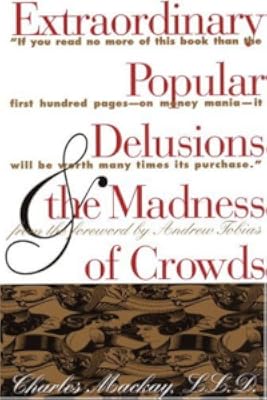
Extraordinary Popular Delusions and the Madness of Crowds
by Charles Mackay
Extraordinary Popular Delusions and the Madness of Crowds (Collections and Selections — omnibus)
On This Page
Description
Extraordinary Popular Delusions and the Madness of Crowds is a history of popular folly by Charles Mackay. The book chronicles its targets in three parts: "National Delusions," "Peculiar Follies," and "Philosophical Delusions." Learn why intelligent people do amazingly stupid things when caught up in speculative edevorse. The subjects of Mackay's debunking include alchemy, beards (influence of politics and religion on), witch-hunts, crusades, and duels. Present day writers on economics, such show more as Andrew Tobias, laud the three chapters on economic bubbles. show lessTags
Recommendations





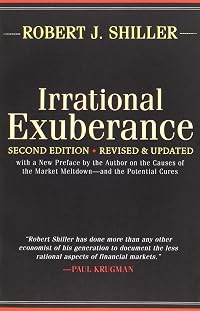

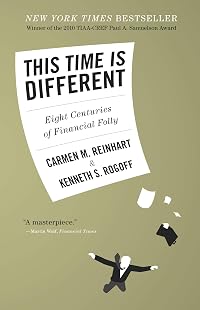
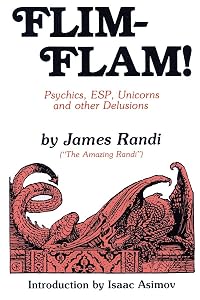
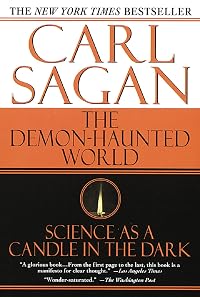





















Member Recommendations
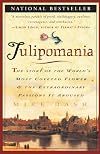
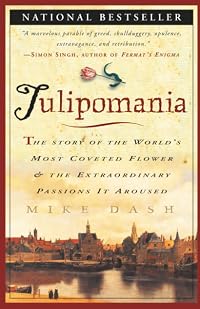
Tulipomania : The Story of the World's Most Coveted Flower & the Extraordinary Passions It Aroused by Mike Dash
lorax Tulipomania is a very readable modern history of one of the more interesting episodes detailed in Extraordinary Popular Delusions, the Dutch tulip bubble of the 1600s.
63

Member Reviews
As Edmund Wilson has famously observed, “No two persons ever read the same book" as is evidenced by the number of reviews that range from one grudging star to five exuberant ones. This, of course, is true of every book that's been reviewed in any online forum, but I find Charles Mackay's Extraordinary Popular Delusions and the Madness of Crowds particularly challenging to rate because it's, well, different from usual histories. How so? It was first published in 1841 in, I presume, the UK, having been written by a Scot living in London. The writing style, the vocabulary, and even the punctuation are noticeably different from what one normally encounters in 2026, 185 years later. Some reviewers obviously find this difference quite show more off-putting, but there are those of us who find it rather fascinating. I do recommend having ready access to a comprehensive dictionary while reading because the context does not always clarify some terms that have become obscure over the last one and a half centuries or that perchance failed to immigrate from 19th century England to the 21st century United States.
Delusions, despite its relative antique nature, has been reprinted in various editions. The one I've read is a consolidation of Mackay's original three-volume work and is described as “complete and unabridged” with the ISBN 978-1-387-89039-2 and appears to be a print-on-demand product of Lightning Source LLC for Adansonia Press. It reproduces Mackay's three volumes in a single hard-cover book of 478 pages on good quality paper but with rather small, dense font and noticeably narrow page margins. Near-sighted readers such as I should have no complaint with the physical appearance, but others may have to don their reading glasses before commencing. One other observation on the text is that occasional (though not at all frequent) misspellings hint at the use of an optical character reader (OCR) in the book's preparation; however, I'm quite willing to overlook that in a work of this antiquity.
As for the contents, Mackay selects an encyclopedic variety of examples to illustrate how readily large groups can be led to believe in the most audacious schemes and to embrace ideas that, in light of later learning and reason, appear ridiculous. We see vast numbers of people who madly invest their fortunes in popular ventures only to lose those investments when the ventures inevitably fail (gold and silver mines in Louisiana?) Others see more value in tulips than in cash (at least until the flowers become too numerous). Some find more meaning in dueling than in leading a rational life. Others flock to the burnings of witches. There are those who avoid haunted houses like the plague. Many were the believers in alchemy (or alchymy as Mackay spelled the practice). His chapter on the Crusades I found particularly enlightening from the standpoint of history as well as sociology. We mustn't overlook belief in magnetic fluid and the miraculous healing skills of the magnetisers, either.
Is Mackay an objective analyst of human behavior? Hardly. In his discussion of belief in spirits and hauntings, he notes, “If two or three persons can only be found to take the lead in any absurdity, however great, there is sure to be plenty of imitators. Like sheep in a field, if one clears the stile, the rest will follow.” Similar judgements on the intelligence of humanity in general appear in more or less every chapter. Were Mackay writing today, I think he would likely address such events as the profitless U.S. war in Vietnam, the inexplicable rise of the “MAGA” political faction, the strange existence of believers in UFOs, “chemtrails,” inefficacy of vaccinations, and the “deep state,” and I have no doubt that he would include his opinion of the absurdity (to hark back to his statement quoted above) evidenced by such people.
By the way, for aficionados of J. K. Rowling's Harry Potter sagas, Mackay devotes several pages to the alchemist Nicholas Flamel and to the search for the philosopher's stone. Well, there you have it: I'm assigning the book five stars just for informing me that Nicholas Flamel was a real person and not a creation of Rowling's imagination and that belief in the philosopher's stone was a popular delusion. Besides, I quite agree with Mackay's judgement of the people who fell for the multitudinous delusions, scams, and superstitions that populate his book. show less
Delusions, despite its relative antique nature, has been reprinted in various editions. The one I've read is a consolidation of Mackay's original three-volume work and is described as “complete and unabridged” with the ISBN 978-1-387-89039-2 and appears to be a print-on-demand product of Lightning Source LLC for Adansonia Press. It reproduces Mackay's three volumes in a single hard-cover book of 478 pages on good quality paper but with rather small, dense font and noticeably narrow page margins. Near-sighted readers such as I should have no complaint with the physical appearance, but others may have to don their reading glasses before commencing. One other observation on the text is that occasional (though not at all frequent) misspellings hint at the use of an optical character reader (OCR) in the book's preparation; however, I'm quite willing to overlook that in a work of this antiquity.
As for the contents, Mackay selects an encyclopedic variety of examples to illustrate how readily large groups can be led to believe in the most audacious schemes and to embrace ideas that, in light of later learning and reason, appear ridiculous. We see vast numbers of people who madly invest their fortunes in popular ventures only to lose those investments when the ventures inevitably fail (gold and silver mines in Louisiana?) Others see more value in tulips than in cash (at least until the flowers become too numerous). Some find more meaning in dueling than in leading a rational life. Others flock to the burnings of witches. There are those who avoid haunted houses like the plague. Many were the believers in alchemy (or alchymy as Mackay spelled the practice). His chapter on the Crusades I found particularly enlightening from the standpoint of history as well as sociology. We mustn't overlook belief in magnetic fluid and the miraculous healing skills of the magnetisers, either.
Is Mackay an objective analyst of human behavior? Hardly. In his discussion of belief in spirits and hauntings, he notes, “If two or three persons can only be found to take the lead in any absurdity, however great, there is sure to be plenty of imitators. Like sheep in a field, if one clears the stile, the rest will follow.” Similar judgements on the intelligence of humanity in general appear in more or less every chapter. Were Mackay writing today, I think he would likely address such events as the profitless U.S. war in Vietnam, the inexplicable rise of the “MAGA” political faction, the strange existence of believers in UFOs, “chemtrails,” inefficacy of vaccinations, and the “deep state,” and I have no doubt that he would include his opinion of the absurdity (to hark back to his statement quoted above) evidenced by such people.
By the way, for aficionados of J. K. Rowling's Harry Potter sagas, Mackay devotes several pages to the alchemist Nicholas Flamel and to the search for the philosopher's stone. Well, there you have it: I'm assigning the book five stars just for informing me that Nicholas Flamel was a real person and not a creation of Rowling's imagination and that belief in the philosopher's stone was a popular delusion. Besides, I quite agree with Mackay's judgement of the people who fell for the multitudinous delusions, scams, and superstitions that populate his book. show less
The German philosopher Friedrich Schiller tells us, "Anyone taken as an individual is tolerably sensible and reasonable - as a member of a crowd, he at once becomes a blockhead." Written in 1841 by Charles McKay, Extraordinary Popular Delusions outlines classic episodes of mass behavior in history. These include worship of alchemists, fortune-tellers, haunted houses, and "popular follies of great cities". For modern context, Andrew Tobias comments in the book's forward about "'the hustle', where large groups of young people learned to dance in lemminglike unison." How quaint. And, hilariously, the book's original title was Extraordinary Popular Delusions and the Madness of Krauts. In our current day there are still "bubbles" and other show more evidence of the continuing predilection of the masses to follow dim ideas beyond the bounds of reason. show less
Why do otherwise intelligent individuals form seething masses of idiocy when they engage in collective action? Why do financially sensible people jump lemming-like into hare-brained speculative frenzies--only to jump broker-like out of windows when their fantasies dissolve? We may think that the Great Crash of 1929, junk bonds of the '80s, and over-valued high-tech stocks of the '90s are peculiarly 20th century aberrations, but Mackay's classic--first published in 1841--shows that the madness and confusion of crowds knows no limits, and has no temporal bounds. These are extraordinarily illuminating,and, unfortunately, entertaining tales of chicanery, greed and naivete. Essential reading for any student of human nature or the show more transmission of ideas.
In fact, cases such as Tulipomania in 1624--when Tulip bulbs traded at a higher price than gold--suggest the existence of what I would dub "Mackay's Law of Mass Action:" when it comes to the effect of social behavior on the intelligence of individuals, 1+1 is often less than 2, and sometimes considerably less than 0.
As with any true classic, once it is read it is hard to imagine not having known of it--and there is the compulsion to recommend it to others. First published in 1841, Extraordinary Popular Delusions and the Madness of Crowds is often cited as the best book ever written about market psychology. This Harriman House edition includes Charles Mackay's account of the three infamous financial manias - John Law's Mississipi Scheme, the South Sea Bubble, and Tulipomania.
Between the three of them, these historic episodes confirm that greed and fear have always been the driving forces of financial markets, and, furthermore, that being sensible and clever is no defence against the mesmeric allure of a popular craze with the wind behind it.
In writing the history of the great financial manias, Charles Mackay proved himself a master chronicler of social as well as financial history. Blessed with a cast of characters that covered all the vices, gifted a passage of events which was inevitably heading for disaster, and with the benefit of hindsight, he produced a record that is at once a riveting thriller and absorbing historical document. A century and a half later, it is as vibrant and lurid as the day it was written.
For modern-day investors, still reeling from the dotcom crash, the moral of the popular manias scarcely needs spelling out. When the next stock market bubble comes along, as it surely will, you are advised to recall the plight of some of the unfortunates on these pages, and avoid getting dragged under the wheels of the careering bandwagon yourself. show less
In fact, cases such as Tulipomania in 1624--when Tulip bulbs traded at a higher price than gold--suggest the existence of what I would dub "Mackay's Law of Mass Action:" when it comes to the effect of social behavior on the intelligence of individuals, 1+1 is often less than 2, and sometimes considerably less than 0.
As with any true classic, once it is read it is hard to imagine not having known of it--and there is the compulsion to recommend it to others. First published in 1841, Extraordinary Popular Delusions and the Madness of Crowds is often cited as the best book ever written about market psychology. This Harriman House edition includes Charles Mackay's account of the three infamous financial manias - John Law's Mississipi Scheme, the South Sea Bubble, and Tulipomania.
Between the three of them, these historic episodes confirm that greed and fear have always been the driving forces of financial markets, and, furthermore, that being sensible and clever is no defence against the mesmeric allure of a popular craze with the wind behind it.
In writing the history of the great financial manias, Charles Mackay proved himself a master chronicler of social as well as financial history. Blessed with a cast of characters that covered all the vices, gifted a passage of events which was inevitably heading for disaster, and with the benefit of hindsight, he produced a record that is at once a riveting thriller and absorbing historical document. A century and a half later, it is as vibrant and lurid as the day it was written.
For modern-day investors, still reeling from the dotcom crash, the moral of the popular manias scarcely needs spelling out. When the next stock market bubble comes along, as it surely will, you are advised to recall the plight of some of the unfortunates on these pages, and avoid getting dragged under the wheels of the careering bandwagon yourself. show less
It was amazing how relevant this book, written in 1841, was to today. Of all the “popular delusions” covered here, the only thing I can think of that doesn’t still go on today is Alchemy. This would shock and disappoint the author I’m sure. It did me.
The tone of the book is a little more anecdotal than scholarly, but he does provide footnotes for much of it. I don’t think I would take it as 100% historical fact though. The author is really funny and sarcastic and writes in a manner very friendly to the modern reader. The only only problem I had was with names of people that I was obviously meant to recognize, but didn’t, and like many books of the time he quotes untranslated French (and Italian if I remember correctly) at show more times expecting that any educated person should be able to understand.
This is a book I have to recommend every one read. It gives you a bigger perspective on just how ridiculous people can be, especially in groups, and how people aren’t really any different than they’ve ever been. A really great book, the only reason I’m giving it 4 stars instead of 5 is that it could use some editing. He goes on too long about Alchemy (almost 200 pages) giving too many case histories in detail. This happens to a smaller extent in a lot of the book, but you shouldn’t let that put you off. Even though I’m giving it 4 stars for that, it’s a book that made a huge impression on me.
edit; OK, I just discovered the Breatharians, who claim to not have to eat or drink, and will sell you the secret of eternal life. This is a large part of exactly the same scams the Alchemists used, so I guess everything in this book still goes on. Amazing. show less
The tone of the book is a little more anecdotal than scholarly, but he does provide footnotes for much of it. I don’t think I would take it as 100% historical fact though. The author is really funny and sarcastic and writes in a manner very friendly to the modern reader. The only only problem I had was with names of people that I was obviously meant to recognize, but didn’t, and like many books of the time he quotes untranslated French (and Italian if I remember correctly) at show more times expecting that any educated person should be able to understand.
This is a book I have to recommend every one read. It gives you a bigger perspective on just how ridiculous people can be, especially in groups, and how people aren’t really any different than they’ve ever been. A really great book, the only reason I’m giving it 4 stars instead of 5 is that it could use some editing. He goes on too long about Alchemy (almost 200 pages) giving too many case histories in detail. This happens to a smaller extent in a lot of the book, but you shouldn’t let that put you off. Even though I’m giving it 4 stars for that, it’s a book that made a huge impression on me.
edit; OK, I just discovered the Breatharians, who claim to not have to eat or drink, and will sell you the secret of eternal life. This is a large part of exactly the same scams the Alchemists used, so I guess everything in this book still goes on. Amazing. show less
There is a saying that those who don’t remember history are condemned to repeat it. Originally published under slightly different name in 1841, EXTRAORDINARY POPULAR DELUSIONS AND THE MADNESS OF CROWDS by Charles Mackay provides examples of notorious financial schemes that destroyed fortunes and governments.
Most of the examples in the short version I read are get-rich schemes The first case is John Law was a Scotsman in the early 1700s who was an expert on economics but didn’t anticipate the how people, including governments, would react to these offers. The Mississippi Scheme, a plan to use paper money as currency, brought France, suffering after the excesses of King Louis XIV, almost to financial ruin.
The Mississippi Company show more gained exclusive rights to trade in several Far East Company and promised great returns. People waited in long lines to invest in the Company. Law became highly sought after but the results, which affected almost all French people, were nowhere near what Law anticipated.
The third chapter of the book “The Tulipmania” tells the story of tulips in Holland and Germany. (The flower was named from a Turkish word signifying a turban.) Long valued in Constantinople, tulips first came to Augsburg in 1559. By 1634, possessing tulips became the mark of class. Dutch people devoted its industry to raise and sell tulips at unbelievably high prices. In 1636, they were sold on the Exchange of London. Today the same ones are still available and still valued for their beauty, but people are not selling property to get one.
“Men, it has been well said, think in herds; it will be seen that they go mad in herds, while they only recover their senses slowly, and one by one.” Considering the political division in the US during the past few years and spread of the Coronavirus, especially in the US, people haven’t learned much. show less
Most of the examples in the short version I read are get-rich schemes The first case is John Law was a Scotsman in the early 1700s who was an expert on economics but didn’t anticipate the how people, including governments, would react to these offers. The Mississippi Scheme, a plan to use paper money as currency, brought France, suffering after the excesses of King Louis XIV, almost to financial ruin.
The Mississippi Company show more gained exclusive rights to trade in several Far East Company and promised great returns. People waited in long lines to invest in the Company. Law became highly sought after but the results, which affected almost all French people, were nowhere near what Law anticipated.
The third chapter of the book “The Tulipmania” tells the story of tulips in Holland and Germany. (The flower was named from a Turkish word signifying a turban.) Long valued in Constantinople, tulips first came to Augsburg in 1559. By 1634, possessing tulips became the mark of class. Dutch people devoted its industry to raise and sell tulips at unbelievably high prices. In 1636, they were sold on the Exchange of London. Today the same ones are still available and still valued for their beauty, but people are not selling property to get one.
“Men, it has been well said, think in herds; it will be seen that they go mad in herds, while they only recover their senses slowly, and one by one.” Considering the political division in the US during the past few years and spread of the Coronavirus, especially in the US, people haven’t learned much. show less
This exposition frustrated with its dry, numerical analysis, it's sycophantic treatment of entirely unproductive financial schemers and its sexism — e.g. printing the entire text of a song slanderous against the innocent wife of one of the financiers, and none of the texts of the other songs.
I rate it one star for introducing me to the origins of the word "bubble", but I had to pull the headphones from my ears one fifth of the way through this irrelevant panegyric to the absurd excesses of capital.
I rate it one star for introducing me to the origins of the word "bubble", but I had to pull the headphones from my ears one fifth of the way through this irrelevant panegyric to the absurd excesses of capital.
“This is the most important book ever written about crowd psychology and, by extension, about financial markets. A serious student of the markets and even anyone interested in the extremes of human behavior should read this book (Ron Insana, writing for CNBC).”
If Mr. Insana’s observation on the rear cover of this compendium of Charles Mackay’s and Joseph de la Vega’s treatises sounds like a bit of hyperbole, let's just remember that Mr. Insana writes for CNBC.
I haven’t read enough primary literature on crowd psychology to know whether “(t)his is the most important book ever written” on that subject. That doesn’t really matter. The fact is, it’s a damned good book, an easy read of 4-5 hours, and a bit of history one show more never gets in school. Well, maybe in the Business Schools of Harvard, Wharton or Columbia.
A shame that no one’s ever made a movie on the subject of John Law and the “Mississippi Madness” of 1719-1720. Perhaps the French are just a tad embarrassed by this bit of their history. Ditto for the Brits and the “South-Sea Bubble,” which followed almost immediately thereafter. And let’s not omit the Dutch and their “Tulipomania” of 1635-1636. All three events are covered not only adequately and sufficiently, but amusingly, in Charles Mackay’s treatise.
Joseph de la Vega’s treatise, Confusión de Confusiones, on the psychology and behavior of brokers in Amsterdam’s first stock exchange is, of course, a horse of a somewhat different color. Rather than straight exposition, he penned Confusión de Confusiones in dialogue form and first published it, in Spanish, in 1688. Although I’ve spent only limited time on Wall Street or in the company of stock brokers, one might assume that de la Vega’s descriptions are as accurate today as they were 325 years ago. And yes: anyone contemplating a job in the financial services industry — as well as anyone contemplating so much as dinner with a stock broker — should read both treaties. It would be a small investment in time and money — and might save you a lifetime of frustration and disillusionment.
Quite by coincidence, my reading of Extraordinary Popular Delusions and the Madness of Crowds and Confusión de Confusiones coincides with my viewing of “Margin Call”—an excellent film on a related subject. And my own professional career, which survived the one-day drop of over 500 points in the Dow Jones in 1987, but not the dot-com crash of 2000, is a small testament to market madness and the delusions of crowds. As they say in both Predicate and Quantitative Logic, Q.E.D. (quod erat demonstrandum).
RRB
08/29/13
Brooklyn, NY show less
If Mr. Insana’s observation on the rear cover of this compendium of Charles Mackay’s and Joseph de la Vega’s treatises sounds like a bit of hyperbole, let's just remember that Mr. Insana writes for CNBC.
I haven’t read enough primary literature on crowd psychology to know whether “(t)his is the most important book ever written” on that subject. That doesn’t really matter. The fact is, it’s a damned good book, an easy read of 4-5 hours, and a bit of history one show more never gets in school. Well, maybe in the Business Schools of Harvard, Wharton or Columbia.
A shame that no one’s ever made a movie on the subject of John Law and the “Mississippi Madness” of 1719-1720. Perhaps the French are just a tad embarrassed by this bit of their history. Ditto for the Brits and the “South-Sea Bubble,” which followed almost immediately thereafter. And let’s not omit the Dutch and their “Tulipomania” of 1635-1636. All three events are covered not only adequately and sufficiently, but amusingly, in Charles Mackay’s treatise.
Joseph de la Vega’s treatise, Confusión de Confusiones, on the psychology and behavior of brokers in Amsterdam’s first stock exchange is, of course, a horse of a somewhat different color. Rather than straight exposition, he penned Confusión de Confusiones in dialogue form and first published it, in Spanish, in 1688. Although I’ve spent only limited time on Wall Street or in the company of stock brokers, one might assume that de la Vega’s descriptions are as accurate today as they were 325 years ago. And yes: anyone contemplating a job in the financial services industry — as well as anyone contemplating so much as dinner with a stock broker — should read both treaties. It would be a small investment in time and money — and might save you a lifetime of frustration and disillusionment.
Quite by coincidence, my reading of Extraordinary Popular Delusions and the Madness of Crowds and Confusión de Confusiones coincides with my viewing of “Margin Call”—an excellent film on a related subject. And my own professional career, which survived the one-day drop of over 500 points in the Dow Jones in 1987, but not the dot-com crash of 2000, is a small testament to market madness and the delusions of crowds. As they say in both Predicate and Quantitative Logic, Q.E.D. (quod erat demonstrandum).
RRB
08/29/13
Brooklyn, NY show less
Members
- Recently Added By
Lists

Ten Books That Have Stayed With Me
160 works; 30 members

Books Read in 2015
3,299 works; 126 members

In Our Time books
4,934 works; 2 members

Books Cited in Blueprint by Nicholas Christakis
261 works; 1 member
Author Information

45+ Works 3,340 Members
Some Editions
Awards and Honors
Notable Lists
Series

Belongs to Publisher Series
Work Relationships
Is contained in
Contains
Common Knowledge
- Canonical title
- Extraordinary Popular Delusions and the Madness of Crowds
- Original publication date
- 1841 (1st edition) (1st edition); 1852 (2nd edition) (2nd edition)
- People/Characters
- John Law, 1671–1729; Nostradamus; Franz Anton Mesmer; Robin Hood
- Important events
- The Crusades; Mississippi Bubble; South Sea Bubble; Tulip mania; Alchemy in Renaissance and early modern Europe; Witch trials in the early modern period
- Epigraph
- (To Memoirs of Extraordinary Popular Delusions)
"Il est bon de connaître les délires de l'esprit humain. Chaque peuple a ses folies plus ou moins grossiéres."
Millot
(To Memoirs of Extraordinary Popular Delusions and the Madness of Crowds)
N'en déplaise à ces fous nommés sages de Gréce,
En ce monde il n'est point de parfaite sagesse;
Tous les hommes sont fous, et malgr... (show all)é tous leurs soins
Ne different entre eux que du plus ou du moins.
Boileau. - First words
- (Preface)
The object of the Author in the following pages has been to collect the most remarkable instances of those moral epidemics which have been excited, sometimes by one cause and sometimes by another, and to show how... (show all) easily the masses have been led astray, and how imitative and gregarious men are, even in their infatuations and crimes.
(Preface to edition of 1852)
In reading the history of nations, we find that, like individuals, they have their whims and their peculiarities; their seasons of excitement and recklessness, when they care not what they do.
(Chapter 1)
The personal character and career of one man are so intimately connected with the great scheme of the years 1719 and 1720 that a history of the Mississippi madness can have no fitter introduction than a sketch ... (show all)of the life of its great author John Law. - Last words
- (Click to show. Warning: May contain spoilers.)There are few who would not join with Cowley in the extravagant wish introduced in his lines "written while sitting in a chair made of the remains of the ship in which Sir Francis Drake sailed round the world:"
"And I mystelf, who now love quiet too,
Almost as much as any chair can do,
Would yet a journey take
An old wheel of that chariot to see,
Which Phaeton so rashly brake." - Canonical DDC/MDS
- 001.96
- Canonical LCC
- AZ999
Classifications
- Genres
- Sociology, Nonfiction, General Nonfiction, History
- DDC/MDS
- 001.96 — Computer science, information & general works Computer science, knowledge & systems Knowledge and learning in general Aliens/UFOs Errors, delusions, superstitions
- LCC
- AZ999 — General Works History of scholarship and learning. The humanities History of scholarship and learning. The humanities
- BISAC
Statistics
- Members
- 2,963
- Popularity
- 6,048
- Reviews
- 43
- Rating
- (3.79)
- Languages
- 6 — Czech, English, French, German, Spanish, Portuguese (Portugal)
- Media
- Paper, Audiobook, Ebook
- ISBNs
- 87
- UPCs
- 1
- ASINs
- 69