The Shape of Water [2017 film]
by Guillermo del Toro (Director), Vanessa Taylor (Screenwriter)
On This Page
Description
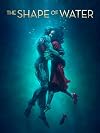
"An otherworldly fairy tale, set against the backdrop of Cold War-era America circa 1962. In the hidden high-security government laboratory where she works, lonely Elisa is trapped in a life of isolation. Elisa's life is changed forever when she and co-worker Zelda discover a secret classified experiment." --Tags
Recommendations


Member Recommendations

lulaa I kept thinking about PDL while watching Shape of Water, and thought my mind was maybe playing tricks: but then I saw an interview where Guillermo del Toro mentioned having been inspired by PDL when creating his most recent film. Thinking about the conjunctions between the two is really stimulating, I think.
Member Reviews
The Shape of Water is Cold War-set fantasy romance, I guess, although I have issues with the romance that I'll get into in a bit.
Elisa is a mute cleaning lady who works at a high-security government facility. When a mysterious aquatic being is brought to the facility, she forms a bond with him and comes up with a plan to free him and get him back to the ocean where he belongs. (Although apparently he was originally captured in a South American river where he was worshiped by the locals as a god, so wouldn't he have been more comfortable in fresh water?)
Unfortunately, two governments have a stake in the River God's fate. The U.S. government wants him dissected in the hope that his ability to breathe both water and air could somehow lead show more to important advancements in space-related technology. (I'm sorry, I know this doesn't really make any sense, but this is the reason viewers were given.) The Russian government doesn't see a point in capturing him for themselves but does want him killed before the U.S. can learn anything useful from him.
I had wanted to go see this when it was showing in theaters, but if the movie theater in my town ever showed it, it wasn't around for long. I'd heard bits and pieces about the movie from several different groups. The disabled community expressed concerns with the casting decision for Elisa and the way her muteness was handled. The romance community appeared to like that the movie was a fantasy romance starring a human heroine and nonhuman love interest. And then there were the folks who repeatedly made jokes about fish-man sex.
I went into this thinking I'd either love it or at least like it. At the very least, I thought I'd enjoy its romantic storyline. What I didn't expect was that I'd find the movie, overall, to be kind of repugnant. It took willpower to finish it, and I may never get around to watching the extras.
As you can probably tell from my summary, many aspects of the story didn't make sense. I've already covered a couple things. In addition, there was the way that Elisa handled hiding the River God. She needed to be careful and avoid drawing attention to herself until the date came when she could set the him free. So what did she do? She smirked at Strickland, the government agent who was bound and determined to find the River God and kill him, and told him "Fuck you" in sign language. She also blocked her bathroom door and flooded the bathroom up to the ceiling so that she could have underwater sex with the River God, never mind that the water dripped through her floor down to the theater she lived above.
Sadly, I even disliked the one aspect I thought I'd enjoy, the romance. I could understand why Elisa was drawn to the River God, although I thought it was a bit stupid of her to approach him so soon after he removed two of his captor's fingers. I also found it difficult to believe that Elisa would have had so much time alone with him in the facility. Still, my real problems with the romance didn't start until after she'd broken him out and taken him home.
Their first time having sex bugged me. 1) He'd given no indication that he was sexually attracted to her. 2) He was completely at her mercy. Was consent even possible in this situation? What if he viewed sex as the price he'd have to pay to stay safe until he could finally get to the ocean? 3) The characters kept alternating between approaching him as a man with fish-like aspects and as a wild animal who didn't know any better when he, say, bit the head off a pet cat. (Yes, a cat is indeed eaten on-screen.) Having sex with him seemed even dumber than rushing up to his pool to feed him an egg had been. How was she to know how he'd react?
I was also bothered by the way the movie handled things like Elisa's muteness, racism, and Giles, Elisa's friend, being gay. While trying to convince Giles to help her free the River God, Elisa said something along the lines of the River God being the only one who didn't see her as lacking something. However, this was the first time the movie had touched on anything like this. People talked to her the same way they did anyone else, and she had several people in her life who understood her sign language. No, she didn't have a lover, but nothing in the movie had indicated that this was because of her muteness.
Apparently viewers were expected to assume that she was alone because no one wanted to have sex with a mute woman. The weird fantasy dancing scene later on in the movie just made everything worse, as it seemed to indicate that Elisa felt unable to properly communicate her love to the River God because she couldn't speak. Over and over again, the person who most viewed Elisa as "lacking" because she was mute was Elisa herself.
Giles and Zelda were the gay sidekick and the Black sidekick, respectively. There was a moment when Giles was given a choice between potentially furthering his career and finding romance or helping Elisa. Heopted for the former and only ended up doing the latter after he was professionally and romantically rejected. For the rest of the movie he existed only to help Elisa and the River God, even to the point of casually brushing off the fact that one of his cats had been eaten and he'd been clawed. Zelda, too, existed primarily to ensure Elisa and the River God's happiness. Her husband treated her like she was his hired help, and there was one part where I was genuinely worried that she was going to die to protect Elisa.
I'll wrap this up with Strickland. He was a giant ball of grossness, from his first conversation with Zelda and Elisa, in which he proudly stated that he viewed washing one's hands before and after using a urinal to be a sign of weakness in character (he always skipped washing after), to the ongoing issue of his increasingly necrotic fingers. He also added an element of rapiness to the movie as he fantasized about having sex with Elisa and even arranged to be alone with her so he could creepily come onto her. He was supposed to be nasty, I know, but combined with all the other issues I had with the movie he was almost too much for me at times.
I really thought I was going to enjoy this movie, and I'm sad that I didn't.
Extras:
Again, I haven't seen any of these yet. Once I do, I may update this review with a few notes on what I thought about them.
- A Fairy Tale for Troubled Times
- Anatomy of a scene: Prologue
- Anatomy of a scene: The dance
- Shaping the waves: a conversation with artist James Jean
- Guillermo del Toro's master class
- Theatrical trailers
(Original review posted on A Library Girl's Familiar Diversions.) show less
Elisa is a mute cleaning lady who works at a high-security government facility. When a mysterious aquatic being is brought to the facility, she forms a bond with him and comes up with a plan to free him and get him back to the ocean where he belongs. (Although apparently he was originally captured in a South American river where he was worshiped by the locals as a god, so wouldn't he have been more comfortable in fresh water?)
Unfortunately, two governments have a stake in the River God's fate. The U.S. government wants him dissected in the hope that his ability to breathe both water and air could somehow lead show more to important advancements in space-related technology. (I'm sorry, I know this doesn't really make any sense, but this is the reason viewers were given.) The Russian government doesn't see a point in capturing him for themselves but does want him killed before the U.S. can learn anything useful from him.
I had wanted to go see this when it was showing in theaters, but if the movie theater in my town ever showed it, it wasn't around for long. I'd heard bits and pieces about the movie from several different groups. The disabled community expressed concerns with the casting decision for Elisa and the way her muteness was handled. The romance community appeared to like that the movie was a fantasy romance starring a human heroine and nonhuman love interest. And then there were the folks who repeatedly made jokes about fish-man sex.
I went into this thinking I'd either love it or at least like it. At the very least, I thought I'd enjoy its romantic storyline. What I didn't expect was that I'd find the movie, overall, to be kind of repugnant. It took willpower to finish it, and I may never get around to watching the extras.
As you can probably tell from my summary, many aspects of the story didn't make sense. I've already covered a couple things. In addition, there was the way that Elisa handled hiding the River God. She needed to be careful and avoid drawing attention to herself until the date came when she could set the him free. So what did she do? She smirked at Strickland, the government agent who was bound and determined to find the River God and kill him, and told him "Fuck you" in sign language. She also blocked her bathroom door and flooded the bathroom up to the ceiling so that she could have underwater sex with the River God, never mind that the water dripped through her floor down to the theater she lived above.
Sadly, I even disliked the one aspect I thought I'd enjoy, the romance. I could understand why Elisa was drawn to the River God, although I thought it was a bit stupid of her to approach him so soon after he removed two of his captor's fingers. I also found it difficult to believe that Elisa would have had so much time alone with him in the facility. Still, my real problems with the romance didn't start until after she'd broken him out and taken him home.
Their first time having sex bugged me. 1) He'd given no indication that he was sexually attracted to her. 2) He was completely at her mercy. Was consent even possible in this situation? What if he viewed sex as the price he'd have to pay to stay safe until he could finally get to the ocean? 3) The characters kept alternating between approaching him as a man with fish-like aspects and as a wild animal who didn't know any better when he, say, bit the head off a pet cat. (Yes, a cat is indeed eaten on-screen.) Having sex with him seemed even dumber than rushing up to his pool to feed him an egg had been. How was she to know how he'd react?
I was also bothered by the way the movie handled things like Elisa's muteness, racism, and Giles, Elisa's friend, being gay. While trying to convince Giles to help her free the River God, Elisa said something along the lines of the River God being the only one who didn't see her as lacking something. However, this was the first time the movie had touched on anything like this. People talked to her the same way they did anyone else, and she had several people in her life who understood her sign language. No, she didn't have a lover, but nothing in the movie had indicated that this was because of her muteness.
Apparently viewers were expected to assume that she was alone because no one wanted to have sex with a mute woman. The weird fantasy dancing scene later on in the movie just made everything worse, as it seemed to indicate that Elisa felt unable to properly communicate her love to the River God because she couldn't speak. Over and over again, the person who most viewed Elisa as "lacking" because she was mute was Elisa herself.
Giles and Zelda were the gay sidekick and the Black sidekick, respectively. There was a moment when Giles was given a choice between potentially furthering his career and finding romance or helping Elisa. He
I'll wrap this up with Strickland. He was a giant ball of grossness, from his first conversation with Zelda and Elisa, in which he proudly stated that he viewed washing one's hands before and after using a urinal to be a sign of weakness in character (he always skipped washing after), to the ongoing issue of his increasingly necrotic fingers. He also added an element of rapiness to the movie as he fantasized about having sex with Elisa and even arranged to be alone with her so he could creepily come onto her. He was supposed to be nasty, I know, but combined with all the other issues I had with the movie he was almost too much for me at times.
I really thought I was going to enjoy this movie, and I'm sad that I didn't.
Extras:
Again, I haven't seen any of these yet. Once I do, I may update this review with a few notes on what I thought about them.
- A Fairy Tale for Troubled Times
- Anatomy of a scene: Prologue
- Anatomy of a scene: The dance
- Shaping the waves: a conversation with artist James Jean
- Guillermo del Toro's master class
- Theatrical trailers
(Original review posted on A Library Girl's Familiar Diversions.) show less
This is the book version of the movie. Although I have not seen the movie, I knew enough about the movie that I felt as if I already knew the story. The adaptation seems authentic to what I know of the film, but I imagine this will be one of the few instances where the movie is better than the book.
1962 Baltimore. Elisa Esposito, found abandoned as a baby with scars on her neck, has been mute all her life, that disability which has largely led to her not having opportunities. Despite being a bright woman, she works a manual labor job as a cleaner at a military research facility where she has long been friends with fellow cleaner, Zelda Fuller, who often translates her sign language to others at the facility. And she has had no romance in her life, her major emotional support, beyond Zelda, being her aging gay artist neighbor, Giles, the two who live in adjoining apartment units above a movie theater. Like Elisa, Giles is lonely, his homosexuality complicating both his personal and professional life, the latter as a commercial show more graphic artist. Elisa's life changes when Colonel Richard Strickland brings a new "asset" into the facility, Elisa discovering it being a seeming mixed human/amphibious creature found in the waters of the Amazon. Secretly visiting with the creature, Elisa is immediately drawn to him, and despite he having a violent side as part of his inherent being, the two find a way to communicate with each other and end up forming a bond with each other. Elisa has to decide what to do when she discovers that although the reason for bringing the creature to the facility is to test the possibility of him being sent into space, Colonel Strickland, who has always had antagonistic feelings toward the creature, ultimately wants to kill him, this following the systematic torture he has inflicted on him. Elisa may have to balance her feelings on wanting to be with the creature against what may be the greater benefit to him of being set free back into the wilds of the water. Complicating matters are that the Soviets are also aware of the creature, they having a secret agent who has infiltrated the facility.
—Huggo show less
—Huggo show less
En un inquietante laboratorio de alta seguridad, durante la Guerra Fría, se produce una conexión insólita entre dos mundos aparentemente alejados. La vida de la solitaria Elisa (Sally Hawkins), que trabaja como limpiadora en el laboratorio, cambia por completo cuando descubre un experimento clasificado como secreto: un hombre anfibio (Doug Jones) que se encuentra ahí recluido. (FILMAFFINITY)
Jun 21, 2018Spanish
Oui mais bon....
May 20, 2018French
Ratings
Members
- Recently Added By
Lists

100 Films Challenge
100 works; 1 member

Do I wanna see once upon a time
25 works; 1 member
Author Information

Guillermo del Toro was born October 9, 1964 in Guadalajara Jalisco, Mexico. He is a Mexican director, producer, screen- writer and designer. He studied at the Instituto de Ciencias , University of Guadalajara. He was first exposed to film making when he was 8 years old and studied special effects and make-up with SFX artist Dick Smith. He spent 8 show more years as a special effects make-up designer and formed his own company, Necropia. He also founded the Guadalajara Film festival. Later he formed his own production company, The Tequila Gang. Guillermo del Toro has directed a variety of films from action hero comic book adaptations like Hellboy and Blade II to historical fantasy films. He has stated in interviews that he has a sort of fetish for insects, monsters, and dark places and is in love with monsters. On June 2, 2009 he released his first novel, The Strain, which he co-authored with Chuck Hogan. It is intended to be the first book in a vampire trilogy. in September 2010 he released his book, Fall, which made The New York Times Bestseller list. He made Publisher's Weekly Bestseller List in 2011 with his title The Night Eternal, Book III of the Strain Trilogy. He and Daniel Kraus are the authors of , The Shape of Water (2018). It was made into a feature film and won four Academy Awards, a Golden Globe, and was awarded the Golden Lion for Best Film at the74th Annual Venice International Film Festival. (Bowker Author Biography) show less
All Editions
Some Editions
Awards and Honors
Awards
Series
Belongs to Publisher Series
The Criterion Collection (1242)
Work Relationships
Is an adaptation of
Has the adaptation
Was inspired by
Inspired
Has as a reference guide/companion
Has as a study
Common Knowledge
- Canonical title
- The Shape of Water [2017 film]
- Original title
- The Shape of Water
- Original publication date
- 2017-08-31
- People/Characters
- Elisa Esposito; Richard Strickland; Giles Gunderson; The Amphibian Man
- Important places
- Baltimore, Maryland, USA; Maryland, USA
- Important events
- Cold War; 1960s; 1962
- Related movies
- The Shape of Water (2017 | IMDb)
- Original language
- English
- Disambiguation notice
- This is the entry for the film. Please do not combine with the book.
Classifications
Statistics
- Members
- 389
- Popularity
- 80,332
- Reviews
- 5
- Rating
- (3.94)
- Languages
- English, French, Spanish
- Media
- Paper, Audiobook, Ebook
- ISBNs
- 4
- UPCs
- 3
- ASINs
- 24