
Greg Ruth
Author of The Lost Boy
Works by Greg Ruth
Conan Chronicles Epic Collection: Out of the Darksome Hills (2019) — Illustrator — 24 copies, 1 review
Freaks: No Coração da América 3 copies
Sweetheart 1 copy
Associated Works
This Is How You Die: Stories of the Inscrutable, Infallible, Inescapable Machine of Death (2013) — Illustrator — 282 copies, 8 reviews
Freedom is Space for the Spirit: A Tor.Com Original (2016) — Illustrator, some editions — 17 copies, 1 review
Freaks of the Heartland # 6 — Illustrator — 1 copy
Freaks of the Heartland # 3 — Illustrator — 1 copy
Freaks of the Heartland # 1 — Illustrator — 1 copy
Tagged
Common Knowledge
- Gender
- male
Members
Reviews
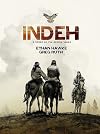
Full Disclosure: I got this book for free from a Goodreads Giveaway in exchange for an honest review.
Second disclosure: I didn't really read the description of the book before I entered the giveaway. I saw that it was a history book, and clicked. As such, I was immensely surprised when a beautifully illustrated graphic novel showed up on my doorstep a few days later.
Indeh is a work of art. Greg Ruth's black and white images are beautifully done and arrestingly composed. There is so much show more detail to each panel, whether in the subtleties of expression in a character close up, or in the grim background details of a two page spread depicting a massacre. You feel yourself lingering on each page, soaking in as much as you can.
As to the story, Ethan Hawke (yes, that one. No "Gattaca" jokes, please) brings us the story of Goyahkla, later to be known as Geronimo, as the Apache people struggle to survive a war against the grinding machine of the American Army. The story is based on real events, though I am (I'm ashamed to say) unfamiliar with the Apache Wars. For those history-minded folks like me, Hawke provides a decent bibliography at the end of the book, allowing the reader to dive deeper in the story if they want. I expect I'll be reading quite a few of these books in the future. (As an aside, I love it when authors do this, even in fiction. The most recent example that comes to mind is the gloriously dark The Trench Angel by Michael Keenan Gutierrez)
The narrative of "Indeh" is told primarily from the Apache point of view, focusing primarily on the deeds of Geronimo and Naiches (son of the Apache Chief). There are occasional flips over to the point of view of the American army officers tasked with subduing and "pacifying" the Apache, but this story is meant to be a primarily Apache one. In my view, the central Apache characters are treated well by Hawke. The Apache are eminently sympathetic; after all, their land, culture, and people are being systematically crushed by an armed force that considers them nuisances and savages. But Hawke doesn't fall into the trap of resting with the "noble savage" or "spiritual warrior" trope that so many (white) authors seem to. His Apache characters are sympathetic, and they are brutal. They are heroes, and they are ruthless. In other words, they are fully, simply, human. They are not perfect, but they are doing all they can to preserve their people and way of life.
In the afterword, Hawke tells us that Indeh started as a failed screenplay. It seems that Hollywood felt that a movie about the Apache Wars, with a primarily Native American cast, would never get off the ground. From this disappointment, the book was born. I am glad this story is out there in this form. The visceral style of Ruth's illustrations paired well with the brutal realities of war, and the story, advanced through dialogue rather than exposition, is engaging. After reading "Indeh," I think there might be a market for narrative historical graphic novels (raise your hand if you'd like to see The Devil in the White City turned into a graphic novel). I also wonder if this would be a good medium for native artists to get these histories out in the public sphere. As I've said, Hawke does a wonderful job of telling this story from an Apache viewpoint, but I do wonder how an Apache author or artist would have told it.
In sum, this is a great afternoon's read (and on top of that, you'll probably learn something). If you're into history, graphic novels, or war stories, this is probably a good bet for you. Just be warned that due to the limitations of the medium, Hawke has to simplify or skip over some bits, so you'll probably find yourself moving to the bibliography afterward, looking for more. show less
Second disclosure: I didn't really read the description of the book before I entered the giveaway. I saw that it was a history book, and clicked. As such, I was immensely surprised when a beautifully illustrated graphic novel showed up on my doorstep a few days later.
Indeh is a work of art. Greg Ruth's black and white images are beautifully done and arrestingly composed. There is so much show more detail to each panel, whether in the subtleties of expression in a character close up, or in the grim background details of a two page spread depicting a massacre. You feel yourself lingering on each page, soaking in as much as you can.
As to the story, Ethan Hawke (yes, that one. No "Gattaca" jokes, please) brings us the story of Goyahkla, later to be known as Geronimo, as the Apache people struggle to survive a war against the grinding machine of the American Army. The story is based on real events, though I am (I'm ashamed to say) unfamiliar with the Apache Wars. For those history-minded folks like me, Hawke provides a decent bibliography at the end of the book, allowing the reader to dive deeper in the story if they want. I expect I'll be reading quite a few of these books in the future. (As an aside, I love it when authors do this, even in fiction. The most recent example that comes to mind is the gloriously dark The Trench Angel by Michael Keenan Gutierrez)
The narrative of "Indeh" is told primarily from the Apache point of view, focusing primarily on the deeds of Geronimo and Naiches (son of the Apache Chief). There are occasional flips over to the point of view of the American army officers tasked with subduing and "pacifying" the Apache, but this story is meant to be a primarily Apache one. In my view, the central Apache characters are treated well by Hawke. The Apache are eminently sympathetic; after all, their land, culture, and people are being systematically crushed by an armed force that considers them nuisances and savages. But Hawke doesn't fall into the trap of resting with the "noble savage" or "spiritual warrior" trope that so many (white) authors seem to. His Apache characters are sympathetic, and they are brutal. They are heroes, and they are ruthless. In other words, they are fully, simply, human. They are not perfect, but they are doing all they can to preserve their people and way of life.
In the afterword, Hawke tells us that Indeh started as a failed screenplay. It seems that Hollywood felt that a movie about the Apache Wars, with a primarily Native American cast, would never get off the ground. From this disappointment, the book was born. I am glad this story is out there in this form. The visceral style of Ruth's illustrations paired well with the brutal realities of war, and the story, advanced through dialogue rather than exposition, is engaging. After reading "Indeh," I think there might be a market for narrative historical graphic novels (raise your hand if you'd like to see The Devil in the White City turned into a graphic novel). I also wonder if this would be a good medium for native artists to get these histories out in the public sphere. As I've said, Hawke does a wonderful job of telling this story from an Apache viewpoint, but I do wonder how an Apache author or artist would have told it.
In sum, this is a great afternoon's read (and on top of that, you'll probably learn something). If you're into history, graphic novels, or war stories, this is probably a good bet for you. Just be warned that due to the limitations of the medium, Hawke has to simplify or skip over some bits, so you'll probably find yourself moving to the bibliography afterward, looking for more. show less
This originally appeared at The Irresponsible Reader.
---
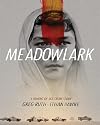
WHAT'S MEADOWLARK ABOUT?
Things aren't going well for Cooper—a little prank leads his father to stop by his mother's house on his way to work. When his father learns that Cooper's been expelled from school, he drags him along with him to work.
Cooper's dad, Jack "Meadowlark" Jackson used to be a boxer of some local renown, but that was then. He's now a prison guard—one respected by his peers and even most prisoners. But Cooper still show more thinks of him largely as a hero figure. the boxer whose poster hangs on his bedroom wall.
While Jack gets to work in a prison tower, Cooper hangs out with the Warden—clearly a grandmotherly figure in his life. It seems like a pretty okay kind of day, actually. And then an alarm sounds. Several fights have broken out in various parts of the prison—the guards spread out to imposing order, and in the midst of chaos, three prisoners go missing.
It's after this that things really start to go south.
The book then focuses on Cooper and Jack trying to make their way through the ensuing bedlam while they deal with their relationship. Being the father of a teen boy brings a certain level of difficulty, especially if there's trouble between the custodial mother and the father. The violence—horrible violence—of the day creates a heightened atmosphere for their necessary (and rather touching) conversations.
WHAT ABOUT THE ART?
You can't talk about a graphic novel without focusing on the graphic part of it, right? Which is really a shame because I'm not equipped for it.
Ruth's art is exactly what this story needs—as usual, I don't know how to describe the art, but the pencil work—sort of rough and heavy—fits both the action and the characters. The sort of sepia-coloring says Texas to me—and makes the setting ring true.
I did appreciate the not-at-all-subtle use of Ethan Hawke as Jack, it added a little extra flavor.
SO, WHAT DID I THINK ABOUT MEADOWLARK?
This seems like the kind of story that S. A. Cosby or Jordan Harper would write—a mix of family drama and crime.
The emotions and family dynamic felt real, relatable—and was even touching. The violence and criminal behavior were just as visceral—and disturbing. You put them together with some compelling artwork and you've got yourself a winner.
I'd have liked a touch more depth—but given the medium, I'm not sure you could get too much deeper (without needing another hundred pages or so)—so I'm not holding that against it too much.
There's a lot to commend in this graphic novel, and very little to complain about. I see that Hawke and Ruth have collaborated on an earlier graphic novel and I need to track that down. show less
---
WHAT'S MEADOWLARK ABOUT?
Things aren't going well for Cooper—a little prank leads his father to stop by his mother's house on his way to work. When his father learns that Cooper's been expelled from school, he drags him along with him to work.
Cooper's dad, Jack "Meadowlark" Jackson used to be a boxer of some local renown, but that was then. He's now a prison guard—one respected by his peers and even most prisoners. But Cooper still show more thinks of him largely as a hero figure. the boxer whose poster hangs on his bedroom wall.
While Jack gets to work in a prison tower, Cooper hangs out with the Warden—clearly a grandmotherly figure in his life. It seems like a pretty okay kind of day, actually. And then an alarm sounds. Several fights have broken out in various parts of the prison—the guards spread out to imposing order, and in the midst of chaos, three prisoners go missing.
It's after this that things really start to go south.
The book then focuses on Cooper and Jack trying to make their way through the ensuing bedlam while they deal with their relationship. Being the father of a teen boy brings a certain level of difficulty, especially if there's trouble between the custodial mother and the father. The violence—horrible violence—of the day creates a heightened atmosphere for their necessary (and rather touching) conversations.
WHAT ABOUT THE ART?
You can't talk about a graphic novel without focusing on the graphic part of it, right? Which is really a shame because I'm not equipped for it.
Ruth's art is exactly what this story needs—as usual, I don't know how to describe the art, but the pencil work—sort of rough and heavy—fits both the action and the characters. The sort of sepia-coloring says Texas to me—and makes the setting ring true.
I did appreciate the not-at-all-subtle use of Ethan Hawke as Jack, it added a little extra flavor.
SO, WHAT DID I THINK ABOUT MEADOWLARK?
This seems like the kind of story that S. A. Cosby or Jordan Harper would write—a mix of family drama and crime.
The emotions and family dynamic felt real, relatable—and was even touching. The violence and criminal behavior were just as visceral—and disturbing. You put them together with some compelling artwork and you've got yourself a winner.
I'd have liked a touch more depth—but given the medium, I'm not sure you could get too much deeper (without needing another hundred pages or so)—so I'm not holding that against it too much.
There's a lot to commend in this graphic novel, and very little to complain about. I see that Hawke and Ruth have collaborated on an earlier graphic novel and I need to track that down. show less
So is this going to be a regular thing now? As with Indeh, Greg Ruth and Ethan Hawke collaborate on a graphic novel that just happens to have a character that looks a lot like Hawke and could be the storyboards for a ready-to-be-optioned B-movie.
This time Ethan plays a washed up boxer who is shambling through life as a prison guard and thousands of dollars behind on child support to his son's mother. As junior recently got expelled from school, Hawke stumbles into taking the boy to prison on show more the day there happens to be a prison break. In an increasingly unlikely series of events the boy keeps tagging along as Hawke digs himself further and further into loserdom. (And, hey, is that Jean Reno playing Maurice, the prison break mastermind?) But, hey, they're father and son bonding so it's deep and profound drama and not just schlocky action, right? Right? show less
This time Ethan plays a washed up boxer who is shambling through life as a prison guard and thousands of dollars behind on child support to his son's mother. As junior recently got expelled from school, Hawke stumbles into taking the boy to prison on show more the day there happens to be a prison break. In an increasingly unlikely series of events the boy keeps tagging along as Hawke digs himself further and further into loserdom. (And, hey, is that Jean Reno playing Maurice, the prison break mastermind?) But, hey, they're father and son bonding so it's deep and profound drama and not just schlocky action, right? Right? show less
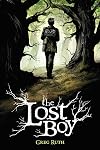
The Lost Boy by Greg Ruth is a graphic novel about a move to a new town and the discovery of a long lost mystery. Nate and his family are new in town and he's not happy to have been transplanted from his old neighborhood and friends. While unpacking his boxes, he finds an old tape recorder and a note remarkably addressed to him. Those two items lead him on a path of adventure, danger, and revelation.
I'm a sucker for old house mysteries. Old things revealing old stories and creating new show more adventures is the recipe for a book I can't resist. Add in an element of the supernatural and I'll probably end up reading in one or two sittings.
The Lost Boy does include the supernatural, though what kind of supernatural is left as part of the big mystery. There are shadowy figures, mysterious creatures, a wood that seems to pop up out of nothing. All of these things are tied to the old tapes that Nate feels compelled to listen to.
It was a fun, roller coaster of a book. I think fans of shows like Supernatural or Gravity Falls will enjoy The Lost Boy show less
I'm a sucker for old house mysteries. Old things revealing old stories and creating new show more adventures is the recipe for a book I can't resist. Add in an element of the supernatural and I'll probably end up reading in one or two sittings.
The Lost Boy does include the supernatural, though what kind of supernatural is left as part of the big mystery. There are shadowy figures, mysterious creatures, a wood that seems to pop up out of nothing. All of these things are tied to the old tapes that Nate feels compelled to listen to.
It was a fun, roller coaster of a book. I think fans of shows like Supernatural or Gravity Falls will enjoy The Lost Boy show less
Lists
Awards


You May Also Like


Associated Authors
Statistics
- Works
- 22
- Also by
- 57
- Members
- 852
- Popularity
- #30,031
- Rating
- 4.0
- Reviews
- 48
- ISBNs
- 48
- Languages
- 6
- Favorited
- 1