
Sheila Keenan
Author of O, Say Can You See?: America's Symbols, Landmarks, and Inspiring Words
About the Author
Sheila Keenan has a master's degree in English literature with a minor in women's studies from the University of Massachusetts. She is the author of several books for children
Image credit: via Amazon.com
Works by Sheila Keenan
The History of Moviemaking: Animation and Live-Action, from Silent to Sound, Black-And-White to Color (Voyages of Discovery) (1995) 117 copies
The Heartbeat of Wounded Knee (Young Readers Adaptation): Life in Native America (2022) 41 copies, 2 reviews
Snowy Day, The 1 copy
Associated Works
What the Painter Sees (Voyages of Discovery) (1995) — Translator, some editions — 84 copies, 1 review
Tagged
Common Knowledge
- Birthdate
- 1953-04-08
- Gender
- female
- Nationality
- USA
- Associated Place (for map)
- USA
Members
Reviews
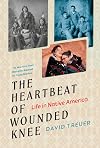
Adapted for teen readers from the 2019 original, Treuer’s seminal account offers a fresh, distinct historical reconsideration.
The author’s purpose is clear from the outset: to present a deliberate counternarrative to mainstream assumptions and push back against the constrictive specter of the framing of the Wounded Knee massacre of 1890 as a turning point representing the end of Native American cultures. In seven chapters spanning prehistorical times to the present, this chronicle of show more Indigenous communities and peoples in North America is a scintillating version reduced in length but not breadth. Beginning with a brief overview of the pre-colonization period and the ensuing violent disruptions of the Europeans, the opening chapter also covers Indigenous resistance. The next chapter depicts the role of the U.S. government in an ever increasing, violent push for assimilation via boarding schools and the Dawes Act. The further the book goes into the 20th century and the rise of Native American social action in the 1960s and 1970s, such as through the American Indian Movement, the more Treuer includes firsthand stories from his research interviews. These accounts clearly delineate the ties between the continued impact of the past and the possibilities for a viable, hard-fought future for Native American lives. This essential work ends with a review of the Standing Rock protest and its potential and asks the fundamental, yet-to-be-answered question: “What kind of country do we want to be?”
Utterly vital in its historical prowess, essential in its portraits of lived experiences. (notes, index) (Nonfiction. 12-18)
-Kirkus Review show less
The author’s purpose is clear from the outset: to present a deliberate counternarrative to mainstream assumptions and push back against the constrictive specter of the framing of the Wounded Knee massacre of 1890 as a turning point representing the end of Native American cultures. In seven chapters spanning prehistorical times to the present, this chronicle of show more Indigenous communities and peoples in North America is a scintillating version reduced in length but not breadth. Beginning with a brief overview of the pre-colonization period and the ensuing violent disruptions of the Europeans, the opening chapter also covers Indigenous resistance. The next chapter depicts the role of the U.S. government in an ever increasing, violent push for assimilation via boarding schools and the Dawes Act. The further the book goes into the 20th century and the rise of Native American social action in the 1960s and 1970s, such as through the American Indian Movement, the more Treuer includes firsthand stories from his research interviews. These accounts clearly delineate the ties between the continued impact of the past and the possibilities for a viable, hard-fought future for Native American lives. This essential work ends with a review of the Standing Rock protest and its potential and asks the fundamental, yet-to-be-answered question: “What kind of country do we want to be?”
Utterly vital in its historical prowess, essential in its portraits of lived experiences. (notes, index) (Nonfiction. 12-18)
-Kirkus Review show less
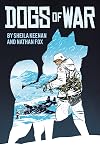
"Dogs of War" shares three stories of canines and their masters during times of war. The dogs highlighted are: Boots, a World War I medical dog; Loki, a sled dog used during World War II; and Sheba, a scout dog utilized during the Vietnam war. The stories different time periods and dogs help keep the story varied while still having that single link between them being a focus on dogs of war.
The book starts out with what is probably the strongest of the bunch in Boots. Set in the trenches of show more WWI, Boots and his master Marcellinus are responsible for venturing out and locating injured soldiers. The story focuses a lot on the soldiers interactions with each other with Boots' story being more of the footnote that holds them together, but this doesn't detract from the dog theme. The story packs a "Band of Brothers" type punch as well with some great emotional content. The second story following Loki has the feel of a Jack London adventure story. Loki is a misfit among the other sled dogs and must work to prove himself. The third and final story integrates its war stories through flashbacks about Sheba's exploits in Vietnam with her handler, who after the war is having trouble coping and returning to society.
The collection as a whole is very solid. The pacing and variety of the stories is fantastic and the art supports the story very well. People looking for stories that focus solely on the dogs may be disappointed in some instances where the canines take a backseat to their human counterparts, but overall, the book is very enjoyable. Also of note is the further reading and author's note section that go into the true, historical aspects of the story. I received a free copy through NetGalley. show less
The book starts out with what is probably the strongest of the bunch in Boots. Set in the trenches of show more WWI, Boots and his master Marcellinus are responsible for venturing out and locating injured soldiers. The story focuses a lot on the soldiers interactions with each other with Boots' story being more of the footnote that holds them together, but this doesn't detract from the dog theme. The story packs a "Band of Brothers" type punch as well with some great emotional content. The second story following Loki has the feel of a Jack London adventure story. Loki is a misfit among the other sled dogs and must work to prove himself. The third and final story integrates its war stories through flashbacks about Sheba's exploits in Vietnam with her handler, who after the war is having trouble coping and returning to society.
The collection as a whole is very solid. The pacing and variety of the stories is fantastic and the art supports the story very well. People looking for stories that focus solely on the dogs may be disappointed in some instances where the canines take a backseat to their human counterparts, but overall, the book is very enjoyable. Also of note is the further reading and author's note section that go into the true, historical aspects of the story. I received a free copy through NetGalley. show less
There is a long, noble history of war dogs —back to the Greeks and Romans of antiquity and earlier, to Alyattes of Lydia against the Cimmerians in 600 BC. Dogs have been used for patrols and guard work, as well as taken into battle.
In the modern era, dogs were used during World War I as sentries, scouts, casualty dogs, explosive dogs, ratters and mascots. Hundreds of dogs were used by US forces in WW II and thousands during the Viet Nam war. It is beyond dispute that they contributed to show more saving thousands of lives in all of these theatres of war.
And yet they have not received the recognition they deserved. Helping to alleviate that is a wonderful, heart-felt new graphic novel from Sheila Keenan and Nathan Fox. Dogs of War links three fictional vignettes of heroic dogs used in major conflicts.
In “Boots” Fox and Keenan do masterful work in portraying the cruelty and hopelessness of trench warfare in Ypres, 1914 — grimy and desperate but room enough for a wonderful scene highlighting the Christmas Eve truce along the Western Front.
“Loki” is set in Greenland during World War II where an American expeditionary force has built runways, set up a weather station and monitor any enemy activity. Our hero Loki, an Alaskan Malamute, is paired with a new recruit from Maine who trains him and is well served in the hazardous adventures they face together.
In “Sheba” the war has ended but the nightmares never do for Lanford a Vietnam vet back home in North Carolina. Flashbacks to Vietnam and his scout dog Sheba bring the horror of war home and this bittersweet story is a wonderful way to end this inspiring book.
The stories are extremely well written and the art is confident and exciting. Highly recommended for any audience. show less
In the modern era, dogs were used during World War I as sentries, scouts, casualty dogs, explosive dogs, ratters and mascots. Hundreds of dogs were used by US forces in WW II and thousands during the Viet Nam war. It is beyond dispute that they contributed to show more saving thousands of lives in all of these theatres of war.
And yet they have not received the recognition they deserved. Helping to alleviate that is a wonderful, heart-felt new graphic novel from Sheila Keenan and Nathan Fox. Dogs of War links three fictional vignettes of heroic dogs used in major conflicts.
In “Boots” Fox and Keenan do masterful work in portraying the cruelty and hopelessness of trench warfare in Ypres, 1914 — grimy and desperate but room enough for a wonderful scene highlighting the Christmas Eve truce along the Western Front.
“Loki” is set in Greenland during World War II where an American expeditionary force has built runways, set up a weather station and monitor any enemy activity. Our hero Loki, an Alaskan Malamute, is paired with a new recruit from Maine who trains him and is well served in the hazardous adventures they face together.
In “Sheba” the war has ended but the nightmares never do for Lanford a Vietnam vet back home in North Carolina. Flashbacks to Vietnam and his scout dog Sheba bring the horror of war home and this bittersweet story is a wonderful way to end this inspiring book.
The stories are extremely well written and the art is confident and exciting. Highly recommended for any audience. show less
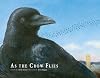
Crows are a really common neighborhood and city bird, and one that children and adults can easily observe together, so this realistic picture book showing crow behavior around urban/suburban humans and human environments fills a useful niche. Narrating from the perspective a crow, the author depicts small group interactions and also the winter 'crow invasion' that brings large groups of crows into cities and towns to roost together. (That depiction of the 'crow invasion' may be a little show more scary for younger kids who haven't experienced it yet, so the reader may need to remind them that roosting is only for the winter!) The illustrations are excellent, and the rhyming is solid, though typography on some pages, designed to mimic the birds' movement, may be a stumbling block for easy read-aloud.
Grab this book and read it with a kid you've watched crows in the fast food parking lot with! show less
Grab this book and read it with a kid you've watched crows in the fast food parking lot with! show less
Awards


You May Also Like


Associated Authors
Statistics
- Works
- 41
- Also by
- 1
- Members
- 4,741
- Popularity
- #5,306
- Rating
- 3.8
- Reviews
- 43
- ISBNs
- 122
- Languages
- 3
- Favorited
- 1