
Michael Burgan
Author of Who Was Theodore Roosevelt?
About the Author
Michael Burgan has been a freelance writer for 17 years. He has written more than 250 books for children and young adults, both nonfiction and fiction. Burgan has won several awards for his writing, and his plays for adult audiences have been staged across the United States. He graduated from the show more University of Connecticut with a BA in history. He currently resides Santa Fe, New Mexico, with his cat Callie. show less
Series
Works by Michael Burgan
World War II Pilots: An Interactive History Adventure (You Choose: World War II) (2013) 230 copies, 1 review
The Split History of the American Revolution: A Perspectives Flip Book (Perspectives Flip Books) (2012) 155 copies, 1 review
The Great Depression: An Interactive History Adventure (You Choose: Historical Eras) (2011) 102 copies
The Battle of Bunker Hill: An Interactive History Adventure (You Choose: History) (2007) 83 copies, 3 reviews
Nat Turner's Slave Rebellion (Graphic Library: Graphic History)/ (2006) — Author — 55 copies, 2 reviews
Raising the Flag: How a Photograph Gave a Nation Hope in Wartime (Captured History) (2011) 53 copies
The Split History of World War I: A Perspectives Flip Book (Perspectives Flip Books) (2013) 41 copies
Shadow Catcher: How Edward S. Curtis Documented American Indian Dignity and Beauty (Captured History) (2015) 33 copies, 1 review
The Korean War: An Interactive Modern History Adventure (You Choose: Modern History) (2014) 32 copies
The Voting Rights Act of 1965: An Interactive History Adventure (You Choose: History) (2015) 31 copies
The Untold Story of the Black Regiment: Fighting in the Revolutionary War (What You Didn't Know About the American Revolution) (2015) 31 copies
National Geographic Investigates: Not a Drop to Drink: Water for a Thirsty World (2008) 30 copies, 1 review
Thomas Paine: Great Writer Of The Revolution (Signature Lives: Revolutionary War Era) (2005) 30 copies
The Vietnam War: An Interactive Modern History Adventure (You Choose: Modern History) (2014) 27 copies
Olympic Gold 1936: How the Image of Jesse Owens Crushed Hitler's Evil Myth (Captured History Sports) (2017) 26 copies
Food Engineering: From Concept to Consumer (Calling All Innovators: A Career for You) (2015) 24 copies
Chernobyl Explosion: How a Deadly Nuclear Accident Frightened the World (Captured Science History) (2018) 21 copies
Genetic Engineering: Science, Technology, Engineering (Calling All Innovators: A Career for You) (2016) 21 copies
Death at Kent State: How a Photograph Brought the Vietnam War Home to America (Captured History) (2016) 20 copies
Tank Man: How a Photograph Defined China's Protest Movement (Captured World History) (2014) 19 copies
The Great San Francisco Earthquake and Fire (Graphic Library: Disasters in History) (2007) — Composer — 18 copies, 1 review
The Split History of the D-Day Invasion: A Perspectives Flip Book (Perspectives Flip Books: Famous Battles) (2018) 15 copies
Finding the Titanic: How Images from the Ocean Depths Fueled Interest in the Doomed Ship (Captured Science History) (2017) 15 copies, 1 review
TV Shapes Presidential Politics in the Kennedy-Nixon Debates: 4D An Augmented Reading Experience (Captured Television History 4D) (2018) 13 copies
Secret Stories of the Revolutionary War 12 copies
Surviving Earthquakes (Raintree Perspectives: Children's True Stories: Natural Disasters) (2011) 12 copies, 1 review
America in World War II (World Almanac Library: Wars That Changed American History) (2006) 12 copies
Weapons, Gear, and Uniforms of the American Revolution (Edge Books: Equipped for Battle) (2012) 11 copies
The Hindenburg in Flames: How a Photograph Marked the End of the Airship (Captured World History) (2016) 10 copies
The Battle of the Bulge: Nazi Germany's Final Attack on the Western Front (Tangled History) (2019) 9 copies
The Making of the Social Network: An Interactive Modern History Adventure (You Choose: Modern History) (2014) 9 copies, 1 review
Weapons Technology: Science, Technology, and Engineering (Calling All Innovators: A Career for You) (Library Edition) (2016) 9 copies
Leading American businesses : profiles of major American companies and the people who made them important (2002) 9 copies
Nikola Tesla: Physicist, Inventor, Electrical Engineer (Signature Lives: Modern America) (2009) 9 copies, 1 review
Ali's Knockout Punch: How a Photograph Stunned the Boxing World (Captured History Sports) (2017) 8 copies
George Washington Carver: Scientist, Inventor, and Teacher (Signature Lives: Modern America) (2007) 8 copies
Christopher Columbus: Opening the Americas to European Exploration (A Proud Heritage: The Hispanic Library) (2004) 8 copies
Refusing to Crumble: The Danish Resistance in World War II (Taking a Stand) (2010) 7 copies, 1 review
The Untold Story of the Battle of Saratoga: A Turning Point in the Revolutionary War (What You Didn't Know About the American Revolution) (2015) 6 copies
Robert Hooke: Natural Philosopher and Scientific Explorer (Signature Lives: Scientific Revolution) (2007) 6 copies
A Changing Nation: Immigration and Industrialization from the Civil War to World War I (Making a New Nation) (2006) 5 copies
Trouble at the Cave 3 copies
The Vanishing Lake 3 copies
The Sea Center Sneak 3 copies
The Robot Ruse 3 copies
Prowlers at the Park 3 copies
Exxon Valdez: How a Massive Oil Spill Triggered an Environmental Catastrophe (Captured Science History) (2018) 3 copies
Science in Everyday Life in America: [Five Volumes]: Science in Everyday Life in America: 1900-1950 (2002) 2 copies
Science in Everyday Life in America: [Five Volumes]: Science in Everyday Life in America: 1851-1899, Volume III (2002) 2 copies
The Department of Justice: A Look Behind the Scenes (U.S. Government Behind the Scenes) (2019) 2 copies
First in Flight: How a Photograph Captured the Takeoff of the Wright Brothers' Flyer (Captured History) (2020) 2 copies
Spotify, Pandora, and Streaming Music (Tech 2.0: World-Changing Entertainment Companies) (2018) 2 copies
Battles of the American Revolution 2 copies
The Path of Math 1 copy
Empires of Ancient Persia 1 copy
Who Was H. J. Heniz? 1 copy
Science in Everyday Life in America: [Five Volumes]: Science in Everyday Life in America: 1800-1850, Volume II (2002) 1 copy
Science in Everyday Life in America: [Five Volumes]: Science in Everyday Life in America: 1951 to the Present, Volume V (2002) 1 copy
William Howard Taft 1 copy
The Department of Energy: A Look Behind the Scenes (U.S. Government Behind the Scenes) (2019) 1 copy
Super-Dinos 1 copy
The Louisiana Purchase 1 copy
Pro wrestler Bill Goldberg 1 copy
Associated Works
Tagged
Common Knowledge
Members
Reviews
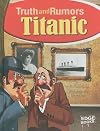
This is perhaps the best children’s book on Titanic that I’ve ever been fortunate enough to read. It might be one of the best Titanic books, period. I have read quite a bit about Titanic and often encounter misinformation; this is especially true in books for children. Here, however, Burgan’s dedication to accuracy is phenomenal. In fact, the main focus of this book is on distinguishing the actual history from the rumor and legend. I was quite impressed when he called out the 1997 show more James Cameron film for its role in perpetuating false ideas about the disaster. (The movie is not a documentary; it was designed to be entertaining, and Burgan doesn’t disparage the film in any way. But I still think it took guts to point out that certain events portrayed in the film, events that never happened, are still able to shape our collective understanding of the occurrences that night. It was part of his way of getting his readers to think critically about the information they have, and about the strength of that information’s sources.)
Burgan’s writing is clear, and his explanations for the origins of some of the rumors are well thought-out. His respect for his audience shines through, too: he never condescends to his readers, and he even treats them like mini researchers. Perhaps the best example of this comes at the end, where he gives three common rumors about the ship. He then states that these three rumors are all false, but he also explains how he knows this, why the rumors persist, and what children can do to find out the real story. He explains that they have the power to evaluate sources and to discover for themselves what is real and what isn’t. I also grinned when I got to the part where he mentioned that if they are in doubt about the quality of a source, they should “ask a librarian.” Terrific advice, that! show less
Burgan’s writing is clear, and his explanations for the origins of some of the rumors are well thought-out. His respect for his audience shines through, too: he never condescends to his readers, and he even treats them like mini researchers. Perhaps the best example of this comes at the end, where he gives three common rumors about the ship. He then states that these three rumors are all false, but he also explains how he knows this, why the rumors persist, and what children can do to find out the real story. He explains that they have the power to evaluate sources and to discover for themselves what is real and what isn’t. I also grinned when I got to the part where he mentioned that if they are in doubt about the quality of a source, they should “ask a librarian.” Terrific advice, that! show less
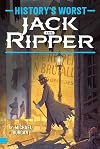
Now this is an odd book. It's the true facts, all of them, of the case of serial killer Jack the Ripper, written for ages 8-12. You may ask yourself, as I did, why an eight year-old would need a book about these notorious murders. Why have a third grader asking their parent to explain words such as "alcoholism" and "prostitution"? This book could be a real eye-opener. There are very grisly accounts of the victims lives, before and after meeting The Ripper, and it includes a list of suspects. show more There are interesting sidebars about police work at the time, literary characters in horror, mental illness and such, all combined to make a very interesting book for adults. This was published in 2017 and the author includes some recent information that I'd never read before. But no kid's book for elementary ages should include the phrase "sexual element". I'm rating this for it's information as an adult reader and hoping it never reaches its intended audience. show less
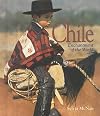
I did this review in 2005 for one of my MLS classes. After three years, and one working as a teacher-librarian, I decided that it was about time to make it more public. This book is awful and librarians should be aware of its bias. I am originally from Chile and I really dislike the idea that American children can get such an inaccurate view of my country. It's true that I carry my own personal bias, but this book doesn't deserve to be in any school library shelf.
Summary: An inaccurate show more description of the geography, plants, animals, history, economy, language, religions, culture, sports, arts, and people of Chile. Includes color illustrations, a table of contents, timeline, fast facts, bibliography and index.
Evaluation: When I learned about the Enchantment of the World Series, I decided to read the one about Chile for two main reasons: I was curious to know how my country is depicted for children and how close of a picture it is, and also because I felt I can tell by first hand the accuracy of its content. When I saw the book I had big hopes. I thought the illustrations were very realistic and did represent a fairly close idea of what Chile is about and what the people look like. But then I start reading...
First I checked the bibliography, and I was not very impressed. I was disappointed to see in the books section "to find out more" that the sources were mostly of a tourist scope or if historical, of a very narrow view. I think the author should have cited also the sources she used to come up with her particular statements.
Second, from the four websites the author cites, the first one is from one of Andrew W. Donoho's students. Donoho is an adjunct professor from the Graduate School of Library and Information Science at the University of Texas at Austin, and the website cited is from one of his 1994 Information Design Class student's project. (http://www.ddg.com/LIS/InfoDesignF94/aurelia/chile.htm (visited November 19, 2005). The site is Ok, but old and poor on graphics and there are so many other websites more appealing for children, that I don't know why McNair decided that this site deserved to be mentioned.
Focusing on the content of this book, I have to say that contains many clichés, inaccuracies and overstatements. Saying that the four geographic zones for the entire country are the coastal mountain range, the pampa, altiplano and the Andes (p. 16); that 20% of Chile's people live in the Archipielago (that means further south of Puerto Montt); that the Santiago Zoo "is about the only spot in the Central Valley where one can see wildlife" (p. 40); that "an estimated 5 million people live in a ring of shantytown called poblaciones callampas around the edge of Santiago" while next to it is a chart that states that the entire Santiago population is of 4,295,593 inhabitants (chapter Los Chilenos, p. 91); that the Chilean wine industry began with the first settlers (p. 72); or that "Neruda's poetry was openly left-wing and critical of conservative politics" (p.109), is inaccurate if not completely wrong.
The part that talks about the history of Chile and its political development is bias and full of contradictions and overstatements. The authors starts saying that "Chile has been struggling toward democracy for nearly 200 years" (p. 10), and calls chapter four "a long and rocky road to democracy" to summarize Chilean political history which gives the impression that Chile has being unstable for over 200 years, and then starts chapter four by saying that "Chile is a representative democracy, one of the oldest in the Americas" (p.61). Chilean 20th century history is oversimplified, and even in the timeline given in page 129, nothing happen between 1925 and 1970. Even though it is true that Chile is known in the US mostly because of the last 35 five years because of the failed intent of Salvador Allende's socialist government and Pinochet's dictatorship as its aftermaths, the scope in this book seems to be simplistic and derogatory, especially knowing the fact that in most of these events the US government was closely involved. The author argues that the main reason Allende's fall was the fear of the right wing and moderate elements of Allende's reforms (p.57)(which sounds great according to McNair) or saying that the opposition to Pinochet's dictatorship grew because of economical reasons (p.59).
All these statements indicate lack of research or more accurate information. It seems that the author based her observation only from her own experiences while traveling in the country or facts that she heard from word of mouth or tourist pamphlets and brochures. In no part of the book one can see the author relying on Chilean sources, besides some materials that the embassy of Chile in Washington made available to her.
The languages she uses leave the reader the impression Chile is a very exotic and wild country. For example, when she describes celebrations of funerals and weddings, she writes "when a person dies, people gather together to socialize. The occasion is a celebration in honor of a person's life, and food and drink are served. Weddings are another good reason for parties, which often go on for three days" (p.126). The truth of the matter is that funerals and weddings in Chile are celebrated very similarly as in the US, if not more plainly and briefly.
I skimmed other books of the Enchantment of the World Series (Norway and Bolivia) and got the impression they were not as bad as the one of Chile. All of them have the same lay-out, but the content varies depending on the person who writes it. For books on Series like this I would suggest to check closely each book of the Series. The quality of one book does not assure the quality of the whole series. show less
Summary: An inaccurate show more description of the geography, plants, animals, history, economy, language, religions, culture, sports, arts, and people of Chile. Includes color illustrations, a table of contents, timeline, fast facts, bibliography and index.
Evaluation: When I learned about the Enchantment of the World Series, I decided to read the one about Chile for two main reasons: I was curious to know how my country is depicted for children and how close of a picture it is, and also because I felt I can tell by first hand the accuracy of its content. When I saw the book I had big hopes. I thought the illustrations were very realistic and did represent a fairly close idea of what Chile is about and what the people look like. But then I start reading...
First I checked the bibliography, and I was not very impressed. I was disappointed to see in the books section "to find out more" that the sources were mostly of a tourist scope or if historical, of a very narrow view. I think the author should have cited also the sources she used to come up with her particular statements.
Second, from the four websites the author cites, the first one is from one of Andrew W. Donoho's students. Donoho is an adjunct professor from the Graduate School of Library and Information Science at the University of Texas at Austin, and the website cited is from one of his 1994 Information Design Class student's project. (http://www.ddg.com/LIS/InfoDesignF94/aurelia/chile.htm (visited November 19, 2005). The site is Ok, but old and poor on graphics and there are so many other websites more appealing for children, that I don't know why McNair decided that this site deserved to be mentioned.
Focusing on the content of this book, I have to say that contains many clichés, inaccuracies and overstatements. Saying that the four geographic zones for the entire country are the coastal mountain range, the pampa, altiplano and the Andes (p. 16); that 20% of Chile's people live in the Archipielago (that means further south of Puerto Montt); that the Santiago Zoo "is about the only spot in the Central Valley where one can see wildlife" (p. 40); that "an estimated 5 million people live in a ring of shantytown called poblaciones callampas around the edge of Santiago" while next to it is a chart that states that the entire Santiago population is of 4,295,593 inhabitants (chapter Los Chilenos, p. 91); that the Chilean wine industry began with the first settlers (p. 72); or that "Neruda's poetry was openly left-wing and critical of conservative politics" (p.109), is inaccurate if not completely wrong.
The part that talks about the history of Chile and its political development is bias and full of contradictions and overstatements. The authors starts saying that "Chile has been struggling toward democracy for nearly 200 years" (p. 10), and calls chapter four "a long and rocky road to democracy" to summarize Chilean political history which gives the impression that Chile has being unstable for over 200 years, and then starts chapter four by saying that "Chile is a representative democracy, one of the oldest in the Americas" (p.61). Chilean 20th century history is oversimplified, and even in the timeline given in page 129, nothing happen between 1925 and 1970. Even though it is true that Chile is known in the US mostly because of the last 35 five years because of the failed intent of Salvador Allende's socialist government and Pinochet's dictatorship as its aftermaths, the scope in this book seems to be simplistic and derogatory, especially knowing the fact that in most of these events the US government was closely involved. The author argues that the main reason Allende's fall was the fear of the right wing and moderate elements of Allende's reforms (p.57)(which sounds great according to McNair) or saying that the opposition to Pinochet's dictatorship grew because of economical reasons (p.59).
All these statements indicate lack of research or more accurate information. It seems that the author based her observation only from her own experiences while traveling in the country or facts that she heard from word of mouth or tourist pamphlets and brochures. In no part of the book one can see the author relying on Chilean sources, besides some materials that the embassy of Chile in Washington made available to her.
The languages she uses leave the reader the impression Chile is a very exotic and wild country. For example, when she describes celebrations of funerals and weddings, she writes "when a person dies, people gather together to socialize. The occasion is a celebration in honor of a person's life, and food and drink are served. Weddings are another good reason for parties, which often go on for three days" (p.126). The truth of the matter is that funerals and weddings in Chile are celebrated very similarly as in the US, if not more plainly and briefly.
I skimmed other books of the Enchantment of the World Series (Norway and Bolivia) and got the impression they were not as bad as the one of Chile. All of them have the same lay-out, but the content varies depending on the person who writes it. For books on Series like this I would suggest to check closely each book of the Series. The quality of one book does not assure the quality of the whole series. show less
Finding the Titanic: How Images from the Ocean Depths Fueled Interest in the Doomed Ship (Captured Science History) by Michael Burgan
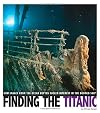
Interest in the Titanic is never-ending, but it wasn't always that way. Interest in the major disaster was quickly eclipsed at the time by the events of World War I and only briefly revived by the 1958 movie, A Night to Remember. Not until Robert Ballard's discovery of the wreckage in 1985 did it become a subject of fascination to the general public. This fascination was largely fueled by the images brought up by Ballard and later excavators and creates the focus of this book.
The story show more begins with the story of the Titanic and then moves into Ballard's expedition and later discoveries. However, while there is a thorough exposition of Ballard's methods, feelings, and work, there is an extra focus on the technology used to capture images and the subsequent improvements made in the undersea robots used to film the wreckage.
Burgan covers the controversy over how the wreck should be handled and the discussion around the collection and use of artifacts. There's also new evidence about the causes of the sinking and additional discoveries made about the wreckage. Burgan goes into additional discoveries and scientific advances made by Ballard, including the real reason he was able to discover the Titanic - he was searching for Navy submarines that had wrecked in the area.
Back matter includes a timeline, glossary, and resources as well as sources, bibliography, and index.
Verdict: A worthy addition to your Titanic resources for young fanatics, add this to get the latest information and a unique perspective. Recommended.
ISBN: 9780756556402; Published 2017 by Capstone; Review copy provided by publisher; Donated to the library show less
The story show more begins with the story of the Titanic and then moves into Ballard's expedition and later discoveries. However, while there is a thorough exposition of Ballard's methods, feelings, and work, there is an extra focus on the technology used to capture images and the subsequent improvements made in the undersea robots used to film the wreckage.
Burgan covers the controversy over how the wreck should be handled and the discussion around the collection and use of artifacts. There's also new evidence about the causes of the sinking and additional discoveries made about the wreckage. Burgan goes into additional discoveries and scientific advances made by Ballard, including the real reason he was able to discover the Titanic - he was searching for Navy submarines that had wrecked in the area.
Back matter includes a timeline, glossary, and resources as well as sources, bibliography, and index.
Verdict: A worthy addition to your Titanic resources for young fanatics, add this to get the latest information and a unique perspective. Recommended.
ISBN: 9780756556402; Published 2017 by Capstone; Review copy provided by publisher; Donated to the library show less
Lists
Awards


You May Also Like


Associated Authors
Statistics
- Works
- 351
- Also by
- 2
- Members
- 8,844
- Popularity
- #2,707
- Rating
- 3.7
- Reviews
- 81
- ISBNs
- 1,040
- Languages
- 6
- Favorited
- 1