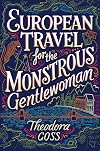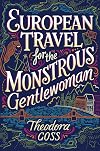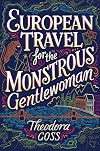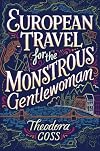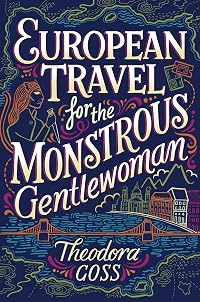
European Travel for the Monstrous Gentlewoman
by Theodora Goss 
The Extraordinary Adventures of the Athena Club (2)
On This Page
Description
Mary Jekyll and the rest of the daughters of literature's mad scientists embark on a madcap adventure across Europe to rescue another monstrous girl and stop the Alchemical Society's nefarious plans once and for all. From Paris to Vienna to Budapest, Mary and her friends must make new allies, face old enemies, and finally confront the fearsome, secretive Alchemical Society. It's time for these monstrous gentlewomen to overcome the past and create their own destinies.Tags
Recommendations
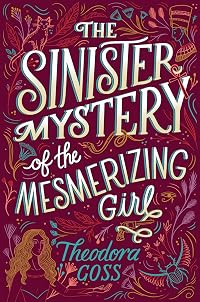
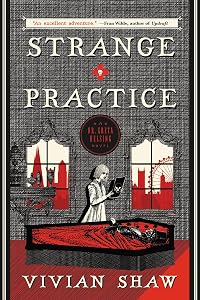

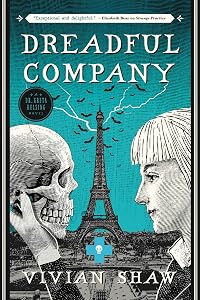
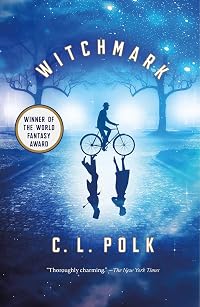
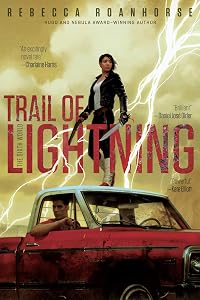

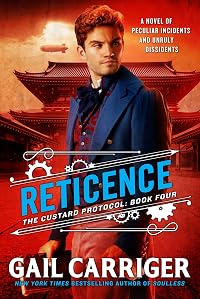
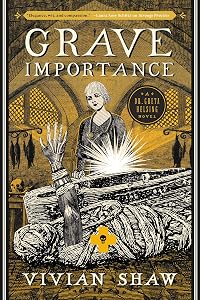
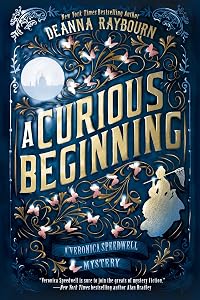









Member Recommendations
Member Reviews
As a rollicking adventure, romping across 1890s Europe to thwart exotic bad guys with the help of powerful, competent women who live locally in Vienna and Budapest and have extraordinary resources at their command, this succeeds very well.
There's lots of action and derring-do, all of which is very well described. We get to spend time in a lunatic asylum in England, in a lunatic asylum in Vienna, in a ruined castle in Styria and in a Baron's villa in Budapest. Along the way, we travel on the Orient Express, join the circus, have a firefight in a back alley, carry out three rescues from the clutches of villains and have a major, violent confrontation with the massed membership of the Alchemical Society.
Each member of the Athena Club show more gets to do something interesting and or dangerous. Some of them discover new abilities or new things about their history and all of them grow in confidence as they work together and the Club increases its membership. We meet several powerful, independent women who make common cause with the Athena Club. We also meet the woman heading the Alchemical Society, who turns out to be quite different from the egomaniacal men around her.
The characters of the members of the Athena Club are being nicely fleshed out now. Mary is opening up a bit and Alice is moving out of the shadows. Dianna remains her unrepentant self. Her uninhibited energy made me laugh several times. Catherine is more puma in this book than the last and all the better for it.
There is also some excellent prose in the book. Here's an example. Cat has just asked Martin the Marvelous Mesmerist if mesmerism is real. He admits that some of the show is for effect but says that the "mesmerical waves" are real. I love this description:
"...when I was a child, I could sense them all around me—like we were all living in the ocean, under water, but only I knew we were wet.”
That's a powerful description of what it feels like to see things differently than the people around you.
All in all, this book was a lot of fun.
It just wasn't as much fun as the first book "The Strange Case Of The Alchemist's Daughter".
I know all second books in a trilogy face the challenge of not being as novel as the first book and not having the finality of the last but my enjoyment of this book was weakened by small things that might easily have been fixed.
The opening of the book was clumsy. About half of the first two hours of this twenty-four hours and twenty-seven minutes long could have been left out if Theodora Goss had assumed that I'd had the wit to read the series in sequence and that I had not so poor a memory that I needed to be reminded of the backstory of every member of the Athena Club and a recap on the plot of the first novel.
She did gloss the recaps with some humour, showing at least that's she's aware of how clumsy a start this is but, given how bold and innovative the writing style of the first novel was - it adopted a novel form and made no concessions to readers who might not be fully awake - it was a disappointing start. 'm a little disappointed.
Another niggle was that the members of the Athena Club kept using American conventions to describe the layout of buildings. In Europe, the first floor is the one above the ground floor. Mary et. al. would take this for granted so I was quite confused when they used the American convention, making the first floor the second floor.
There was also a surprising anachronism. At one point in an account to the Athena Club, Cats says:
In Clerkenwell, a woman selling newspapers and cheap paperbacks from a stall was able to direct them to Mrs. Protheroe’s boardinghouse,
The book is set in the 1890's. Paperbacks didn't appear until the 1930s. Even the Yellowbacks that W H Smith's sold at railway stations didn't appear until the next century.
I was also that I ended up returning the audiobook and moving to the ebook version. This is not something I do often but I was losing patience with Kate Reading's narration. This is disappointing as I'd enjoyed her narration of the first book. This time, her reading kept falling into a rhythm that provided variation but often put stresses in strange places, especially when there was no direct speech. It turned out that the ebook version is clear and easy to follow. I think I'll stick with this format for the final book of the series.
Despite the niggles, I had fun with the book and I like the characters so the final book in the series, "The Sinister Mystery Of The Mesmerising Girl" is already in my TBR pile. show less
There's lots of action and derring-do, all of which is very well described. We get to spend time in a lunatic asylum in England, in a lunatic asylum in Vienna, in a ruined castle in Styria and in a Baron's villa in Budapest. Along the way, we travel on the Orient Express, join the circus, have a firefight in a back alley, carry out three rescues from the clutches of villains and have a major, violent confrontation with the massed membership of the Alchemical Society.
Each member of the Athena Club show more gets to do something interesting and or dangerous. Some of them discover new abilities or new things about their history and all of them grow in confidence as they work together and the Club increases its membership. We meet several powerful, independent women who make common cause with the Athena Club. We also meet the woman heading the Alchemical Society, who turns out to be quite different from the egomaniacal men around her.
The characters of the members of the Athena Club are being nicely fleshed out now. Mary is opening up a bit and Alice is moving out of the shadows. Dianna remains her unrepentant self. Her uninhibited energy made me laugh several times. Catherine is more puma in this book than the last and all the better for it.
There is also some excellent prose in the book. Here's an example. Cat has just asked Martin the Marvelous Mesmerist if mesmerism is real. He admits that some of the show is for effect but says that the "mesmerical waves" are real. I love this description:
"...when I was a child, I could sense them all around me—like we were all living in the ocean, under water, but only I knew we were wet.”
That's a powerful description of what it feels like to see things differently than the people around you.
All in all, this book was a lot of fun.
It just wasn't as much fun as the first book "The Strange Case Of The Alchemist's Daughter".
I know all second books in a trilogy face the challenge of not being as novel as the first book and not having the finality of the last but my enjoyment of this book was weakened by small things that might easily have been fixed.
The opening of the book was clumsy. About half of the first two hours of this twenty-four hours and twenty-seven minutes long could have been left out if Theodora Goss had assumed that I'd had the wit to read the series in sequence and that I had not so poor a memory that I needed to be reminded of the backstory of every member of the Athena Club and a recap on the plot of the first novel.
She did gloss the recaps with some humour, showing at least that's she's aware of how clumsy a start this is but, given how bold and innovative the writing style of the first novel was - it adopted a novel form and made no concessions to readers who might not be fully awake - it was a disappointing start. 'm a little disappointed.
Another niggle was that the members of the Athena Club kept using American conventions to describe the layout of buildings. In Europe, the first floor is the one above the ground floor. Mary et. al. would take this for granted so I was quite confused when they used the American convention, making the first floor the second floor.
There was also a surprising anachronism. At one point in an account to the Athena Club, Cats says:
In Clerkenwell, a woman selling newspapers and cheap paperbacks from a stall was able to direct them to Mrs. Protheroe’s boardinghouse,
The book is set in the 1890's. Paperbacks didn't appear until the 1930s. Even the Yellowbacks that W H Smith's sold at railway stations didn't appear until the next century.
I was also that I ended up returning the audiobook and moving to the ebook version. This is not something I do often but I was losing patience with Kate Reading's narration. This is disappointing as I'd enjoyed her narration of the first book. This time, her reading kept falling into a rhythm that provided variation but often put stresses in strange places, especially when there was no direct speech. It turned out that the ebook version is clear and easy to follow. I think I'll stick with this format for the final book of the series.
Despite the niggles, I had fun with the book and I like the characters so the final book in the series, "The Sinister Mystery Of The Mesmerising Girl" is already in my TBR pile. show less
I started this last year but didn’t get very far before it was due back at the library. I decided I’d request the audiobook next time. That was a good move: Kate Reading really does a great job with all the characters’ voices and accents, which made the story all the more engaging, and even listening at 1.5 -- 1.75 speed (because the audiobook is over 20 hours and I wanted to finish it before it was due back!) it was easy to keep track of who was speaking.
Mary Jekyll and Justine Frankenstein set off for Europe to rescue Lucinda Van Helsing at the request of Mary’s former governess, Mina Murray, and receive help and hospitality from people like Irene Adler and Carmilla. And the rest of the Athena Club become involved. I show more particularly enjoyed their interjections and digressions, and interactions with each other. They make a great team.
CATHERINE: Can you please do your best to not give away the plot? Like the fact that Mary eventually made it safely home… I won’t say whether or not the others did!
MARY: Oh please. If we hadn’t made it back, we wouldn’t be writing this book. The important thing is, what happened to us on the way?
CATHERINE: It’s unbelievable, what authors have to put up with from their own characters. Remind me why I agreed to do this?
MARY: Excuse me. We are not your characters, but fellow members of the Athena Club. And as to why you agreed... we need money, remember?
CATHERINE: Oh, right. show less
Mary Jekyll and Justine Frankenstein set off for Europe to rescue Lucinda Van Helsing at the request of Mary’s former governess, Mina Murray, and receive help and hospitality from people like Irene Adler and Carmilla. And the rest of the Athena Club become involved. I show more particularly enjoyed their interjections and digressions, and interactions with each other. They make a great team.
CATHERINE: Can you please do your best to not give away the plot? Like the fact that Mary eventually made it safely home… I won’t say whether or not the others did!
MARY: Oh please. If we hadn’t made it back, we wouldn’t be writing this book. The important thing is, what happened to us on the way?
CATHERINE: It’s unbelievable, what authors have to put up with from their own characters. Remind me why I agreed to do this?
MARY: Excuse me. We are not your characters, but fellow members of the Athena Club. And as to why you agreed... we need money, remember?
CATHERINE: Oh, right. show less
I cannot fully express how much I love the Athena Club. I can only say that I wish we had had such books when I was a kid -- perhaps I would not have felt so monstrous myself growing up, or at least not so alone.
This sequel picks up where its predecessor left off, which is to say a few months after a certain dramatic rescue and only a short while after the arrival of a certain mysterious telegram. Mysterious telegrams, in fact, abound in this particular volume, which finds our gang of monstrous females traveling not just around England, but all the way to Budapest in order to rescue a fellow experiment. Along the way, there are kidnappings and fires and plenty of snacks, just as anyone who has read the previous installment might show more expect.
The series carries on with its experiments in narrative style, with character intrusions and commentary in and on the narrative itself, often peppering humor and insight in with the plot twists. In this particular book, those insertions are often joking and unsubtle foreshadowing of the coming events, as well as the occasional breaking of tension. Nothing here is meant to be purely logical, so those who don't care for such interruptions may be better off with a more straightforward book, but those thinking of reading this probably already know what they're in for.
Indeed, those asides are indicative of the book's greater point: the emotional growth of our central characters and the development of their relationships as a club of young women in a world that too often underestimates and limits young women. The bonds between these characters are the most important part of the book; in reading their interactions, one does feel enveloped in the warmth of their emotions and, indeed, less alone than perhaps one did when one started.
Add to that the delicious period details, the familiar literary guest-stars, and the thoroughly modern attitude, and you have a book that speaks to my readerly soul. Seriously. I love all 700 pages of it. That's it and that's all. show less
This sequel picks up where its predecessor left off, which is to say a few months after a certain dramatic rescue and only a short while after the arrival of a certain mysterious telegram. Mysterious telegrams, in fact, abound in this particular volume, which finds our gang of monstrous females traveling not just around England, but all the way to Budapest in order to rescue a fellow experiment. Along the way, there are kidnappings and fires and plenty of snacks, just as anyone who has read the previous installment might show more expect.
The series carries on with its experiments in narrative style, with character intrusions and commentary in and on the narrative itself, often peppering humor and insight in with the plot twists. In this particular book, those insertions are often joking and unsubtle foreshadowing of the coming events, as well as the occasional breaking of tension. Nothing here is meant to be purely logical, so those who don't care for such interruptions may be better off with a more straightforward book, but those thinking of reading this probably already know what they're in for.
Indeed, those asides are indicative of the book's greater point: the emotional growth of our central characters and the development of their relationships as a club of young women in a world that too often underestimates and limits young women. The bonds between these characters are the most important part of the book; in reading their interactions, one does feel enveloped in the warmth of their emotions and, indeed, less alone than perhaps one did when one started.
Add to that the delicious period details, the familiar literary guest-stars, and the thoroughly modern attitude, and you have a book that speaks to my readerly soul. Seriously. I love all 700 pages of it. That's it and that's all. show less
Really loved this sequel -- glad to see the delightful and powerful ladies of the Athena Club return, and still find both their aside squabbles and their personalities to be deeply amusing. I kind of love that the sequel continues the collector's tradition of the first book. In addition to all our usual ladies, they are now on a quest to rescue Lucinda Van Helsing -- some unexpected allies come to their aid and provide yet more interesting tie-ins to the literary canon. Love it.
Some things I were different -- Mary! Resume your confidence! I think you will need it. And Can't Diana pleeeeease have a puppy? Hoho seems like an excellent addition, is all I'm saying. Really looking forward to the next book.
Some specific feedback about the show more ARC (late, I fear) -- it is an enormous book, and some of the asides could be pared back without sacrificing much -- in particular, Diana's continual brattiness gets a little repetitive in the asides, since it is also abundantly present in the narrative. Since that is ARC commentary, I'm not sure it's relevant to the published book, as it may have been edited further. Advanced reader's copy provided by Edelweiss. show less
Some things I were different -- Mary! Resume your confidence! I think you will need it. And Can't Diana pleeeeease have a puppy? Hoho seems like an excellent addition, is all I'm saying. Really looking forward to the next book.
Some specific feedback about the show more ARC (late, I fear) -- it is an enormous book, and some of the asides could be pared back without sacrificing much -- in particular, Diana's continual brattiness gets a little repetitive in the asides, since it is also abundantly present in the narrative. Since that is ARC commentary, I'm not sure it's relevant to the published book, as it may have been edited further. Advanced reader's copy provided by Edelweiss. show less
This is a very comfortable and comforting read, assuming:
A: You're a big fan of all the classic Victorian (or nearby) Horrors, SFs and Fantasies of the day.
B: You love it when minor female characters get catapulted into the limelight in frankly feminist adventures with cultured justice in mind.
C: You love roadtrip novels.
Me? I love roadtrip novels of all kinds. We even got an actual horseless carriage in this one! But mostly it was trains (Orient express!), back-country inns, and a full European vacation package.
The tangential tellings of these women's stories are delightful. And a lot less tragic. And they no longer resemble cardboard cut-outs of people! Yay!
For the literary part of me, I chortled at all the new or recurring show more character references. Now including a much wider cast of Dracula!
One thing I ought to mention: this is a very long novel, and while I really loved nursing a baby vampire back to sanity and enjoyed the final plot resolution a great deal, the real core of this novel is all about the JOURNEY. Like any kind of roadtrip novel. :) I took it easy and enjoyed all the sights, smells, and the spilling of blood. show less
A: You're a big fan of all the classic Victorian (or nearby) Horrors, SFs and Fantasies of the day.
B: You love it when minor female characters get catapulted into the limelight in frankly feminist adventures with cultured justice in mind.
C: You love roadtrip novels.
Me? I love roadtrip novels of all kinds. We even got an actual horseless carriage in this one! But mostly it was trains (Orient express!), back-country inns, and a full European vacation package.
The tangential tellings of these women's stories are delightful. And a lot less tragic. And they no longer resemble cardboard cut-outs of people! Yay!
For the literary part of me, I chortled at all the new or recurring show more character references. Now including a much wider cast of Dracula!
One thing I ought to mention: this is a very long novel, and while I really loved nursing a baby vampire back to sanity and enjoyed the final plot resolution a great deal, the real core of this novel is all about the JOURNEY. Like any kind of roadtrip novel. :) I took it easy and enjoyed all the sights, smells, and the spilling of blood. show less
I liked it but my god was it a long book! It needed to be because it went over the timeline twice because the Monsterous Gentlewomen get split up. Goss does a very good job of keeping the pace of the book up and holding my interest. I adore all the characters being pulled in from the different literary world's. It reminds me of Once Upon a Time minus the bad actors and set in the Victorian era *swoons*
To be blunt, this was a chore. Though the premise was intriguing–the female children of some of book-history’s most villainous men come together as a Society–the execution made it an exercise in perseverance.
But that core idea–so clever! Take the idea of female=uncontrolled=wild=nature=monster, band them together, give them a mission, and surround them with both real and literary figures. But there’s a constant interruption of meta elements, which proves tiresome. The story is ostensibly written by Catherine, one of the young women, as a means of earning money for the group. It is frequently interrupted with discussions among the characters about how they might be portrayed, or objections to what is being shared. Vaguely show more amusing at the start, it becomes significantly less so the fourth or fifth time it happens. By the time we reach the penultimate scenes, it’s annoying.
“DIANA: I wasn’t petulant! I’m never petulant. What does that mean, anyway? I think you made that word up. Are writers allowed to do that?
MARY: I am certainly perturbable! Catherine, you’re describing me as though I were some sort of female Sherlock Holmes, which I am not, thank you very much.
DIANA: That’s not such a bad comparison, actually. You’re as annoying as he is.'
Justine was sitting on the carpet. All our chairs, she said, made her feel as though she were folding up like an accordion. And Catherine, your author, was standing next to the fireplace, leaning on the mantle, looking particularly jaunty in a man's suit.”
Even more significantly, the pace is wildly uneven, veering back and forth between action and florid detail of who was thinking what, at what time. While the action merits some attention, there’s a level of detail that is truly unnecessary. For instance, take the appearance of a dog whistle:
“It is a common dog whistle,’ said Beatrice. ‘I borrowed it from the Count’s groom, who uses it to signal the wolfdogs. They were first invented by Sir Francis Galton to determine the range of hearing in human beings and animals. Human ears cannot hear it–as the rest of you saw, Mary was not affected at all. But those of a dog can–or a cat, or a vampire. A cat can hear sounds higher than a dog, and a vampire, I conjecture, can hear even higher. We can use it to distract and disable [redacted]. But those of you with particularly acute hearing will have to carry India-rubber earplugs to protect yourself from its sound.”
And this is why it’s a 700 page book: there’s two (plus) extra sentences for every paragraph. Yikes. Trying to pick my words carefully here, I’d say that this might appeal to the sort of reader that likes a lot of detail but minimum effort. But what about the clever allusions, the reviewer wonders? Doesn’t Goss introduces us to a historical figure that provides a bit of free psychological profiling of two of our heroines? Doesn’t that require inference? Oh, but the conclusions are spelled out shortly after, reader, when one of the other characters clarifies it. It’s like that all the way through, and I think that, in part, accounts for a lot of the feeling of disinterest.
What’s good? Goss is not incompetent with her words. The setting was well-realized. A fair amount of things happen, so despite the leisurely pace, it’s not precisely boring. I still love the concept, and the idea of these young women growing in their self-knowledge and owning their own power is a fabulous idea, especially as they band together to rescue other young women like themselves. I like the idea of ‘science’ playing a role. There’s a fair amount of diversity, and attention to class differences. If you can let go of the meta, it’s kind of fun to have guest appearances from famous historical figures brought into the story.
I’d say it’s boilerplate 1890s-ish supernatural with two things setting it apart. One, Girrrl-Power, which is done in an attractive way (although worth knowing that they need resources from other people, both male and female). Two, the idea that Dr. Moreau, Dr. Hyde, Van Helsing and many others are all members of an Alchemical Society that is dedicated to advancing knowledge and mankind through ‘scientific principles.’ ?
Still, there’s no excuse for 700 pages, unless Goss was trying to write Jonathan Strange for the young/new-adult set? Now that I think about it…
Two and a half monsters. show less
But that core idea–so clever! Take the idea of female=uncontrolled=wild=nature=monster, band them together, give them a mission, and surround them with both real and literary figures. But there’s a constant interruption of meta elements, which proves tiresome. The story is ostensibly written by Catherine, one of the young women, as a means of earning money for the group. It is frequently interrupted with discussions among the characters about how they might be portrayed, or objections to what is being shared. Vaguely show more amusing at the start, it becomes significantly less so the fourth or fifth time it happens. By the time we reach the penultimate scenes, it’s annoying.
“DIANA: I wasn’t petulant! I’m never petulant. What does that mean, anyway? I think you made that word up. Are writers allowed to do that?
MARY: I am certainly perturbable! Catherine, you’re describing me as though I were some sort of female Sherlock Holmes, which I am not, thank you very much.
DIANA: That’s not such a bad comparison, actually. You’re as annoying as he is.'
Justine was sitting on the carpet. All our chairs, she said, made her feel as though she were folding up like an accordion. And Catherine, your author, was standing next to the fireplace, leaning on the mantle, looking particularly jaunty in a man's suit.”
Even more significantly, the pace is wildly uneven, veering back and forth between action and florid detail of who was thinking what, at what time. While the action merits some attention, there’s a level of detail that is truly unnecessary. For instance, take the appearance of a dog whistle:
“It is a common dog whistle,’ said Beatrice. ‘I borrowed it from the Count’s groom, who uses it to signal the wolfdogs. They were first invented by Sir Francis Galton to determine the range of hearing in human beings and animals. Human ears cannot hear it–as the rest of you saw, Mary was not affected at all. But those of a dog can–or a cat, or a vampire. A cat can hear sounds higher than a dog, and a vampire, I conjecture, can hear even higher. We can use it to distract and disable [redacted]. But those of you with particularly acute hearing will have to carry India-rubber earplugs to protect yourself from its sound.”
And this is why it’s a 700 page book: there’s two (plus) extra sentences for every paragraph. Yikes. Trying to pick my words carefully here, I’d say that this might appeal to the sort of reader that likes a lot of detail but minimum effort. But what about the clever allusions, the reviewer wonders? Doesn’t Goss introduces us to a historical figure that provides a bit of free psychological profiling of two of our heroines? Doesn’t that require inference? Oh, but the conclusions are spelled out shortly after, reader, when one of the other characters clarifies it. It’s like that all the way through, and I think that, in part, accounts for a lot of the feeling of disinterest.
What’s good? Goss is not incompetent with her words. The setting was well-realized. A fair amount of things happen, so despite the leisurely pace, it’s not precisely boring. I still love the concept, and the idea of these young women growing in their self-knowledge and owning their own power is a fabulous idea, especially as they band together to rescue other young women like themselves. I like the idea of ‘science’ playing a role. There’s a fair amount of diversity, and attention to class differences. If you can let go of the meta, it’s kind of fun to have guest appearances from famous historical figures brought into the story.
I’d say it’s boilerplate 1890s-ish supernatural with two things setting it apart. One, Girrrl-Power, which is done in an attractive way (although worth knowing that they need resources from other people, both male and female). Two, the idea that Dr. Moreau, Dr. Hyde, Van Helsing and many others are all members of an Alchemical Society that is dedicated to advancing knowledge and mankind through ‘scientific principles.’ ?
Still, there’s no excuse for 700 pages, unless Goss was trying to write Jonathan Strange for the young/new-adult set? Now that I think about it…
Two and a half monsters. show less
Members
- Recently Added By
Lists

Books Read in 2018
4,360 works; 110 members

Books Read in 2020
4,379 works; 124 members
Author Information

51+ Works 4,368 Members
Theodora Goss is a LibraryThing Author, an author who lists their personal library on LibraryThing.
Some Editions
Awards and Honors
Awards
Distinctions
Series

Work Relationships
Was inspired by
Has as a study
Common Knowledge
- Canonical title
- European Travel for the Monstrous Gentlewoman
- Original publication date
- 2018
- People/Characters
- Mary Jekyll; Diana Hyde; Beatrice Rappaccini; Catherine Moreau; Justine Frankenstein; Lucinda Van Helsing (show all 10); Irene Norton; Mina Murray; Dracula; Carmilla / Countess Mircalla of Karnstein
- Important places
- Vienna, Austro-Hungarian Empire; Budapest, Austro-Hungarian Empire; London, England, UK
- Dedication
- For all the girl monsters.
May they conquer the world. - First words
- Lucinda Van Helsing looked out the window.
- Last words
- (Click to show. Warning: May contain spoilers.)Not this time.
- Publisher's editor
- Wolfe, Navah
- Original language
- English
Classifications
Statistics
- Members
- 649
- Popularity
- 44,645
- Reviews
- 25
- Rating
- (3.90)
- Languages
- Czech, English, Hungarian
- Media
- Paper, Audiobook, Ebook
- ISBNs
- 12
- ASINs
- 6