
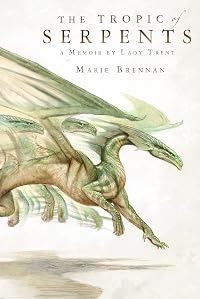
On This Page
Description
"Attentive readers of Lady Trent's earlier memoir, A Natural History of Dragons, are already familiar with how a bookish and determined young woman named Isabella first set out on the historic course that would one day lead her to becoming the world's premier dragon naturalist. Now, in this remarkably candid second volume, Lady Trent looks back at the next stage of her illustrious (and occasionally scandalous) career. Three years after her fateful journeys through the forbidding mountains of show more Vystrana, in which she lost her husband, the widowed Mrs. Camherst defies family and convention to embark on an expedition to the savage, war-torn continent of Eriga, home of such exotic draconian species as the grass-dwelling snakes of the savannah, arboreal tree snakes, and, most elusive of all, the legendary swamp-wyrms of the tropics. The expedition is not an easy one. Accompanied by both an old associate and a runaway heiress, Isabella must brave oppressive heat, merciless fevers, palace intrigues, gossip, and other hazards in order to satisfy her boundless fascination with all things draconian, even if it means venturing deep into the forbidden jungle known as the Green Hell . . . where her courage, resourcefulness, and scientific curiosity will be tested as never before"-- show lessTags
Recommendations

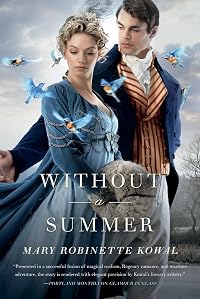
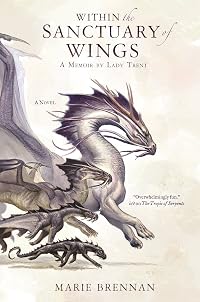
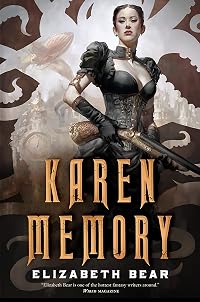




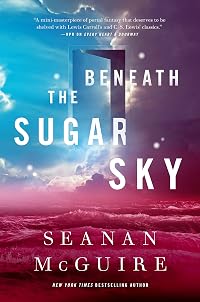
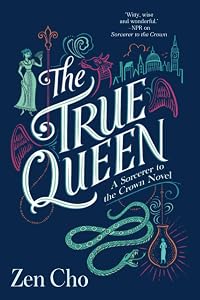

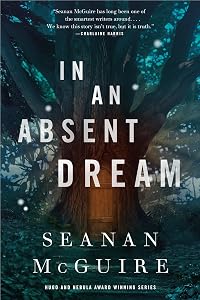
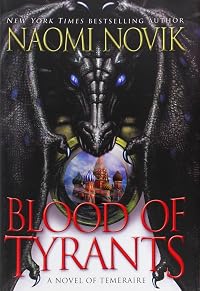




Member Recommendations
Member Reviews
Isabella Camherst (aka Lady Trent) is writing her memoirs as an older woman looking back on her life. This second book in the series takes her to Eriga (an alternate version of Africa) to continue her scholarly studies of dragons. At age twenty-three, she is a widow with a toddler son. Her husband died on their last expedition to Vystrana. She sets off from Scirland (an alternate England) on a journey in the company of Natalie, granddaughter of the sponsor, and Thomas, a fellow dragon scholar from her previous expedition. The storyline follows their adventures in the jungles and swamps of Eriga, encounters with local tribes, and struggles to overcome both natural and man-made perils.
It is set in an alternate version of Victorian times, show more when women encountered many restrictions and were expected to marry and have children. They certainly were not expected to pursue science. Both Isabella and Natalie eschew convention. Isabella is a strong female protagonist, and from the distance of years, can point out her youthful mistakes. She has a sarcastic wit, which she employs liberally, often to her own detriment. The world building is intricate, complete with diverse politics, tribes, languages, customs, egos, and natural elements. It is both a journey of personal growth and a “historical” fantasy adventure.
Although this book could stand alone, I recommend starting with A History of Dragons, as it is an enjoyable book that sets the stage for this second installment. I am not usually a big fan of fantasy, but I think I have found my niche. I enjoy fantasy when it is mixed with historical fiction, an element of scholarly pursuit, and a dash of social commentary. This book delivers on all counts.
4.5 show less
It is set in an alternate version of Victorian times, show more when women encountered many restrictions and were expected to marry and have children. They certainly were not expected to pursue science. Both Isabella and Natalie eschew convention. Isabella is a strong female protagonist, and from the distance of years, can point out her youthful mistakes. She has a sarcastic wit, which she employs liberally, often to her own detriment. The world building is intricate, complete with diverse politics, tribes, languages, customs, egos, and natural elements. It is both a journey of personal growth and a “historical” fantasy adventure.
Although this book could stand alone, I recommend starting with A History of Dragons, as it is an enjoyable book that sets the stage for this second installment. I am not usually a big fan of fantasy, but I think I have found my niche. I enjoy fantasy when it is mixed with historical fiction, an element of scholarly pursuit, and a dash of social commentary. This book delivers on all counts.
4.5 show less
I loved this book almost as much as the first one but found the memoir-from-another-world aspects frustrating when told by the narration to read more scholarly works by the (fictional) memoirist for more details on the dragons and biology and science stuff. Because I WANT to know all that but I can't read the scholarly works because they don't exist in our world. And it makes me sad. Hopefully the further volumes of the memoirs will expand on some of it more because I want to know all the things!!!
Digital audiobook narrated by Kate Reading.
3.5***
Book two in the “Memoirs of Lady Trent” alternate history / fantasy series. It is written as a memoir by the elderly Isabella Camherst, recalling her youth and adventures as a natural historian specializing in dragons.
Brennan has created a world that somewhat resembles Victorian-era England (Skirland in the book) and its colonies on the continent of Africa (Eriga in the book). This episode of Lady Trent’s “memoirs” takes place some three years after the first book. Defying her family, she embarks on a study the dragons of Eriga, accompanied by Natalie, the expedition sponsor’s granddaughter, and Thomas, a dragon scholar she met on an earlier adventure. Her family was right show more to object; the trio have all sorts of dangerous adventures, some due to the rugged terrain (jungle, savannah and swamp) and wild animals (including dragons), others due to human interactions.
I like how Brennan has framed these books as Isabella’s memoirs. As such, she is a woman looking back on her youth, able to point out her mistakes in hindsight, but relaying them, nonetheless. She has a wonderfully sarcastic tone to her storytelling and is not above some self-deprecating comments.
Isabella is a wonderful heroine. She’s intelligent, intrepid, confident, tenacious, resilient and courageous. I do wish that Natalie had had a bigger role. It seemed she was completely forgotten in some segments of the book, though she certainly played a key role in one fantastic episode near the end. I also really appreciated how Brennan wove in some political issues involving colonialism, economics, the cultures of different indigenous groups, and the devastation of fragile ecological systems in the name of “progress.”
Kate Reading does a marvelous job of performing the audiobook. She has quite a variety of different “languages” and cultures (all invented by Brennan) to interpret in addition to the “Skirlings,” and she is up to the task. show less
3.5***
Book two in the “Memoirs of Lady Trent” alternate history / fantasy series. It is written as a memoir by the elderly Isabella Camherst, recalling her youth and adventures as a natural historian specializing in dragons.
Brennan has created a world that somewhat resembles Victorian-era England (Skirland in the book) and its colonies on the continent of Africa (Eriga in the book). This episode of Lady Trent’s “memoirs” takes place some three years after the first book. Defying her family, she embarks on a study the dragons of Eriga, accompanied by Natalie, the expedition sponsor’s granddaughter, and Thomas, a dragon scholar she met on an earlier adventure. Her family was right show more to object; the trio have all sorts of dangerous adventures, some due to the rugged terrain (jungle, savannah and swamp) and wild animals (including dragons), others due to human interactions.
I like how Brennan has framed these books as Isabella’s memoirs. As such, she is a woman looking back on her youth, able to point out her mistakes in hindsight, but relaying them, nonetheless. She has a wonderfully sarcastic tone to her storytelling and is not above some self-deprecating comments.
Isabella is a wonderful heroine. She’s intelligent, intrepid, confident, tenacious, resilient and courageous. I do wish that Natalie had had a bigger role. It seemed she was completely forgotten in some segments of the book, though she certainly played a key role in one fantastic episode near the end. I also really appreciated how Brennan wove in some political issues involving colonialism, economics, the cultures of different indigenous groups, and the devastation of fragile ecological systems in the name of “progress.”
Kate Reading does a marvelous job of performing the audiobook. She has quite a variety of different “languages” and cultures (all invented by Brennan) to interpret in addition to the “Skirlings,” and she is up to the task. show less
Three years after her first adventures in the study of dragons, Isabella, Lady Trent is at it again - this time heading to the war-torn continent of Eriga, where new and exotic dragons await her. But the voyage is anything but easy as she must navigate scandal, politics, different social mores and, most difficult of all, the swampland of the Green Hell, home of the swamp-wyrms…. I’m quite enjoying catching up to this series, especially the ways in which Isabella challenges the Victorian-era social system in which she was raised, and which considers her to be somewhat shocking, and certainly unladylike! For example, she dares to bring up the subject of (gasp!) menstruation, in a way that is necessary to the story; it made me think show more about how infrequently that completely natural bodily function is mentioned in novels, even in feminist novels. Good for her! Isabella’s relationships are also a scandal to her society, particularly her lack of maternal feeling toward her small son. But most of all, her willingness to charge into dangerous situations and, especially, her ability to survive and even thrive in them, is the most scandalous behaviour of all! Recommended. show less
While these memoirs have been less dragon-y than I might wish, it has still been interesting reading about Lady Trent's exploits. Brennan peppers the texts with references to other (totally fake!) books that one could read in addition to Lady Trent's that will give a fuller understanding of events and the cultures referenced. Brennan also alludes to events that occur later in Trent's life that hook the reader into wanting to read further volumes. It's a really clever way to make these alternate histories/universe seem more like a really real thing.
While it can be less than obvious which cultures correlate to those of our own universe and frustrating to not understand the time system, it's another way that the text stays behind the show more fourth wall. Lady Trent doesn't bother to explain things which she takes for granted (such as the names of the days of the week). It shows that Brennan really thought about the details that wouldn't be apparent to readers but that help cement credibility for the world she built. But it also means no info-dumping, for which I am grateful.
Also, my criticism from the previous book, that Trent seemed to take a superior attitude to the people/cultures she was visiting, is not an issue in this book. As a character, she has matured a great deal but she also hasn't changed in ways that seem contrary to the character established. She feels just as confined by gender roles, even as she is breaking out of them, and experiences a great deal of conflict in her personal relationships because of it.
Overall, a really fab read. I wish I hadn't waited so long to read it, but now I can dive into [b: Voyage of the Basilisk|21893608|The Voyage of the Basilisk (Memoir by Lady Trent, #3)|Marie Brennan|https://d.gr-assets.com/books/1397141380s/21893608.jpg|41184172] as soon as it gets to my library. show less
While it can be less than obvious which cultures correlate to those of our own universe and frustrating to not understand the time system, it's another way that the text stays behind the show more fourth wall. Lady Trent doesn't bother to explain things which she takes for granted (such as the names of the days of the week). It shows that Brennan really thought about the details that wouldn't be apparent to readers but that help cement credibility for the world she built. But it also means no info-dumping, for which I am grateful.
Also, my criticism from the previous book, that Trent seemed to take a superior attitude to the people/cultures she was visiting, is not an issue in this book. As a character, she has matured a great deal but she also hasn't changed in ways that seem contrary to the character established. She feels just as confined by gender roles, even as she is breaking out of them, and experiences a great deal of conflict in her personal relationships because of it.
Overall, a really fab read. I wish I hadn't waited so long to read it, but now I can dive into [b: Voyage of the Basilisk|21893608|The Voyage of the Basilisk (Memoir by Lady Trent, #3)|Marie Brennan|https://d.gr-assets.com/books/1397141380s/21893608.jpg|41184172] as soon as it gets to my library. show less
Three years after the events in A Natural History of Dragons, Isabella Camherst continues her study of dragons by travelling to Eriga and into the tropical swamp of Mouleen.
I took a while to properly warm to this novel.
Part of that is because having a much-older Isabella narrate her youthful adventures sometimes encourages one to view her younger self with a greater degree of distance than I prefer to feel towards a protagonist.
There were also times when I wanted to hold this story at a distance, because I found imagining the physical discomforts of travelling in the tropics so viscerally unappealing -- even though Isabella doesn’t dwell on them. (Personally, I found camping in a humid tropical climate far more of an endurance test show more than camping in other climates or weather conditions.
Nevertheless, I ended up really enjoying this adventure and I came away feeling much more invested in Isabella than I did after the first book.
And I can still see how having Isabella tell her adventures with the benefit of hindsight is a strength.
I took a while to properly warm to this novel.
Part of that is because having a much-older Isabella narrate her youthful adventures sometimes encourages one to view her younger self with a greater degree of distance than I prefer to feel towards a protagonist.
There were also times when I wanted to hold this story at a distance, because I found imagining the physical discomforts of travelling in the tropics so viscerally unappealing -- even though Isabella doesn’t dwell on them. (Personally, I found camping in a humid tropical climate far more of an endurance test show more than camping in other climates or weather conditions.
Nevertheless, I ended up really enjoying this adventure and I came away feeling much more invested in Isabella than I did after the first book.
And I can still see how having Isabella tell her adventures with the benefit of hindsight is a strength.
All of this was inadvertent on my own part—but it does little good to cry, “I only wanted to study dragons!” Science is not separate from politics. As much as I would like it to be a pure thing, existing only in some intellectual realm unsullied by human struggle, it will always be entangled with the world we live in.show less
(That is a lie, though I will leave it in. Not the entanglement—that much is true—but the notion that I would like it to be otherwise. If science were only some abstract thing, without connection to our lives, it would be both useless and boring. But there have been times when I wished that I might snip a few of the threads tying it to other matters, so they would stop tripping me as I went.)
It's like a fantasy series about Mary Anning, except she's not poor and she studies dragons, not dinosaur fossils.
The first book took her from being a sheltered girl expected to marry well and produce offspring in a nice house, to being an explorer and naturalist, in defiance of society's wishes (but with the support of her husband).
This book takes her even farther from her supposed role and sends her to study more dragons in that world's rough equivalent of Africa--nations which, moreover, are heavily under colonial exploitation and with all the mess and nastiness of our own society's racism in incipient form. The journey she takes to becoming herself is at least as gripping for me as her adventures with dragons, swamps, armies and show more international politics (though there's that, too).
The one downside is the framing device. On the one hand, I know what Brennan is aiming for: the books are all the memoirs of the main character, written in her old age with the benefit of hindsight and now even less concerned with society's opinion than she was at the time. Because of this, she can drop all kinds of little foreshadowing hints and appropriately distance herself from poor decisions made when she was younger and more malleable.
But on the other hand, it makes it a little dry in spots, because it is all being told from several decades out.
Still, I really liked it and am planning to read the sequel, and highly recommend it--especially to any fantasy readers looking for a spirited feminist heroine in a messy, complicated world. show less
The first book took her from being a sheltered girl expected to marry well and produce offspring in a nice house, to being an explorer and naturalist, in defiance of society's wishes (but with the support of her husband).
This book takes her even farther from her supposed role and sends her to study more dragons in that world's rough equivalent of Africa--nations which, moreover, are heavily under colonial exploitation and with all the mess and nastiness of our own society's racism in incipient form. The journey she takes to becoming herself is at least as gripping for me as her adventures with dragons, swamps, armies and show more international politics (though there's that, too).
The one downside is the framing device. On the one hand, I know what Brennan is aiming for: the books are all the memoirs of the main character, written in her old age with the benefit of hindsight and now even less concerned with society's opinion than she was at the time. Because of this, she can drop all kinds of little foreshadowing hints and appropriately distance herself from poor decisions made when she was younger and more malleable.
But on the other hand, it makes it a little dry in spots, because it is all being told from several decades out.
Still, I really liked it and am planning to read the sequel, and highly recommend it--especially to any fantasy readers looking for a spirited feminist heroine in a messy, complicated world. show less
Members
- Recently Added By
Lists

Top Five Books of 2014
1,064 works; 398 members

Books Read in 2014
2,343 works; 89 members

Books Read in 2016
4,666 works; 199 members
Author Information

98+ Works 11,533 Members

Marie Brennan is a LibraryThing Author, an author who lists their personal library on LibraryThing.
Some Editions
Awards and Honors
Awards
Distinctions
Series

Belongs to Publisher Series
Work Relationships
Common Knowledge
- Canonical title
- The Tropic of Serpents
- Original title
- The Tropic of Serpents. A Memoir by Lady Trent
- Original publication date
- 2014-03-04
- People/Characters
- Isabella, Lady Trent; Natalie Oscott; Thomas Wilker; Yeyuama; Faj Rawango; Frederick Kemble (show all 17); Maxwell Oscott, Earl of Hilford; Denyw n Kpama Waleyim; Gregoire Velloin; Adam Tarwin-Bannithot; Galinke n Oforiro Dara; Okweme n Kpama Waleyim; Ankumata n Rumeme Gbori; Akinimanbi; Mekeesawa; Nagoreemo; Joshua Maitland
- Important places
- Scirling; Eriga
- First words
- Public opinion is a fickle thing.
- Last words
- (Click to show. Warning: May contain spoilers.)"How much do you suppose a voyage around the world might cost?"
Classifications
Statistics
- Members
- 1,145
- Popularity
- 21,957
- Reviews
- 63
- Rating
- (4.01)
- Languages
- English, French, German, Polish
- Media
- Paper, Audiobook, Ebook
- ISBNs
- 16
- UPCs
- 1
- ASINs
- 10