On This Page
Description
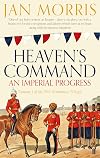
The Pax Britannica trilogy is Jan Morris' epic story of the British Empire from the accession of Queen Victoria to the death of Winston Churchill. Heaven's Command, the first volume, takes us from the crowning of Queen Victoria in 1837 to the Diamond Jubilee in 1897. The story moves effortlessly across the world, from the English shores to Fiji, Zululand, the Canadian prairies and beyond.Tags
Recommendations



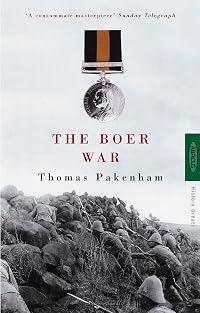
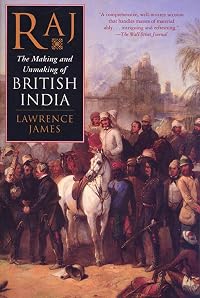
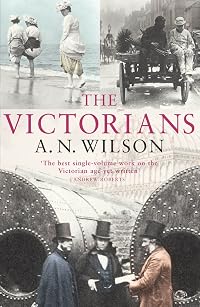
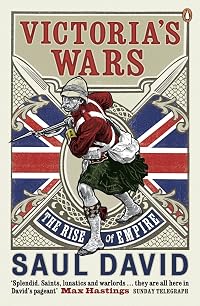
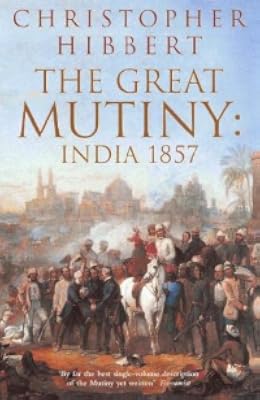
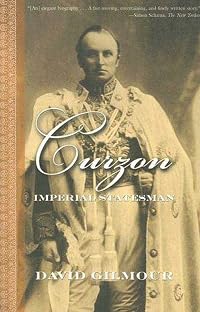


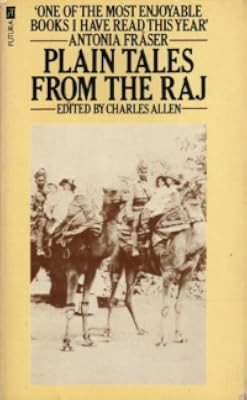
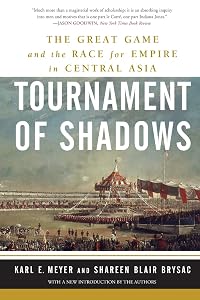


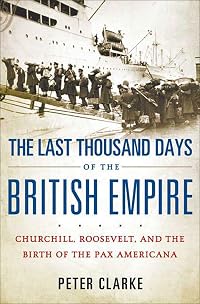
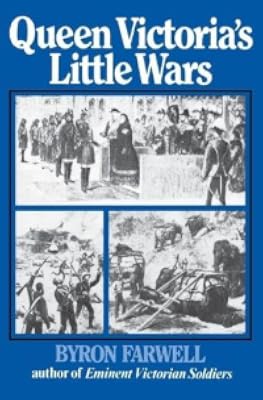
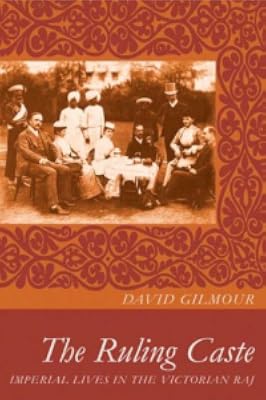








Member Recommendations


nessreader Both gossipy story packed accounts of the british empire in full bloom and the eccentrics who somehow made it


Member Reviews
Simply incredible. Who knew history could be this interesting? Who knew that descriptions of battles could still communicate military detail without endless repetition? Who knew dates and names could be rattled off regularly without making me yawn?
I was skeptical when it was gifted to me, assuming it was a laborious academic tome. Whilst it's by no means short on fact and detail, it's far more hybrid in nature - just as compellingly entertaining and engaging as it is interesting and informative.
The writing is just beautiful; elegant, paced and sumptuous without being over-bearing. Centrally, it's evocative - and that's really one of the most clever things about the book. It at once completely evokes the spirit of the Empire; the show more excitement and energy of a country that day-by-day was making leaps of discovery and progress. But at the same time it adopts a tone that is understatedly contemptuous of the motivations and methods that were employed.
Its condemnation of the concept of Empire is inherent but not aggressive, often delivered with a gentle irony; letting many of the atrocities speak for themselves, and giving a healthy sense of fulness to the peoples that were inevitably steam rollered. It gives good (though uncontested - though like I said, it's not an academic work per se) explanation of how many of the ideas of empire came to be; the charisma of key stakeholders and an attitude of benevolence and calling that only latterly devolved into greed and power.
I am, ultimately, shocked that history is this interesting, and shocked that it can be written as such, to such a degree.
I'm almost tempted to dock a point though - simply because of the frustration - and envy - this book caused. To hold such expertise and knowledge and write so well as Jan (as well as climbing Everest and being involved in pioneering gender surgery), when I won't be able to remember the name of a single historical figure or the date of a battle even one week from now is very, very humbling. show less
I was skeptical when it was gifted to me, assuming it was a laborious academic tome. Whilst it's by no means short on fact and detail, it's far more hybrid in nature - just as compellingly entertaining and engaging as it is interesting and informative.
The writing is just beautiful; elegant, paced and sumptuous without being over-bearing. Centrally, it's evocative - and that's really one of the most clever things about the book. It at once completely evokes the spirit of the Empire; the show more excitement and energy of a country that day-by-day was making leaps of discovery and progress. But at the same time it adopts a tone that is understatedly contemptuous of the motivations and methods that were employed.
Its condemnation of the concept of Empire is inherent but not aggressive, often delivered with a gentle irony; letting many of the atrocities speak for themselves, and giving a healthy sense of fulness to the peoples that were inevitably steam rollered. It gives good (though uncontested - though like I said, it's not an academic work per se) explanation of how many of the ideas of empire came to be; the charisma of key stakeholders and an attitude of benevolence and calling that only latterly devolved into greed and power.
I am, ultimately, shocked that history is this interesting, and shocked that it can be written as such, to such a degree.
I'm almost tempted to dock a point though - simply because of the frustration - and envy - this book caused. To hold such expertise and knowledge and write so well as Jan (as well as climbing Everest and being involved in pioneering gender surgery), when I won't be able to remember the name of a single historical figure or the date of a battle even one week from now is very, very humbling. show less
Heaven's Command: An Imperial Progress is the first in the Pax Britannica trilogy of history books about the British Empire by James Morris (better known today as Jan Morris, the world's most respected travel writer).
This volume traces the rise of the Empire from a few scattered holdings to dominance over 2/3's of the Earth during the period 1837-1897, the first 60 years of Victoria's reign.
Although a thick book well over 500 pages in length, it is actually a rather quick read due to Morris' lively writing style. It is not an exhaustive work but it does hit upon the many thoughts, trends, and events that gave rise to British Imperialism. At times Morris seems wistful about Britain's lost imperial past and times amused by the mores of show more Victorian era Britons. Being rather anti-imperialist myself I feel Morris is not critical enough, but on the whole Morris tells the story warts and all. His main thesis is that a missionary zeal drove the expansion of British influence worldwide. In the process the prostelyzing goal shifts from the gospel of Jesus Christ to the gospel of British civilization.
As a reader of British fiction, I found this book helpful in finally knowing something about all those cultural touchstones that appear in British literature. At last I know a bit about the Indian Mutiny, the Boer War, Gordon of Khartoum and Dr. Livingstone. The Crimean War, however, is only mentioned in passing.
To help illustrate the breadth and diversity of this work I include a couple of sentences summarizing each chapter.
1. A Charming Invention -- Queen Victoria accends to the throne in 1837, while Emily Eden travels in India with her brother. Nothing seems to indicate that Victoria will soon be Empress over a vast swath of the Earth.
2. High and Holy Work -- Britain not only bans the slave trade but also the Royal Navy is saddled with the task of preventing the smuggling of human chattel.
3. Sweet Lives -- The Boers get bored with British interference and trek off to settle their own country where they can be racist, cranky, and slaughter the natives. Morris holds a bizarre romantic attachment to the Boers while at the same time making them sound like the most awful people ever.
4. Roots in Their Soil -- Religious and political reform join forces to eliminate the Thuggee cult of stranglers in India.
5. Laws of War -- The British venture into Afghanistan and find themselves in a quagmire that eerily resembles current day headlines.
The presence of the army in Afghanistan, it said, was apparently displeasing to the great majority of the Afghan nation; and since the only object of its presence there was the integrity, happiness and welfare of the Afghans, there was no point in its remaining.
6. Merchant Ventures -- The traders, voyageurs, and imperialists of the Hudson Bay Company.
7. White Settlers -- Settlement in Nova Scotia, Australia, and New Zealand.
8. An Act of God -- The horrors of the Irish famine, and the indifference of the British to their suffering neighbors due to a devotion to market economics instead of the religious charity and reform they brought to other parts of the world.
9. 'What a Fine Man!' -- Short sketches of the military and colonial leaders who would shape the Empire.
10. Grooves of Change -- The British become enamored with technological progress from the machinery of Crystal Palace to the medical plants of Kew Gardens.
11. The Epic of the Race -- The bloody and tragic Indian Mutiny which forever changes the relationship of Britain to its colonies. Attitudes shift from a communal of effort of joint improvement to the Imperial imposition of British ways.
12. Pan and Mr. Gladstone -- The British acquire the Ionian isles, use them for imperial R&R, and are completely ignorant of the local culture.
13. The Imperial Style -- The empire settles on Gothic architecture and constructs hill stations to oversee its colonies.
14. Illustrious for the Nile -- The search for the source of the Nile leads to a feud between explorers Richard Burton and John Hanning Speke. Speke wins.
15. Governor Eyre -- An uprising in Jamaica meets bloody reprisals from the British colonial rulers that cause a furore back in Britain.
16. 'Ain't the Pentateuch Queer' -- Missionary zeal, the schism of the church in South Africa, and superstition in the ranks.
17. The Humiliation of the Metis -- In Canada, a mix of indigenous peoples and French Canadians efforts at self-determination in Manitoba are ruined by a British doublecross.
The British were now exporting to their dominions a kind of package civilization, offered in competition with the local product, and backed by powerful service arrangements.
18. In the Pacific -- The British squabble with the Americans on the high seas and along the US/Canadian border at San Juan Island.
19. A Fixed Purpose -- The rivalry of Gladstone and Disraeli and their conflicting visions of empire.
But the sense of duty, too, powerfully contributed to the passions of Empire. It was less a missionary duty now: the idea that the world's natives could be converted to Christian Britishness had lost some of its conviction. But it was still, in its austere way, a philanthropic mission. Justice, security, communications, opportunity -- these were the advantages of civilization which the British now diligently if aloofly distributed among their subjects. . . . The British had no doubts about the merits of their own civilization, or qualms about their mission to distribute it across the world: but they had coe to suppose that not all aspects of it were transplantable (p. 389-90).
20. Ashanti -- The British enter into black Africa and brutally take on the proud, mystical, and militaristic Ashanti.
Africa was a brutalizing influence upon the Empire: not because the black peoples were more brutal than others, but because the British though them so, and behaved accordingly (p. 404).
21. By the Sword -- The British secure because of their strong but dated Navy are shocked by the opening of the Suez Canal, but eventually take control of that as well.
22. South of the Zambesi -- The British meet the Boers again and are humiliated in battle once again, a rare loss in a string of Imperial victories.
23. The End of the Tasmanians -- The aboroginal people of Tasmania are erased by genocide.
24. The Rebel Prince -- The inspiring yet tragic story of Charles Stewart Parnell and the doomed Irish Home Rule movement.
25. The Martyr of Empire -- Gordon of Khartoum became a national hero by waiting for Krusty to come to Sudan.
26. Scramble for Africa -- The European powers divy up Africa for their own commericial and imperial causes.
The idea of Empire was becoming vulgarized, like some fatidious sport cheapened by arrivistes. It had often been brutal in the past, and often misguided, but it had seldom been mean. Eve in hypocrisy its aspirations were at least grand, and it had been enobled by the lingering vision of the evangelicals. Even in moments of vindictive frenzy its furies could be interpreted as divine, and most of Victoria's imperialists genuinely believed the British Empire to be an instrument for the general good of the world.
Africa and the New Imperialism tainted this conception. There were still visionaries genuinely concerned with the betterment of the Africans, who saw the humiliation of tribes and ancient kingdoms only as sad means toward honorable ends. Generally, though, the African scramble was a chronicle of squalor -- chiefs gulled, tribes dispossesed, vast inheritances signed away with a thumb-print or a shaky cross (p. 520).
27. An Imperial Fulfillment -- By the time of Victoria's Jubilee in 1897, empire is firmly established and the sun never sets on the British Empire. show less
This volume traces the rise of the Empire from a few scattered holdings to dominance over 2/3's of the Earth during the period 1837-1897, the first 60 years of Victoria's reign.
Although a thick book well over 500 pages in length, it is actually a rather quick read due to Morris' lively writing style. It is not an exhaustive work but it does hit upon the many thoughts, trends, and events that gave rise to British Imperialism. At times Morris seems wistful about Britain's lost imperial past and times amused by the mores of show more Victorian era Britons. Being rather anti-imperialist myself I feel Morris is not critical enough, but on the whole Morris tells the story warts and all. His main thesis is that a missionary zeal drove the expansion of British influence worldwide. In the process the prostelyzing goal shifts from the gospel of Jesus Christ to the gospel of British civilization.
As a reader of British fiction, I found this book helpful in finally knowing something about all those cultural touchstones that appear in British literature. At last I know a bit about the Indian Mutiny, the Boer War, Gordon of Khartoum and Dr. Livingstone. The Crimean War, however, is only mentioned in passing.
To help illustrate the breadth and diversity of this work I include a couple of sentences summarizing each chapter.
1. A Charming Invention -- Queen Victoria accends to the throne in 1837, while Emily Eden travels in India with her brother. Nothing seems to indicate that Victoria will soon be Empress over a vast swath of the Earth.
2. High and Holy Work -- Britain not only bans the slave trade but also the Royal Navy is saddled with the task of preventing the smuggling of human chattel.
3. Sweet Lives -- The Boers get bored with British interference and trek off to settle their own country where they can be racist, cranky, and slaughter the natives. Morris holds a bizarre romantic attachment to the Boers while at the same time making them sound like the most awful people ever.
4. Roots in Their Soil -- Religious and political reform join forces to eliminate the Thuggee cult of stranglers in India.
5. Laws of War -- The British venture into Afghanistan and find themselves in a quagmire that eerily resembles current day headlines.
The presence of the army in Afghanistan, it said, was apparently displeasing to the great majority of the Afghan nation; and since the only object of its presence there was the integrity, happiness and welfare of the Afghans, there was no point in its remaining.
6. Merchant Ventures -- The traders, voyageurs, and imperialists of the Hudson Bay Company.
7. White Settlers -- Settlement in Nova Scotia, Australia, and New Zealand.
8. An Act of God -- The horrors of the Irish famine, and the indifference of the British to their suffering neighbors due to a devotion to market economics instead of the religious charity and reform they brought to other parts of the world.
9. 'What a Fine Man!' -- Short sketches of the military and colonial leaders who would shape the Empire.
10. Grooves of Change -- The British become enamored with technological progress from the machinery of Crystal Palace to the medical plants of Kew Gardens.
11. The Epic of the Race -- The bloody and tragic Indian Mutiny which forever changes the relationship of Britain to its colonies. Attitudes shift from a communal of effort of joint improvement to the Imperial imposition of British ways.
12. Pan and Mr. Gladstone -- The British acquire the Ionian isles, use them for imperial R&R, and are completely ignorant of the local culture.
13. The Imperial Style -- The empire settles on Gothic architecture and constructs hill stations to oversee its colonies.
14. Illustrious for the Nile -- The search for the source of the Nile leads to a feud between explorers Richard Burton and John Hanning Speke. Speke wins.
15. Governor Eyre -- An uprising in Jamaica meets bloody reprisals from the British colonial rulers that cause a furore back in Britain.
16. 'Ain't the Pentateuch Queer' -- Missionary zeal, the schism of the church in South Africa, and superstition in the ranks.
17. The Humiliation of the Metis -- In Canada, a mix of indigenous peoples and French Canadians efforts at self-determination in Manitoba are ruined by a British doublecross.
The British were now exporting to their dominions a kind of package civilization, offered in competition with the local product, and backed by powerful service arrangements.
18. In the Pacific -- The British squabble with the Americans on the high seas and along the US/Canadian border at San Juan Island.
19. A Fixed Purpose -- The rivalry of Gladstone and Disraeli and their conflicting visions of empire.
But the sense of duty, too, powerfully contributed to the passions of Empire. It was less a missionary duty now: the idea that the world's natives could be converted to Christian Britishness had lost some of its conviction. But it was still, in its austere way, a philanthropic mission. Justice, security, communications, opportunity -- these were the advantages of civilization which the British now diligently if aloofly distributed among their subjects. . . . The British had no doubts about the merits of their own civilization, or qualms about their mission to distribute it across the world: but they had coe to suppose that not all aspects of it were transplantable (p. 389-90).
20. Ashanti -- The British enter into black Africa and brutally take on the proud, mystical, and militaristic Ashanti.
Africa was a brutalizing influence upon the Empire: not because the black peoples were more brutal than others, but because the British though them so, and behaved accordingly (p. 404).
21. By the Sword -- The British secure because of their strong but dated Navy are shocked by the opening of the Suez Canal, but eventually take control of that as well.
22. South of the Zambesi -- The British meet the Boers again and are humiliated in battle once again, a rare loss in a string of Imperial victories.
23. The End of the Tasmanians -- The aboroginal people of Tasmania are erased by genocide.
24. The Rebel Prince -- The inspiring yet tragic story of Charles Stewart Parnell and the doomed Irish Home Rule movement.
25. The Martyr of Empire -- Gordon of Khartoum became a national hero by waiting for Krusty to come to Sudan.
26. Scramble for Africa -- The European powers divy up Africa for their own commericial and imperial causes.
The idea of Empire was becoming vulgarized, like some fatidious sport cheapened by arrivistes. It had often been brutal in the past, and often misguided, but it had seldom been mean. Eve in hypocrisy its aspirations were at least grand, and it had been enobled by the lingering vision of the evangelicals. Even in moments of vindictive frenzy its furies could be interpreted as divine, and most of Victoria's imperialists genuinely believed the British Empire to be an instrument for the general good of the world.
Africa and the New Imperialism tainted this conception. There were still visionaries genuinely concerned with the betterment of the Africans, who saw the humiliation of tribes and ancient kingdoms only as sad means toward honorable ends. Generally, though, the African scramble was a chronicle of squalor -- chiefs gulled, tribes dispossesed, vast inheritances signed away with a thumb-print or a shaky cross (p. 520).
27. An Imperial Fulfillment -- By the time of Victoria's Jubilee in 1897, empire is firmly established and the sun never sets on the British Empire. show less
A bit dated in some ways, but still an entertaining overview of British imperialism during Victoria's reign. The anecdotal style, pepped up by Morris's first-hand knowledge of many of the places involved, makes it a quick, amusing read, with a few serious insights buried here and there as well.
It is always a pleasure to read a Jan Morris book even if the subject is of limited interest, but in this case, she is covering an era of which I knew relatively little, the British Empire during the reign of Victoria. She populates the book with a cast of memorable characters, some of whom I had heard of (Gladstone and Disraeli) but many others I had never come across, mainly military. She brings them to life through the quality of her writing. Fortunately she is a prolific writer so there are many more books for me still to read.
This is a great introduction to the second British Empire. Short chapters on themes and specific historic events are woven together to give an insightful but not exhaustive story of the development of the Empire.
This is a flashy and fairly superficial survey of the Empah at the given moment. If you haven't read much in this area, this is a good first survey book. The prose is clear.
Unless you have studied the history of the 19th century in earnest, you are probably like me - you pick up bits and pieces from all manner of sources. For me that includes everything from Kent's Bolitho, to Cornwell's Sharpe, to Fraser's Flashman. This series ties much of it together, providing an overall context and basis in fact, allowing you to better judge fact from fiction. Highly recommended.
Members
- Recently Added By
Lists

Best British Empire History Books
39 works; 8 members

Club Read's Recommended Nonfiction Written by Women
618 works; 30 members
Author Information

88+ Works 10,628 Members
Jan Morris served as an intelligence officer with the 9th Queen's Royal Lancers, studied at Oxford University, and was a reporter for the Times and the Guardian before launching a successful career as a novelist, history author, and travel writer
Series

Work Relationships
Is contained in
Common Knowledge
- Original publication date
- 1973
- People/Characters
- Victoria, Queen of the United Kingdom; William Lamb, 2nd Viscount Melbourne; Emily Eden; Sir Richard Francis Burton; Benjamin Disraeli, 1st Earl of Beaconsfield; William Ewart Gladstone
- Important places
- United Kingdom; British Empire
- Important events
- Accession of Victoria (1837); Boer War; Queen Victoria's Diamond Jubilee (1897)
- Epigraph
- When Britain first, at Heaven's command,
Arose from out the azure main,
This was the charter of the land,
And guardian angels sung the strain:
'Rule, Britannia, rule the waves;
Britons never will be slaves.'
Set in this storm Northern sea,
Queen of these restless fields of tide,
England! what shall men say of thee,
Before whose feet the worlds divide?
--Oscar Wilde - Dedication
- For
HENRY MORRIS
Un-Imperialist - First words
- Prologue: the house that is portrayed on the jacket of this work is called Sezincote.
Chapter 1: In October 1837 the Honourable Emily Eden, a witty and accomplished Englishwoman in her forty-first year, was accompanying her brother Lord Auckland, Governor-General of India, on an official progress up-country f... (show all)rom Calcutta. - Last words
- (Click to show. Warning: May contain spoilers.);From my heart i thank my beloved people,' it said, speeding through the cables to Ottawa and Calcutta, Lagos and the Cape, Sydney and Christchurch, the fortress islands of the Mediterranean and the old slave colonies - to Lucknow where the flag still flew above the shattered Residency, to Winnipeg where Riel lay beneath his stone-clamped tomb, to Truganini's Hobart, to Cakobau's Fiji, to Eyre's shabby Spanish Town, to Ashanti and Zululand and Dublin and Kampala - 'From my heart I thank my beloved people. May God bless them.'
Classifications
Statistics
- Members
- 629
- Popularity
- 46,309
- Reviews
- 10
- Rating
- (4.09)
- Languages
- English, Italian
- Media
- Paper, Audiobook, Ebook
- ISBNs
- 16
- ASINs
- 12