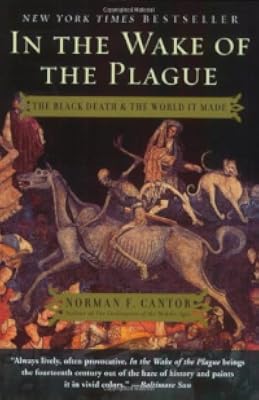
In the Wake of the Plague: The Black Death and the World It Made
by Norman F. Cantor
On This Page
Description
The Black Death was the fourteenth century's equivalent of a nuclear war. It wiped out one-third of Europe's population, takingmillion lives. And yet, most of what we know about it is wrong. The details of the Plague etched in the minds of terrified schoolchildren - the hideous black welts, the high fever, and the awful end by respiratory failure - are more or less accurate. But what the Plague really was and how it made history remain shrouded in a haze of myths. Now, Norman Cantor, the show more premier historian of the Middle Ages, draws together the most recent scientific discoveries and groundbreaking historical research to pierce the mist and tell the story of the Black Death as a gripping, intimate narrative. show lessTags
Recommendations






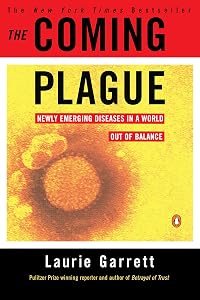


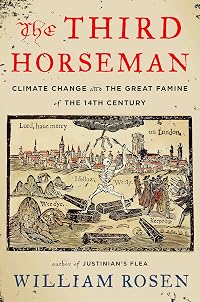
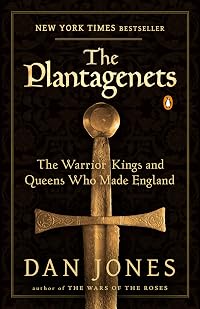
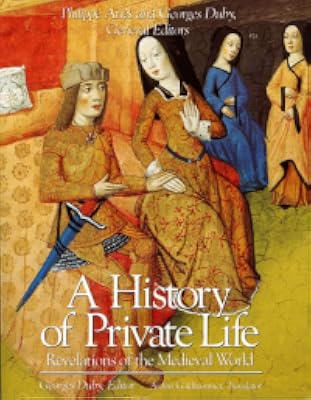




Member Recommendations
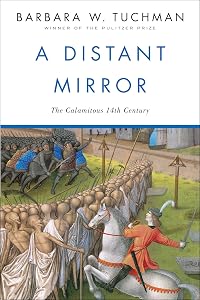
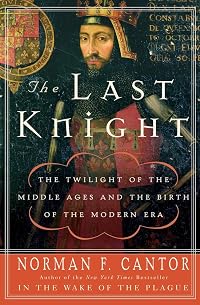
The Great Mortality: An Intimate History of the Black Death, the Most Devastating Plague of All Time by John Kelly
AnnaClaire More of a comparative recommendation: I got a better understanding of the Black Death from Kelly's book than from Cantor's.
Also recommended by meggyweg
20
Member Reviews
A few critical reviews below have some measured points, and I thought I'd click some thumbs up and be done, but this book truly inspired me; the problem with most other reviews is that they seem to respect this book as being worthy of existence.
The book is rambling, repetitive muck.
By chapter 2 I had a mental sidebar of notes for a rage-review. I was so disgusted that I came to view Cantor's ridiculous overuse of the word "biomedical" as a major character flaw. It should have been thrown across the room after a few pages but I didn't want to damage anything more valuable than the book, like for example, anything. But it had to be finished. The final page had to be glimpsed. The depths had to be plumbed to see if I would run out of show more rope.
Some highlights for LibraryThing posterity:
Edward II's anal-rape murder "partly" reflected the Church's attitude toward homosexuality, but also reflected contemporary attitudes toward global weather patterns.
Edward III ravaged 25% of 1/3 of France.
Plantagenet Joan is constantly referred to as "little princess", so by the 3rd or 4th instance I am searching for endnotes to see if she was actually little, but no, it was just pointlessly derogatory.
In a spectacular display of relevance to plague transmission, Cantor spends an entire page of his measly 200 describing Joan's wardrobe (she had lots of buttons), seemingly for the sole purpose of punchlining the English monarchy's lack of taste "then or now".
Cantor refers to Joan as a "top-drawer white girl". That is top-shelf history right there. Approximately here I stopped cataloging disgust and just doggy-paddled the rest of the way through the slop. Slop which includes an entire section on the possibility of alien plague dust causing the epidemic.
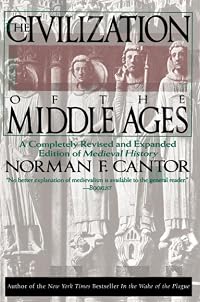
Trees died for this - living, respirating, sun-loving trees. Absolutely, completely, unworthy of an NYU professor and Princeton Fellow, and perversely, so perversely, I am looking forward to reading Cantor's "Civilization", though I don't know if I'm searching for his redemption or more stench from the putrefaction of Academia.
This book is a plague about a plague and even reviews about it are a waste of time. show less
The book is rambling, repetitive muck.
By chapter 2 I had a mental sidebar of notes for a rage-review. I was so disgusted that I came to view Cantor's ridiculous overuse of the word "biomedical" as a major character flaw. It should have been thrown across the room after a few pages but I didn't want to damage anything more valuable than the book, like for example, anything. But it had to be finished. The final page had to be glimpsed. The depths had to be plumbed to see if I would run out of show more rope.
Some highlights for LibraryThing posterity:
Edward II's anal-rape murder "partly" reflected the Church's attitude toward homosexuality, but also reflected contemporary attitudes toward global weather patterns.
Edward III ravaged 25% of 1/3 of France.
Plantagenet Joan is constantly referred to as "little princess", so by the 3rd or 4th instance I am searching for endnotes to see if she was actually little, but no, it was just pointlessly derogatory.
In a spectacular display of relevance to plague transmission, Cantor spends an entire page of his measly 200 describing Joan's wardrobe (she had lots of buttons), seemingly for the sole purpose of punchlining the English monarchy's lack of taste "then or now".
Cantor refers to Joan as a "top-drawer white girl". That is top-shelf history right there. Approximately here I stopped cataloging disgust and just doggy-paddled the rest of the way through the slop. Slop which includes an entire section on the possibility of alien plague dust causing the epidemic.
Trees died for this - living, respirating, sun-loving trees. Absolutely, completely, unworthy of an NYU professor and Princeton Fellow, and perversely, so perversely, I am looking forward to reading Cantor's "Civilization", though I don't know if I'm searching for his redemption or more stench from the putrefaction of Academia.
This book is a plague about a plague and even reviews about it are a waste of time. show less
Like many tragedies, the plague left an altered world in its horrific wake. Cantor’s stated purpose is to provide a description of the Black Death “and the world it made,” with emphasis on identifying some of the “winners/losers” that emerged after the series of plagues that swept through Europe in the 13th-14th century.
A fascinating topic, yes? And given Cantor’s rep as a “leading American historian of the Middle Ages,” I picked this up enthusiastically, anticipating a thorough, orderly, scholarly exploration of the topic. However, that’s not quite what happened. Instead of a textbook, what I got felt more like a curmudgeonly old college professor whipping through the entire curriculum of his oft-taught “Europe show more Before and After the Plague” class without bothering to consult his notes.
For one thing, Cantor’s choice of content seems driven by personal interest/preference rather than logic. For every page that actually addresses information relevant to the topic, Cantor includes pages and pages of tangential information, including long back-stories on people/institutions (Cardinal Bradwardine, the Occam-Marsilio heresy, the antecedents of the French wine industry) that are often interesting but end up having little (or nothing) to do with the topic. Much of the time I had the sense that Cantor’s research/knowledge was guiding his narrative, rather than his narrative synthesizing the research.
Also, organization of the material is (to be generous) eclectic, whipping through time and across themes with little logic, with some anecdotes repeated multiple times (as if the storyteller forgot he’d already shared them) and an ending so abrupt that you can practically hear the bell ringing, signaling the end of class.
Finally, Cantor repeatedly presents dubious/biased material with the supreme self-confidence of a professor who believes his class full of cowed undergraduates would never dare muster up the courage to challenge him. I tolerated his rants against certain historical personages (Edward III is described, with no substantiating detail, as an “avaricious and sadistic thug”, and what exactly was the narrative purpose of Richard II's sexual preferences?); I endured his factually dubious tangent about Lollardism; but the part at the end where he appears to endorse the notion that the plague came from space dust is where I began to lose my patience.
If you’re a history “generalist”, then this may be worth the read. As a general survey of the Medieval period, the text works well; Cantor is an engaging (if erratic) storyteller who knows how to synthesize lots of ideas into a whole. But if your interest is in a thorough, accurate, and unbiased exploration of “The Black Death and the World It Made” (to quote the subtitle), allow me to save you the time and present the Cliff’s Notes version: wives, property lawyers, and yeoman peasants benefited; the Lancastrians kings of England, The Holy Roman Empire, scientific exploration, and the Jews suffered; and art, religion, monarchies and philosophy mostly emerged a draw. Now go pick up something equally entertaining but a little less erratic: might I recommend something by Boorstin, Goodwin, or Tuchman? show less
A fascinating topic, yes? And given Cantor’s rep as a “leading American historian of the Middle Ages,” I picked this up enthusiastically, anticipating a thorough, orderly, scholarly exploration of the topic. However, that’s not quite what happened. Instead of a textbook, what I got felt more like a curmudgeonly old college professor whipping through the entire curriculum of his oft-taught “Europe show more Before and After the Plague” class without bothering to consult his notes.
For one thing, Cantor’s choice of content seems driven by personal interest/preference rather than logic. For every page that actually addresses information relevant to the topic, Cantor includes pages and pages of tangential information, including long back-stories on people/institutions (Cardinal Bradwardine, the Occam-Marsilio heresy, the antecedents of the French wine industry) that are often interesting but end up having little (or nothing) to do with the topic. Much of the time I had the sense that Cantor’s research/knowledge was guiding his narrative, rather than his narrative synthesizing the research.
Also, organization of the material is (to be generous) eclectic, whipping through time and across themes with little logic, with some anecdotes repeated multiple times (as if the storyteller forgot he’d already shared them) and an ending so abrupt that you can practically hear the bell ringing, signaling the end of class.
Finally, Cantor repeatedly presents dubious/biased material with the supreme self-confidence of a professor who believes his class full of cowed undergraduates would never dare muster up the courage to challenge him. I tolerated his rants against certain historical personages (Edward III is described, with no substantiating detail, as an “avaricious and sadistic thug”, and what exactly was the narrative purpose of Richard II's sexual preferences?); I endured his factually dubious tangent about Lollardism; but the part at the end where he appears to endorse the notion that the plague came from space dust is where I began to lose my patience.
If you’re a history “generalist”, then this may be worth the read. As a general survey of the Medieval period, the text works well; Cantor is an engaging (if erratic) storyteller who knows how to synthesize lots of ideas into a whole. But if your interest is in a thorough, accurate, and unbiased exploration of “The Black Death and the World It Made” (to quote the subtitle), allow me to save you the time and present the Cliff’s Notes version: wives, property lawyers, and yeoman peasants benefited; the Lancastrians kings of England, The Holy Roman Empire, scientific exploration, and the Jews suffered; and art, religion, monarchies and philosophy mostly emerged a draw. Now go pick up something equally entertaining but a little less erratic: might I recommend something by Boorstin, Goodwin, or Tuchman? show less
Of all of Norman Cantor's books about the Middle Ages, this is by far the worst! Cantor was once a decent (though never great) medieval historian, but that time has long past. This book is not only poorly written/edited, but it is also wildly inaccurate. Its clear that the intended audience of this book is the general public and it is not for a specialist, but that does not make it acceptable to sensationalize/misrepresent facts in the guise of making the subject more interesting or more accessible. The problems with the content are too numerous to list individually, but I have listed a couple of the most glaring ones. First, he makes absurd and unsubstantiated claims (see section on how cosmic dust may have caused the plague) and he show more cites unverified legends as facts to support his scattered and incoherent argument (see the passages about the ring around the rosy song). His sloppy and casual presentation also leads him to make mistakes in terminology, like referring to women's garments as corsets even though corsets weren't worn until nearly 200 years later. Second, he is a very judgmental historian imposing his 20th century belief system on a 14th century society. Please don't misunderstand. As a medieval historian myself, I am completely aware that all interpretations of history are biased by the author's own views, but that does not mean you should dismiss your historical subject as backward, stupid, or laughable. In a wasted effort to be light-hearted (which is especially strange considering he is writing a treatise about pestilence and disease that ravaged a continent), he comes off as callous and insensitive, particularly in his discussion of Jews where he gets perilously close to blaming them for their own persecution. Even if you could put aside the numerous factual errors, the book is also almost impossible to read. It is repetitive, disjointed, and it appears never to have been edited. Cantor spends about a third of the book discussing the topic of this treatise (mostly inaccurately as I have already discussed) and then spends the remainder of the book going off on unrelated and poorly connected tangents rife with run-on sentences and incorrectly used vocabulary. He offers no new insights into this field and will lead newcomers to medieval history astray. Please do not waste your time reading this book. You will only be misinformed and aggravated. If I could give the book no stars, I would. Quite possibly the worst book of medieval history that I have ever been forced to read. show less
I really enjoy books about the rise and spread of diseases and their effects on politics and culture. I read Hans Zinsser's Rats, Lice, and History at a young age; even as a child I recognized the skillfulness and clarity of his writing. Alas, Cantor's In the Wake of the Plague: The Black Death and the World It Made is disorganized, repetitive, tangential, and unskillful. If a student handed it in as a manuscript, I'd hand it back with the request that s/he outline her work first. I am not exaggerating when I say that putting each paragraph on an index card, throwing the cards in the air, stacking them and recompiling the book in that order without adding transitions might be an organizational improvement. Topics are touched upon and show more discarded; paragraphs only peripherally related to the topic festoon the chapters like cobwebs; assertions are not backed up with evidence; ideas and statements are repeated. Why this was a New York Times bestseller I don't know, but I think less of us all that it was.
Cantor's rambling and disjointed text is neither a good introduction to the plague nor, as the title promises, an examination of its aftermath. Theories of the plague's constituents (Yersina pestis? Anthrax? Cosmic dust?) are raised and dropped at random. Some historical and economic information does address the purported topic, but is poorly written and appears in desultory fashion. The text is internally contradictory. Some sentences make no sense. It reads like a rambling professor's last lecture before retirement.
Odd ad hominem arguments and strange attributive statements mar the text further. Is it really that important to identify Richard II's homosexuality multiple times? To apparently blame people who had not yet invented empiricism for not understanding about germs? To somehow hold the Jews accountable for the misperception that they caused the plague? To criticize women for choosing chastity and the cloister when their rate of death in childbirth was so high? (Male clergy are not criticized for their chastity at all.) Lucy (the early human discovered by the Leakeys) is referred to as "the black mother of us all," a phrase in which the inclusion of "black" is superfluous and strange, and which occurs in the context of a several-page disquisition that has very little to do with the plague (and certainly nothing to do with its wake).
Do yourself a favor and avoid this like the... well, you know. Many books of much higher quality address the topic. As for this one, though I am a book packrat of problematic proportions, I'm tempted to throw it in my paper recycling bin lest it fall into the hands of someone who can't critically evaluate it. show less
Cantor's rambling and disjointed text is neither a good introduction to the plague nor, as the title promises, an examination of its aftermath. Theories of the plague's constituents (Yersina pestis? Anthrax? Cosmic dust?) are raised and dropped at random. Some historical and economic information does address the purported topic, but is poorly written and appears in desultory fashion. The text is internally contradictory. Some sentences make no sense. It reads like a rambling professor's last lecture before retirement.
Odd ad hominem arguments and strange attributive statements mar the text further. Is it really that important to identify Richard II's homosexuality multiple times? To apparently blame people who had not yet invented empiricism for not understanding about germs? To somehow hold the Jews accountable for the misperception that they caused the plague? To criticize women for choosing chastity and the cloister when their rate of death in childbirth was so high? (Male clergy are not criticized for their chastity at all.) Lucy (the early human discovered by the Leakeys) is referred to as "the black mother of us all," a phrase in which the inclusion of "black" is superfluous and strange, and which occurs in the context of a several-page disquisition that has very little to do with the plague (and certainly nothing to do with its wake).
Do yourself a favor and avoid this like the... well, you know. Many books of much higher quality address the topic. As for this one, though I am a book packrat of problematic proportions, I'm tempted to throw it in my paper recycling bin lest it fall into the hands of someone who can't critically evaluate it. show less
Given its title, the very nature of this subject provides much ground for interesting work. But despite the author's obviously in depth research, there's little good I can say about this book.
The author attempts to tell the tale of the Plague through personal experiences of people from all walks of life. While the idea is good, the overly detailed and plodding style make for a difficult and sometimes dull read. Another aspect of the work includes speculation as to the true cause(s) of the plague. Aside from the standard conclusion of parasites transmitted via black rats, an interesting argument is made for anthrax being a contributing factor. However, the author loses credibility when giving some credence to the theory that the bacteria show more were possibly delivered via cosmic dust from comets. Add to this many digressions which have little relevance to the plague itself and you have a work better avoided. show less
The author attempts to tell the tale of the Plague through personal experiences of people from all walks of life. While the idea is good, the overly detailed and plodding style make for a difficult and sometimes dull read. Another aspect of the work includes speculation as to the true cause(s) of the plague. Aside from the standard conclusion of parasites transmitted via black rats, an interesting argument is made for anthrax being a contributing factor. However, the author loses credibility when giving some credence to the theory that the bacteria show more were possibly delivered via cosmic dust from comets. Add to this many digressions which have little relevance to the plague itself and you have a work better avoided. show less
This is possibly the worst book of history I have ever read. High points include: a suggestion that Jews were to blame for their own massacre (152), a twenty-page-plus chapter on how the Black Death was good for women (123-146), the assertion that Shakespeare's Richard II is "in some ways the best account of that pathetic and unstable figure" (214) (who, Cantor takes pains to remind us, multiple times, was gay, gay, gay), pages of rambling about Jewish history into the twentieth century (164-167), the unmistakeable condensation of the author toward both his subject and his reader, his attempt to cite Francis Crick as an authority on disease transmission, a reference to Lucy as "the black mother of us all" (186), a bizarre predilection show more toward editorializing, sensationalizing, and modernizing references, and his addiction to the word "biomedical."
Un-freaking-readable.
(And, on closer examination, I find that he's Anne Rice's favorite historian. That explains *so much.*) show less
Un-freaking-readable.
(And, on closer examination, I find that he's Anne Rice's favorite historian. That explains *so much.*) show less
It is not a problem when historians present a viewpoint of historical figures, positive or negative, of their opinions are based on evidence, and can be proven. That is what they do.
This author, however, does not seem to have heard of evidence. He takes up page after page bashing the English, and demonising Edward III, calling him everything under the sun, and does not cite even a single shred of evidence to back up his claims. They are quite simply his own opinions, and he makes no secret of this.
This would not be so bad if the author did not Hold his own viewpoint in such high regard, and present in as actual historical Fact, which he does here, especially considering that some of the his assertions are quite simply absurd and show more laughable.
He claims for instance that Edward III and the English were evil for no other reason then that they invaded France. As if this event in itself were enough proof of the innate badness of the English, and the demoniac malevolence of the Plantagenet Kings.
Apparently, it did not accur to him that almost all Medieval Kings invaded other Kingdoms including French ones, and so by his line of reasoning they should all be evil too. Nope, only the English ones qualify for demonisation. Right. As if no other Medieval European people would even do anything so nasty as take over anyone else's country.
To make things even more ridiculous, the author then presents an ancient Myth about one of the ancestors of the Plantagenet Kings having been a Demon who took the form of a beautiful women and married the Duke of Normandy- and cites this as an explanation for why Edward III was so nasty. Using myth to back up one's argument?
When reading this, I could scarcely believe that the author was a respected professor of Medieval History.
The unabashed vitriolic and hateful nature of the author's viewpoint shocked me to the core, as it seemed so alien to the nature of everything historians are taught about objectivity, not judging the past by modern standards and distinguishing between fact and opinion. It seems as though the author simply lost his grip on logic, reason and common sense and wrote a 250 page tirade against everyone and everything he disliked.
As such, this is one of the only books that I can honestly say ever made me feel ashamed to be associated with the scholarly historical profession. show less
This author, however, does not seem to have heard of evidence. He takes up page after page bashing the English, and demonising Edward III, calling him everything under the sun, and does not cite even a single shred of evidence to back up his claims. They are quite simply his own opinions, and he makes no secret of this.
This would not be so bad if the author did not Hold his own viewpoint in such high regard, and present in as actual historical Fact, which he does here, especially considering that some of the his assertions are quite simply absurd and show more laughable.
He claims for instance that Edward III and the English were evil for no other reason then that they invaded France. As if this event in itself were enough proof of the innate badness of the English, and the demoniac malevolence of the Plantagenet Kings.
Apparently, it did not accur to him that almost all Medieval Kings invaded other Kingdoms including French ones, and so by his line of reasoning they should all be evil too. Nope, only the English ones qualify for demonisation. Right. As if no other Medieval European people would even do anything so nasty as take over anyone else's country.
To make things even more ridiculous, the author then presents an ancient Myth about one of the ancestors of the Plantagenet Kings having been a Demon who took the form of a beautiful women and married the Duke of Normandy- and cites this as an explanation for why Edward III was so nasty. Using myth to back up one's argument?
When reading this, I could scarcely believe that the author was a respected professor of Medieval History.
The unabashed vitriolic and hateful nature of the author's viewpoint shocked me to the core, as it seemed so alien to the nature of everything historians are taught about objectivity, not judging the past by modern standards and distinguishing between fact and opinion. It seems as though the author simply lost his grip on logic, reason and common sense and wrote a 250 page tirade against everyone and everything he disliked.
As such, this is one of the only books that I can honestly say ever made me feel ashamed to be associated with the scholarly historical profession. show less
Members
- Recently Added By
Lists

Best Books About Plagues and Epidemics
99 works; 17 members

Europe
205 works; 6 members

Weirdo Nonfiction
138 works; 3 members

Library Non-Fiction
164 works; 1 member
Author Information

69 Works 8,947 Members
Norman F. Cantor is Emeritus Professor of History, Sociology, and Comparative Literature at New York University.
Some Editions
Awards and Honors
Distinctions
Common Knowledge
- Original publication date
- 2001
- People/Characters
- Joan of England (1333-1348); Peter of Castile; Thomas Bradwardine, Archbishop
- Important places
- Europe; Bordeaux, Gironde, Nouvelle-Aquitaine, France; Spain
- Important events
- Black Death (1348 | 1350)
- Dedication
- To my family
- First words
- In the sixth month of the new millennium and new century, the American Medical Association held a conference on infectious diseases.
- Last words
- (Click to show. Warning: May contain spoilers.) social healing is occurring but Chaucer does not reflect on this process: He illustrates its happenings.
- Publisher's editor
- Nichols, Bruce; Freedberg, Daniel
- Blurbers
- Fernandez-Armesto, Felipe; Prestwich, Michael
- Original language
- English
Classifications
- Genres
- History, General Nonfiction, Nonfiction
- DDC/MDS
- 614.5732 — Applied science & technology Medicine & health Epidemics and poisons Incidence of and public measures to prevent specific diseases and kinds of diseases Bacterial diseases Pasteurella infections, yersinia infections, chlamydia infections, tularemia Plague
- LCC
- RC172 .C36 — Medicine Internal medicine Internal medicine Infectious and parasitic diseases
- BISAC
Statistics
- Members
- 2,186
- Popularity
- 9,340
- Reviews
- 57
- Rating
- (3.34)
- Languages
- Dutch, English
- Media
- Paper, Audiobook, Ebook
- ISBNs
- 15
- ASINs
- 11