
Jem
by Frederik Pohl
On This Page
Description
The discovery of another habitable world might spell salvation to the three bitterly competing power blocs of the resource-starved 21st century; but when their representatives arrive on Jem, with its multiple intelligent species, they discover instead the perfect situation into which to export their rivalries. Subtitled, with savage irony, 'The Making of a Utopia', Jem is one of Frederik Pohl's most powerful novels.Tags
Recommendations





















Member Recommendations
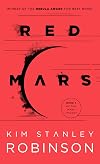
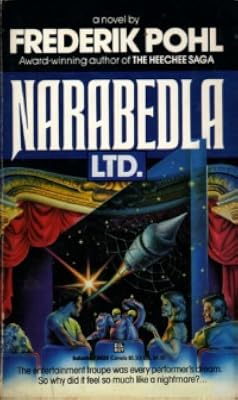
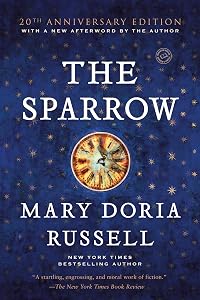
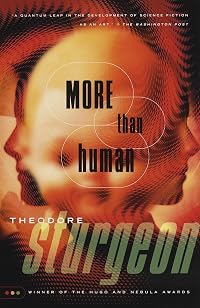
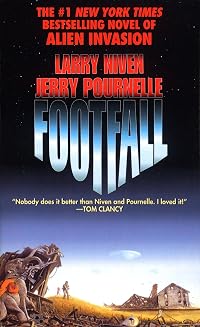
quilted_kat Pohl surely influenced Kim Stanley Robinson, there were so many similarities.
Member Reviews
A book steeped in the politics of the time in which it was written (1980, which had seen decades of cold war wearing down the major world powers, and an increasingly resource-hungry world, etc). Here, all too believably, humankind transplants its unreflective self interest and greed into a new world, with tragic consequences. There are definite elements of satire here, but it won't provoke any smiles in the reader; at times it's chillingly bleak, and its ironic subtitle of 'the making of a utopia' is well-earned. Interestingly, the female characters are more deeply characterised than the male ones (though, they're also much more *problematically* characterised), but none of them are particularly likeable, when it all comes down to it show more (except perhaps Charlie, one of the alien characters). Like its characters, it's an interesting book with some important things to say, but it wasn't a particularly enjoyable reading experience. show less
My reactions to reading this novel in 2004.
This is an interesting book for four levels.
It has a rather dated flavor, specifically of the ‘70s with its division of the earth into three power blocs based on the resource they export -- fuel, food, and people. The inspiration for this is obviously the real world OPEC, and the book also bears a characteristic Pohl concern: overpopulation and/or resource exhaustion and/or pollution. The first two were popular sf themes at least through the mid-1980s. These days the greenhouse effect is the environmental apocalypse of the day. Pohl’s world has traditional enmities and alliances reshuffled. America, a food exporter (the food bloc is Earth’s second richest power bloc), is now allied with show more some former Soviet countries and has cool relations with Britain.
The second interesting thing is, despite this ‘70s flavor, the novel has a very 19th century and early 20th century feeling -- specifically, as nuclear war gets closer and closer on Earth, of World War One. The three power blocs try to compete to exploit and colonize Jem to gain greater power relative to their competitors in a manner reminiscent of the colonization of the world by Europeans.
The third interesting thing is the gaps in the story that Pohl chooses not to dwell on. While he gives us three fairly worked out sentient, non-technological alien races, he doesn’t dwell a lot on their cultures, (though all get at least one viewpoint scene or chapter) or the development of human and alien communication. Nor does he spend a lot of time on the technology of space travel or the ecological details of growing human crops on an alien world. Rather Pohl’s concern is political. The science is good, at least what we see in passing (with the puzzling exception of drilling for oil on the Mid-Atlantic Ridge. I can think of no biogenic or abiogenic theory of petroleum production which would cause you to drill there), but Pohl dwells on political struggles and machinations.
This novel is Pohl the political writer and not the science writer -- the Pohl the political writer is almost always present. Thus the most interesting and complex character is Colonel Marge Menninger.Supremely manipulative, deceitful, aggressive, nationalistic for America, grasping of Jem, smart and quick on the uptake, decisive, precipitator of a war on Jem and, unknowingly, savior of mankind on Jem. It is her motives that touch on the other interesting part of this novel. Menninger, despite her nationalism and violence, is not a simple, hackneyed portrait of a stupid military man. Menninger sees the problems of Earth and wants to build a decent civilization on Jem from the ground up -- though it will be done with American values and loyalty to her home country. (In this world, the nuclear proliferation has made war untenable. Granted, as recent events have shown, even a superpower like America would think twice about starting a war even if it meant only one of its cities being nuked, but nuclear weapons still require money and expertise and to that add you must add delivery systems. Pohl, as you expect given his politics -- and real world statements I’ve heard him give about the matter -- explicitly rejects the notion of a missile defense, an idea which must have been in the air in the late 70s.).
It is that utopian urge which comes to the front in the novel’s last chapter. All throughout the novel, Pohl has addressed the reader directly, making him aware with foreshadowing and comments, that they are reading a story. The last chapter takes place generations after the rest of the book with descendants of the main characters. At first you think they have built what Pohl sees as a desirable society. Than you find out that this world has dissidents who don’t agree with its rejection of technology, see it as dying on the vine while the human family, on other planets, resumes its exploration. The final lines show Pohl’s ambivalent view of the issues, that utopic striving is naive but inevitable, a foolishness of youth but necessary to life and growth: “Why fight Utopia? ... And so in that moment he completes the process of growing up. And begins the process of dying. Which is much the same thing.” Of his characters, at the beginning he humanely and truthfully notes: “They did what they could. More often than not, they did what they thought they should.” show less
This is an interesting book for four levels.
It has a rather dated flavor, specifically of the ‘70s with its division of the earth into three power blocs based on the resource they export -- fuel, food, and people. The inspiration for this is obviously the real world OPEC, and the book also bears a characteristic Pohl concern: overpopulation and/or resource exhaustion and/or pollution. The first two were popular sf themes at least through the mid-1980s. These days the greenhouse effect is the environmental apocalypse of the day. Pohl’s world has traditional enmities and alliances reshuffled. America, a food exporter (the food bloc is Earth’s second richest power bloc), is now allied with show more some former Soviet countries and has cool relations with Britain.
The second interesting thing is, despite this ‘70s flavor, the novel has a very 19th century and early 20th century feeling -- specifically, as nuclear war gets closer and closer on Earth, of World War One. The three power blocs try to compete to exploit and colonize Jem to gain greater power relative to their competitors in a manner reminiscent of the colonization of the world by Europeans.
The third interesting thing is the gaps in the story that Pohl chooses not to dwell on. While he gives us three fairly worked out sentient, non-technological alien races, he doesn’t dwell a lot on their cultures, (though all get at least one viewpoint scene or chapter) or the development of human and alien communication. Nor does he spend a lot of time on the technology of space travel or the ecological details of growing human crops on an alien world. Rather Pohl’s concern is political. The science is good, at least what we see in passing (with the puzzling exception of drilling for oil on the Mid-Atlantic Ridge. I can think of no biogenic or abiogenic theory of petroleum production which would cause you to drill there), but Pohl dwells on political struggles and machinations.
This novel is Pohl the political writer and not the science writer -- the Pohl the political writer is almost always present. Thus the most interesting and complex character is Colonel Marge Menninger.
It is that utopian urge which comes to the front in the novel’s last chapter. All throughout the novel, Pohl has addressed the reader directly, making him aware with foreshadowing and comments, that they are reading a story. The last chapter takes place generations after the rest of the book with descendants of the main characters. At first you think they have built what Pohl sees as a desirable society. Than you find out that this world has dissidents who don’t agree with its rejection of technology, see it as dying on the vine while the human family, on other planets, resumes its exploration. The final lines show Pohl’s ambivalent view of the issues, that utopic striving is naive but inevitable, a foolishness of youth but necessary to life and growth: “Why fight Utopia? ... And so in that moment he completes the process of growing up. And begins the process of dying. Which is much the same thing.” Of his characters, at the beginning he humanely and truthfully notes: “They did what they could. More often than not, they did what they thought they should.”
Rarely have I read such an apallingly negative view of humanity... that's not a bad thing, but nevertheless, I didn't love the book. It's probably the most interesting work by Pohl I've yet read, however.
Ugh, what thoroughly unpleasant people populated this book! The aliens were interesting, but they and I would have been much better off without the humans that invaded their world and immediately exploited it and them for their own shortsighted, selfish, immoral purposes. There was one moment of redemption near the end of the book, and a couple of good lines or memorable scenes, but overall, ugh!
Yes, Pohl is making a sharp and largely valid critique of humans and society here, but it was just so unpleasant to read. Ugh.
Yes, Pohl is making a sharp and largely valid critique of humans and society here, but it was just so unpleasant to read. Ugh.
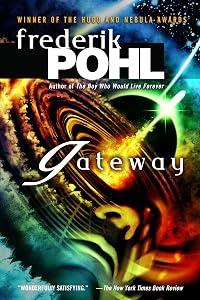
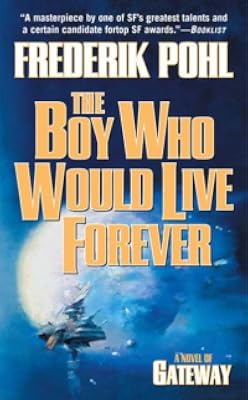
...Jem is not a light story, at times Pohl's commentary on human behaviour is almost cynical. Although parts of the novel appear to be a bit over the top, the author gives the reader plenty to think about. Pohl certainly does not spare us the darker side of human nature. Some science fiction likes to portray exploration of the stars as a scientific and humanitarian effort, one that will lead the species to an utopian future. In Jem, base human emotions such as greed, aggression and mistrust are more important driving forces. The way it confronts the reader with these less favourable aspects of human nature make Jem a very interesting read. It is perhaps not quite as strong as Gateway but certainly more than worth reading.
Full Random show more Comments review show less
Full Random show more Comments review show less
Simply a remarkable book, even better than Gateway and probably one of the top 10 scifi books I have ever read (as of March 2012). The contributions are both anthropological and political. I also always enjoy Pohl's futurology settings, taking place at the beginning of the interesting part of the Space Age. Also, the main character is very accessible, a lot like other space inclined people without a real valuable trait that would earn them a spot in space. There is so much more...
Will be reading the rest of his work soon.
Will be reading the rest of his work soon.
An imaginative world (conveniently with a breathable atmosphere and edible plants), with a typically Seventies message about how people ruin paradise. Not deadly dull, but not too engaging either. Despite the cover blurb, it did not "take its place among such classics as 1984, Brave New World, On the Beach, and Stanger in a Strange Land." If you've read the other four, you will know why.
No deep philosophical or psychological insights, no depth in the societal critique, just normal people doing dumb things.
Chronacronisms include: smoking (largely banned in 1990s); cassette tapes (replaced by CDs and now other media); very non-PC language.
No deep philosophical or psychological insights, no depth in the societal critique, just normal people doing dumb things.
Chronacronisms include: smoking (largely banned in 1990s); cassette tapes (replaced by CDs and now other media); very non-PC language.
Members
- Recently Added By
Published Reviews
ThingScore 75
where Jem works as a novel, it works in ways that would be very satisfying even to people who say they don't like science fiction.
added by Shortride
Lists

S.F. Masterworks (Complete)
229 works; 15 members

SF Masterworks
193 works; 8 members

Books Read in 2025
4,091 works; 97 members
Author Information

640+ Works 42,833 Members
Frederik Pohl was born in New York City on November 26, 1919. More interested in writing than in school, he dropped out of high school in his senior year and took a job with a publishing company. After serving as a public relations officer in the United States Army from 1943 to 1945, he returned to publishing as copywriter for Popular Science, a show more literary agent for several sci-fi writers, and the editor for the magazines Galaxy and If from 1959 until 1969, with If winning three successive Hugo awards. His first published work, a poem entitled Elegy to a Dead Satellite: Luna, was printed in Amazing Stories magazine in 1937 under the pen name Elton Andrews. His first science fiction novels were published in the mid 1960's, some written in collaboration with other writers, others created alone. During his lifetime, he won over 16 major awards for his writing (much of which was published pseudonymously) including six Hugo Awards and three Nebula Awards. His works include Gateway, which won the Campbell Memorial, Hugo, Locus SF, and Nebula Awards, Beyond the Blue Event Horizon, and Jem, which won the National Book Award in 1979. He also embraced blogging in his later years, using his online journal as an ongoing sequel to his autobiography, The Way the Future Was. He died on September 2, 2013 at the age 93. (Bowker Author Biography) show less
Some Editions
Awards and Honors
Awards
Series
Belongs to Publisher Series
Work Relationships
Is contained in
Common Knowledge
- Canonical title*
- JEM - die Konstruktion einer Utopie
- Original title
- Jem - The Making of a Utopia
- Original publication date
- 1979
- People/Characters
- Danny Dalehouse; Marjory Menninger; Ana Dimitrova
- Important places
- Jem
- First words
- When Danny Dalehouse first went to Sofia he did not know it for the first stage in a much longer journey, nor that he would meet some of his future companions.
- Last words
- (Click to show. Warning: May contain spoilers.)Which is much the same thing.
- Blurbers
- Amis, Kingsley; Bear, Greg
- Original language
- English
*Some information comes from Common Knowledge in other languages. Click "Edit" for more information.
Classifications
Statistics
- Members
- 1,071
- Popularity
- 23,893
- Reviews
- 11
- Rating
- (3.35)
- Languages
- 6 — Dutch, English, French, German, Italian, Spanish
- Media
- Paper
- ISBNs
- 16
- ASINs
- 17