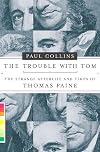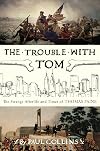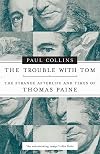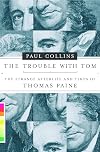
The Trouble with Tom: The Strange Afterlife and Times of Thomas Paine
by Paul Collins
On This Page
Description
Follows the trail of the corpse of the author of "Common Sense," who was shunned as an infidel by the church, buried in an open field on a New York farm, and whose body was later dug up and moved to Britain years later by a well-meaning admirer who nevergot around to burying the remains.Tags
Recommendations






















Member Recommendations

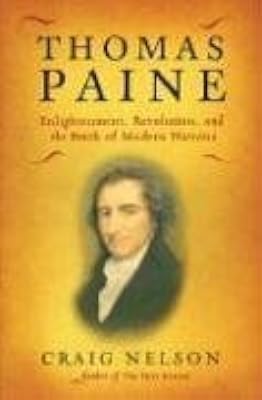
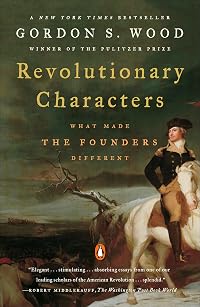
CGlanovsky The author in both books is very present in the text; humorous, unconventional and interesting look at American History
Member Reviews
Paul Collins writes:
He did still have some visitors to break up his loneliness, though. His old friend John Stewart was in the city for a while, and - how time was changing him! Strange to think of all that had passed since their days together in London, reading the day's papers and philosophizing until the wee hours of the morning at the White Bear coffeehouse on Piccadilly. Back in 1790, Stewart had been perhaps the only man in London who could draw more stares than Paine himself. Tall, muscular, and exotic, Stewart had lived the kind of life found only in adventure fiction. He'd shipped out to Madras as a young clerk for the East India Company in 1763, only to decide that - as he announced brusquely in a letter to company directors - show more he was "born for nobler pursuits than to be a copier of invoices and bills of landing to a company of grocers, haberdashers, and cheese-mongers." And he was right: joining an Indian prince as a secretary, he rose through the ranks to become an army general and a prime minister - before, incredibly, throwing it all over to walk on foot through the mountains of Persia and Turkey, the deserts of Arabia and Egypt, deep into Ethiopia and into the terra incognita of central Africa, and then back around the Adriatic and Mediterranean to Paris. When he reached London, he was dubbed by the incredulous press "Walking Stewart." Never was there a more apt name; for he later hiked through Lapland and down into central Asia, and after sailing to New York walked all the way down to Paraguay. Walking Stewart became, as his friend Thomas De Quincey put it, the first circumambulator of the globe. Stewart attributed his survival to two things that struck anyone else back then as incomprehensible: a vegetarian diet, and an utter refusal to ever carry a weapon.
Yes, they'd made quite a pair back then. Paine, a failed grocer and customs officer who had moved to America and overthrown the monarchy, and Stewart, who paraded through Piccadilly in Armenian garb, his mannerisms mixed with those of all the exotic lands he'd walked through, and his speech and accent now a mélange from the innumerable languages he'd learned. It was muttered among onlookers that Paine had become some sort of inventor, going about trying to sell iron bridges - and Stewart, well, nobody knew quite what to make of him at all. The man wouldn't talk of his fantastic travels; instead, he was always distributing bizarre pamphlets he'd privately printed, bearing titles like The Roll of a Tennis Ball Through the Moral World. The few who could read past their strange diction and publication date - for Stewart had invented his own calendar - found all sorts of curious ideas inside. Stewart found it incomprehensible that women put up with child care, and believed the state should establish daytime nurseries so that mothers and fathers might work or improve their minds. He saw nothing wrong with prostitution, and considered it a typical city business like lamplighting or driving a taxi - indeed, he saw little wrong with sex, and so believed there should be "promiscuous intercourse... that the population might not be come redundant."
And now, as they sat aged in Manhattan, Paine and his old friend still warmly disagreed on many issues: Walking Stewart had always been dubious of Paine's cries for overthrowing kings, and he thought Paine's support of voting rights was absurd. What would it come to, Stewart scoffed - giving the vote to women and apprentices as well? And while Stewart was a confirmed atheist, Paine still believed in a God - in an animating moral force, if you will - he just didn't believe in the Bible or in clergy.
But they were both misunderstood geniuses of a sort; Paine found his books banned in England and despised in America, and Stewart brooded over the fate of his own pamphlets as well. He had a notion, he said, of preserving them for posterity. Stewart bid his readers, when done reading him, to bury his books in their gardens at a depth of seven or eight feet. They were to tell no one else of the location; but then, on their deathbeds, they were to breathe the secret to a trusted few. These fellows would keep the secret burial place until their deathbeds years later, and would communicate it again - down though the centuries, and the millennia, a secret society of philosophers passing down at death the sacred memory of the locations of Stewart's writings. Oh - the Circumambulator then feared - but what if someday my works prove unreadable because the English language itself has moldered away by then? He thereupon decided that first his readers should translate the works into Latin, then bury them.
Paine watched his strange friend return to England. Poor John! a traveling ascetic whose only real pleasure had been in music - the man was going deaf now. Their times were drawing near now... too near, in fact. Word came back from across the ocean months later that Stewart's ship had been dashed to pieces on its way to Liverpool. It sounded like he hadn't survived, hadn't even had the chance to pass on his secret burial spots to his brotherhood. show less
He did still have some visitors to break up his loneliness, though. His old friend John Stewart was in the city for a while, and - how time was changing him! Strange to think of all that had passed since their days together in London, reading the day's papers and philosophizing until the wee hours of the morning at the White Bear coffeehouse on Piccadilly. Back in 1790, Stewart had been perhaps the only man in London who could draw more stares than Paine himself. Tall, muscular, and exotic, Stewart had lived the kind of life found only in adventure fiction. He'd shipped out to Madras as a young clerk for the East India Company in 1763, only to decide that - as he announced brusquely in a letter to company directors - show more he was "born for nobler pursuits than to be a copier of invoices and bills of landing to a company of grocers, haberdashers, and cheese-mongers." And he was right: joining an Indian prince as a secretary, he rose through the ranks to become an army general and a prime minister - before, incredibly, throwing it all over to walk on foot through the mountains of Persia and Turkey, the deserts of Arabia and Egypt, deep into Ethiopia and into the terra incognita of central Africa, and then back around the Adriatic and Mediterranean to Paris. When he reached London, he was dubbed by the incredulous press "Walking Stewart." Never was there a more apt name; for he later hiked through Lapland and down into central Asia, and after sailing to New York walked all the way down to Paraguay. Walking Stewart became, as his friend Thomas De Quincey put it, the first circumambulator of the globe. Stewart attributed his survival to two things that struck anyone else back then as incomprehensible: a vegetarian diet, and an utter refusal to ever carry a weapon.
Yes, they'd made quite a pair back then. Paine, a failed grocer and customs officer who had moved to America and overthrown the monarchy, and Stewart, who paraded through Piccadilly in Armenian garb, his mannerisms mixed with those of all the exotic lands he'd walked through, and his speech and accent now a mélange from the innumerable languages he'd learned. It was muttered among onlookers that Paine had become some sort of inventor, going about trying to sell iron bridges - and Stewart, well, nobody knew quite what to make of him at all. The man wouldn't talk of his fantastic travels; instead, he was always distributing bizarre pamphlets he'd privately printed, bearing titles like The Roll of a Tennis Ball Through the Moral World. The few who could read past their strange diction and publication date - for Stewart had invented his own calendar - found all sorts of curious ideas inside. Stewart found it incomprehensible that women put up with child care, and believed the state should establish daytime nurseries so that mothers and fathers might work or improve their minds. He saw nothing wrong with prostitution, and considered it a typical city business like lamplighting or driving a taxi - indeed, he saw little wrong with sex, and so believed there should be "promiscuous intercourse... that the population might not be come redundant."
And now, as they sat aged in Manhattan, Paine and his old friend still warmly disagreed on many issues: Walking Stewart had always been dubious of Paine's cries for overthrowing kings, and he thought Paine's support of voting rights was absurd. What would it come to, Stewart scoffed - giving the vote to women and apprentices as well? And while Stewart was a confirmed atheist, Paine still believed in a God - in an animating moral force, if you will - he just didn't believe in the Bible or in clergy.
But they were both misunderstood geniuses of a sort; Paine found his books banned in England and despised in America, and Stewart brooded over the fate of his own pamphlets as well. He had a notion, he said, of preserving them for posterity. Stewart bid his readers, when done reading him, to bury his books in their gardens at a depth of seven or eight feet. They were to tell no one else of the location; but then, on their deathbeds, they were to breathe the secret to a trusted few. These fellows would keep the secret burial place until their deathbeds years later, and would communicate it again - down though the centuries, and the millennia, a secret society of philosophers passing down at death the sacred memory of the locations of Stewart's writings. Oh - the Circumambulator then feared - but what if someday my works prove unreadable because the English language itself has moldered away by then? He thereupon decided that first his readers should translate the works into Latin, then bury them.
Paine watched his strange friend return to England. Poor John! a traveling ascetic whose only real pleasure had been in music - the man was going deaf now. Their times were drawing near now... too near, in fact. Word came back from across the ocean months later that Stewart's ship had been dashed to pieces on its way to Liverpool. It sounded like he hadn't survived, hadn't even had the chance to pass on his secret burial spots to his brotherhood. show less
I enjoyed this book (recommended by a friend) but I’m not at all sure how to describe it. It’s not about Tom Paine or his ideas and publications, although there are little bits and pieces about that. It’s more about the insanely peculiar things that happened to his remains after he died. But, it’s not really about that either, it’s more about the various people who had something to do with his remains. Except actually, many of the people in the book had nothing to do with Paine’s remains, they just interacted with other people who did have something to do with the remains, or even a few steps further away from that. And it’s about the author, researching all this madness and visiting the current day locations where some of show more this stuff happened.
It’s fun to read, there’s lots of weird history involved, some famous people (like Thoreau and Emerson) and some real kooks and oddballs who got involved somehow. Also a lot about phrenology, which evidently was very popular for a while. show less
It’s fun to read, there’s lots of weird history involved, some famous people (like Thoreau and Emerson) and some real kooks and oddballs who got involved somehow. Also a lot about phrenology, which evidently was very popular for a while. show less
With cleverly titled chapters, "Here" "There" and "Everywhere" Collins takes us back and forth. America to England to America searching for Paine's bones. This story is as much about Paine but about the people who were inspired to search for Paine's bones. A far more interesting tale when told by Collins. This book is best read in one sitting not piecemeal as I have done. Collins jumps back and forth so much in places an time a reader could easily become confused where they were last time.
The history following Pine's death of America and England is so much more than emancipation , Lincoln and Civil War. Phrenology, birth control, women's rights, death/debt practices, relics, mediums, publishing....wow so interesting.
The people involved show more E.B. Foote, Fowler, Cobbett and Conway plus all the authors that they hung out with are much more interesting when related in this book than a normal history work. This book reads like a Forrest Gump movie, Charles Darwin, Mark Twain, Walt Whitman, Thoreau, and on and on.
14-2008 show less
The history following Pine's death of America and England is so much more than emancipation , Lincoln and Civil War. Phrenology, birth control, women's rights, death/debt practices, relics, mediums, publishing....wow so interesting.
The people involved show more E.B. Foote, Fowler, Cobbett and Conway plus all the authors that they hung out with are much more interesting when related in this book than a normal history work. This book reads like a Forrest Gump movie, Charles Darwin, Mark Twain, Walt Whitman, Thoreau, and on and on.
14-2008 show less
Ratings
Members
- Recently Added By
Author Information

10+ Works 3,889 Members
Common Knowledge
- Canonical title
- The Trouble with Tom: The Strange Afterlife and Times of Thomas Paine
- Original publication date
- 2005
- People/Characters
- Thomas Paine; William Cobbett; Moncure Daniel Conway; Dr. Edward B. Foote; John "Walking" Stewart; Orson Fowler (show all 10); Henry David Thoreau; Ralph Waldo Emerson; Richard Carlile; Walt Whitman
- Epigraph
- But who knows the fate of his bones, or how often he is to be buried? Who hath the oracle of his ashes, or whither they are to be scattered? The relics of many lie like the ruins of Pompey's, in all parts of the earth; and wh... (show all)en they arrive at your hands these may seem to have wandered far, who, in a direct and meridian travel, have but a few miles of known earth between yourself and the pole. -Sir Thomas Browne, "Hydriotaphia, or Urne-Buriall" (1658)
- Dedication
- To Bramwell
- First words
- A taxi speeds through the rain, dashing water up onto the sidewalks of Bleecker Street like a flume ride.
- Last words
- (Click to show. Warning: May contain spoilers.)Reader, where is he not?
Classifications
- Genres
- Nonfiction, History, Biography & Memoir, General Nonfiction, Philosophy
- DDC/MDS
- 320.51 — Society, government, & culture Political science Types of Government Political ideologies Liberalism
- LCC
- JC178 .V2 .C65 — Political Science Political theory Political theory. The state. Theories of the state Modern state Thomas Paine
- BISAC
Statistics
- Members
- 247
- Popularity
- 131,549
- Reviews
- 4
- Rating
- (3.95)
- Languages
- English
- Media
- Paper, Audiobook, Ebook
- ISBNs
- 6
- ASINs
- 3