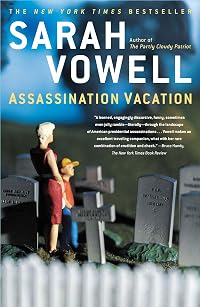
Assassination Vacation
by Sarah Vowell
On This Page
Description
Sarah Vowell exposes the glorious conundrums of American history and culture with wit, probity, and an irreverent sense of humor. With Assassination Vacation, she takes us on a road trip like no other -- a journey to the pit stops of American political murder and through the myriad ways they have been used for fun and profit, for political and cultural advantage. From Buffalo to Alaska, Washington to the Dry Tortugas, Vowell visits locations immortalized and influenced by the spilling of show more politically important blood, reporting as she goes with her trademark blend of wisecracking humor, remarkable honesty, and thought-provoking criticism. We learn about the jinx that was Robert Todd Lincoln (present at the assassinations of Presidents Lincoln, Garfield, and McKinley) and witness the politicking that went into the making of the Lincoln Memorial. The resulting narrative is much more than an entertaining and informative travelogue -- it is the disturbing and fascinating story of how American death has been manipulated by popular culture, including literature, architecture, sculpture, and -- the author's favorite -- historical tourism. Though the themes of loss and violence are explored and we make detours to see how the Republican Party became the Republican Party, there are all kinds of lighter diversions along the way into the lives of the three presidents and their assassins, including mummies, show tunes, mean-spirited totem poles, and a nineteenth-century biblical sex cult. show lessTags
Recommendations




Member Recommendations


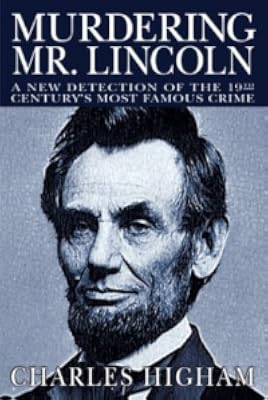
CGlanovsky The author in both books is very present in the text; humorous, unconventional and interesting look at American History
Member Reviews
What do you get if you mix American history, breeziness, humor, sarcasm, and sassiness together? If you’re lucky, you may discover Sarah Vowell’s ASSASSINATION VACATION.
After watching Stephen Sondheim’s Assassins, a musical about the men who killed Presidents Abraham Lincoln, John Garfield, and William McKinley, Sarah Vowell took off to learn more about the men and the victims. She traveled the US to the locations of the murders, the burial sites, and anything else she could find out about the perpetrators.
Along the way, she learned about some similarities and differences among the three events. She wrote: “It’s one of the perks of assassination. In death, you get upgraded into a saint no matter how much people hated you in show more life.”
“I am only slightly less astonished by the egotism of the assassins, the inflated self-esteem it requires to kill a president, than I am astonished by the men who run for president. These are the people who have the gall to believe they can fix us–us and our deficit, our fossil fuels, our racism, poverty, our potholes and public schools.”
She writes about Dr. Samuel Mudd who treated Booth and was later called a conspirator. Was he innocent or guilty?
A Missouri state senator complimented a Southern Magazine for setting the record straight and defending Confederate leaders. That man, John Ashcroft, later became the U.S. Attorney General.
Charles J. Guiteau would later claim he was not responsible for Garfield’s death; Garfield’s doctors were. Technically, he was right.
She elaborates on some strange coincidences. Among them: Robert Todd Lincoln was closely associated with all three events. (In German, todd means death.) Booth was physically close to Lincoln on several occasions. He was even on the podium behind him when he delivered his second inaugural address.
“When I told a friend I was writing about the McKinley administration, he...asked” why anyone would want to read about that?” “Oh, I don’t know...Maybe because we seem to be reliving it.” She continues to prove that those who do not remember history are condemned to relive it: Samuel Tilden received more popular votes than Rutherford B. Hayes. In January 1877, the Republicans on the electoral commission “persuaded the Democrats to ‘elect’ Hayes by agreeing to end reconstruction. (Hard to believe that the candidate who lost the popular vote could actually become the president of the United States. Luckily, that kind of travesty never happened again.)”
More turmoil erupted during the 1880 election when U.S. Grant was seeking a third term. “I’ll admit I rolled my eyes at the ideological hairsplitting, wondering how a group of people who more or less agreed with one another abut most issues could summon forth such stark animosity. Thankfully, we Americans have evolved, our hearts made larger, our minds more open, welcoming the negligible differences among our fellows with compassion and respect.”
Among her tidbits of information was “Slavery...wasn’t a European import but native to American shores.” The north was also involved as it sought to get molasses and rum.
“Maryland, My Maryland” was written in 1861 but was not the official state song until 1939. It includes lines including “sic semper!”, a reference to the state’s motto, “Sic semper tyrannis” the words hollered by John Wilkes Booth, calls Lincoln a despot, and refers to the North as “scum.” When he bombed the Murrah Federal Building in Oklahoma City in 1995, Timothy McVeigh wore a T-shirt with a picture of Lincoln on the front as well as the words, “Sic semper tyrannis.” The shirt instantly became a big seller.
On June 9, 1863, “Just as the pallbearers were carrying [Edwin Booth’s] coffin out the door in New York, in Washington, three floors of Ford’s Theater collapsed...It had been turned into a government office building after the Lincoln assassination. Twenty-two federal employees died.
At the time Garfield ran for President, the best paid government job? New York Custom House collectors. “The Custom House collected two-thirds of the federal government’s revenue.”
The employees, especially the director, were free to siphon off their share first.
“The sad thing about Garfield’s eleven volumes of Sumner’s Works”is that it’s a fifteen-volume set.”
McKinley felt the best thing the US could do for the Filipinos was to “educate, uplift, and Christianize them.” He ignored the fact that most were already Christian because of the Spanish missionaries who arrived in 1565 to convert them to Catholicism.
What really caused the explosion on the U.S. battleship, the Maine which lead to the Spanish-American War?
Vowell spent time talking with tour guides and was able to learn a lot more about her subjects than that given in the typical tour. She did this not by private interviews but by asking questions during the tours.
ASSASSINATION VACATION was a delightful, informative history lesson. I highly recommend it to anyone interested in history, particularly the presidential assassinations, who doesn’t want to wade through a lot of boring, fleshless words. For those who aren’t history buffs, you’ll probably enjoy it as well for its writing style and presentation of information you didn’t think you’d care about. show less
After watching Stephen Sondheim’s Assassins, a musical about the men who killed Presidents Abraham Lincoln, John Garfield, and William McKinley, Sarah Vowell took off to learn more about the men and the victims. She traveled the US to the locations of the murders, the burial sites, and anything else she could find out about the perpetrators.
Along the way, she learned about some similarities and differences among the three events. She wrote: “It’s one of the perks of assassination. In death, you get upgraded into a saint no matter how much people hated you in show more life.”
“I am only slightly less astonished by the egotism of the assassins, the inflated self-esteem it requires to kill a president, than I am astonished by the men who run for president. These are the people who have the gall to believe they can fix us–us and our deficit, our fossil fuels, our racism, poverty, our potholes and public schools.”
She writes about Dr. Samuel Mudd who treated Booth and was later called a conspirator. Was he innocent or guilty?
A Missouri state senator complimented a Southern Magazine for setting the record straight and defending Confederate leaders. That man, John Ashcroft, later became the U.S. Attorney General.
Charles J. Guiteau would later claim he was not responsible for Garfield’s death; Garfield’s doctors were. Technically, he was right.
She elaborates on some strange coincidences. Among them: Robert Todd Lincoln was closely associated with all three events. (In German, todd means death.) Booth was physically close to Lincoln on several occasions. He was even on the podium behind him when he delivered his second inaugural address.
“When I told a friend I was writing about the McKinley administration, he...asked” why anyone would want to read about that?” “Oh, I don’t know...Maybe because we seem to be reliving it.” She continues to prove that those who do not remember history are condemned to relive it: Samuel Tilden received more popular votes than Rutherford B. Hayes. In January 1877, the Republicans on the electoral commission “persuaded the Democrats to ‘elect’ Hayes by agreeing to end reconstruction. (Hard to believe that the candidate who lost the popular vote could actually become the president of the United States. Luckily, that kind of travesty never happened again.)”
More turmoil erupted during the 1880 election when U.S. Grant was seeking a third term. “I’ll admit I rolled my eyes at the ideological hairsplitting, wondering how a group of people who more or less agreed with one another abut most issues could summon forth such stark animosity. Thankfully, we Americans have evolved, our hearts made larger, our minds more open, welcoming the negligible differences among our fellows with compassion and respect.”
Among her tidbits of information was “Slavery...wasn’t a European import but native to American shores.” The north was also involved as it sought to get molasses and rum.
“Maryland, My Maryland” was written in 1861 but was not the official state song until 1939. It includes lines including “sic semper!”, a reference to the state’s motto, “Sic semper tyrannis” the words hollered by John Wilkes Booth, calls Lincoln a despot, and refers to the North as “scum.” When he bombed the Murrah Federal Building in Oklahoma City in 1995, Timothy McVeigh wore a T-shirt with a picture of Lincoln on the front as well as the words, “Sic semper tyrannis.” The shirt instantly became a big seller.
On June 9, 1863, “Just as the pallbearers were carrying [Edwin Booth’s] coffin out the door in New York, in Washington, three floors of Ford’s Theater collapsed...It had been turned into a government office building after the Lincoln assassination. Twenty-two federal employees died.
At the time Garfield ran for President, the best paid government job? New York Custom House collectors. “The Custom House collected two-thirds of the federal government’s revenue.”
The employees, especially the director, were free to siphon off their share first.
“The sad thing about Garfield’s eleven volumes of Sumner’s Works”is that it’s a fifteen-volume set.”
McKinley felt the best thing the US could do for the Filipinos was to “educate, uplift, and Christianize them.” He ignored the fact that most were already Christian because of the Spanish missionaries who arrived in 1565 to convert them to Catholicism.
What really caused the explosion on the U.S. battleship, the Maine which lead to the Spanish-American War?
Vowell spent time talking with tour guides and was able to learn a lot more about her subjects than that given in the typical tour. She did this not by private interviews but by asking questions during the tours.
ASSASSINATION VACATION was a delightful, informative history lesson. I highly recommend it to anyone interested in history, particularly the presidential assassinations, who doesn’t want to wade through a lot of boring, fleshless words. For those who aren’t history buffs, you’ll probably enjoy it as well for its writing style and presentation of information you didn’t think you’d care about. show less
Sarah Vowell is a nut. But she’s my kind of nut. She’s obsessed with presidential assassinations (especially that of Abraham Lincoln), and this book details her trips (pilgrimages) to sites associated with Presidents Garfield, Lincoln, and McKinley during their lives, their deaths, and their afterlives (in the form of memorials, museums, and statues).
But Vowell is funny—these aren’t dry recountings of academic research trips, they’re filled with stories of her encounters with others along the way, and their reactions to her enthusiasm for discussing these assassinations.
But Vowell is funny—these aren’t dry recountings of academic research trips, they’re filled with stories of her encounters with others along the way, and their reactions to her enthusiasm for discussing these assassinations.
This book inspired in me a deep admiration for both historical plaques and James Garfield - not two things I'd ever had much of an opinion about before. Her focus on patterns among the assassinations (e.g., the presence of poor Robert Todd Lincoln) keeps the book feeling tied together, but I also like that she admits that we basically only see (want to see) the patterns for comfort. The structure of the first three sections of the book - sort of like the assassination was at the center with lines about the location, the people, their background, &c. branching off - did sometimes make it a little hard to get back into the book after I'd put it down, but overall it felt like a great charming/morbid jaunt through place and time.
A re-read of a favorite, inspired by learning more from the copious history podcasts I've been recently consuming teaching me more about the presidential assassinations in question. Sarah Vowell's distinctive mixture of unabashed nerdy enthusiasm, thorough knowledge of her subjects, and wry humor is always a delight, and the strong morbid streak we both share, which has particular cause to shine here due to the subject matter, means this book will probably forever be my favorite of hers. This re-read was also fun because in the time since my first reading I've had the chance to visit several of the places discussed--and I was also thrilled when she referred to findagrave.com as "my favorite website" (SAME).
Brief Description: Sarah Vowell goes on vacation to learn more about the assassins of Presidents Abraham Lincoln, James Garfield and William McKinley. Hilarity (as well as pointed political criticism, weird historical factoids, and astute observations) ensue.
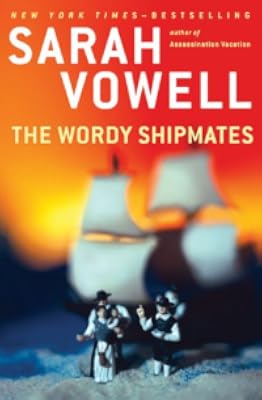
My Thoughts: This was my first exposure to the irreverent, sharp-witted, sarcastic and intelligent view of history that Sarah Vowell provides and it was a real treat! I’ll admit that when I first started the audio and heard Vowell’s rather quirky voice, I had a moment of panic. “I can’t listen to 7 hours of this,” I thought. But I persevered, and after about 10 minutes, I settled into Vowell’s unique phrasing, pacing and voice and really began to enjoy myself. I suspect show more that this might be a book that is better listened to than read as it meanders quite a bit (but in most enjoyable way). It ends up feeling like a long conversation with a smart but oddball friend who has a wicked sense of humor telling you about her rather odd summer vacation. Part history, part political criticism, part pop culture snark, this was a fun listen and made me a Vowell fan. In fact, I’m listening to her take on the Puritans in The Wordy Shipmates right now. show less
My Thoughts: This was my first exposure to the irreverent, sharp-witted, sarcastic and intelligent view of history that Sarah Vowell provides and it was a real treat! I’ll admit that when I first started the audio and heard Vowell’s rather quirky voice, I had a moment of panic. “I can’t listen to 7 hours of this,” I thought. But I persevered, and after about 10 minutes, I settled into Vowell’s unique phrasing, pacing and voice and really began to enjoy myself. I suspect show more that this might be a book that is better listened to than read as it meanders quite a bit (but in most enjoyable way). It ends up feeling like a long conversation with a smart but oddball friend who has a wicked sense of humor telling you about her rather odd summer vacation. Part history, part political criticism, part pop culture snark, this was a fun listen and made me a Vowell fan. In fact, I’m listening to her take on the Puritans in The Wordy Shipmates right now. show less
I love Sarah Vowell. I first learned about her from This American Life on NPR. Then I think I remember her appearing on A Prairie Home Companion. I also read “The Partly Cloudy Patriot.” This book, “Assassination Vacation,” is about Sarah’s pilgrimage through the stories of the assassinated U.S. presidents and their assassins. I think the only way to “read” Sarah Vowell is to listen to her books, which she narrates. I can’t imagine anyone else reading Sarah’s books. If you ever hear someone criticize Sarah Vowell’s voice, immediately dismiss that person. That person knows nothing and shouldn’t be allow to listen to Sarah Vowel. Her words give a delightful voice to what she is writing about, and her voice provides show more the icing on the cake which shouldn’t be missed. I guess what I am saying is if you decide to read one of Sarah Vowell’s books, don’t bother buying a print version. Go right to Audible.com (or your local library like I did) and order that version. To say I enjoyed “Assassination Vacation” is an understatement. Every history teacher in the U.S. should use Sarah Vowell to teach history. show less
Sarah Vowell’s Assassination Vacation examines the lives, presidencies, and assassinations of Abraham Lincoln, James A. Garfield, and William McKinley as well as the people in their lives and their actual assassins, John Wilkes Booth, Charles Guiteau, and Leon Czolgosz. She writes in the style of a travelogue, visiting places relevant to the presidents, their assassins, and the sites of the assassinations themselves. These take her to Illinois, throughout Washington, D.C., to Mentor, OH, to Buffalo, NY, throughout areas in Virginia and Maryland, as far away as Dry Tortugas National Park and as close at home as her Oneida teapot. Through it all, she examines the natures of these men and studies their motivations either to seek the show more presidency or to remove the president. Finally, she concludes with a study of Robert Todd Lincoln, who was unfortunate to either be related to one of the victims, witness one of the assassinations, or just be entering the city when and where another assassination occurred.
Vowell’s dry wit comes through, particularly as she wrote in the shadow of the early days of the Iraq War and cannot help but draw political comparisons to other times of political and military turmoil in the late nineteenth and early twentieth centuries. For myself, I was particularly interested as I had either visited several of the locations in the past – the McKinley Shooting Rock, the Theodore Roosevelt Inaugural National Historic Site, Ford’s Theatre, the White House, the Seward House Museum, and more – or was passing through the areas relevant to James Garfield as I read this book, taking the opportunity to visit the President Garfield Memorial and James A. Garfield National Historic Site. Those with an interest in history, especially those who are excited to stop and read an historic plaque or visit the site of an historic event, will find this a particularly enjoyable read. show less
Vowell’s dry wit comes through, particularly as she wrote in the shadow of the early days of the Iraq War and cannot help but draw political comparisons to other times of political and military turmoil in the late nineteenth and early twentieth centuries. For myself, I was particularly interested as I had either visited several of the locations in the past – the McKinley Shooting Rock, the Theodore Roosevelt Inaugural National Historic Site, Ford’s Theatre, the White House, the Seward House Museum, and more – or was passing through the areas relevant to James Garfield as I read this book, taking the opportunity to visit the President Garfield Memorial and James A. Garfield National Historic Site. Those with an interest in history, especially those who are excited to stop and read an historic plaque or visit the site of an historic event, will find this a particularly enjoyable read. show less
Members
- Recently Added By
Lists

LT picks: Blue Books
197 works; 44 members

NPR Readers Poll: 100 Favorite Funny Books
100 works; 5 members

Summer Reads 2014
207 works; 70 members

Simon & Schuster
136 works; 4 members

Books Read in 2006
421 works; 8 members

Female Author
1,234 works; 67 members
Author Information

13+ Works 16,829 Members
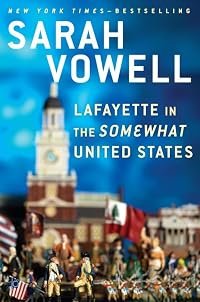
Sarah Vowell lives in New York City. Sarah Vowell was born in Muskogee, Oklahoma on December 27, 1969. She received a B.A. in modern languages and literatures from Montana State University in 1993 and an M.A. in art history from the School of the Art Institute of Chicago in 1996. She has written several nonfiction books including The Wordy show more Shipmates, Assassination Vacation, Radio On, Unfamiliar Fishes, and Lafayette in the Somewhat United States. She has also written two essay collections entitled The Partly Cloudy Patriot and Take the Cannoli. She was a contributing editor for the radio program This American Life on Public Radio International from 1996-2008. Her work has been published in numerous publications including The Village Voice, Esquire, GQ, Spin, The New York Times, Los Angeles Times, and the SF Weekly. She was also the voice of Violet in the animated film The Incredibles. (Bowker Author Biography) show less
Some Editions
Awards and Honors
Awards
Distinctions
Work Relationships
Is abridged in
Common Knowledge
- Canonical title
- Assassination Vacation
- Original publication date
- 2005
- People/Characters
- George A. Atzerodt; John Wilkes Booth; Leon F. Czolgosz; James Abram Garfield; Charles Guiteau; David Herold (show all 14); Abraham Lincoln; Robert Todd Lincoln; William McKinley; Samuel A. Mudd; Lewis Powell; Theodore Roosevelt; John Harrison Surratt, Jr.; Mary Surratt
- Important places
- Washington, D.C., USA; Buffalo, New York, USA; New York, New York, USA; Dry Tortugas National Park, Florida, USA; Lincoln Memorial, Washington, D.C., USA; Clinton, Maryland, USA (show all 7); Baltimore, Maryland, USA
- Important events
- Assassination of Abraham Lincoln; Assassination of James A. Garfield; Spanish-American War; Assassination of William McKinley; Pan-American Exposition
- Epigraph
- In the Middle Ages, relics spawned a continentwide craze. Devotees packed their bags and streamed out of towns and villages, thronging the pilgrimage trails. For most, a journey to see the relic of St. Thomas or St. James off... (show all)ered the only valid excuse for leaving home.
Anneli Rufus Magnificent Corpses
"The real Lincoln exists in my mind," Pris said.
I was astonished. "You don't believe that. What do you mean by saying that? You mean that you have the idea in your mind."
She cocked her head on o... (show all)ne side and eyed me. "No, Louis. I really have Lincoln in my mind. And I've been working night after night to transfer him out of my mind, back into the outside world."
Philip K. Dick We Can Build You
That's what writing is. You're keeping people alive in your head.
Carl Reiner - Dedication
- In memory of Carlile Vowell (1904–1995)
Grandfather, principal, history teacher, Muskogee County commissioner, wiseacre, and Democrat. What I wouldn't give to hear him cuss that a book about three Republicans has been de... (show all)dicated in his name. - First words
- One night last summer, all the killers in my head assembled on a stage in Massachusetts to sing show tunes.
- Quotations
- Going to Ford's Theatre to watch the play is like going to Hooters for the food.
- Last words
- (Click to show. Warning: May contain spoilers.)They shot him too.
- Disambiguation notice
- Please do not combine the abridged audiobook of Sarah Vowell's Assassination Vacation with the unabridged full text of that work. Thank you.
Classifications
Statistics
- Members
- 4,785
- Popularity
- 2,978
- Reviews
- 171
- Rating
- (4.02)
- Languages
- English
- Media
- Paper, Audiobook, Ebook
- ISBNs
- 11
- ASINs
- 11