
Stiff: The Curious Lives of Human Cadavers
by Mary Roach
On This Page
Description
An oddly compelling, often hilarious exploration of the strange lives of our bodies postmortem.For 2,000 years, cadavers---some willingly, some unwittingly---have been involved in science's boldest strides and weirdest undertakings. They've tested France's first guillotines, ridden the NASA Space Shuttle, been crucified in a Parisian laboratory to test the authenticity of the Shroud of Turin, and helped solve the mystery of TWA Flight 800. For every new surgical procedure---from heart show more transplants to gender reassignment surgery---cadavers have been there alongside surgeons, making history in their quiet way.
In this fascinating, ennobling account, Mary Roach visits the good deeds of cadavers over the centuries---from the anatomy labs and human-sourced pharmacies of medieval and nineteenth-century Europe to a human decay research facility in Tennessee, to a plastic surgery practice lab, to a Scandinavian funeral directors' conference on human composting. In her droll, inimitable voice, Roach tells the engrossing story of our bodies when we are no longer with them.
. show less
Tags
Recommendations



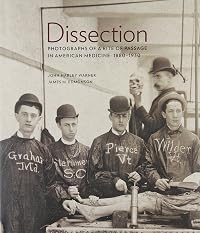
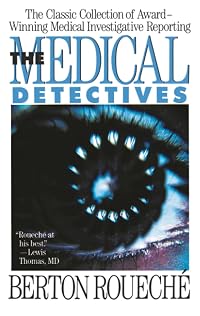
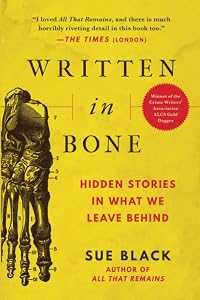
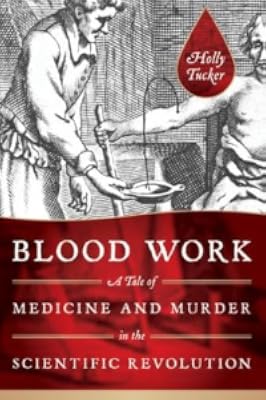



Member Recommendations
BookshelfMonstrosity These engaging, unusual accounts deal with the human body after death. Smoke Gets in Your Eyes wittily relates the work of an assistant in a crematorium, while Stiff presents an entertaining account of what happens with cadavers.
40

PuddinTame If you liked either on of these books, I recommend trying the other author. Both offer nitty-gritty medical details leavened with humor, which helps make the gross details more bearable. For my money, Mary Roach is funnier, but I thoroughly enjoyed both authors
Member Reviews
This book is probably one of the most unique books I will ever read. Writers spend most of their careers on writing about the living, both real and fictional - so reading about cadavers (the scientific term for corpses) was an eye-opening experience, in more ways than one.
Cadavers have been awkward to read and write about - understandably, people don't want to think about what happens to people after they're dead, because that inevitably leads to the sometimes distressing thought of one's own mortality.
But this book breaks all such inhibitions and throws them out of the window. If you're squeamish, don't expect this to be a clean and cheerful ride. Mary Roach makes you realise, by the end of the book, about how cadavers are used show more everywhere - ranging from good (crash testing) and neutral (bullet impact testing), to the controversial (testing if Jesus was really crucified, by crucifying cadavers). The descriptions are, to put it diplomatically, anatomically accurate.
'Tis not a completely nihilistic ride though. The author's tales of embarrassment and mortification are laugh-out-loud (a phrase which I would never imagine saying for a book about the deceased), and the author makes you think about topics which you would normally never think about - such as dissection, who should be given responsibility over the remains, and human head transplants.
TL;DR - a unique and immensely readable work, describing the heavy topic of the deceased with the depth and breadth it deserves - sometimes morbid, sometimes hilarious, but always entertaining. A must read if you have a strong stomach, and can think about your own mortality without dissolving into a mess. show less
Cadavers have been awkward to read and write about - understandably, people don't want to think about what happens to people after they're dead, because that inevitably leads to the sometimes distressing thought of one's own mortality.
But this book breaks all such inhibitions and throws them out of the window. If you're squeamish, don't expect this to be a clean and cheerful ride. Mary Roach makes you realise, by the end of the book, about how cadavers are used show more everywhere - ranging from good (crash testing) and neutral (bullet impact testing), to the controversial (testing if Jesus was really crucified, by crucifying cadavers). The descriptions are, to put it diplomatically, anatomically accurate.
'Tis not a completely nihilistic ride though. The author's tales of embarrassment and mortification are laugh-out-loud (a phrase which I would never imagine saying for a book about the deceased), and the author makes you think about topics which you would normally never think about - such as dissection, who should be given responsibility over the remains, and human head transplants.
TL;DR - a unique and immensely readable work, describing the heavy topic of the deceased with the depth and breadth it deserves - sometimes morbid, sometimes hilarious, but always entertaining. A must read if you have a strong stomach, and can think about your own mortality without dissolving into a mess. show less
This is not a book for everyone.
In STIFF, Mary Roach researches what is done with the dead. It's a fascinating book, especially if you enjoy obscure trivia. Roach uses just enough wit to soften the subject matter without making it irreverent (though some would find the entire subject appalling). Topics included practicing surgery on the dead, body snatching, human crash test dummies, what bodies say about airplane crashes, the search for the soul, and cannibalism. Is it gross? Yes. Was I squeamish? A little bit, but I also read the book during many meals and had no issues. For me, the grossest sections were near the end, especially in regards to human head transplantations. Those poor, poor experimental dogs and monkeys with two show more heads...
An example of the book's tone can be seen here, from page 139 regarding a gelatin used to simulate a thigh in weapon's tests:
"Ballistic gelatin is essentially a tweaked version of Knox dessert gelatin. It is denser than dessert gelatin, having been formulated to match the average density of human tissue, is less colorful, and, lacking sugar, is less likely to please dinner guests."
I found the book quite insightful and already placed several sticky bookmarks for subject matter I will want to review again. show less
In STIFF, Mary Roach researches what is done with the dead. It's a fascinating book, especially if you enjoy obscure trivia. Roach uses just enough wit to soften the subject matter without making it irreverent (though some would find the entire subject appalling). Topics included practicing surgery on the dead, body snatching, human crash test dummies, what bodies say about airplane crashes, the search for the soul, and cannibalism. Is it gross? Yes. Was I squeamish? A little bit, but I also read the book during many meals and had no issues. For me, the grossest sections were near the end, especially in regards to human head transplantations. Those poor, poor experimental dogs and monkeys with two show more heads...
An example of the book's tone can be seen here, from page 139 regarding a gelatin used to simulate a thigh in weapon's tests:
"Ballistic gelatin is essentially a tweaked version of Knox dessert gelatin. It is denser than dessert gelatin, having been formulated to match the average density of human tissue, is less colorful, and, lacking sugar, is less likely to please dinner guests."
I found the book quite insightful and already placed several sticky bookmarks for subject matter I will want to review again. show less
I listened to this audiobook and I loved the narrator. She caught exactly the humour that Mary Roach infused into this subject which seems like the last topic you could make enjoyable.
Mary Roach examines all the ways in which dead bodies can be and have been disposed of. Much of the book is about using cadavers for scientific research or teaching anatomy. I've always known that medical and other students need dead bodies in order to study human anatomy. As a person who didn't even want to dissect a rat in biology I know that would be something I could never do. However, it does seem like a good idea for people who want to treat humans to know how all the organs and bones and muscles work. I'm still not convinced to leave my body for show more that use although I signed my organ donor card decades ago. But some of the other uses of cadavers were surprising to me, such as using them to test what happens in car crashes. Apparently, crash test dummies just can't replicate the way a real body will handle an air bag release when a vehicle is hit. Roach managed to get into all kinds of labs where cadavers are used and she seemed to really enjoy that. Again, not my cup of tea.
The chapters on alternatives to burial or cremation were the most interesting to me. I long ago decided I wasn't going to be put into a coffin and take up a plot of land. About the only other alternative is to be cremated but there may be a time coming when bodies could be composted or freeze-dried and broken into powder. I like the idea of this greener alternative to cremation but it is not available in Canada yet. I wonder what Greenpeace and the David Suzuki Foundation have to say about green ways of disposing of your body.
This book was first released 20 years ago but Roach has done an afterword for a new edition. Unfortunately, this audiobook didn't include that. I watched a Q & A Zoom session with Roach but if other readers don't have that opportunity, then I recommend getting the updated book. show less
Mary Roach examines all the ways in which dead bodies can be and have been disposed of. Much of the book is about using cadavers for scientific research or teaching anatomy. I've always known that medical and other students need dead bodies in order to study human anatomy. As a person who didn't even want to dissect a rat in biology I know that would be something I could never do. However, it does seem like a good idea for people who want to treat humans to know how all the organs and bones and muscles work. I'm still not convinced to leave my body for show more that use although I signed my organ donor card decades ago. But some of the other uses of cadavers were surprising to me, such as using them to test what happens in car crashes. Apparently, crash test dummies just can't replicate the way a real body will handle an air bag release when a vehicle is hit. Roach managed to get into all kinds of labs where cadavers are used and she seemed to really enjoy that. Again, not my cup of tea.
The chapters on alternatives to burial or cremation were the most interesting to me. I long ago decided I wasn't going to be put into a coffin and take up a plot of land. About the only other alternative is to be cremated but there may be a time coming when bodies could be composted or freeze-dried and broken into powder. I like the idea of this greener alternative to cremation but it is not available in Canada yet. I wonder what Greenpeace and the David Suzuki Foundation have to say about green ways of disposing of your body.
This book was first released 20 years ago but Roach has done an afterword for a new edition. Unfortunately, this audiobook didn't include that. I watched a Q & A Zoom session with Roach but if other readers don't have that opportunity, then I recommend getting the updated book. show less
This was the third book I listened to on my roadtrip to/from Indiana. I loved this. It was the first Mary Roach I'd ever read, and I'm kicking myself that I hadn't picked anything up by her sooner.
The reader for the audiobook is fantastic and I thought she really brought the right combination of snark, humor, and curiosity to Roach's writing. I'm a bit bummed that the other books have a different reader who from the samples I listened to I don't like as much.
This book was completely fascinating and covered a large expanse of history to the present day in how we treat dead human bodies. I enjoyed it and laughed and smiled, was engrossed by the macabre, and was a bit uncomfortable to reach the chapter on crash test cadavers for show more automobiles while driving 80 mph down the Ohio Turnpike. show less
The reader for the audiobook is fantastic and I thought she really brought the right combination of snark, humor, and curiosity to Roach's writing. I'm a bit bummed that the other books have a different reader who from the samples I listened to I don't like as much.
This book was completely fascinating and covered a large expanse of history to the present day in how we treat dead human bodies. I enjoyed it and laughed and smiled, was engrossed by the macabre, and was a bit uncomfortable to reach the chapter on crash test cadavers for show more automobiles while driving 80 mph down the Ohio Turnpike. show less
The cultural ideas surrounding death and the disposal of bodies are far more transient than modern American funeral rites would lead people to believe. From cremation to mummification, to burial within the floors of churches or seclusion to remote cemeteries, societies are constantly trying to find the "right" answer to the question of how to dispose of their dead. Stiff: The Curious Lives of Human Cadavers examines the recent history of one of those solutions - donation.
As a reporter, Mary Roach is able to offer her audiences a unique perspective on the process and outcomes of various forms of body disposal; while she very clearly supports the idea of body donation, she herself is not involved in the field (as a scientist, doctor, or show more mortuary professional), which allows her to give her readers a layman's view of what really happens when an individual wills their remains to science - and what could be happening in the future.
Stiff is easy to read, and Roach's lighthearted voice allows readers to chuckle at one of the most difficult emotional decisions individuals will have to make (for themselves or a loved one). While there is a narrative tendency to wander away from the immediate subject, the material presented in the numerous asides is as interesting as the initial subject at hand, and actually serves to give readers an emotional break, the lack of which may be detrimental to the objective and humorous tone that is intended. I highly recommend it. show less
As a reporter, Mary Roach is able to offer her audiences a unique perspective on the process and outcomes of various forms of body disposal; while she very clearly supports the idea of body donation, she herself is not involved in the field (as a scientist, doctor, or show more mortuary professional), which allows her to give her readers a layman's view of what really happens when an individual wills their remains to science - and what could be happening in the future.
Stiff is easy to read, and Roach's lighthearted voice allows readers to chuckle at one of the most difficult emotional decisions individuals will have to make (for themselves or a loved one). While there is a narrative tendency to wander away from the immediate subject, the material presented in the numerous asides is as interesting as the initial subject at hand, and actually serves to give readers an emotional break, the lack of which may be detrimental to the objective and humorous tone that is intended. I highly recommend it. show less
Out behind the University of Tennessee Medical Center is a lovely, forested grove with squirrels leaping in the branches of the hickory trees and birds calling and patches of green grass where people lie on their backs in the sun, or sometimes the shade, depending on where the researchers put them.
The first paragraph of the third chapter exemplifies Roach's sense of humour. It would be easy, writing books about the alimentary tract or dead bodies or the scientific study of sex, to just let go and wallow, Horrible Histories-style, in gross-out miscellany. And once or twice in the later chapters of Stiff she does get pretty close to this. But for the most part she maintains a very fine balance, approaching the fundamental oddness of the show more non-living body from multiple angles — a plastic surgery seminar with 40 heads in roasting trays, an "organ harvest" of a brain-dead donor, crash-test research, or her visit (highlight of the book) to the above-mentioned site of research into bodily decomposition. I marginally preferred Bonk and Gulp, but Roach is consistently entertaining and I look forward to reading more of her. show less
The first paragraph of the third chapter exemplifies Roach's sense of humour. It would be easy, writing books about the alimentary tract or dead bodies or the scientific study of sex, to just let go and wallow, Horrible Histories-style, in gross-out miscellany. And once or twice in the later chapters of Stiff she does get pretty close to this. But for the most part she maintains a very fine balance, approaching the fundamental oddness of the show more non-living body from multiple angles — a plastic surgery seminar with 40 heads in roasting trays, an "organ harvest" of a brain-dead donor, crash-test research, or her visit (highlight of the book) to the above-mentioned site of research into bodily decomposition. I marginally preferred Bonk and Gulp, but Roach is consistently entertaining and I look forward to reading more of her. show less
In a Nutshell: An excellent (albeit a little outdated) exposition of human cadavers and the various ways in which they have contributed to our lives. Went much beyond my expectations! The blurb emphasises on funny, but it is more sardonic than hilarious. A bit too gross in some chapters, but overall, informative and fascinating. Animal lovers – beware; this isn’t going to be an easy read for you. Recommended to those interested in the topic.
~~~~~~~~~~~~~~~~~~~~~~~~~~~~
One prompt in a reading challenge I am participating in: ‘A nonfiction book about the human body’ was a tough one for me. I have quite a few books in my TBR about human organs and their wonders, so I was confused about which one to pick for this prompt. As I was show more staring at the prompt and trying to make up my mind, two words suddenly stood out: “Human Body.” Taking the words literally reminded me of this fascinating book that has been on my agenda since almost a decade now.
Stiff, which is a slang term for ‘dead body’, focusses on the life (afterlife?) of human cadavers. As the introductory note states, this is a book about "notable achievements made while dead". Most of us already know how important cadavers have been in the world of medicine, whether for surgical training or for organ donation. But these aren’t the only avenues where cadavers have contributed.
The book details a wide array of fields in whose development cadavers have played a role. These range from real-world technology (such as ballistics development – least interesting chapter for me), philosophical queries (Where in your body does the soul lie? – what a mind-boggling question!), or unexpected research topics (“crucifixion cadavers” – aargh!) The focus is not just on the utilitarian side of human cadavers such as medical research and technological development (Cadavers have even helped make your car safer!) but also on the cultural side such as religious beliefs, funeral procedures, historical death investigations, and potential burial options. There are eye-popping insights about how cadavers are procured, treated, and disposed of, historically and contemporarily.
The blurb calls this book “an often hilarious exploration of the strange lives of our bodies postmortem.” Even Entertainment Weekly tagged it as “one of the funniest and most unusual books of the year....Gross, educational, and unexpectedly sidesplitting.’ I don’t know why there’s so much stress on the comic. Perhaps it is to make the book sound more merry than macabre. There is humour in the content, no doubt. The author often inserts her snarky observations even in between serious anecdotes. While this is entertaining at times, it also often appears forced and insensitive. I couldn’t reconcile the idea of using a facetious style for a morbid topic.
Just because the approach is dispassionate doesn’t mean that the topics will leave you unstirred. Many chapters are gross, which is to be expected in a book where the lifeless remains of humans and their decomposition is the central theme. The first two chapters are still okay. But the content turns more revolting as the chapters go by. (Ugh – the “medicine” of the 16th and 17th centuries!!) I had a grimace on my face throughout the second half.
As much as the content about certain “uses” of human cadavers was stomach-churning, the most traumatising to me were the details of the animal experiments. show less
~~~~~~~~~~~~~~~~~~~~~~~~~~~~
One prompt in a reading challenge I am participating in: ‘A nonfiction book about the human body’ was a tough one for me. I have quite a few books in my TBR about human organs and their wonders, so I was confused about which one to pick for this prompt. As I was show more staring at the prompt and trying to make up my mind, two words suddenly stood out: “Human Body.” Taking the words literally reminded me of this fascinating book that has been on my agenda since almost a decade now.
Stiff, which is a slang term for ‘dead body’, focusses on the life (afterlife?) of human cadavers. As the introductory note states, this is a book about "notable achievements made while dead". Most of us already know how important cadavers have been in the world of medicine, whether for surgical training or for organ donation. But these aren’t the only avenues where cadavers have contributed.
The book details a wide array of fields in whose development cadavers have played a role. These range from real-world technology (such as ballistics development – least interesting chapter for me), philosophical queries (Where in your body does the soul lie? – what a mind-boggling question!), or unexpected research topics (“crucifixion cadavers” – aargh!) The focus is not just on the utilitarian side of human cadavers such as medical research and technological development (Cadavers have even helped make your car safer!) but also on the cultural side such as religious beliefs, funeral procedures, historical death investigations, and potential burial options. There are eye-popping insights about how cadavers are procured, treated, and disposed of, historically and contemporarily.
The blurb calls this book “an often hilarious exploration of the strange lives of our bodies postmortem.” Even Entertainment Weekly tagged it as “one of the funniest and most unusual books of the year....Gross, educational, and unexpectedly sidesplitting.’ I don’t know why there’s so much stress on the comic. Perhaps it is to make the book sound more merry than macabre. There is humour in the content, no doubt. The author often inserts her snarky observations even in between serious anecdotes. While this is entertaining at times, it also often appears forced and insensitive. I couldn’t reconcile the idea of using a facetious style for a morbid topic.
Just because the approach is dispassionate doesn’t mean that the topics will leave you unstirred. Many chapters are gross, which is to be expected in a book where the lifeless remains of humans and their decomposition is the central theme. The first two chapters are still okay. But the content turns more revolting as the chapters go by. (Ugh – the “medicine” of the 16th and 17th centuries!!) I had a grimace on my face throughout the second half.
As much as the content about certain “uses” of human cadavers was stomach-churning, the most traumatising to me were the details of the animal experiments. show less
Members
- Recently Added By
Lists

Best Science Books for Non-Scientists
113 works; 57 members

Non-Fiction Worth Reading
1,025 works; 264 members

Unread books
1,063 works; 83 members

Recommend the 20 best books you've read in the last five years
2,168 works; 608 members

Wish List
4 works; 1 member

Top Five Books of 2015
811 works; 241 members

SOPA Book Recommendations
19 works; 1 member

Research/Inquiry - mentor texts
43 works; 2 members

Works Cited in Kevin Wetmore's Eaters of the Dead
61 works; 1 member

The Complete Rory Gilmore Reading List
506 works; 5 members

Rory Gilmore Book Club
193 works; 5 members

Weirdo Nonfiction
138 works; 3 members

Reading Glasses Podcast
410 works; 3 members

Club Read's Recommended Nonfiction Written by Women
618 works; 30 members

Books Read in 2022
5,226 works; 115 members

Female Author
1,234 works; 67 members

Mind Expanding Books by hackerkid
581 works; 8 members

NPR Readers Poll: 100 Favorite Funny Books
100 works; 5 members

Dear Nerdfighteria Maybe-Fiction Recommendations
24 works; 1 member

Books Read in 2018
4,360 works; 110 members

W. W. Norton & Company
47 works; 2 members

My E-Book Collection - Opinions Welcome
92 works; 10 members

Favourite Books
1,820 works; 316 members

Books Read in 2012
816 works; 34 members

Books Read in 2025
4,128 works; 98 members
Author Information

24+ Works 33,785 Members
Mary Roach was born and raised in Etna, New Hampshire. She has a BA degree in psychology from Wesleyan University. She spent a few years as a free-lance copy editor before she landed a job at the San Francisco Zoological Society turning out press releases. She then moved on to write humor pieces for such periodicals as The New York Times Magazine, show more The San Francisco Chronicle and Sports Illustrated. Her article "How to Win at Germ Warfare" was a National Magazine Award Finalist, in 1995. In 1996, her article on earthquake-proof bamboo houses took the Engineering Journalism Award. She published several books such as Stiff: The Curious Lives of Human Cadavers (2003) and Packing for Mars (2010). Mary's title Grunt: The Curious Science of Humans at War, made the New York Times Bestseller list in 2016. (Bowker Author Biography) show less
Some Editions
Awards and Honors
Awards
Distinctions
Notable Lists
Work Relationships
Common Knowledge
- Canonical title
- Stiff: The Curious Lives of Human Cadavers
- Original publication date
- 2003-04
- People/Characters
- Mary Roach; Ronn Wade; Marilena Marignani; Arpad Vass; Ron Walli; Captain Louis La Garde (show all 12); Commander Marlene DeMaio; Lieutenant Colonel Robert Harris; Robert White; Kevin McCabe; William Burke; William Hare
- Important places
- Wayne State University; University of California, San Francisco, California, USA; University of Maryland School of Medicine; University of Tennessee Anthropological Research Facility
- Important events
- Funeral Rule (1982); Anatomy Act (1836)
- Dedication
- For wonderful Ed
- First words
- Introduction
The way I see it, being dead is not terribly far off from being on a cruise ship.
The human head is of the same approximate size and weight as a roaster chicken. - Last words
- (Click to show. Warning: May contain spoilers.)And if there's any way I can arrange it, I'll make the thing wink.
- Blurbers
- Simpson, Les; Adams, Susan; Little, Michael; Wanner, Irene; Rivenburg, Roy
- Canonical DDC/MDS
- 611
- Canonical LCC
- R853.H8
Classifications
Statistics
- Members
- 12,396
- Popularity
- 687
- Reviews
- 478
- Rating
- (4.08)
- Languages
- 13 — Chinese, Dutch, English, French, German, Hungarian, Italian, Lithuanian, Polish, Portuguese, Romanian, Spanish, Swedish
- Media
- Paper, Audiobook, Ebook
- ISBNs
- 40
- ASINs
- 24