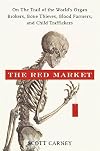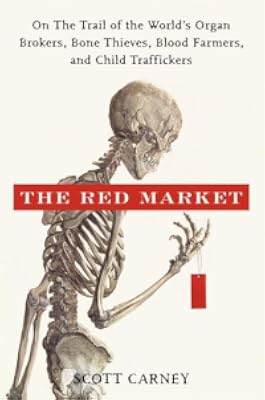
The Red Market: On the Trail of the World's Organ Brokers, Bone Thieves, Blood Farmers, and Child Traffickers
by Scott Carney
On This Page
Description
A shocking tour through a macabre global underworld where organs, bones, and live people are bought and sold on the red market. Investigative journalist Scott Carney has spent five years tracing the lucrative and deeply secretive trade in human bodies and body parts. The Red Market reveals the rise, fall, and resurgence of this multibillion-dollar underground trade through history, from early medical study and modern universities to poverty-ravaged Eurasian villages and high-tech Western show more labs; from body snatchers and surrogate mothers to skeleton dealers and the poor who sell body parts to survive. While local and international law enforcement have cracked down on the market, advances in science have increased the demand for human tissue--ligaments, kidneys, even rented space in women's wombs--leaving little room to consider the ethical dilemmas inherent in the flesh-and-blood trade.--From publisher description. show lessTags
Recommendations














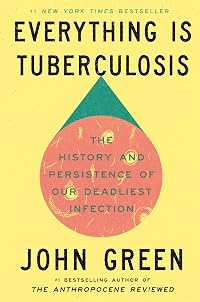
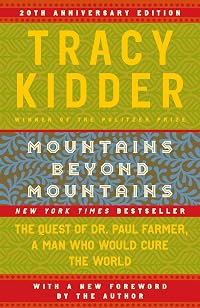


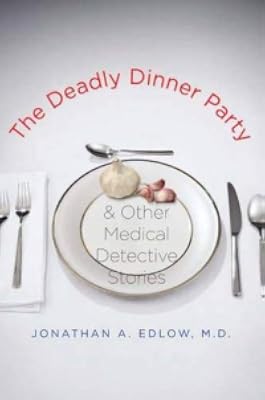
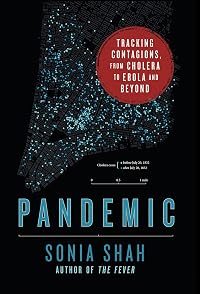



Member Recommendations


Member Reviews
The "red market" of the title is the trade, of varying degrees of legality, in human bodies and body parts. There's a surprising amount of ground that can cover: from the donation or selling of organs, blood, egg cells, and even hair, to the mounting of human skeletons for the teaching of anatomy, to renting out one's body as a drug tester or pregnancy surrogate, to offering a baby up for adoption. There's no doubt that all of that can do a lot of good, but the origins of all that human material can sometimes be very troubling indeed. Scott Carney delves into that darker side, describing, among other horrors, bones robbed from graves, children kidnapped from their families and handed over to adoption agencies who can profit from hefty show more "international adoption fees," and people living in extreme poverty who are exploited badly by those willing to pay -- but not pay very much -- for their kidneys or the use of their wombs. Mostly he focuses on India as a red market supplier, it seems partly because there's a lot of this stuff going on there, but also just because that's where he happens to live.
It's disturbing stuff, for sure. I'm not sure how I feel about Carney's suggestions for how to improve things, though. He talks a lot about how transparency about exactly where, and exactly who, organs and babies and blood come from might make the shadier parts of the red market harder to maintain, and he might have a point. But, medical privacy being as important as it is, it's an idea that I can't help having some reservations about. And as for his assertions that doctors "create a market" for transplants and that perhaps people should instead "learn to accept mortality..." Geez. I kind of get where he's coming from, but that's harsh, and his willingness to make that kind of statement so baldly and so callously does make me think that here's a guy who has maybe let himself get a little carried away on this subject, which inclines me to take some of his other assertions and opinions with more of a grain of salt.
Still. Whatever one thinks of Carney's personal take on the subject, or his ideas on how to deal with it, he is definitely uncovering something here that all of us, particularly those who stand to benefit from it, should be much more aware of than we are, even if that awareness is unpleasant. Which it is. It really, really is. show less
It's disturbing stuff, for sure. I'm not sure how I feel about Carney's suggestions for how to improve things, though. He talks a lot about how transparency about exactly where, and exactly who, organs and babies and blood come from might make the shadier parts of the red market harder to maintain, and he might have a point. But, medical privacy being as important as it is, it's an idea that I can't help having some reservations about. And as for his assertions that doctors "create a market" for transplants and that perhaps people should instead "learn to accept mortality..." Geez. I kind of get where he's coming from, but that's harsh, and his willingness to make that kind of statement so baldly and so callously does make me think that here's a guy who has maybe let himself get a little carried away on this subject, which inclines me to take some of his other assertions and opinions with more of a grain of salt.
Still. Whatever one thinks of Carney's personal take on the subject, or his ideas on how to deal with it, he is definitely uncovering something here that all of us, particularly those who stand to benefit from it, should be much more aware of than we are, even if that awareness is unpleasant. Which it is. It really, really is. show less
Scott Carney travels the world (and by "the world" I mean "India") to discover the dark side of the red market, the trade in human body parts. Whether it's blood for transfusions during/after surgery, kidneys for replacements, or female eggs for in vitro fertilization, for every heart-warming success story there is a dark counterpart, for all those things have to come from somewhere, and when anything has a market value, some people will do anything to make a profit.
I wanted to like this book, and some parts of it I really did. It is definitely concerning to read about the global black market in human tissue, and when the author focuses on the facts related to it I found the book very informative. The problem is the author pushes his show more own agenda too hard, and he is too opinionated for my taste. He frequently points out how sad it is that people who live in poverty are "forced" to sell things like blood to make ends meet, citing how it's exploitative and unfair, but then insinuates that they shouldn't be allowed to do it. Which does nothing but cut off a potential source of income from a free renewable resource in their possession.
He bemoans how terrible and unfair it is that the poor have to give blood for money so that the rich can use it for themselves, but this is a fundamental aspect of human civilization, and is important for a functioning economy. In almost every situation in almost every form of government money flows from poor hands into rich ones, so every opportunity you have to siphon money out of rich pockets and distribute it among poor communities should be seized upon, as it creates a more balanced, free-flowing system.
This was my problem with the book, you see. Had he stuck to the facts, and nothing but the facts, I would have been appropriately alarmed and terrified at the subject matter. Instead I spent most of the time fuming that the guy had the audacity to decide what is right for people in a different financial situation than he is. It's sad too, because he has an excellent point in the end, that human tissue exchange should be made more public so that the black market could be more easily traced, but I couldn't focus on that because I was too busy disagreeing with just about everything else he said.
Then, just when I thought it couldn't get any worse, the author spoils the ending of Never Let Me Go by Kazuo Ishiguro, which is pretty much the biggest pet peeve ever of mine. Fortunately I've already read it, but c'mon man, what are you doing!?
I can't say this book is terrible, if you agree with his views you may find it a highly satisfying read. I prefer cold, distant, objective, and emotionless nonfiction, and the author was too emotionally involved, which killed the book for me. 2 stars. show less
I wanted to like this book, and some parts of it I really did. It is definitely concerning to read about the global black market in human tissue, and when the author focuses on the facts related to it I found the book very informative. The problem is the author pushes his show more own agenda too hard, and he is too opinionated for my taste. He frequently points out how sad it is that people who live in poverty are "forced" to sell things like blood to make ends meet, citing how it's exploitative and unfair, but then insinuates that they shouldn't be allowed to do it. Which does nothing but cut off a potential source of income from a free renewable resource in their possession.
He bemoans how terrible and unfair it is that the poor have to give blood for money so that the rich can use it for themselves, but this is a fundamental aspect of human civilization, and is important for a functioning economy. In almost every situation in almost every form of government money flows from poor hands into rich ones, so every opportunity you have to siphon money out of rich pockets and distribute it among poor communities should be seized upon, as it creates a more balanced, free-flowing system.
This was my problem with the book, you see. Had he stuck to the facts, and nothing but the facts, I would have been appropriately alarmed and terrified at the subject matter. Instead I spent most of the time fuming that the guy had the audacity to decide what is right for people in a different financial situation than he is. It's sad too, because he has an excellent point in the end, that human tissue exchange should be made more public so that the black market could be more easily traced, but I couldn't focus on that because I was too busy disagreeing with just about everything else he said.
Then, just when I thought it couldn't get any worse, the author spoils the ending of Never Let Me Go by Kazuo Ishiguro, which is pretty much the biggest pet peeve ever of mine. Fortunately I've already read it, but c'mon man, what are you doing!?
I can't say this book is terrible, if you agree with his views you may find it a highly satisfying read. I prefer cold, distant, objective, and emotionless nonfiction, and the author was too emotionally involved, which killed the book for me. 2 stars. show less
Rating:
2.5 Stars - a solid ‘fine.’
In a nutshell:
Investigative journalist Scott Carney explores the various ways humans sell bodies and body parts.
Best for:
Those interested in the ethics of these issues and who aren’t squeamish.
Lines(s) that stuck with me:
N/A
Why I chose it:
The audio book selection from my local library is ROUGH. Virtually none of the books on my TBR list are available, so I started scrolling non fiction and this seemed interesting. Also … medical things fascinate me, as does ethics.
Review:
How can you ethically procure a non-renewable resource? Or a resource that requires someone to literally give of their own flesh? And what about when that resource is needed to save a life? What if that resource isn’t actually show more needed, but people really want it?
Carney’s book explores a variety of scenarios where human anatomy is procured in ways that may be unethical, questioning both the black (or ‘red’) market approach as well as the legal routes for securing these resources. He looks at getting bodies and bones for anatomy studies, blood for surgery, eggs for surrogacy, kidneys for transplant, volunteer for drug trials, and even babies for adoption.
One critique that I think holds for this book is that in nearly every example (save, if I recall correctly, blood donation, which I’ll get to below), Carney really only explores the red markets of other countries, usually India, though sometimes China as well. For example, he (rightfully, I believe) explores the unethical nature of so many international adoptions, including situations where parents didn’t actually think they were relinquishing their children - and where US adoptive parents refuse to return those children. But he doesn’t explore the ethics of US domestic adoption. In fact, I think there is a real missed opportunity here to explore the actions of those who provide something that no one actually needs - a baby. This also goes for the section on egg harvesting and surrogacy.
Most of what else Carney explores one could argue is a necessity - blood for a surgery, or a kidney to stop needing dialysis, or, at a higher level, stem cells for research purposes. And the question becomes: if someone needs it, is it right that another person should be prevented from providing it if they are remunerated? And what is the cost of that to the seller/donor, and to society? How much is your kidney worth, and if you are possibly not able to feed your children, how low a price might someone offer?
I found the chapter on blood donation especially fascinating. A little over a decade ago I served on the junior board of the non-profit who manages blood collection (not the American Red Cross) in the city I used to live in. I also used to donate blood regularly (the UK makes you wait much longer between donations, so I can’t donate as regularly here) and platelets on occasion. I was shocked (not that shocked) to learn that in the 60s, corporations managed and paid for blood donations and then sold the blood to hospitals. When non-profits got involved, these corporations actually filed claims of an anti-trust nature, saying these non-profits seeking volunteers were preventing them from making profits, and for awhile US government agreed, fining these non-profits daily. Fucking WILD. Also, there was a whole thing where prisoners in Alabama were ‘donating’ blood, and that blood wasn’t screened, and was sold to Canada, leading to a lot of issues.
Carney argues that one of the best things we could do is require that all human body parts and resources have a name associated with their donation. Every pint of blood, every organ donation, every body. While some argue that privacy is the ethical choice, Carney argues that having a name will reduce the likelihood that someone is coerced to give their flesh and bone. While it wasn’t providing my name, as a blood donor they trialed a project where I would get a text when the blood I was donated was used, which was pretty cool, and probably an incentive for others to keep donating when they had the chance.
There’s much more in the book - the above are just the areas that really stood out to me. And as I said, there seems to be a real issue around the countries that Carney chose to focus on - India and China cannot be the only places participating in unethical human organ / blood / tissue procurement, and it feels weird that (as best as I can recall) Carney doesn’t really even pay lip service to the issues taking place in any of the other 200+ countries in the world.
Would I recommend it to its target audience:
Sure, but probably as an audio book as you could get the washing done at the same time., and with the caveat that there might be some bias in what the author has chosen to highlight. show less
2.5 Stars - a solid ‘fine.’
In a nutshell:
Investigative journalist Scott Carney explores the various ways humans sell bodies and body parts.
Best for:
Those interested in the ethics of these issues and who aren’t squeamish.
Lines(s) that stuck with me:
N/A
Why I chose it:
The audio book selection from my local library is ROUGH. Virtually none of the books on my TBR list are available, so I started scrolling non fiction and this seemed interesting. Also … medical things fascinate me, as does ethics.
Review:
How can you ethically procure a non-renewable resource? Or a resource that requires someone to literally give of their own flesh? And what about when that resource is needed to save a life? What if that resource isn’t actually show more needed, but people really want it?
Carney’s book explores a variety of scenarios where human anatomy is procured in ways that may be unethical, questioning both the black (or ‘red’) market approach as well as the legal routes for securing these resources. He looks at getting bodies and bones for anatomy studies, blood for surgery, eggs for surrogacy, kidneys for transplant, volunteer for drug trials, and even babies for adoption.
One critique that I think holds for this book is that in nearly every example (save, if I recall correctly, blood donation, which I’ll get to below), Carney really only explores the red markets of other countries, usually India, though sometimes China as well. For example, he (rightfully, I believe) explores the unethical nature of so many international adoptions, including situations where parents didn’t actually think they were relinquishing their children - and where US adoptive parents refuse to return those children. But he doesn’t explore the ethics of US domestic adoption. In fact, I think there is a real missed opportunity here to explore the actions of those who provide something that no one actually needs - a baby. This also goes for the section on egg harvesting and surrogacy.
Most of what else Carney explores one could argue is a necessity - blood for a surgery, or a kidney to stop needing dialysis, or, at a higher level, stem cells for research purposes. And the question becomes: if someone needs it, is it right that another person should be prevented from providing it if they are remunerated? And what is the cost of that to the seller/donor, and to society? How much is your kidney worth, and if you are possibly not able to feed your children, how low a price might someone offer?
I found the chapter on blood donation especially fascinating. A little over a decade ago I served on the junior board of the non-profit who manages blood collection (not the American Red Cross) in the city I used to live in. I also used to donate blood regularly (the UK makes you wait much longer between donations, so I can’t donate as regularly here) and platelets on occasion. I was shocked (not that shocked) to learn that in the 60s, corporations managed and paid for blood donations and then sold the blood to hospitals. When non-profits got involved, these corporations actually filed claims of an anti-trust nature, saying these non-profits seeking volunteers were preventing them from making profits, and for awhile US government agreed, fining these non-profits daily. Fucking WILD. Also, there was a whole thing where prisoners in Alabama were ‘donating’ blood, and that blood wasn’t screened, and was sold to Canada, leading to a lot of issues.
Carney argues that one of the best things we could do is require that all human body parts and resources have a name associated with their donation. Every pint of blood, every organ donation, every body. While some argue that privacy is the ethical choice, Carney argues that having a name will reduce the likelihood that someone is coerced to give their flesh and bone. While it wasn’t providing my name, as a blood donor they trialed a project where I would get a text when the blood I was donated was used, which was pretty cool, and probably an incentive for others to keep donating when they had the chance.
There’s much more in the book - the above are just the areas that really stood out to me. And as I said, there seems to be a real issue around the countries that Carney chose to focus on - India and China cannot be the only places participating in unethical human organ / blood / tissue procurement, and it feels weird that (as best as I can recall) Carney doesn’t really even pay lip service to the issues taking place in any of the other 200+ countries in the world.
Would I recommend it to its target audience:
Sure, but probably as an audio book as you could get the washing done at the same time., and with the caveat that there might be some bias in what the author has chosen to highlight. show less
We often joke about being in such dire need of money that we'd give up a kidney or take part in pharmaceutical experiments for some quick cash. I mean, hey, it's my body, I can do what I want. But it isn't just about one's rights over their body and every bit inside of it -- it's about the dozens of other hands that would handle your bodily materials, should you choose to let them circulate through a dirty, secret trade.
Welcome to the red market.
Here, you can buy pretty much any human material you can think of -- ranging from hair to blood, from kidneys to whole children. You just have to ask the right people.
In his book, investigative journalist Scott Carney reveals the loopholes in both national and international regulations and show more our personal notions of morality and ethics about the human body, consequentially finding himself on some gruesome journeys into clinics and medical offices across the world. Globetrotting while following the worldwide circulation of bits and pieces of people, "The Red Market" presents the reality of how acquiring human material can quickly lead into murky waters as exploitative practices prey upon opportunity, or what we might otherwise call demand.
How is it that hospitals always have sufficient supplies of blood? Why do pharmaceuticals outsource their testing procedures? Carney makes it clear that in an industry where there is a dizzying array of conflicting narratives , that something else must be going on -- and that if you want that organ or IVF treatment or 100% human hair extensions bad enough, there's a market ready to supply you with it.
I will tell you one thing -- this little book is a sickening game-changer. Carney's personal website states that his stories "blend narrative non-fiction with ethnography", and indeed they do. By allowing personal voices to seep into his narrative about the body trade, Carney is triumphant in his relentless efforts to humanize a market that has severed body parts from the names of their willing (and unwilling) donors, transparency from the world of medicine, and soul from body.
"The Red Market" presents us with a queasy history, present, and potential future of the body market, ultimately advocating for more transparency between transactions, regardless of whether they are done out of altruism or profit. "The market cannot be the best decider" of the value of human lives, Carney argues, stating that it allows for people "to have the right to other people's bodies". He has earnestly gathered the knowledge, and now only awaits for its deconstruction and dismembering by his readers.
Check out my full review of this book on my blog! show less
Welcome to the red market.
Here, you can buy pretty much any human material you can think of -- ranging from hair to blood, from kidneys to whole children. You just have to ask the right people.
In his book, investigative journalist Scott Carney reveals the loopholes in both national and international regulations and show more our personal notions of morality and ethics about the human body, consequentially finding himself on some gruesome journeys into clinics and medical offices across the world. Globetrotting while following the worldwide circulation of bits and pieces of people, "The Red Market" presents the reality of how acquiring human material can quickly lead into murky waters as exploitative practices prey upon opportunity, or what we might otherwise call demand.
How is it that hospitals always have sufficient supplies of blood? Why do pharmaceuticals outsource their testing procedures? Carney makes it clear that in an industry where there is a dizzying array of conflicting narratives , that something else must be going on -- and that if you want that organ or IVF treatment or 100% human hair extensions bad enough, there's a market ready to supply you with it.
I will tell you one thing -- this little book is a sickening game-changer. Carney's personal website states that his stories "blend narrative non-fiction with ethnography", and indeed they do. By allowing personal voices to seep into his narrative about the body trade, Carney is triumphant in his relentless efforts to humanize a market that has severed body parts from the names of their willing (and unwilling) donors, transparency from the world of medicine, and soul from body.
"The Red Market" presents us with a queasy history, present, and potential future of the body market, ultimately advocating for more transparency between transactions, regardless of whether they are done out of altruism or profit. "The market cannot be the best decider" of the value of human lives, Carney argues, stating that it allows for people "to have the right to other people's bodies". He has earnestly gathered the knowledge, and now only awaits for its deconstruction and dismembering by his readers.
Check out my full review of this book on my blog! show less
This is a market that nobody really talks about, is not fully regulated and is highly profitable for everyone except the donors. While the author concentrates on the market for whole skeletons, fresh organs, blood and young children and babies in India, he does mention that there are other countries who also traffic in these areas.
He certainly doesn't hold anything back, and while really interesting, I wouldn't recommend this as pre-mealtime reading. The research and interviews he's conducted with parents whose children were kidnapped, only to be found having been adopted through legitimate adoption agencies in countries like the USA and the UK are very touching. The research into blood factories where farmers and villagers are show more sometimes kidnapped, chained to beds in a barn next to cows while drained of their blood puts even Dracula in the pale. Then there are the bone factories, where cadavers, having been stolen from graves, are cleaned and polished by people so medical colleges around the world have whole, whitened skeletons for their students to study. Even hair has a market, and there's remy hair from people who pledge their hair as a sacrifice and have it removed from their heads at a temple, but there's also hair that's collected from other locations which, because of their condition, have uses I had never once considered. The chapters dedicated to villagers in India who sell their kidneys, part of their liver or eye were eye-openers for me, not that I was unaware that there are people who still sell their organs on the black market, but more about how some hospitals cover up the fact that they're trading in purchased organs or about the number of people who will risk surgery in countries just so they can purchase their translated organs on the red market.
Fascinating if sometimes really horrific reading. But I'm glad I read this because I'm much more aware of what some people will do to make a buck at the expense of someone else or to prolong their own lives. show less
He certainly doesn't hold anything back, and while really interesting, I wouldn't recommend this as pre-mealtime reading. The research and interviews he's conducted with parents whose children were kidnapped, only to be found having been adopted through legitimate adoption agencies in countries like the USA and the UK are very touching. The research into blood factories where farmers and villagers are show more sometimes kidnapped, chained to beds in a barn next to cows while drained of their blood puts even Dracula in the pale. Then there are the bone factories, where cadavers, having been stolen from graves, are cleaned and polished by people so medical colleges around the world have whole, whitened skeletons for their students to study. Even hair has a market, and there's remy hair from people who pledge their hair as a sacrifice and have it removed from their heads at a temple, but there's also hair that's collected from other locations which, because of their condition, have uses I had never once considered. The chapters dedicated to villagers in India who sell their kidneys, part of their liver or eye were eye-openers for me, not that I was unaware that there are people who still sell their organs on the black market, but more about how some hospitals cover up the fact that they're trading in purchased organs or about the number of people who will risk surgery in countries just so they can purchase their translated organs on the red market.
Fascinating if sometimes really horrific reading. But I'm glad I read this because I'm much more aware of what some people will do to make a buck at the expense of someone else or to prolong their own lives. show less
Totally captivating and frightening.
After hearing about this book, it sounded like an interesting read. It was.
There are so many frightening topics addressed within the pages, all of which impact us in a variety of ways.
I know people who have adopted children from overseas, and this book discusses the market that exists for children.
I know people who have had surgery and needed blood. This book discusses the market for blood products.
It also discusses the nefarious world of organ transplants, and drug testing.
There is a market for all of these products that come from our own human bodies. One of the frightening things is that this market is set up so those who receive the products have no knowledge of where those products have come show more from.
This book is filled with frightening stories from around the world. While the issues dealt with in this book may offer some hope for extending our lives, one has to wonder at the ethics that go along with this,
This book is well worth reading. show less
After hearing about this book, it sounded like an interesting read. It was.
There are so many frightening topics addressed within the pages, all of which impact us in a variety of ways.
I know people who have adopted children from overseas, and this book discusses the market that exists for children.
I know people who have had surgery and needed blood. This book discusses the market for blood products.
It also discusses the nefarious world of organ transplants, and drug testing.
There is a market for all of these products that come from our own human bodies. One of the frightening things is that this market is set up so those who receive the products have no knowledge of where those products have come show more from.
This book is filled with frightening stories from around the world. While the issues dealt with in this book may offer some hope for extending our lives, one has to wonder at the ethics that go along with this,
This book is well worth reading. show less
A very well-written book that explores the underside of the 'modern' organ donation industry/racket. It tells us of how entrepreneurs have made a market in an area that is perpetually gray. The philosophical questions the author raises, about organ donation etc. are worth reading.
A good book, highly recommended!
A good book, highly recommended!
Members
- Recently Added By
Lists

Best books read in 2011
200 works; 51 members

Books Read in 2016
4,666 works; 199 members
Author Information

11 Works 730 Members
Common Knowledge
- Original publication date
- 2011
Classifications
- Genres
- Nonfiction, General Nonfiction, Politics and Government
- DDC/MDS
- 364.15 — Society, government, & culture Social problems and social services Crime Criminal offenses Offenses against the person
- LCC
- HV6627 .C37 — Social sciences Social pathology. Social and public welfare. Criminology Social pathology. Social and public welfare. Criminology Crimes and offenses
- BISAC
Statistics
- Members
- 329
- Popularity
- 96,852
- Reviews
- 11
- Rating
- (3.40)
- Languages
- English
- Media
- Paper, Audiobook, Ebook
- ISBNs
- 9
- ASINs
- 3