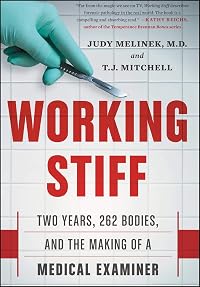
Working Stiff: Two Years, 262 Bodies, and the Making of a Medical Examiner
by Judy Melinek (Author), T. J. Mitchell (Author)
On This Page
Description
"The fearless memoir of a young forensic pathologist's "rookie season" as a NYC medical examiner, and the cases--hair-raising and heartbreaking and impossibly complex--that shaped her as both a physician and a mother. Just two months before the September 11 terrorist attacks, Dr. Judy Melinek began her training as a New York City forensic pathologist. With her husband T.J. and their toddler Daniel holding down the home front, Judy threw herself into the fascinating world of death show more investigation--performing autopsies, investigating death scenes, counseling grieving relatives. Working Stiff chronicles Judy's two years of training, taking readers behind the police tape of some of the most harrowing deaths in the Big Apple, including a firsthand account of the events of September 11, the subsequent anthrax bio-terrorism attack, and the disastrous crash of American Airlines flight 587. Lively, action-packed, and loaded with mordant wit, Working Stiff offers a firsthand account of daily life in one of America's most arduous professions, and the unexpected challenges of shuttling between the domains of the living and the dead. The body never lies--and through the murders, accidents, and suicides that land on her table, Dr. Melinek lays bare the truth behind the glamorized depictions of autopsy work on shows like CSI and Law & Order to reveal the secret story of the real morgue"-- show lessTags
Recommendations

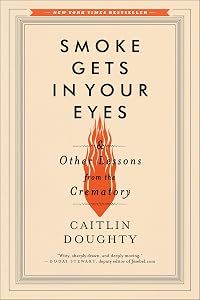
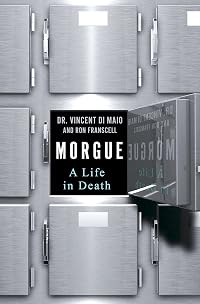
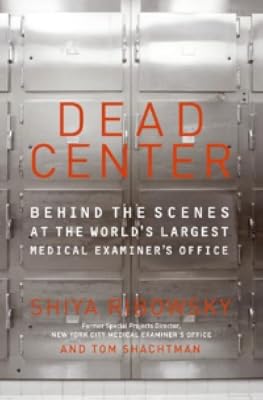
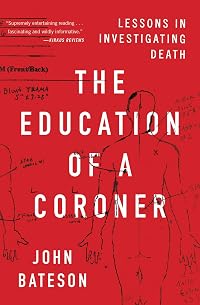


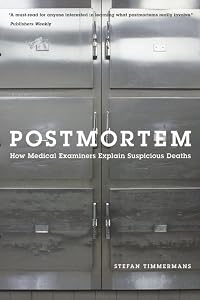
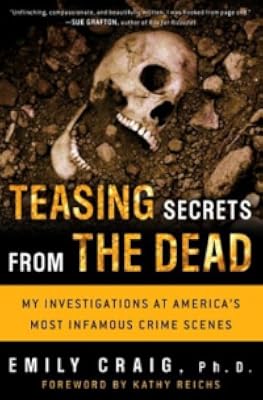


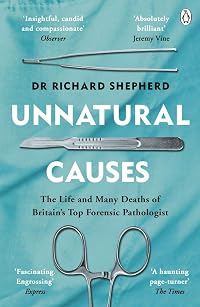
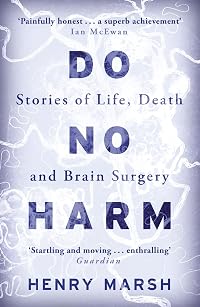

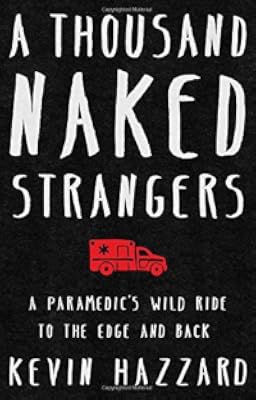
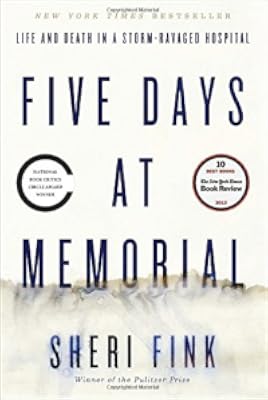
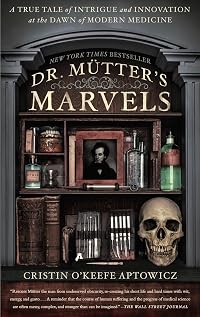
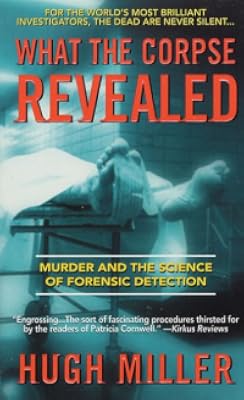
Member Recommendations


Member Reviews
Working Stiff is an account of the two years which Judy Melinek spent training as a forensic pathologist in New York City. Written in a conversational style which eschews jargon as much as possible, the book is by turns amusing, informative, and graphic. I think I've got a fairly sturdy stomach, but Melinek's account of the worst manner of death she ever encountered did nauseate me. Melinek's training also took place in 2001/02, which means that the latter chapters of Working Stiff are particularly harrowing.
The one thing which I really didn't like about the book, however, and which rather soured me on it, were the opinions which Melinek expressed about suicide and what she sees as the selfishness of those who take their own lives. Her show more views are certainly informed by her own experiences—her clearly much-beloved father suffered from mental illness and killed himself when she was a teenager—but I don't think she did a good job at differentiating her own emotions from more objective medical opinions. I wince to think of the possible reaction of a reader who has previously experienced suicidal ideation.
Recommended, but only if you have a strong stomach. show less
The one thing which I really didn't like about the book, however, and which rather soured me on it, were the opinions which Melinek expressed about suicide and what she sees as the selfishness of those who take their own lives. Her show more views are certainly informed by her own experiences—her clearly much-beloved father suffered from mental illness and killed himself when she was a teenager—but I don't think she did a good job at differentiating her own emotions from more objective medical opinions. I wince to think of the possible reaction of a reader who has previously experienced suicidal ideation.
Recommended, but only if you have a strong stomach. show less
"Wednesday featured the pulpified remains of a suicidal jumper and the preventable death of a motor vehicle passenger who hadn’t buckled his seat belt. Some construction workers in the heart of Harlem uncovered a scattering of human remains at a building site, and these—the dumpster bones—became three new cases for me. Two messy continuing investigations, five new postmortems, and an anthrax assist—that was October 31, 2001."
So before I was an oncology nurse, I was an emergency medical technician. That's a mere 110 hour (at the time) course that teaches you how to assess and treat people and load them in the ambulance for transport to the hospital. I rose through various certification levels until it came time to decide, show more paramedic or nurse. And nurses just had more versatility. At any rate, I say this to give some perspective on my mindset. This was a fascinating, strangely readable book... until I got to the 9/11 chapter. To be honest, I think this one has lingered on my to be read list after seeing a friend's review (thanks, LCJ), so if I ever knew, I had totally forgotten it was there.
"I could tell just by looking at the open body bag that this person had been mashed, burned, dropped from a height, and slashed by sharp forces."
During 9/11, I was working as a clinic assistant as I was in nursing school. I was listening to the radio as I drove the highway, taking the back ways to work, and I remember hearing something on the radio about a plane hitting a tower. Then I got to the hospital and tuned in to the horror on tv (no smartphones in those days, kids). I remember calling my bestie in NYC again and again, only to hear 'all circuits were busy.' I remember the horror of watching people leap from 40 stories high in the tv replays.
"Another day I opened a fireman’s jacket to find it empty except for the bones of his arms in the sleeves."
This book reminded me that I still have strong feels in my memories around 9-11. I had to take a break for a bit before I could finish, and I choose the finish moment carefully. The last case Melinek discusses, of an airplane crash in NY that year, seemed almost a relief in comparison. I spared some moments for everyone in that office who must have suffered PTSD.
“You’re under a lot of stress because your chakras are way out of whack,” the pleasant young masseuse informed me. That, and I’m working a graveyard shift sifting through fetid human remains under Frankenstein conditions, I thought privately. That, and the chakras."
Which is surprisingly not discussed. This is a book that feels very very much like a medical report with feeble attempts to humanize it by talking about her husband and children, and as a medical person, I was one-hundred per cent down for the medical report (the children were, as usual, distracting). But I did wonder how the experience was for non-medical people. There were asides that made me laugh as an urgent care/ER nurse:
"In my experience people never die from bad sushi. A huge load of heroin, yes; bad sushi, no"
because people really do get a lot of anxiety about the latest thing, but never about the, you know, real things: "The numbers in the Bronx were staggering. More than a third of the cases I autopsied there died of substance abuse." But sure, go ahead and finish that bottle of wine.
Also, kudos for her, because I learned three things: accessory spleens (wth?!), schizophrenia comes with autonomic dysfunction, and reperfusion injury called leopard skin in the stomach. Oh yes; also that I'm still horrified by 9-11. show less
So before I was an oncology nurse, I was an emergency medical technician. That's a mere 110 hour (at the time) course that teaches you how to assess and treat people and load them in the ambulance for transport to the hospital. I rose through various certification levels until it came time to decide, show more paramedic or nurse. And nurses just had more versatility. At any rate, I say this to give some perspective on my mindset. This was a fascinating, strangely readable book... until I got to the 9/11 chapter. To be honest, I think this one has lingered on my to be read list after seeing a friend's review (thanks, LCJ), so if I ever knew, I had totally forgotten it was there.
"I could tell just by looking at the open body bag that this person had been mashed, burned, dropped from a height, and slashed by sharp forces."
During 9/11, I was working as a clinic assistant as I was in nursing school. I was listening to the radio as I drove the highway, taking the back ways to work, and I remember hearing something on the radio about a plane hitting a tower. Then I got to the hospital and tuned in to the horror on tv (no smartphones in those days, kids). I remember calling my bestie in NYC again and again, only to hear 'all circuits were busy.' I remember the horror of watching people leap from 40 stories high in the tv replays.
"Another day I opened a fireman’s jacket to find it empty except for the bones of his arms in the sleeves."
This book reminded me that I still have strong feels in my memories around 9-11. I had to take a break for a bit before I could finish, and I choose the finish moment carefully. The last case Melinek discusses, of an airplane crash in NY that year, seemed almost a relief in comparison. I spared some moments for everyone in that office who must have suffered PTSD.
“You’re under a lot of stress because your chakras are way out of whack,” the pleasant young masseuse informed me. That, and I’m working a graveyard shift sifting through fetid human remains under Frankenstein conditions, I thought privately. That, and the chakras."
Which is surprisingly not discussed. This is a book that feels very very much like a medical report with feeble attempts to humanize it by talking about her husband and children, and as a medical person, I was one-hundred per cent down for the medical report (the children were, as usual, distracting). But I did wonder how the experience was for non-medical people. There were asides that made me laugh as an urgent care/ER nurse:
"In my experience people never die from bad sushi. A huge load of heroin, yes; bad sushi, no"
because people really do get a lot of anxiety about the latest thing, but never about the, you know, real things: "The numbers in the Bronx were staggering. More than a third of the cases I autopsied there died of substance abuse." But sure, go ahead and finish that bottle of wine.
Also, kudos for her, because I learned three things: accessory spleens (wth?!), schizophrenia comes with autonomic dysfunction, and reperfusion injury called leopard skin in the stomach. Oh yes; also that I'm still horrified by 9-11. show less
“Don’t jaywalk. Wear your seat belt when you drive. Better yet, stay out of the car, and get some exercise. Watch your weight. If you’re a smoker stop right now. If you aren’t, don’t start. Guns put holes in people. Drugs are bad. You know that yellow line on the subway platform? It’s there for a reason. Staying alive, as it turns out, is mostly common sense.”
This is the advice of Judy Melinek, the author of Working Stiff: Two Years, 262 Bodies, and the Making of a Medical Examiner, gleaned from her experience as an assistant medical examiner in New York City. From 2001 to 2003 Melinek performed hundreds of autopsies on the victims of homicides, suicides, accidents, natural diseases, therapeutic complications, and show more undetermined causes, that crossed her table.
Melinek’s very first post mortem involved the death of a young man, a heroin addict diagnosed with sickle-cell trait who died in hospital, her second an elderly man who sustained severe burns in a house fire, the third a pregnant woman, the victim of a hit and run. In general, each chapter of Working Stiff groups together cases by manner of death, detailing Melinek’s examination of patients young and old, male and female, destitute and wealthy, and everything in between. The final chapters focus on the medical examiners office’s role in the wake of the Twin Towers collapse on September 11, and the crash of American Airlines flight 587.
The narrative is very readable, almost conversational in tone, and mostly free of the medical jargon one might expect. Melinek is at all times respectful but not humourless, sharing both professional perspective and personal observations. I do feel compelled to warn the unwary reader that this isn’t a book for the squeamish with its graphic record of gruesome injury and detailed descriptions of the forensic autopsy process.
What shines through is Melinek’s passion and commitment to her job as she works to investigate and determine the cause and manner of death, comfort the bereaved, provide assistance to the justice system and “speak for the dead”.
Informative, entertaining and engaging Working Stiff is a fascinating account of the work of a medical examiner, well told by Judy Melinek and her husband T.J. Mitchell.
* I gave the book an extra 1/2 star for Judy’s admission she wears “sensible shoes and a Medical Examiner windbreaker” during her rare visits to crime scenes – not six inch stiletto’s and Armani suits. show less
This is the advice of Judy Melinek, the author of Working Stiff: Two Years, 262 Bodies, and the Making of a Medical Examiner, gleaned from her experience as an assistant medical examiner in New York City. From 2001 to 2003 Melinek performed hundreds of autopsies on the victims of homicides, suicides, accidents, natural diseases, therapeutic complications, and show more undetermined causes, that crossed her table.
Melinek’s very first post mortem involved the death of a young man, a heroin addict diagnosed with sickle-cell trait who died in hospital, her second an elderly man who sustained severe burns in a house fire, the third a pregnant woman, the victim of a hit and run. In general, each chapter of Working Stiff groups together cases by manner of death, detailing Melinek’s examination of patients young and old, male and female, destitute and wealthy, and everything in between. The final chapters focus on the medical examiners office’s role in the wake of the Twin Towers collapse on September 11, and the crash of American Airlines flight 587.
The narrative is very readable, almost conversational in tone, and mostly free of the medical jargon one might expect. Melinek is at all times respectful but not humourless, sharing both professional perspective and personal observations. I do feel compelled to warn the unwary reader that this isn’t a book for the squeamish with its graphic record of gruesome injury and detailed descriptions of the forensic autopsy process.
What shines through is Melinek’s passion and commitment to her job as she works to investigate and determine the cause and manner of death, comfort the bereaved, provide assistance to the justice system and “speak for the dead”.
Informative, entertaining and engaging Working Stiff is a fascinating account of the work of a medical examiner, well told by Judy Melinek and her husband T.J. Mitchell.
* I gave the book an extra 1/2 star for Judy’s admission she wears “sensible shoes and a Medical Examiner windbreaker” during her rare visits to crime scenes – not six inch stiletto’s and Armani suits. show less
Thanks to badkittyuno for writing this review or I might never have known about this great book. I started it on Sunday and finished it today, and thoroughly enjoyed most of it.
Dr. Melinek is a forensic pathologist who spent two years as a fellow working in the New York City’s Office of the Chief Medical Examiner. Her time there was interesting for many reasons, including the fact that she worked there during the fall of 2001, when the city was dealing with deaths from 9/11, the Antrax attacks, and a plane crash in Queens.
It makes sense that this book would interest me. A couple of years ago in a Pajiba comment diversion, I shared a bit about what I do for a living. I still do that work, and am still learning, so the parts of this show more book that I found myself highlighting were in the chapter on the response to 9/11. There were a few comments in there that I found to be pretty helpful and that I’m going to look into incorporating into our plans. So from that perspective, the book was quite helpful.
But it was also well written. While I’m sure each chapter has some cohesive theme (as Dr. and Mr. Melinek don’t just write chronologically), I don’t think it was necessarily broken down into obvious chunks. And yet the topics all flowed well, and flowed naturally. The storytelling was engrossing, fascinating and, from my experience working with MEs, not fantastical or exaggerated at all.
A couple of quibbles: autopsy reports are generally public information, so I recognize that Dr. and Mr. Melinek aren’t breaking any laws in sharing this information, but some parts felt a bit like a breach of ethics. Mostly, her interactions with grieving family members. Unless names were changed, or permission granted (which I doubt), some of the stories she told seemed like they could really cause additional pain for the family members. Who knows if any of them will read this book (probably unlikely), but it made me think a little bit of that ABC hospital documentary that showed the death of someone whose wife unsuspectingly saw it on TV a couple of years later. It was traumatic. Obviously stumbling on a TV show is easier than deliberately reading a book, but what if a friend or relative of one of the cases discussed reads about it? I’m not saying that the book shouldn’t be written, or that the concerns of a couple of people should prevent sharing information that sheds light on this very important field, but I did think about it.
I’m also a bit frustrating with the Dr.’s constant reference to death by suicide as selfish. I cannot directly relate to her direct experience with death by suicide (her father’s), and she is certainly entitled to view her father’s decision as selfish, but that characterization always strikes me as reeking of victim blaming, and I found it especially off-putting when she projected her feelings about it onto others who died by suicide.
Even with those reservations, I do still strongly recommend this book for anyone looking for a surprisingly quick read on this topic that is both interesting and thorough. show less
Dr. Melinek is a forensic pathologist who spent two years as a fellow working in the New York City’s Office of the Chief Medical Examiner. Her time there was interesting for many reasons, including the fact that she worked there during the fall of 2001, when the city was dealing with deaths from 9/11, the Antrax attacks, and a plane crash in Queens.
It makes sense that this book would interest me. A couple of years ago in a Pajiba comment diversion, I shared a bit about what I do for a living. I still do that work, and am still learning, so the parts of this show more book that I found myself highlighting were in the chapter on the response to 9/11. There were a few comments in there that I found to be pretty helpful and that I’m going to look into incorporating into our plans. So from that perspective, the book was quite helpful.
But it was also well written. While I’m sure each chapter has some cohesive theme (as Dr. and Mr. Melinek don’t just write chronologically), I don’t think it was necessarily broken down into obvious chunks. And yet the topics all flowed well, and flowed naturally. The storytelling was engrossing, fascinating and, from my experience working with MEs, not fantastical or exaggerated at all.
A couple of quibbles: autopsy reports are generally public information, so I recognize that Dr. and Mr. Melinek aren’t breaking any laws in sharing this information, but some parts felt a bit like a breach of ethics. Mostly, her interactions with grieving family members. Unless names were changed, or permission granted (which I doubt), some of the stories she told seemed like they could really cause additional pain for the family members. Who knows if any of them will read this book (probably unlikely), but it made me think a little bit of that ABC hospital documentary that showed the death of someone whose wife unsuspectingly saw it on TV a couple of years later. It was traumatic. Obviously stumbling on a TV show is easier than deliberately reading a book, but what if a friend or relative of one of the cases discussed reads about it? I’m not saying that the book shouldn’t be written, or that the concerns of a couple of people should prevent sharing information that sheds light on this very important field, but I did think about it.
I’m also a bit frustrating with the Dr.’s constant reference to death by suicide as selfish. I cannot directly relate to her direct experience with death by suicide (her father’s), and she is certainly entitled to view her father’s decision as selfish, but that characterization always strikes me as reeking of victim blaming, and I found it especially off-putting when she projected her feelings about it onto others who died by suicide.
Even with those reservations, I do still strongly recommend this book for anyone looking for a surprisingly quick read on this topic that is both interesting and thorough. show less
Each body tells a story.
This is the tale of a woman's decision to switch over from her residency as a surgeon to training as a medical examiner. You know CSI, Criminal Minds, the other CSI, Rizzoli and Isles, the other other CSI, etc.? Forget them. They fit almost as well into the fantasy genre as Game of Thrones or anything with werewolves or vampires.
I grew up watching Quincy, M.E. I'm as fond of Jack Klugman from that show as I am of Oscar Madison. But I think it was mostly his fault that I was as shocked as I was – which was extremely – when I grew up a little and found out that doctors can't always diagnose illness or determine cause of death with certainty. Quincy and shows like it always made it seem like it was very basic show more puzzle–solving, like simple algebra: this symptom + another symptom – some other symptom = diagnosis; some were just more obscure than others, or perhaps there might be obscuring circumstances. Hey, I was young; I didn't quite have a handle on how vastly simplified the world is on the other side of the tv screen. It must be nice to live there, where the killer is always caught (in 48 minutes! Unless of course it's a featured serial killer who escapes and will be returning for the season finale) and the disease is always cured, or at least identified.
Honestly, I remember being very confused and gobsmacked the first time I saw something that was, you know, real. On CSI, there is impatient sighing when they have to wait a few hours for DNA results. In reality, it's more like months. Whatever it was, it wasn't as real as this book. Turns out a tox screen can take a couple of weeks – and that shocked me. Need a copy of a report from another department? Give it a few months.
It's been a little while since I bought this audiobook, so I don't remember whether the setting in time of the book had an impact on my decision to give it a try: Dr. Melinek changed her concentration from treating the living to examining the dead in 2001. She trained in New York City. If the idea that she was involved in the aftermath of 9/11 was one of the reasons I opted for the book, it was a moment of temporary insanity. To this day I flinch when a plane flies low. I live in Connecticut. I've visited NYC many times – and police and fire fighters from my area went to Ground Zero. I had friends and friends–of–friends who live and work in the City. I heard first–hand accounts, that weekend. It's emotional. Still. Of course.
Between that and the basic subject matter, this book is not for the squeamish. But it's a story well told, with humor and compassion – and passion. Even while I was cringing, I enjoyed it. show less
This is the tale of a woman's decision to switch over from her residency as a surgeon to training as a medical examiner. You know CSI, Criminal Minds, the other CSI, Rizzoli and Isles, the other other CSI, etc.? Forget them. They fit almost as well into the fantasy genre as Game of Thrones or anything with werewolves or vampires.
I grew up watching Quincy, M.E. I'm as fond of Jack Klugman from that show as I am of Oscar Madison. But I think it was mostly his fault that I was as shocked as I was – which was extremely – when I grew up a little and found out that doctors can't always diagnose illness or determine cause of death with certainty. Quincy and shows like it always made it seem like it was very basic show more puzzle–solving, like simple algebra: this symptom + another symptom – some other symptom = diagnosis; some were just more obscure than others, or perhaps there might be obscuring circumstances. Hey, I was young; I didn't quite have a handle on how vastly simplified the world is on the other side of the tv screen. It must be nice to live there, where the killer is always caught (in 48 minutes! Unless of course it's a featured serial killer who escapes and will be returning for the season finale) and the disease is always cured, or at least identified.
Honestly, I remember being very confused and gobsmacked the first time I saw something that was, you know, real. On CSI, there is impatient sighing when they have to wait a few hours for DNA results. In reality, it's more like months. Whatever it was, it wasn't as real as this book. Turns out a tox screen can take a couple of weeks – and that shocked me. Need a copy of a report from another department? Give it a few months.
It's been a little while since I bought this audiobook, so I don't remember whether the setting in time of the book had an impact on my decision to give it a try: Dr. Melinek changed her concentration from treating the living to examining the dead in 2001. She trained in New York City. If the idea that she was involved in the aftermath of 9/11 was one of the reasons I opted for the book, it was a moment of temporary insanity. To this day I flinch when a plane flies low. I live in Connecticut. I've visited NYC many times – and police and fire fighters from my area went to Ground Zero. I had friends and friends–of–friends who live and work in the City. I heard first–hand accounts, that weekend. It's emotional. Still. Of course.
Between that and the basic subject matter, this book is not for the squeamish. But it's a story well told, with humor and compassion – and passion. Even while I was cringing, I enjoyed it. show less
It seems to me that if one is sentient, one can’t help but think about death a great deal. We all think about death differently of course. Some of us flee it, some of us glorify it, some turn it into entertainment, some eagerly await the next life. But I think we have a shared reason for thinking about death. We cannot control death, so we compensate for that lack of control with a desire for understanding—whether scientific or spiritual.
Among those looking for understanding are forensic scientists, anthropologists, and technicians. They come to the human body after death has occurred in an effort tell the story, to provide certainty, if not comfort, for those left living. Julie Melinek, one of the authors of Working Stiff, has made show more a career of this search for truth. (I want to note here that the book is coauthored by Melinek’s Husband, T. J. Mitchell, but as Working Stiff is written in first person from Melinek’s perspective, I’ll be referring to her when discussing the book.)
A significant body of forensics-for-laypeople literature has emerged over the past few decades, and Working Stiff is an excellent addition to this genre. Melinek originally pursued a career as a surgeon before realizing that she wanted a specialty more conducive to a sane family life. As she noted at one point, almost every surgeon has a cot in her office for catnaps between emergencies, but a pathologist’s patients are already dead. That doesn’t mean that she doesn’t take her work seriously, just that she values being able to do her work when she’s at her best, rather than in response to the chaos of medical crises.
The work Melinek does is fascinating, a sort of problem solving simultaneously pursuing knowledge, justice, and compassion. She doesn’t treat some lives as more valuable than others. Death comes in many forms to many people, and in every instance Melinek is similarly focused on uncovering the narrative underlying each death. She writes about overdoses, accidental deaths, deaths resulting from medical error, murder (and her explanations of the differences among these categories is remarkably precise, much clearer than the brief list I’ve offered here).
Working Stiff succeeds not just informationally, but stylistically as well. Melinek’s voice is both professional and relaxed, conversational and informative. At work, she spends a great deal of time explaining complex physiological information to ordinary people, and this makes her an excellent writer. Books in this genre can feel like collections of disparate narratives, sort of a “if this is Tuesday, we must be in the brain case,” if that isn’t too irreverent. While Melinek does focus on different classes of deaths as she moves from chapter to chapter, the narrative thread of her book—the well-defined time span of two years’ work—keeps these topics from feeling isolated from one another.
The narrative flow becomes particularly effective—and particularly important—in the last few chapters, when she describes the process of working to identify human remains after the attack that caused the collapse of the World Trade Center. She gives us a sense of what this work is like over time: not just one challenging day, but months of such work. She describes moving between “ordinary” autopsies and mass casualties.
This book is precise, and it is graphic as a result of this precision. It doesn’t make for light reading, but it is compelling. show less
Among those looking for understanding are forensic scientists, anthropologists, and technicians. They come to the human body after death has occurred in an effort tell the story, to provide certainty, if not comfort, for those left living. Julie Melinek, one of the authors of Working Stiff, has made show more a career of this search for truth. (I want to note here that the book is coauthored by Melinek’s Husband, T. J. Mitchell, but as Working Stiff is written in first person from Melinek’s perspective, I’ll be referring to her when discussing the book.)
A significant body of forensics-for-laypeople literature has emerged over the past few decades, and Working Stiff is an excellent addition to this genre. Melinek originally pursued a career as a surgeon before realizing that she wanted a specialty more conducive to a sane family life. As she noted at one point, almost every surgeon has a cot in her office for catnaps between emergencies, but a pathologist’s patients are already dead. That doesn’t mean that she doesn’t take her work seriously, just that she values being able to do her work when she’s at her best, rather than in response to the chaos of medical crises.
The work Melinek does is fascinating, a sort of problem solving simultaneously pursuing knowledge, justice, and compassion. She doesn’t treat some lives as more valuable than others. Death comes in many forms to many people, and in every instance Melinek is similarly focused on uncovering the narrative underlying each death. She writes about overdoses, accidental deaths, deaths resulting from medical error, murder (and her explanations of the differences among these categories is remarkably precise, much clearer than the brief list I’ve offered here).
Working Stiff succeeds not just informationally, but stylistically as well. Melinek’s voice is both professional and relaxed, conversational and informative. At work, she spends a great deal of time explaining complex physiological information to ordinary people, and this makes her an excellent writer. Books in this genre can feel like collections of disparate narratives, sort of a “if this is Tuesday, we must be in the brain case,” if that isn’t too irreverent. While Melinek does focus on different classes of deaths as she moves from chapter to chapter, the narrative thread of her book—the well-defined time span of two years’ work—keeps these topics from feeling isolated from one another.
The narrative flow becomes particularly effective—and particularly important—in the last few chapters, when she describes the process of working to identify human remains after the attack that caused the collapse of the World Trade Center. She gives us a sense of what this work is like over time: not just one challenging day, but months of such work. She describes moving between “ordinary” autopsies and mass casualties.
This book is precise, and it is graphic as a result of this precision. It doesn’t make for light reading, but it is compelling. show less
Members
- Recently Added By
Lists

medical memoirs
24 works; 3 members

Top Five Books of 2020
982 works; 348 members

Non-Fiction Worth Reading
1,016 works; 263 members

Top Five Books of 2015
811 works; 241 members

Books Read in 2015
3,299 works; 129 members

Weirdo Nonfiction
138 works; 3 members
Author Information


T.J. Mitchell is a LibraryThing Author, an author who lists their personal library on LibraryThing.
Common Knowledge
- Original publication date
- 2014-08-12
- People/Characters
- Judy Melinek
- Important places
- New York, New York, USA
- Important events
- September 11 Attacks
- Dedication
- To Rutka, Tom & Rita and in memory of Frank Cimerol and Dr. Menachem Melinek
- First words
- Remember, this can only end badly.
- Quotations
- The open manhole had a plastic chimney over it, to vent steam from a broken main while Consolidated Edison repaired it. There was an eighteen-foot drop to the boiling water on the bottom of the steam tunnel. The Con Ed superv... (show all)isor who talked to our MLI at the scene state that it was 300 degrees down there, where Sean Doyle landed. Police and paramedics arrived quickly but couldn’t get Doyle out. They had to wait for Con Ed to shut off the main, and even then it was far too dangerous to send a rescuer into the steam tunnel. Doyle wasn’t dead when the Con Ed workers first arrived, the MLI’s report told me. They said he was arching his back and reaching upward to them. He was screaming.
It took four hours to retrieve the body. The MLI took the corpse’s temperature before bagging him up, as is protocol in a death by hyperthermia. It read 125 degrees, she wrote in her report, “though it was probably more, because the thermometer only goes to 125 degrees.”
Doyle’s body was leathery to the touch, twisted, and glistening with beads of clear water. The outer layer of epidermis was peeling off his hands, feet, shoulders, and legs. His mouth was a black-lined O of burned tissue, his eyes cloudy. Every inch of skin was bright red. The man on my autopsy table had been steamed like a lobster. - Last words
- (Click to show. Warning: May contain spoilers.)To confront death every day, to see it for yourself, you have to love the living.
- Original language
- English US
Classifications
- Genres
- General Nonfiction, Nonfiction, Biography & Memoir, Science & Nature
- DDC/MDS
- 614.1092 — Applied science & technology Medicine & health Epidemics and poisons Forensic medicine
- LCC
- RA1025 .M45 .A3 — Medicine Public aspects of medicine Public aspects of medicine Forensic medicine. Medical jurisprudence. Legal medicine
- BISAC
Statistics
- Members
- 865
- Popularity
- 31,576
- Reviews
- 42
- Rating
- (4.16)
- Languages
- English
- Media
- Paper, Audiobook, Ebook
- ISBNs
- 12
- ASINs
- 6