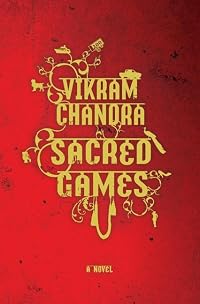
Sacred Games
by Vikram Chandra
On This Page
Description
Now a Netflix original series"SACRED GAMES is] as hard to put down as it is to pick up."-- New York Times Book Review"Bold, fresh and big...SACRED GAMES deserves praise for its ambitions but also for its terrific achievement"-- Maureen Corrigan, NPR's Fresh Air.Seven years in the making, Sacred Games is an epic of exceptional richness and power. Vikram Chandra's novel draws the reader deep into the life of Inspector Sartaj Singh--and into the criminal underworld of Ganesh Gaitonde, the most show more wanted gangster in India.Sartaj, one of the very few Sikhs on the Mumbai police force, is used to being identified by his turban, beard and the sharp cut of his trousers. But "the silky Sikh" is now past forty, his marriage is over and his career prospects are on the slide. When Sartaj gets an anonymous tip-off as to the secret hide-out of the legendary boss of G-Company, he's determined that he'll be the one to collect the prize.Vikram Chandra's keenly anticipated new novel is a magnificent story of friendship and betrayal, of terrible violence, of an astonishing modern city and its dark side. Drawing inspiration from the classics of nineteenth-century fiction, mystery novels, Bollywood movies and Chandra's own life and research on the streets of Mumbai, Sacred Games evokes with devastating realism the way we live now but resonates with the intelligence and emotional depth of the best of literature. show lessTags
Recommendations

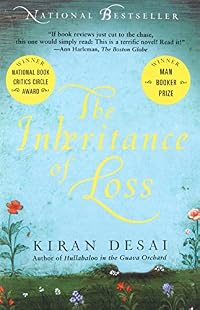
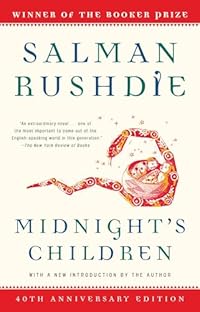
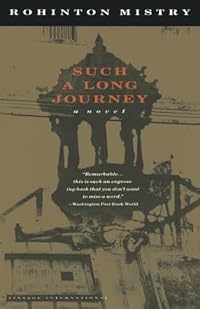
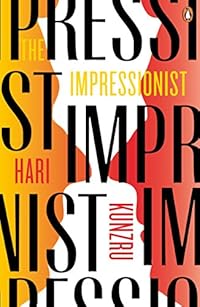








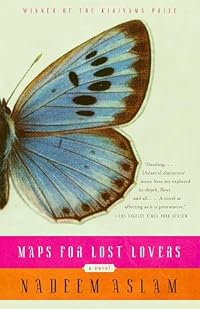

Member Recommendations
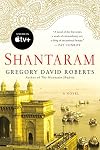
oliver40274 A wonderfully written saga that takes you into Bombay life on the streets.
Also recommended by VisibleGhost
21
Member Reviews
This is not one novel, but several interlaced. At its most basic, it’s a police procedural with the indomitable Sartaj Singh carrying out his low-tech job as a police detective in Mumbai. Like all the best modern literary detectives (such as Mankell’s Wallander) Sartaj is a decent, complicated, divorced and troubled man. Unlike most, he lives in a world where graft and corruption seem to be a part of everyone’s life, including his own; he takes bribes, he beats confessions out of captives and he feels guilt about it all. Put him in London or New York and he’d be detestable. In Mumbai, he’s a champion! He is a superb creation and I fervently hope to meet him again.
Interleaved in Sartaj’s daily muddling through, Ganesh show more Gaitonde, a major Mumbai crime-boss tells us his venal life story. Although some of his history is fascinating, this is the least attractive part of Sacred Games. I was uncomfortable with this narrative for a number of reasons. Firstly because Gaitonde dies in the first hundred pages and I saw no literary justification for this life-story narrated in the first-person. Secondly, because his self-justification began eventually to jar on me. Thirdly, because the key plot leading to his downfall smacked a little too much of a Stephen Siegal thriller with nuclear bombs and last minute rescues. Nevertheless, Gaitonde’s story had its merits; it’s witty, frequently original and it introduces Jojo, the woman who refuses to meet him but who provides him with girls. The foul-mouthed, corrupt Jojo is one of this novels fantastic originals. It is through her that we get to explore aspects of Bollywood and the depths the ambitious and unconnected must stoop to in order to succeed.
More than anything else, what I really loved about Sacred Games was its principle character, India. I knew nothing about India before I picked up this book and it has mesmerised me. Flashbacks take us back fifty years to Partition when India and Pakistan went their separate ways and tens of millions of people were displaced. We get insights into a state which is simultaneously modern and feudal. The book is steeped in politics and religion. We are treated to many brief but fully fleshed-out biographies of people from all strata of society, loosely connected to the main storyline, but fascinating for themselves. This is a novel we want to enter and get involved with its very real inhabitants. I continuously wanted to intervene, to use my privileged insider-knowledge of all their stories to correct the accidents of history, set them straight and help them out.
Some reviewers have criticised the Insets, chapters which recount stories outside the main thread of the narrative, as distracting to the reader. Personally, I found that these were the elements that elevated the book beyond good to GREAT. The author uses these tales to underline that none of the characters ever knows the whole story. In this way, the reader has a perspective that the characters miss. We see, for example, mitigating circumstances in the life of the cop killer. I particularly liked the story of the two sisters, separated by the Partition, who end up living long and rewarding lives in opposite camps.
I can’t remember when I was so ‘involved’ in a story. This is the book that will bring me eventually to visit India. show less
Interleaved in Sartaj’s daily muddling through, Ganesh show more Gaitonde, a major Mumbai crime-boss tells us his venal life story. Although some of his history is fascinating, this is the least attractive part of Sacred Games. I was uncomfortable with this narrative for a number of reasons. Firstly because Gaitonde dies in the first hundred pages and I saw no literary justification for this life-story narrated in the first-person. Secondly, because his self-justification began eventually to jar on me. Thirdly, because the key plot leading to his downfall smacked a little too much of a Stephen Siegal thriller with nuclear bombs and last minute rescues. Nevertheless, Gaitonde’s story had its merits; it’s witty, frequently original and it introduces Jojo, the woman who refuses to meet him but who provides him with girls. The foul-mouthed, corrupt Jojo is one of this novels fantastic originals. It is through her that we get to explore aspects of Bollywood and the depths the ambitious and unconnected must stoop to in order to succeed.
More than anything else, what I really loved about Sacred Games was its principle character, India. I knew nothing about India before I picked up this book and it has mesmerised me. Flashbacks take us back fifty years to Partition when India and Pakistan went their separate ways and tens of millions of people were displaced. We get insights into a state which is simultaneously modern and feudal. The book is steeped in politics and religion. We are treated to many brief but fully fleshed-out biographies of people from all strata of society, loosely connected to the main storyline, but fascinating for themselves. This is a novel we want to enter and get involved with its very real inhabitants. I continuously wanted to intervene, to use my privileged insider-knowledge of all their stories to correct the accidents of history, set them straight and help them out.
Some reviewers have criticised the Insets, chapters which recount stories outside the main thread of the narrative, as distracting to the reader. Personally, I found that these were the elements that elevated the book beyond good to GREAT. The author uses these tales to underline that none of the characters ever knows the whole story. In this way, the reader has a perspective that the characters miss. We see, for example, mitigating circumstances in the life of the cop killer. I particularly liked the story of the two sisters, separated by the Partition, who end up living long and rewarding lives in opposite camps.
I can’t remember when I was so ‘involved’ in a story. This is the book that will bring me eventually to visit India. show less
Life, crime and death in Mumbai. The writing and pacing did not pull me through this long complex novel nor did deep involvement with the characters only one of whom was mostly agreeable, but only mostly. It is also a bit of a self parody in that a film made within the story echos the most dramatic elements of the outer story, but without any of the blazing patriotic heroism. Still, there is a weary, gritty grappling with what's real in life that makes the effort, and it is some effort, of reading worthwhile.
This doorstopper weighs 780 grams and has 947 pp. not including the glossary (which I am very thankful was included) or the other P.S. material included by Harper. However I never felt I was bogging down in detail or wishing it would just conclude. It was an eye-opening read about India and I am glad I finally read this book.
It's hard for me to condense this book into a paragraph or two but I'll give it a try. The main story involves a policeman in Mumbai, one Sartaj Singh. His father was also a policeman but he has been dead for some time. His mother, who was born in the Punjab which became part of Pakistan after Partition, was still alive but lived outside of Mumbai in a small hill town. As would be obvious to anyone from the Indian show more subcontinent Sartaj Singh is a Sikh. He is divorced so he spends most of his waking hours working. One day he gets a phone call in the early morning telling him where he can find the notorious crime boss Ganesh Gaitonde. This is quite a coup because Gaitonde was thought to be in hiding outside of India. Gaitonde is living in an almost indestructible underground bunker and before Sartaj manages to break down the upper structure he talks at some length to Sartaj. As Sartaj breaks in Gaitonde shoots himself; there is also the body of a woman in the bunker with him. Before Sartaj can really do a proper investigation the case is taken over by members of the Indian spy agency. However, Sartaj is asked to do some work on the case and doing so he discovers that the dead woman was JoJo Mascarenas, a television producer and agent for actors and actresses. This brings him into contact with JoJo's sister, Mary, with whom he falls in love. He also helps uncover a plot by the Pakistani government to flood the Indian economy with fake money and another plot by a religious zealot to explode a nuclear device in Mumbai. Sartaj also has more mundane duties like intervening in a marital dispute and picking up bribes for his superior officer. Sartaj is not a perfect person but the reader can't help but like him.
The main plot is interspersed with other narrative threads with one very significant exploration of Ganesh Gaitonde's life which his spirit narrates after his corporeal death. This is a look at the dark underbelly of Mumbai and beyond and it should have been highly distasteful but was somehow fascinating (sort of like looking at a traffic accident as you drive by). There was also a thread about how the Indian Partition affected Sartaj's mother and her family which was heartbreaking.
There are characters from all the different religions in India which I found particularly interesting. Chandra shows everyone as having good and bad qualities just as real people do. One comes away from reading this book with an admiration for how well the Indian society works despite all the different beliefs. show less
It's hard for me to condense this book into a paragraph or two but I'll give it a try. The main story involves a policeman in Mumbai, one Sartaj Singh. His father was also a policeman but he has been dead for some time. His mother, who was born in the Punjab which became part of Pakistan after Partition, was still alive but lived outside of Mumbai in a small hill town. As would be obvious to anyone from the Indian show more subcontinent Sartaj Singh is a Sikh. He is divorced so he spends most of his waking hours working. One day he gets a phone call in the early morning telling him where he can find the notorious crime boss Ganesh Gaitonde. This is quite a coup because Gaitonde was thought to be in hiding outside of India. Gaitonde is living in an almost indestructible underground bunker and before Sartaj manages to break down the upper structure he talks at some length to Sartaj. As Sartaj breaks in Gaitonde shoots himself; there is also the body of a woman in the bunker with him. Before Sartaj can really do a proper investigation the case is taken over by members of the Indian spy agency. However, Sartaj is asked to do some work on the case and doing so he discovers that the dead woman was JoJo Mascarenas, a television producer and agent for actors and actresses. This brings him into contact with JoJo's sister, Mary, with whom he falls in love. He also helps uncover a plot by the Pakistani government to flood the Indian economy with fake money and another plot by a religious zealot to explode a nuclear device in Mumbai. Sartaj also has more mundane duties like intervening in a marital dispute and picking up bribes for his superior officer. Sartaj is not a perfect person but the reader can't help but like him.
The main plot is interspersed with other narrative threads with one very significant exploration of Ganesh Gaitonde's life which his spirit narrates after his corporeal death. This is a look at the dark underbelly of Mumbai and beyond and it should have been highly distasteful but was somehow fascinating (sort of like looking at a traffic accident as you drive by). There was also a thread about how the Indian Partition affected Sartaj's mother and her family which was heartbreaking.
There are characters from all the different religions in India which I found particularly interesting. Chandra shows everyone as having good and bad qualities just as real people do. One comes away from reading this book with an admiration for how well the Indian society works despite all the different beliefs. show less
"'Love is a murdering gaandu...'" Violent, cunning, and superbly enthralling. Gives one a new appreciation for the complexity that is India. Chandra captures the wealth of the poor and the poverty of the wealthy. The story is great, but the characters are magnificent, the city of Mumbai the greatest character of them all. One absorbs the language in a unique way that includes intonation and subtext - it informs us, provides in authentic detail, an additional perspective on the culture. In the end, it all comes together in very cinematic and satisfactory way.
Absolutely superb. A true masterpiece. Don't be put off by its length: Sacred Games is a joy and surely one of the great novels of the decade. Readers may be put off by its length. I held off initially at the thought of plowing through 928 pages but it may even be too short. Other reviewers briefly cover its story and topics, so I won't waste space here on adding to their excellent summaries. It is really a kaleidoscope of a place -- Mumbai -- and a time, the new India. It is rich in stories within the story and character sketches within the implicit "duel" or perhaps dualism of the two central characters. It could have been a mess but in fact is a very taut and superbly paced and structured narrative. The writing is masterly to the show more degree that you do not sense any effort or literary trickery. It never plods or loses pace.
It is partly interesting just in the depiction of modern India and, alas, its widespread and deep-rooted corruption and poverty. It is full of non-English Indian city slang so you do need to check in at times on the Glossary at the back but the mix of styles and language is never artsy or artificial. But these are all secondary to a great story superbly told.
Read the best of Rushdie -- Midnight's Children and, for me, Shalimar the Clown along with this book. Check out the useful but slightly disappointing factual review of life in modern India, Edward Luce's In Spite of the Gods, and you will have found a rich and deep new source of enjoyment -- and education about one of the two new economic and social powerhouses of the global future (the other of course is China).
Novels of this stature are few and far between. This is a genuinely great novel and I am in awe of it -- and loved it, too. show less
It is partly interesting just in the depiction of modern India and, alas, its widespread and deep-rooted corruption and poverty. It is full of non-English Indian city slang so you do need to check in at times on the Glossary at the back but the mix of styles and language is never artsy or artificial. But these are all secondary to a great story superbly told.
Read the best of Rushdie -- Midnight's Children and, for me, Shalimar the Clown along with this book. Check out the useful but slightly disappointing factual review of life in modern India, Edward Luce's In Spite of the Gods, and you will have found a rich and deep new source of enjoyment -- and education about one of the two new economic and social powerhouses of the global future (the other of course is China).
Novels of this stature are few and far between. This is a genuinely great novel and I am in awe of it -- and loved it, too. show less
Rating: 3.5* of five
The Publisher Says: Seven years in the making, Sacred Games is an epic of exceptional richness and power. Vikram Chandra's novel draws the reader deep into the life of Inspector Sartaj Singh--and into the criminal underworld of Ganesh Gaitonde, the most wanted gangster in India.
Sartaj, one of the very few Sikhs on the Mumbai police force, is used to being identified by his turban, beard and the sharp cut of his trousers. But "the silky Sikh" is now past forty, his marriage is over and his career prospects are on the slide. When Sartaj gets an anonymous tip-off as to the secret hide-out of the legendary boss of G-Company, he's determined that he'll be the one to collect the prize.
Vikram Chandra's keenly anticipated show more new novel is a magnificent story of friendship and betrayal, of terrible violence, of an astonishing modern city and its dark side. Drawing inspiration from the classics of nineteenth-century fiction, mystery novels, Bollywood movies and Chandra's own life and research on the streets of Mumbai, Sacred Games evokes with devastating realism the way we live now but resonates with the intelligence and emotional depth of the best of literature.
My Review: WOW. What a book! It's over 900pp long! It's as overwhelming and complex and befuddling as Bharat itself is, for an uninitiated Murrikin tourist.
It's also fabuolously, gorgeously wrought, and very much worthy of being a bestseller. It never will be, for several reasons.
First: It has, and needs, a glossary. Second, it needs but has not an organized-by-relationship Cast of Characters. Third, it's a blinkin' wrist-sprainer of a hardcover and would be fatter than the Bible if it was turned into a mass-market paperback. Fourth, it's just as challengingly fragmented as Ulysses, only more fun to read.
Okay, first comes the glossary. Honestly, I don't know what to tell you about this. I think, based on personal experience, that it's best simply to immerse yourself in the sea of the book, experiencing it the way you would Mumbai if you went there without a tour guide. Just wander along behind Vikram, looking over his shoulder and listening to the people he's talking to; he's the author, after all, and we should trust him to lead us not into the temptation to give up, but deliver us to a satisfying conclusion to the stories he's telling us. He won't disappoint. But if you constantly flip back and forth, back and forth, to the glossary, it'll get wearing and make that giving-up option well-nigh irresistable. Just let the language happen, let yourself see the words without having an instant picture of the concrete reality but rather absorbing the ideas behind them. "Chodo" doesn't need to mean something explicit to you for you to realize that it's being used to describe physical intimacy. You'll get that point PDQ. Let it happen naturally! Try to move past your ingrained logic-and-analysis patterns to experience something afresh.
Second, there are a LOT of people in this tale, and a more complete league table of them would have been helpful where a glossary was not especially so. I think it's useful, in books of more than 20 characters, for publishers to offer us the chance to refresh our memories about who's who and what role and relationship they have in the book. I'd make the publisher do this retroactively but that's not practical...Harper Collins isn't taking orders from me, for some strange reason.
Third, the immensity of the tome! Gadzooks and Godzilla! Had this book sold in the millions, Canada would be devoid of tree-cover. 928pp!! Now, having read the book twice, I can honestly and objectively say that at least 150pp could have come out and left the beauties of the book intact. I think it's a common problem among publishers, though, this inability, or unwillingness, or inexpertise at the art of good editing. I know it's hard. I know because I've done it, and done it very well. But I also know that the end product of a good, collaborative edit is a fabulously improved book.
Fourth, Vikram Chandra's fractured PoV for storytelling. This is the reason an organized Cast of Characters is needed...who's who is provided on p. xi-xii, but it's not complete, and it's not broken into groups by relationship. But the voices are, for third person-limited narrative, beautifully differentiated. The "Inset:" tags are clues to the changes of viewpoint, but we never leave the third person-limited narrative voice; it's challenging to make that not seem flat, like the PoV character suddenly knows things he can't possibly have access to; and for the most part, Vikram Chandra does it well. The last "Inset: Two Deaths, in Cities Far From Home" isn't quite as smooth as others, and in my never-very-humble opinion could be dispensed with whole and entire without damage to the rest of the story.
So why am I so mingy in giving this book a mere 3.5 stars? Because it's too big a commitment to ask a reader to make when it could have been shorter and better told. But folks, India is a huge, huge, huge place that has a lot of English speakers in it. They're going to be producing more and more books in English. I really, strongly advise you to start acclimatizing yourselves to this new reality by picking up works by talented storytellers like Vikram Chandra. Start here, start learning to let Hindi words reveal themselves to you, sink back into the immense, soft seas of India's talented storytellers...unless you want to learn Mandarin, that is. show less
The Publisher Says: Seven years in the making, Sacred Games is an epic of exceptional richness and power. Vikram Chandra's novel draws the reader deep into the life of Inspector Sartaj Singh--and into the criminal underworld of Ganesh Gaitonde, the most wanted gangster in India.
Sartaj, one of the very few Sikhs on the Mumbai police force, is used to being identified by his turban, beard and the sharp cut of his trousers. But "the silky Sikh" is now past forty, his marriage is over and his career prospects are on the slide. When Sartaj gets an anonymous tip-off as to the secret hide-out of the legendary boss of G-Company, he's determined that he'll be the one to collect the prize.
Vikram Chandra's keenly anticipated show more new novel is a magnificent story of friendship and betrayal, of terrible violence, of an astonishing modern city and its dark side. Drawing inspiration from the classics of nineteenth-century fiction, mystery novels, Bollywood movies and Chandra's own life and research on the streets of Mumbai, Sacred Games evokes with devastating realism the way we live now but resonates with the intelligence and emotional depth of the best of literature.
My Review: WOW. What a book! It's over 900pp long! It's as overwhelming and complex and befuddling as Bharat itself is, for an uninitiated Murrikin tourist.
It's also fabuolously, gorgeously wrought, and very much worthy of being a bestseller. It never will be, for several reasons.
First: It has, and needs, a glossary. Second, it needs but has not an organized-by-relationship Cast of Characters. Third, it's a blinkin' wrist-sprainer of a hardcover and would be fatter than the Bible if it was turned into a mass-market paperback. Fourth, it's just as challengingly fragmented as Ulysses, only more fun to read.
Okay, first comes the glossary. Honestly, I don't know what to tell you about this. I think, based on personal experience, that it's best simply to immerse yourself in the sea of the book, experiencing it the way you would Mumbai if you went there without a tour guide. Just wander along behind Vikram, looking over his shoulder and listening to the people he's talking to; he's the author, after all, and we should trust him to lead us not into the temptation to give up, but deliver us to a satisfying conclusion to the stories he's telling us. He won't disappoint. But if you constantly flip back and forth, back and forth, to the glossary, it'll get wearing and make that giving-up option well-nigh irresistable. Just let the language happen, let yourself see the words without having an instant picture of the concrete reality but rather absorbing the ideas behind them. "Chodo" doesn't need to mean something explicit to you for you to realize that it's being used to describe physical intimacy. You'll get that point PDQ. Let it happen naturally! Try to move past your ingrained logic-and-analysis patterns to experience something afresh.
Second, there are a LOT of people in this tale, and a more complete league table of them would have been helpful where a glossary was not especially so. I think it's useful, in books of more than 20 characters, for publishers to offer us the chance to refresh our memories about who's who and what role and relationship they have in the book. I'd make the publisher do this retroactively but that's not practical...Harper Collins isn't taking orders from me, for some strange reason.
Third, the immensity of the tome! Gadzooks and Godzilla! Had this book sold in the millions, Canada would be devoid of tree-cover. 928pp!! Now, having read the book twice, I can honestly and objectively say that at least 150pp could have come out and left the beauties of the book intact. I think it's a common problem among publishers, though, this inability, or unwillingness, or inexpertise at the art of good editing. I know it's hard. I know because I've done it, and done it very well. But I also know that the end product of a good, collaborative edit is a fabulously improved book.
Fourth, Vikram Chandra's fractured PoV for storytelling. This is the reason an organized Cast of Characters is needed...who's who is provided on p. xi-xii, but it's not complete, and it's not broken into groups by relationship. But the voices are, for third person-limited narrative, beautifully differentiated. The "Inset:" tags are clues to the changes of viewpoint, but we never leave the third person-limited narrative voice; it's challenging to make that not seem flat, like the PoV character suddenly knows things he can't possibly have access to; and for the most part, Vikram Chandra does it well. The last "Inset: Two Deaths, in Cities Far From Home" isn't quite as smooth as others, and in my never-very-humble opinion could be dispensed with whole and entire without damage to the rest of the story.
So why am I so mingy in giving this book a mere 3.5 stars? Because it's too big a commitment to ask a reader to make when it could have been shorter and better told. But folks, India is a huge, huge, huge place that has a lot of English speakers in it. They're going to be producing more and more books in English. I really, strongly advise you to start acclimatizing yourselves to this new reality by picking up works by talented storytellers like Vikram Chandra. Start here, start learning to let Hindi words reveal themselves to you, sink back into the immense, soft seas of India's talented storytellers...unless you want to learn Mandarin, that is. show less
I really liked it a lot. The New Yorker review was kind of a pan, basically saying that Chandra has far greater abilities than he shows here, but honestly, I think the reviewer was looking for something hidden that was in plain view. I thought the characters were well crafted, and I thought the story was *supposed* to be homage to Bollywood. It kept me completely entertained and engaged for 900 (exactly) pages.
It's the story of two people -- Sardaj Singh, a police detective, and Ganesh Gaitonde, a bigwig in an Indian mafia-style gang. The book begins with Gaitonde being apprehended via an anonymous phone call, so there's no chase or hunt involved. Except that there are unanswered questions once he's been found.
So the book is made up of show more alternating chapters -- Gaitonde's life history in the first person and Singh's current life in the third person. And there are four "insets," in which one or more other people are examined closely -- a turning point in the life of Singh's mother (during Partition), the last days of an intelligence officer who "ran" Gaitonde for years, etc. And, surprisingly, these insets not only don't disrupt the narrative, they also add texture and depth to the main story. I really really enjoyed them. show less
It's the story of two people -- Sardaj Singh, a police detective, and Ganesh Gaitonde, a bigwig in an Indian mafia-style gang. The book begins with Gaitonde being apprehended via an anonymous phone call, so there's no chase or hunt involved. Except that there are unanswered questions once he's been found.
So the book is made up of show more alternating chapters -- Gaitonde's life history in the first person and Singh's current life in the third person. And there are four "insets," in which one or more other people are examined closely -- a turning point in the life of Singh's mother (during Partition), the last days of an intelligence officer who "ran" Gaitonde for years, etc. And, surprisingly, these insets not only don't disrupt the narrative, they also add texture and depth to the main story. I really really enjoyed them. show less
Members
- Recently Added By
Lists

Recommend the 20 best books you've read in the last five years
2,168 works; 606 members

Top Five Books of 2013
1,564 works; 715 members

All Things India
95 works; 21 members

Most Popular Books Tagged India
36 works; 5 members

Blue Pyramid 1,276 Best Books of All Time
1,248 works; 32 members

Global Mysteries
90 works; 6 members
Author Information

12+ Works 4,047 Members
Author Vikram Chandra was born in New Delhi, India in 1961. He attended college in the United States receiving a BA in English with a concentration in creative writing from Pomona College and attended the film school at Columbia University before dropping out to work on his first novel. His first novel, Red Earth and Pouring Rain, was inspired by show more an autobiography of a nineteenth century soldier named Colonel James "Sikander" Skinner. It won the Commonwealth Writers Prize for Best First Book and the David Higham Prize for Fiction. His next novel, Love and Longing in Bombay, won the Commonwealth Writers Prize for Best Book (Eurasia region) and was short-listed for the Guardian Fiction Prize. In 2000, he and Suketu Mehta co-wrote the Bollywood movie Mission Kashmir. He teaches creative writing at the University of California and currently divides his time between Berkeley, California and Mumbai. (Bowker Author Biography) show less
Some Editions
Awards and Honors
Awards
Distinctions
Notable Lists
Series
Belongs to Publisher Series
Common Knowledge
- Canonical title
- Sacred Games
- Original title
- Sacred Games
- Original publication date
- 2006 (UK and India), 2007 (US) (UK and India | US)
- People/Characters
- Sartaj Singh; Ganesh Gaitonde
- Important places
- Bombay, India; Mumbai, India; India
- Dedication
- For Anuradha Tandon and S. Hussain Zaidi
- First words
- A white Pomeranian named Fluffy flew out of a fifth-floor window in Panna, which was a brand-new building with the painter's scaffolding still around it.
- Last words
- (Click to show. Warning: May contain spoilers.)He went in and began another day.
- Blurbers
- Mars-Jones, Adam
Classifications
Statistics
- Members
- 2,110
- Popularity
- 9,673
- Reviews
- 51
- Rating
- (3.84)
- Languages
- 9 — Dutch, English, French, German, Hindi, Italian, Polish, Portuguese, Spanish
- Media
- Paper, Audiobook, Ebook
- ISBNs
- 48
- ASINs
- 15