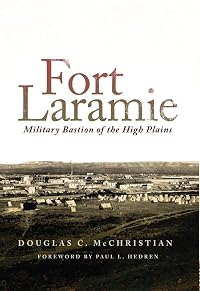
Fort Laramie: Military Bastion of the High Plains (Frontier Military)
by Douglas C. McChristian
On This Page
Description
Of all the U.S. Army posts in the West, none witnessed more history than Fort Laramie, positioned where the northern Great Plains join the Rocky Mountains. From its beginnings as a trading post in 1834 to its abandonment by the army in 1890, it was involved in the buffalo hide trade, overland migrations, Indian wars and treaties, the Utah War, Confederate maneuvering, and the coming of the telegraph and first transcontinental railroad. Douglas C. McChristian has written the first complete show more history of Fort Laramie, chronicling every critical stage in its existence, including its addition to the National Park System. He draws on an extraordinary array of archival materials-including those at Fort Laramie National Historic Site-to present new data about the fort and new interpretations of historical events. Emphasizing the fort's military history, McChristian documents the army's vital role in ending challenges posed by American Indians to U.S. occupation and settlement of the region, and he expands on the fort's interactions with the many Native peoples of the Central Plains and Rocky Mountains. He provides a particularly lucid description of the infamous Grattan fight of 1854, which initiated a generation of strife between Indians and U.S. soldiers, and he recounts the 1851 Horse Creek and 1868 Fort Laramie treaties. Meticulously researched and gracefully told, this is a long-overdue military history of one of the American West's most venerable historic places. show lessTags
Recommendations
























Member Reviews
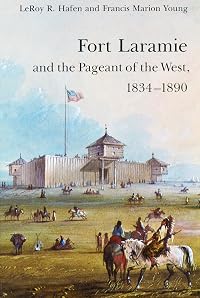
After LeRoy R. Hafen and Francis Marion Young’s Fort Laramie and the Pageant of the West 1834-1890, several other books appeared on Fort Laramie. This is not only a detailed operational history of the most significant army post in American history but extends the story past the fort’s closure in 1890 to its date as a National Historic Site where McChristian served as an historian three times.
It covers the fort’s days as a trading post from 1834 to 1849 in a brief introductory chapter, so Hafen’s and Young’s book is to be preferred for that period. However, this is by far the longer and superior account of the fort in its US Army days.
Its many photos and maps are reproduced well and, besides an extensive bibliography and index, show more it has plentiful footnotes which aren’t mere citations.
McChristian covers not only events at the fort but puts them in a wider context and also covers skirmishes and battles units stationed at the fort fought in. His coverage of the Grattan Massacre details the unsuccessful attempts by an Indian trader to defuse the situation and the aftermath where Fort Laramie came the closest ever to being attacked by Indians – an attack which would probably have been successful given the few soldiers there.
He covers the problems of getting representatives of tribes to the negotiations of Horse Creek Treaty of 1851. Several tribes didn’t show up. The Sioux told the Pawnee they could come to the council, but they’d kill them afterwards. A major flaw of the resulting treaty was that, while it concentrating on keeping peace between whites and Indians, it provided no provisions for tribes attacking each other and taking control of their land. On the plains, the three dominant and aggressive groups were the Sioux, Cheyenne, and Arapaho.
Also covered in detail are the negotiating skills of Red Cloud surrounding the Fort Laramie Treaty of 1868. They included everything from not showing up, simply ignoring treaty provisions or pretending not to understand them, to a charm offensive on the East Coast. McChristian sees him as ultimately operating out of personal aggrandizement. Eventually, his conciliatory gestures toward the US government lost him influence among his tribe.
There are several subjects that are little mentioned or ignored in Hafen and Young’s book. One is the importance of Fort Laramie in securing mail communication to California and later on Utah and Oregon. Another is the presence of U. S. Volunteers, also known as Galvanized Yankees, at the fort staring in 1864. These were Confederate prisoners of war who were offered relative freedom if they agreed to serve in US Army on the frontier where they would be guaranteed they wouldn’t be fighting their fellow countrymen. Opinions on their military value differed among officers. Some found them inferior troops. Others found them the best troops there. Some of the volunteers stayed in the west and the US Army after the war.
The Civil War caused some dissensions and a near mutiny at the fort. Several of the soldiers there were Southern sympathizers at the beginning of the war. It was also feared that the Overland Mail Company had several rebel agents in it. The capture of Fort Laramie was anticipated by an ambitious Confederate plan which wanted to occupy Colorado for its mineral wealth. That plan, however, ended when General Sibley was defeated in 1862 at the Battle of Glorieta Pass by Army regulars and Colorado volunteers.
Covered extensively are the various skirmishes and small attacks by Indians at various periods. They range from cattle theft to killing of various settlers and immigrants passing through. McChristian also covers the influence of frontier boosters out of Denver and Cheyenne in exaggerating Indian depredations and calling for harsh military reprisals. Numerous Indian traders clashed with the US government in pursuit of their own business. The longstanding problem of white and Indian relations – regulating the liquor trade – is covered.
After the Great Sioux War, which McChristian sees as a deliberate provocation by the United States government to seize the Black Hills of South Dakota (the area around the fort was sometimes called the Black Hills too), the fort settled into a routine. Ranchers began to develop the area around it, and the peacetime troops were served by a number of off-base saloons and “hog ranches” – as in “root hog or die”, i.e. brothels.
The matter of sex has a sad element in the fort’s history. Soldiers would often form sexual liaisons with women among the “Laramie Loafers” – Sioux Indians who hung around the fort. Pregnancies would often result, and, when the soldiers were transferred or discharged, these women of the “Squaw Camp” would lead sad lives, often shunned by their tribe. Across the North Platte River from the fort was the “Papoose Tree” on which one officer recorded 40 bodies of these children hung wrapped among its limbs.
An institution of the fort was Ordnance Sergeant Leodegar Schnyder, a Swiss immigrant He arrived at the fort in 1849. Having no faith in the officer, he declined an invitation by Second Lieutenant Grattan to go along on his ill-fated mission. He would serve at fort the until 1886 and be honored as Wyoming’s oldest resident. Unfortunately, he never wrote a word about his time at the fort.
McChristian covers the various disputes among local families to exploit the fort’s land and buildings after it was closed and auctioned off in 1890. The fort’s restoration and federalization as a National Historic Site is covered. We shouldn’t wonder, he says, that so much of Fort Laramie has been lost but at how much remains.
Don’t let the level of detail put you off this book. McChristian presents his story chronologically and writes clearly. It’s hard to imagine this book being bested in its coverage of Fort Laramie in its military role. show less
It covers the fort’s days as a trading post from 1834 to 1849 in a brief introductory chapter, so Hafen’s and Young’s book is to be preferred for that period. However, this is by far the longer and superior account of the fort in its US Army days.
Its many photos and maps are reproduced well and, besides an extensive bibliography and index, show more it has plentiful footnotes which aren’t mere citations.
McChristian covers not only events at the fort but puts them in a wider context and also covers skirmishes and battles units stationed at the fort fought in. His coverage of the Grattan Massacre details the unsuccessful attempts by an Indian trader to defuse the situation and the aftermath where Fort Laramie came the closest ever to being attacked by Indians – an attack which would probably have been successful given the few soldiers there.
He covers the problems of getting representatives of tribes to the negotiations of Horse Creek Treaty of 1851. Several tribes didn’t show up. The Sioux told the Pawnee they could come to the council, but they’d kill them afterwards. A major flaw of the resulting treaty was that, while it concentrating on keeping peace between whites and Indians, it provided no provisions for tribes attacking each other and taking control of their land. On the plains, the three dominant and aggressive groups were the Sioux, Cheyenne, and Arapaho.
Also covered in detail are the negotiating skills of Red Cloud surrounding the Fort Laramie Treaty of 1868. They included everything from not showing up, simply ignoring treaty provisions or pretending not to understand them, to a charm offensive on the East Coast. McChristian sees him as ultimately operating out of personal aggrandizement. Eventually, his conciliatory gestures toward the US government lost him influence among his tribe.
There are several subjects that are little mentioned or ignored in Hafen and Young’s book. One is the importance of Fort Laramie in securing mail communication to California and later on Utah and Oregon. Another is the presence of U. S. Volunteers, also known as Galvanized Yankees, at the fort staring in 1864. These were Confederate prisoners of war who were offered relative freedom if they agreed to serve in US Army on the frontier where they would be guaranteed they wouldn’t be fighting their fellow countrymen. Opinions on their military value differed among officers. Some found them inferior troops. Others found them the best troops there. Some of the volunteers stayed in the west and the US Army after the war.
The Civil War caused some dissensions and a near mutiny at the fort. Several of the soldiers there were Southern sympathizers at the beginning of the war. It was also feared that the Overland Mail Company had several rebel agents in it. The capture of Fort Laramie was anticipated by an ambitious Confederate plan which wanted to occupy Colorado for its mineral wealth. That plan, however, ended when General Sibley was defeated in 1862 at the Battle of Glorieta Pass by Army regulars and Colorado volunteers.
Covered extensively are the various skirmishes and small attacks by Indians at various periods. They range from cattle theft to killing of various settlers and immigrants passing through. McChristian also covers the influence of frontier boosters out of Denver and Cheyenne in exaggerating Indian depredations and calling for harsh military reprisals. Numerous Indian traders clashed with the US government in pursuit of their own business. The longstanding problem of white and Indian relations – regulating the liquor trade – is covered.
After the Great Sioux War, which McChristian sees as a deliberate provocation by the United States government to seize the Black Hills of South Dakota (the area around the fort was sometimes called the Black Hills too), the fort settled into a routine. Ranchers began to develop the area around it, and the peacetime troops were served by a number of off-base saloons and “hog ranches” – as in “root hog or die”, i.e. brothels.
The matter of sex has a sad element in the fort’s history. Soldiers would often form sexual liaisons with women among the “Laramie Loafers” – Sioux Indians who hung around the fort. Pregnancies would often result, and, when the soldiers were transferred or discharged, these women of the “Squaw Camp” would lead sad lives, often shunned by their tribe. Across the North Platte River from the fort was the “Papoose Tree” on which one officer recorded 40 bodies of these children hung wrapped among its limbs.
An institution of the fort was Ordnance Sergeant Leodegar Schnyder, a Swiss immigrant He arrived at the fort in 1849. Having no faith in the officer, he declined an invitation by Second Lieutenant Grattan to go along on his ill-fated mission. He would serve at fort the until 1886 and be honored as Wyoming’s oldest resident. Unfortunately, he never wrote a word about his time at the fort.
McChristian covers the various disputes among local families to exploit the fort’s land and buildings after it was closed and auctioned off in 1890. The fort’s restoration and federalization as a National Historic Site is covered. We shouldn’t wonder, he says, that so much of Fort Laramie has been lost but at how much remains.
Don’t let the level of detail put you off this book. McChristian presents his story chronologically and writes clearly. It’s hard to imagine this book being bested in its coverage of Fort Laramie in its military role. show less
First edition
Ratings
Members
- Recently Added By
Author Information

10 Works 184 Members
Douglas C. McChristian is a retired research historian for the National Park Service in the Santa Fe regional office and a former National Park Service field historian at fort Davis and Fort Laramie national historic sites and at Little Bighorn Battlefield National Monument.
Series
Belongs to Publisher Series
Common Knowledge
- Important places
- Fort Laramie, Wyoming, USA
- Original language
- English
Classifications
Statistics
- Members
- 22
- Popularity
- 1,186,399
- Reviews
- 2
- Rating
- (4.00)
- Languages
- English
- Media
- Paper, Audiobook, Ebook
- ISBNs
- 5
- ASINs
- 3