On This Page
Description
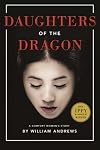
During World War II the Japanese forced 200,000 young Korean women to be sex slaves or "comfort women" for their soldiers. This is one woman's riveting story of strength, courage and promises kept.Tags
Recommendations













Member Reviews
Twenty years ago, Anna was born in Korea and adopted by an American couple. Upon the death of her adoptive mother, Anna travels to Korea to meet her birth mother. Instead, she meets her maternal grandmother, who tells Anna her own difficult story as well as the story of Anna's birth mother's life and death.
When the book starts, Anna is the narrator, and she speaks to the audience in a young, conversational tone. Then the flashback begins, and the past is revealed through Anna's grandmother's voice, which gives the writing a smoother, more formal tone that made it easier for me to lose myself in the story.
This isn't a book for the faint of heart. These girls were called "comfort women"--a euphemism for sex slaves, and they suffered show more horribly at the hands of their captors. I felt my stomach knot up at times, and I wanted to reach into the book and pull them out of their pain. However, I do think the author was a bit heavy-handed at times when it just wasn't necessary to be that detailed. Truly, though, it's amazing how cruel humans can be, but also what humans can survive, as well.
At any rate, if you're looking for a book that's going to make you feel strong emotions, Daughters of the Dragon definitely will. This is a terrible piece of history being repeated right now in lands under ISIS control, and as hard as it to read about, it must be unimaginable to survive. Rape is still a weapon of war. I guess, no matter how terrible they are, some things never change. show less
When the book starts, Anna is the narrator, and she speaks to the audience in a young, conversational tone. Then the flashback begins, and the past is revealed through Anna's grandmother's voice, which gives the writing a smoother, more formal tone that made it easier for me to lose myself in the story.
This isn't a book for the faint of heart. These girls were called "comfort women"--a euphemism for sex slaves, and they suffered show more horribly at the hands of their captors. I felt my stomach knot up at times, and I wanted to reach into the book and pull them out of their pain. However, I do think the author was a bit heavy-handed at times when it just wasn't necessary to be that detailed. Truly, though, it's amazing how cruel humans can be, but also what humans can survive, as well.
At any rate, if you're looking for a book that's going to make you feel strong emotions, Daughters of the Dragon definitely will. This is a terrible piece of history being repeated right now in lands under ISIS control, and as hard as it to read about, it must be unimaginable to survive. Rape is still a weapon of war. I guess, no matter how terrible they are, some things never change. show less
An amazing journey!
Searching for her Korean birth mother leads twenty year old American Anna Carlson into a dark story of suffering, anguish and despair that the Japanese nation still has to properly apologize for.
This novel is a further example of women caught up into war and used and abused by those who think of themselves as more entitled and more powerful. An age old story.
Andrews has woven a wonderful heart wrenching story, without apology, and without false emotions.
What unfolds is the life of a young Korean girl, Jae-hee who is terribly and horribly brutalized during the Japanese occupation of Korea; and who is somehow able to emotionally stay strong, despite the dogs of despair nipping at her heals.
This is not gushy, not over show more the top, simply a telling of the journey of one young woman who is used as a sex slave 'comfort woman' by the Japanese. Jae-hee moves to North Korea in the hope of change and a better world. That was not the holy grail it was supposed to be. She then barely escapes with her life to South Korea to struggle as best she may in the aftermath of the Korean War, contending with the shaming prejudices rampant against her and her comfort sister sufferers.
Threaded throughout is the mystery of the comb with the two-headed dragon--a comb that Anna is confronted about by North Koreans.
A worthy and revealing read.
A NetGalley ARC show less
Searching for her Korean birth mother leads twenty year old American Anna Carlson into a dark story of suffering, anguish and despair that the Japanese nation still has to properly apologize for.
This novel is a further example of women caught up into war and used and abused by those who think of themselves as more entitled and more powerful. An age old story.
Andrews has woven a wonderful heart wrenching story, without apology, and without false emotions.
What unfolds is the life of a young Korean girl, Jae-hee who is terribly and horribly brutalized during the Japanese occupation of Korea; and who is somehow able to emotionally stay strong, despite the dogs of despair nipping at her heals.
This is not gushy, not over show more the top, simply a telling of the journey of one young woman who is used as a sex slave 'comfort woman' by the Japanese. Jae-hee moves to North Korea in the hope of change and a better world. That was not the holy grail it was supposed to be. She then barely escapes with her life to South Korea to struggle as best she may in the aftermath of the Korean War, contending with the shaming prejudices rampant against her and her comfort sister sufferers.
Threaded throughout is the mystery of the comb with the two-headed dragon--a comb that Anna is confronted about by North Koreans.
A worthy and revealing read.
A NetGalley ARC show less
This book is historical fiction of the life of a "comfort woman," a euphemism for a sex slave, to the Japanese military during WWII. The main character tells her story to her granddaughter, who had been adopted at birth by an American family, and had travelled to Korea to seek her birth mother. I read it quickly, and found it compelling. I wondered if a grandmother would tell her story in such detail to her granddaughter, but dismissed it as a plot device. I had known of the existence of these women but had never internalized that it meant forced sexual slavery for many thousands of Asian women. I also learned a bit about Korean history. As you may expect from the subject matter, this book is not for children or for anyone triggered by show more descriptions of rape or battery. show less
I loved this historical fiction tale about the Korean comfort women of WWII. It was heartbreaking, but I learned a lot. The characters were ones I cared about, and so I would recommend this for anyone interested in a tale about a strong woman. That said, be warned - it is not easy to read about rape and abuse, which did take place, and continues to take place in conflict zones. So if they are triggers, you might not want to read this book.
A riveting and well written piece of fictional history based on documented true events of the conscription of thousands of young Asian women by the Japanese Imperial Army to become “comfort women” for its officers and troops. Japan has yet to fully apologize or justly recompense these women.
We follow the lives of two Korean teenagers, Jae-Hee and Soo-Hee and the mystery talisman of the golden comb carved with a two-headed dragon and five toes on its claws. They were subject to beatings, multiple rapes, and degradation. After the war, Jae-Hee attempts to integrate herself back into Korean society but Korea becomes divided. She escapes to the South with her daughter Soo-bo but the shame of her past follows her. Anna the orphaned show more daughter of Soo-Bo comes to Korea from America to discover her past.
This is a story that needs to be told and you won’t be disappointed by the author’s excellent narration.
I was provided with an electronic copy in return for an honest review. show less
We follow the lives of two Korean teenagers, Jae-Hee and Soo-Hee and the mystery talisman of the golden comb carved with a two-headed dragon and five toes on its claws. They were subject to beatings, multiple rapes, and degradation. After the war, Jae-Hee attempts to integrate herself back into Korean society but Korea becomes divided. She escapes to the South with her daughter Soo-bo but the shame of her past follows her. Anna the orphaned show more daughter of Soo-Bo comes to Korea from America to discover her past.
This is a story that needs to be told and you won’t be disappointed by the author’s excellent narration.
I was provided with an electronic copy in return for an honest review. show less
I had heard about the Comfort Women who were abducted into forced prostitution by the Japanese army during WWII although only in the context of the Japanese occupation of China, so I was unaware that a huge number of Korean women were also enslaved. Therefore, the book was educational in that respect and also in the reasons for the Korean War and why the country is split to the present day. The way the whole issue was covered up to avoid political or trade conflicts with Japan after the war is also disgraceful, and this was portrayed in the more recent parts of the main character's story.
Where I'm not so keen on the book is the emphasis on grisly descriptions of violence against women rather than on the characters of the women and how show more they survive and, in some cases, support each other. The attitudes of the Geishas is also left unexplored; they seem callous towards the slaves because they are not Japanese. It isn't clear exactly what role they performed given that most of the 'servicing' was done by the prisoners: mainly, they just seem to sit around watching. It also didn't quite gell that this is written by a man from the West whose only connection to Korea is that he adopted a child from the country.
The emphasis on the comb and its meaning is also rather odd, serving to make the main character artificially special rather than representative of the women who suffered. The present day framing only serves to make it less credible that the character can recall sixty year old events in such minute detail, and I found those present day parts to be much weaker. Her granddaughter isn't really developed as a character and it isn't convincing that her adoptive father would let her go off alone in a foreign country to meet a woman who claimed to be her grandmother given the real life instances of abduction and trafficking. Due to these considerations, I can only rate this as a 3 star read and hope that a book on the subject will be written one day by someone with a Korean ethnic and cultural background. show less
Where I'm not so keen on the book is the emphasis on grisly descriptions of violence against women rather than on the characters of the women and how show more they survive and, in some cases, support each other. The attitudes of the Geishas is also left unexplored; they seem callous towards the slaves because they are not Japanese. It isn't clear exactly what role they performed given that most of the 'servicing' was done by the prisoners: mainly, they just seem to sit around watching. It also didn't quite gell that this is written by a man from the West whose only connection to Korea is that he adopted a child from the country.
The emphasis on the comb and its meaning is also rather odd, serving to make the main character artificially special rather than representative of the women who suffered. The present day framing only serves to make it less credible that the character can recall sixty year old events in such minute detail, and I found those present day parts to be much weaker. Her granddaughter isn't really developed as a character and it isn't convincing that her adoptive father would let her go off alone in a foreign country to meet a woman who claimed to be her grandmother given the real life instances of abduction and trafficking. Due to these considerations, I can only rate this as a 3 star read and hope that a book on the subject will be written one day by someone with a Korean ethnic and cultural background. show less
I quite liked this. The subject was horrible (of course), and some of the story was... questionable (I wasn't keen on the whole comb idea and how it played out). It was better than I expected considering it's written by a man with no personal experience. This isn't a subject I know a huge amount about, but this made me determined to watch the 2016 documentary "The Apology" - I had planned to, but hadn't had the courage to start it.
This book made me angry, at America and Japan. It made me furious on behalf of those women, abused and discarded, forced to hide their past as if they did something shameful.
I got it free on kindle, and I probably won't read it again. I don't think this is The Book you need to read to get to grips with what show more the Japanese did to these women, but it's not a bad place to start (fairly easy read aside from the actual events depicted). Overall I'd probably say it's worthy (in what it's trying to achieve) but not compelling. show less
This book made me angry, at America and Japan. It made me furious on behalf of those women, abused and discarded, forced to hide their past as if they did something shameful.
I got it free on kindle, and I probably won't read it again. I don't think this is The Book you need to read to get to grips with what show more the Japanese did to these women, but it's not a bad place to start (fairly easy read aside from the actual events depicted). Overall I'd probably say it's worthy (in what it's trying to achieve) but not compelling. show less
Members
- Recently Added By
Author Information
5 Works 240 Members
Awards and Honors
Series

Common Knowledge
- Original publication date
- 2018
- Important places
- Korea
Classifications
Statistics
- Members
- 155
- Popularity
- 212,144
- Reviews
- 14
- Rating
- (4.19)
- Languages
- English, German
- Media
- Paper, Ebook
- ISBNs
- 5
- ASINs
- 2