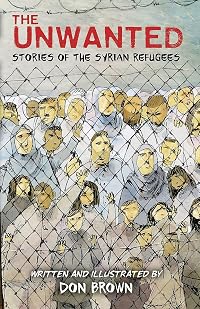
The Unwanted: Stories of the Syrian Refugees
by Don Brown
On This Page
Description
Sibert Honor Medalist ? New York Public Library Best Of 2018 ? The Horn Book's Fanfare 2018 list ? Kirkus Best Books of 2018 ? YALSA Excellence in Nonfiction WinnerIn the tradition of two-time Sibert honor winner Don Brown's critically acclaimed, full-color nonfiction graphic novels The Great American Dust Bowl and Drowned City, The Unwanted is an important, timely, and eye-opening exploration of the ongoing Syrian refugee crisis, exposing the harsh realities of living in, and trying to show more escape, a war zone.
Starting in 2011, refugees flood out of war-torn Syria in Exodus-like proportions. The surprising flood of victims overwhelms neighboring countries, and chaos follows. Resentment in host nations heightens as disruption and the cost of aid grows. By 2017, many want to turn their backs on the victims. The refugees are the unwanted.
Don Brown depicts moments of both heartbreaking horror and hope in the ongoing Syrian refugee crisis. Shining a light on the stories of the survivors, The Unwanted is a testament to the courage and resilience of the refugees and a call to action for all those who read.
. show less
Tags
Recommendations
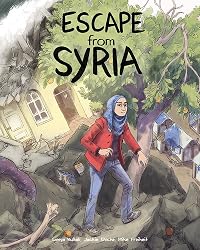
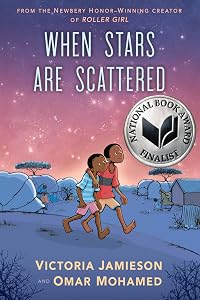
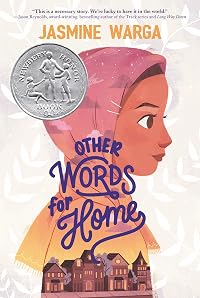

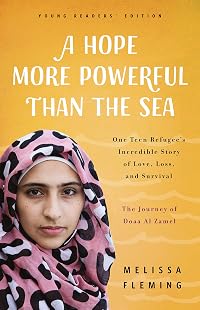

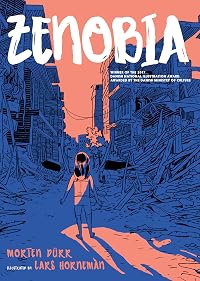
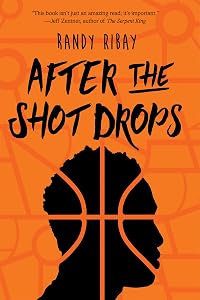
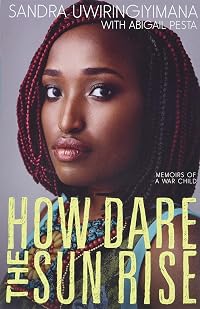
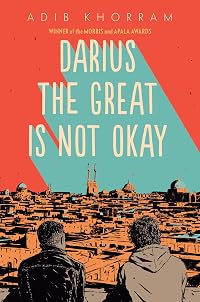
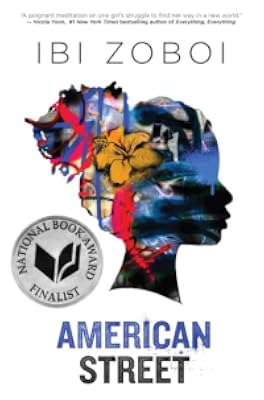
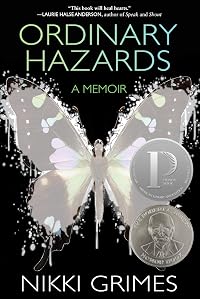
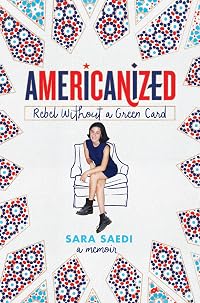
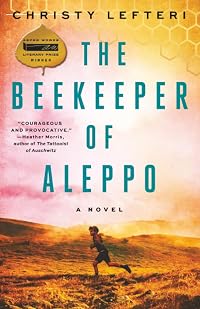

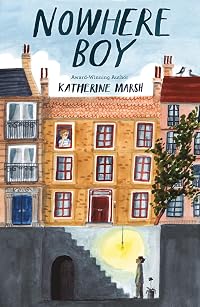
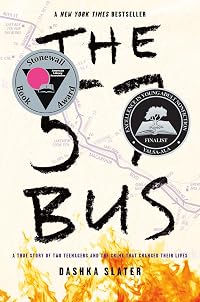
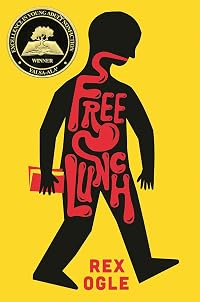
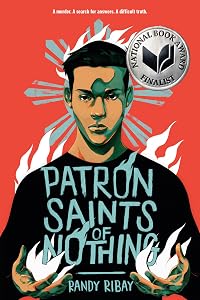
Member Recommendations
Member Reviews
The best thing about this book is how it can be immediately understood by any reader of any age or background. And it doesn't miss or avoid facts. Rather it shares a detailed and substantive story in small stages, with both pictures and text and in quite sharp detail. Certainly the actual individual, family and small group stories of flight and crossing borders and deadly sea crossings succeed in allowing, indeed demanding that the reader empathize with the refugees who have left Syria.
Important moments of the mass exodus including the mass level of border crossing into Jordan and Turkey and mass size of the refugee population living in Lebanon are clearly explained.
The style of art greatly encapsulates war and dangerous attempts to show more escape. The narration is peppered with relevant answers to questions of how people traveled taken from real individuals. The first year of the revolution and the counterrevolutionary war are explained frankly and honestly. Readers outside the Middle East are confronted with bombing of urban areas and mass torture killing in jail. How can any of us stand with our anti-refugee politicians or border guards? To not side with these refugees would be an obscenity.
What will Syria be like in five years now that the dictatorship has won the war almost everywhere?
More and more this book must be matched by another book on the African refugees who are desperately trying to make a similar boat crossing from Libya to Italy, who are being murdered by the Libyan and Italian governments blocking their passage and even shutting down NGO rescue ships. There is a dispossessed and vulnerable mass population of African refugees in Libya and Italy like the Syrian population from Turkey to Germany.
Borders are forcible creations of human beings with power. They are fundamentally about international inequality and they obscenely target even people fleeing violence.
All of us should totally oppose Fortress Europe and we should all totally oppose the US Border Patrol and ICE.
No human being is illegal! Let them all in! show less
Important moments of the mass exodus including the mass level of border crossing into Jordan and Turkey and mass size of the refugee population living in Lebanon are clearly explained.
The style of art greatly encapsulates war and dangerous attempts to show more escape. The narration is peppered with relevant answers to questions of how people traveled taken from real individuals. The first year of the revolution and the counterrevolutionary war are explained frankly and honestly. Readers outside the Middle East are confronted with bombing of urban areas and mass torture killing in jail. How can any of us stand with our anti-refugee politicians or border guards? To not side with these refugees would be an obscenity.
What will Syria be like in five years now that the dictatorship has won the war almost everywhere?
More and more this book must be matched by another book on the African refugees who are desperately trying to make a similar boat crossing from Libya to Italy, who are being murdered by the Libyan and Italian governments blocking their passage and even shutting down NGO rescue ships. There is a dispossessed and vulnerable mass population of African refugees in Libya and Italy like the Syrian population from Turkey to Germany.
Borders are forcible creations of human beings with power. They are fundamentally about international inequality and they obscenely target even people fleeing violence.
All of us should totally oppose Fortress Europe and we should all totally oppose the US Border Patrol and ICE.
No human being is illegal! Let them all in! show less
Literary Merit: Great
Characterization: N/A
Recommended: Highly Recommended
Level: High School
My only gripe about this book is the very same thing that I think makes it extremely accessible to teen readers: its length. The Unwanted is a very short, sweet, and to the point look at the Syrian refugee crisis, told from te points of view of many of the refugees themselves. It begins in 2011, with teenage boys from Dara'a scribbling "Down with the regime" onto a wall. From there, the boys are wrongfully imprisoned, leading into the history of the crisis. Bashar al-Assad, the tyrannical president of Syria, then begins torturing, executing, or imprisoning anyone (civilian or otherwise) who dares disagree with his regime, leading many families to show more flee the country in search of a better life. Unfortunately for these desperate refugees, many of the countries they are fleeing to either do not have the resources and space to accommodate them, or refuse to allocate what they do have to helping strangers from another country. The book explains this struggle through first-hand accounts gathered by the author during his visits to several refugee camps, highlighting the human tragedy of the crisis.
This was an incredibly powerful read, and one that had my heart aching for the millions of people affected by the Syrian refugee crisis. Though I pride myself on staying up to date with world issues, I (rather shamefully) wasn't paying as much attention to this crisis as I likely should have been. Like many people who have grown up with privilege, it can be hard for me to put myself in the shoes of people all the way across the world, and it can be far too easy to remove myself from the suffering of people who do not live in my country. This doesn't mean, however, that their suffering should be ignored; it simply means that me, and others like me, simply need to be informed about what's going on overseas.
The most important thing this book seems to promote is empathy. I don't think a single person reading The Unwanted could get through the entire book without feeling profoundly moved by the suffering of these refugees, no matter what side of the political spectrum they land on. All it takes is picturing your own mother or father, or your own children if you have them, in these situations to realize how hopeless and devastated you might feel in a similar situation. I couldn't imagine having to flee my war-torn home, only to lose most of my family along the way to violence, illness, and drowning. I couldn't picture being a child forced to make the dangerous trip alone, having to work and fight to provide for my family hundreds of miles away. I can only imagine the terrible choices these parents had to make: leave their children in a country where they might very well be bombed at any moment, or risk fleeing with them to an uncertain future? This book helped open my eyes to the very real plights of these refugees, and I imagine it would do the same for any teenage reader who picks up this book.
As I said before, while I would have liked to see more of the history behind this crisis, I can understand why Brown chose to focus solely on the stories of specific refugees. While having the background knowledge and facts is crucially important, making the emotional and human connection for the reader is more important. As many teens are reluctant readers, it might have been very difficult to sell a book jammed with facts and statistics that they could easily skim through in their textbooks: writing the story this way makes it far more relevant to the readers as human beings. Because I don't know much about the history behind this crisis, however, I personally would've preferred this book to be longer, delving more into depth on the political arena that led to the mass exodus of refugees.
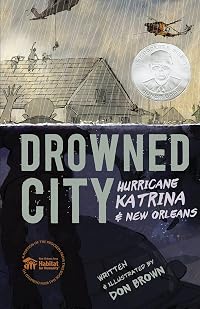
Because this is a graphic novel, I must also comment on the incredible artwork portrayed throughout the book. I read Don Brown's Drowned City about a year ago, and was very impressed with his ability to realistically portray controversial world issues in a way that brings attention to the people rather than the politics. I have always admired the artistry of graphic novels (though I haven't read many myself), and Don Brown's artwork here brings the stories of these refugees to life in a very real and haunting way.
I would recommend this book to a high school audience, mostly because of the very graphic and controversial issues presented in this book. I would also, however, recommend it to a teen interested in activism, or one who would like to be more informed on world issues. As I mentioned before, this book is an extremely quick read, and presents this crisis in a way that is easy to digest for reluctant or struggling readers. I would like to think that a socially aware activist lives in the heart of almost every teen, and seeing/reading about the suffering of others might spur them into meaningful action.
As Dr. Seuss once said through his character the Lorax, "Unless someone like you cares a whole awful lot, nothing is going to get better. It's not." I truly believe that the only thing we need to better our world is more social awareness, and more people who care enough to try making the world a better place for everyone. I commend Don Brown for shedding light on a very real problem in our world today, and will gladly advocate for adding this important work to our library's teen non-fiction section. It is my hope that doing so will inspire others to take action to inspire real change for the future. show less
Characterization: N/A
Recommended: Highly Recommended
Level: High School
My only gripe about this book is the very same thing that I think makes it extremely accessible to teen readers: its length. The Unwanted is a very short, sweet, and to the point look at the Syrian refugee crisis, told from te points of view of many of the refugees themselves. It begins in 2011, with teenage boys from Dara'a scribbling "Down with the regime" onto a wall. From there, the boys are wrongfully imprisoned, leading into the history of the crisis. Bashar al-Assad, the tyrannical president of Syria, then begins torturing, executing, or imprisoning anyone (civilian or otherwise) who dares disagree with his regime, leading many families to show more flee the country in search of a better life. Unfortunately for these desperate refugees, many of the countries they are fleeing to either do not have the resources and space to accommodate them, or refuse to allocate what they do have to helping strangers from another country. The book explains this struggle through first-hand accounts gathered by the author during his visits to several refugee camps, highlighting the human tragedy of the crisis.
This was an incredibly powerful read, and one that had my heart aching for the millions of people affected by the Syrian refugee crisis. Though I pride myself on staying up to date with world issues, I (rather shamefully) wasn't paying as much attention to this crisis as I likely should have been. Like many people who have grown up with privilege, it can be hard for me to put myself in the shoes of people all the way across the world, and it can be far too easy to remove myself from the suffering of people who do not live in my country. This doesn't mean, however, that their suffering should be ignored; it simply means that me, and others like me, simply need to be informed about what's going on overseas.
The most important thing this book seems to promote is empathy. I don't think a single person reading The Unwanted could get through the entire book without feeling profoundly moved by the suffering of these refugees, no matter what side of the political spectrum they land on. All it takes is picturing your own mother or father, or your own children if you have them, in these situations to realize how hopeless and devastated you might feel in a similar situation. I couldn't imagine having to flee my war-torn home, only to lose most of my family along the way to violence, illness, and drowning. I couldn't picture being a child forced to make the dangerous trip alone, having to work and fight to provide for my family hundreds of miles away. I can only imagine the terrible choices these parents had to make: leave their children in a country where they might very well be bombed at any moment, or risk fleeing with them to an uncertain future? This book helped open my eyes to the very real plights of these refugees, and I imagine it would do the same for any teenage reader who picks up this book.
As I said before, while I would have liked to see more of the history behind this crisis, I can understand why Brown chose to focus solely on the stories of specific refugees. While having the background knowledge and facts is crucially important, making the emotional and human connection for the reader is more important. As many teens are reluctant readers, it might have been very difficult to sell a book jammed with facts and statistics that they could easily skim through in their textbooks: writing the story this way makes it far more relevant to the readers as human beings. Because I don't know much about the history behind this crisis, however, I personally would've preferred this book to be longer, delving more into depth on the political arena that led to the mass exodus of refugees.
Because this is a graphic novel, I must also comment on the incredible artwork portrayed throughout the book. I read Don Brown's Drowned City about a year ago, and was very impressed with his ability to realistically portray controversial world issues in a way that brings attention to the people rather than the politics. I have always admired the artistry of graphic novels (though I haven't read many myself), and Don Brown's artwork here brings the stories of these refugees to life in a very real and haunting way.
I would recommend this book to a high school audience, mostly because of the very graphic and controversial issues presented in this book. I would also, however, recommend it to a teen interested in activism, or one who would like to be more informed on world issues. As I mentioned before, this book is an extremely quick read, and presents this crisis in a way that is easy to digest for reluctant or struggling readers. I would like to think that a socially aware activist lives in the heart of almost every teen, and seeing/reading about the suffering of others might spur them into meaningful action.
As Dr. Seuss once said through his character the Lorax, "Unless someone like you cares a whole awful lot, nothing is going to get better. It's not." I truly believe that the only thing we need to better our world is more social awareness, and more people who care enough to try making the world a better place for everyone. I commend Don Brown for shedding light on a very real problem in our world today, and will gladly advocate for adding this important work to our library's teen non-fiction section. It is my hope that doing so will inspire others to take action to inspire real change for the future. show less
Brown pulls no punches with this story: the horrors the refugees face in Syria and the horrors they face wherever they land are shown and described in clear, unbiased language. While clearly sympathetic to their plight, Brown stays admirably factual. The numbers he presents are truly shocking: Syria started with more people than Florida, but has been reduced to a population the size of Denmark, with more fleeing each day.
He mentions in the afterwords that he didn't want to go too deep into the history and the context of the situation - after all, why does it matter that the child who died fleeing was of a particular religion? All that matters what that he had to leave, and he died trying.
He mentions in the afterwords that he didn't want to go too deep into the history and the context of the situation - after all, why does it matter that the child who died fleeing was of a particular religion? All that matters what that he had to leave, and he died trying.
Really well done encapsulation of the Syrian conflict, and thoughtful portrayal of the plight of many of the refugees. It's heavy, because the whole situation is both awful and inhumane, but it's also clear, based on interviews and a compellingly drawn graphic novel.
I found this book at my local library while doing a project on multiculturalism in the library’s collections, so I checked it out. I am also trying to read more graphic novels. Unfortunately this falls into several typical orientalist traps including the way it emphasizes religion and uses political charged terms like jihadist and terrorist without explaining them. Don’t use them if you can’t explain what you mean. All the images are so drab and the hyper focus is on victimizing refugees in such helpless, othering ways. Of course this topic is important and needs to be given platform.
But this one falls short.
But this one falls short.
This book sat for while before I had the backbone to pick it up. Don Brown is an author I admire greatly and this book it quite something. Words do not come easy for me. This book brings you all the determination, anguish and despair of the refugees. It brings you to the precipice but does not throw you over.
I never understood why there was a war in Syria, so I appreciate the information provided by the book in a easy to understand, graphic novel format. It is unfortunate people start civil war and drive out their fellow countrymen and place their lives in peril. My thoughts after reading the book is I hope Syrians come together for the sake of their country and sort out this awful civil war situation, and I hope the neighboring wealthy Muslim countries such as Saudi Arabia do more to assist their fellow believers. (But I don't think this is particularly what the author wanted to convey. I think he mainly wanted his readers to desire Syrian refugees to live a better life in the countries they flee to.)
Members
- Recently Added By
Lists

BBA Potential: Young Adult
22 works; 2 members

Middle East and Maghreb Graphic Novels
46 works; 3 members

Youth: Social Values
194 works; 1 member
Author Information

40+ Works 6,654 Members
Awards and Honors
Awards
Distinctions
Notable Lists
Common Knowledge
- People/Characters
- Bashar al-Assad; Bushra; Viktor Orban; Donald Trump
- Important places
- Dara'a, Syria; Syria; Turkey; Lebanon; Jordan; Greece (show all 23); Egypt; Libya; Mediterranean Sea; Europe; Zaatari, Jordan; Hungary; Bulgaria; Slovakia; Paris, France; Aleppo, Syria; Denmark; Hamburg, Germany; Canada; Sacramento, California, USA; Ritsona, Greece; Elpida, Thessaloniki, Greece; Leros, Greece
- Important events
- Syrian Civil War; Syrian Refugee Crisis; Arab Spring
- First words
- March 2011
Dara'a, southern Syria
Teenage boys scrawl "Down with the regime" on a wall. - Last words
- (Click to show. Warning: May contain spoilers.)"There is no price you would not pay, there is no wall you would not climb, no sea you would not sail, no border you would not cross if it is war or...barbarism...you are fleeing."
Jean-Claude Juncker, president, European Commission - Original language
- English
Classifications
Statistics
- Members
- 445
- Popularity
- 68,980
- Reviews
- 26
- Rating
- (4.15)
- Languages
- English, Spanish
- Media
- Paper, Ebook
- ISBNs
- 7
- ASINs
- 1