On This Page
Description
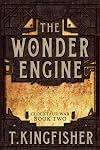
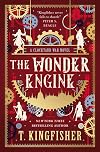
Pull three people out of prison-a disgraced paladin, a convicted forger, and a heartless assassin. Give them weapons, carnivorous tattoos, and each other. Point them at the enemy. What could possibly go wrong? In the sequel to CLOCKWORK BOYS, Slate, Brenner, Caliban and Learned Edmund have arrived in Anuket City, the source of the mysterious Clockwork Boys. But the secrets they're keeping could well destroy them, before the city even gets the chance...Tags
Recommendations



















Member Recommendations

Member Reviews
This second book in the Clocktaur War duology begins where the first one ended, with the four protagonists arriving in Anuket City and starting their undercover work to sabotage the dangerous clocktaurs. Learned Edmund enrolls the help of a master artificer, Ashes Magnus (discovering to his enormous surprise that she’s a woman, and therefore further eroding his misconceptions about the other sex), while Slate, Brenner and Caliban must infiltrate the city’s seedier quarters in search of information while Grimehug, the gnole they encountered along the way and who attached himself to Slate, is revealed as a very helpful co-conspirator.
As for Slate, the dangers inherent in returning to Anuket City, which she left to escape the show more retaliation of crime lord Horsehand, manifest quite suddenly and with potentially deadly consequences, while the foursome’s investigation on the origin of the clocktaurs leads to a terrible discovery and a dangerous infiltration mission from which not all of them will return…
Much as I enjoyed the first part of this duology, I have to admit that this second installment, while still reasonably engaging, did not work as well: for starters, the growing attraction between Slate and Caliban did not feel quite integral to the story, and it pushed the true reason for the quartet’s mission somewhat in the background. It was not because of my aversion to romance, because usually T. Kingfisher manages this element quite well in balancing it with a good dose of humor, but rather because there were no sufficient elements in the relationship to make it believable: there is no doubt about the mutual physical attraction, but their personalities are often in conflict, with no apparent possibility of common ground on which to establish a love story - this is quite different from other relationships portrayed in Kingfisher’s later books, and a bit disappointing. On top of that, the rivalry between Caliban and Brenner over Slate’s affections moves from the first book’s amusingly barbed banter into what looks like hormone-fueled clashes, sliding into the trope of the love triangle and robbing this side of the story of its entertainment value.
Luckily for me, I could focus on the very intriguing aspect of gnole culture: thanks to Grimehug we are made privy to the rich and layered gnole society and the way these creatures, alternately despised, feared and ignored, have carved their niche into human society. Grimehug himself is a delightful character, particularly when he shares his (not very flattering) views on humanity’s behavior, and I liked the way he attached himself to Slate: the bond of friendship between them was indeed one of the higher points in the story, as was Learned Edmund dedication in compiling a treatise on gnoles so that they could be better understood - and appreciated.
When not mooning over Slate, Caliban offers another interesting peek into the paladin mentality, particularly where the connection to one’s god is concerned: there is a fascinating dichotomy here, because on one side we are told about this connection to the divine and the constant battle with demon possession, on the other a paladin’s role seems mostly mundane - at least according to Caliban whose activities largely consisted in the exorcism of possessed animals. And yet, Caliban feels the absence of his god most keenly, and at one point seems almost tempted to accept the offer of another god to fill that void - which made me wonder if his attachment to Slate was not an attempt to do exactly that, rather than a genuine feeling…
Story-wise, The Wonder Engine sees the culmination of the four characters’ mission and the discovery of what originated the creation of the clocktaurs, and does so with a good deal of suspense laced with humor that kept me turning the pages at a fast pace: the steampunk element introduced with the clocktaurs is a nice touch in this fantasy setting and also adds a few gory details that heightened the tension. I must add that there is a surprise development concerning one of the main characters which I suspected must be there since the first book, but still managed to appear surprising thanks to its unexpected placement in the story: without spoiling the surprise, I have to say that Slate’s reaction to this revelation and its consequences played very well and served to depict her personality even more accurately.
When all is said and done, I enjoyed the conclusion of the duology even though it did not feel on the same level as other works by T. Kingfisher: still, the entertainment value of her stories remains high and I’m not going to let this slightly disappointing encounter distract me from reading her other novels. show less
As for Slate, the dangers inherent in returning to Anuket City, which she left to escape the show more retaliation of crime lord Horsehand, manifest quite suddenly and with potentially deadly consequences, while the foursome’s investigation on the origin of the clocktaurs leads to a terrible discovery and a dangerous infiltration mission from which not all of them will return…
Much as I enjoyed the first part of this duology, I have to admit that this second installment, while still reasonably engaging, did not work as well: for starters, the growing attraction between Slate and Caliban did not feel quite integral to the story, and it pushed the true reason for the quartet’s mission somewhat in the background. It was not because of my aversion to romance, because usually T. Kingfisher manages this element quite well in balancing it with a good dose of humor, but rather because there were no sufficient elements in the relationship to make it believable: there is no doubt about the mutual physical attraction, but their personalities are often in conflict, with no apparent possibility of common ground on which to establish a love story - this is quite different from other relationships portrayed in Kingfisher’s later books, and a bit disappointing. On top of that, the rivalry between Caliban and Brenner over Slate’s affections moves from the first book’s amusingly barbed banter into what looks like hormone-fueled clashes, sliding into the trope of the love triangle and robbing this side of the story of its entertainment value.
Luckily for me, I could focus on the very intriguing aspect of gnole culture: thanks to Grimehug we are made privy to the rich and layered gnole society and the way these creatures, alternately despised, feared and ignored, have carved their niche into human society. Grimehug himself is a delightful character, particularly when he shares his (not very flattering) views on humanity’s behavior, and I liked the way he attached himself to Slate: the bond of friendship between them was indeed one of the higher points in the story, as was Learned Edmund dedication in compiling a treatise on gnoles so that they could be better understood - and appreciated.
When not mooning over Slate, Caliban offers another interesting peek into the paladin mentality, particularly where the connection to one’s god is concerned: there is a fascinating dichotomy here, because on one side we are told about this connection to the divine and the constant battle with demon possession, on the other a paladin’s role seems mostly mundane - at least according to Caliban whose activities largely consisted in the exorcism of possessed animals. And yet, Caliban feels the absence of his god most keenly, and at one point seems almost tempted to accept the offer of another god to fill that void - which made me wonder if his attachment to Slate was not an attempt to do exactly that, rather than a genuine feeling…
Story-wise, The Wonder Engine sees the culmination of the four characters’ mission and the discovery of what originated the creation of the clocktaurs, and does so with a good deal of suspense laced with humor that kept me turning the pages at a fast pace: the steampunk element introduced with the clocktaurs is a nice touch in this fantasy setting and also adds a few gory details that heightened the tension. I must add that there is a surprise development concerning one of the main characters which I suspected must be there since the first book, but still managed to appear surprising thanks to its unexpected placement in the story: without spoiling the surprise, I have to say that Slate’s reaction to this revelation and its consequences played very well and served to depict her personality even more accurately.
When all is said and done, I enjoyed the conclusion of the duology even though it did not feel on the same level as other works by T. Kingfisher: still, the entertainment value of her stories remains high and I’m not going to let this slightly disappointing encounter distract me from reading her other novels. show less
The second half of the story which began with Clockwork Boys. The description says: Pull three people out of prison -- a disgraced paladin, a convicted forger, and a heartless assassin. Give them weapons, carnivorous tattoos, and each other. Point them at the enemy. What could possibly go wrong?
Slate and her companions have survived the journey to Anuket City, but they have to uncover the secrets about what clockwork boys are before they can begin to develop any sort of plan for how to stop them. This also isn’t Slate’s first visit to the city and there are people out there who want her dead.
The beginning of this book meanders a bit, perhaps in part because the characters have resolved or at least learnt to avoid sources of friction show more between them. (An observation, not a complaint!) But then things become very tense and fraught. It draws together various elements of the story in a way which is unexpectedly clever (rather than contrived) and unexpectedly heartbreaking.
I really like this. Again, it involves humour and the teamwork and characters I cared about. I like the way the romance -- more of thing here than it was in the first book -- develops. I appreciate that this is a story about characters who have made, in different ways, mistakes that messed-up their lives, and now they have to work out how to move on from their failures. The way Caliban’s issues of faith and religion were explored was interesting.
The perfect gentle knight. She had a strong urge to kick him in the shins. Which would do precisely nothing and he’d look confused at me, And then probably offer to take his shin armor off so I could try again without hurting my foot. show less
Slate and her companions have survived the journey to Anuket City, but they have to uncover the secrets about what clockwork boys are before they can begin to develop any sort of plan for how to stop them. This also isn’t Slate’s first visit to the city and there are people out there who want her dead.
The beginning of this book meanders a bit, perhaps in part because the characters have resolved or at least learnt to avoid sources of friction show more between them. (An observation, not a complaint!) But then things become very tense and fraught. It draws together various elements of the story in a way which is unexpectedly clever (rather than contrived) and unexpectedly heartbreaking.
I really like this. Again, it involves humour and the teamwork and characters I cared about. I like the way the romance -- more of thing here than it was in the first book -- develops. I appreciate that this is a story about characters who have made, in different ways, mistakes that messed-up their lives, and now they have to work out how to move on from their failures. The way Caliban’s issues of faith and religion were explored was interesting.
The perfect gentle knight. She had a strong urge to kick him in the shins. Which would do precisely nothing and he’d look confused at me, And then probably offer to take his shin armor off so I could try again without hurting my foot. show less
Enjoyable if predictable.
Mention should be made that this is a continuation of the cliffhanger from Clockwork Boys. I do not know that this would stand on its own. I liked the ultimate villain/problem plotline and the way the threads came together. I appreciate that part of the issue is the mechanism of bureaucracy and capitalist interest. I'm iffy on the romantic plotline.
Interestingly, having read both back to back, I notice a tonal shift between the two. I suppose that can be one of the problem with friends as editors and cobbling together a story written over such a long time. Book one had a better balance of awfulness tempered by moments of thoughtful compassion. Book two trades most of that in for body horror, emotional outbursts, show more and quips, funny as they were.
“'Damn. No one ever tells me I’ve got a tidy mind.'
'It’s tidier than mine,' said Brenner.
'Yes, but yours is full of spiders.'
The assassin looked absurdly flattered by this."
The leads were incredibly stupid in their fatalism, and need to rely upon helpful strangers to accomplish their goals. I couldn't help but notice the reunion between our leads feels angry, lacking the frank communication that they had at their beginning in book one. It's like Princess Bride without the sweetness of the Princess. Not an awful way to spend the evening, but hoped for more after Clockwork Boys.
two and a half clockworks show less
Mention should be made that this is a continuation of the cliffhanger from Clockwork Boys. I do not know that this would stand on its own. I liked the ultimate villain/problem plotline and the way the threads came together. I appreciate that part of the issue is the mechanism of bureaucracy and capitalist interest. I'm iffy on the romantic plotline.
Interestingly, having read both back to back, I notice a tonal shift between the two. I suppose that can be one of the problem with friends as editors and cobbling together a story written over such a long time. Book one had a better balance of awfulness tempered by moments of thoughtful compassion. Book two trades most of that in for body horror, emotional outbursts, show more and quips, funny as they were.
“'Damn. No one ever tells me I’ve got a tidy mind.'
'It’s tidier than mine,' said Brenner.
'Yes, but yours is full of spiders.'
The assassin looked absurdly flattered by this."
The leads were incredibly stupid in their fatalism, and need to rely upon helpful strangers to accomplish their goals. I couldn't help but notice the reunion between our leads feels angry, lacking the frank communication that they had at their beginning in book one. It's like Princess Bride without the sweetness of the Princess. Not an awful way to spend the evening, but hoped for more after Clockwork Boys.
two and a half clockworks show less
Some writers and/or publishers would have printed Clockwork Boys and The Wonder Engine as one chubby novel—which they actually are, no matter that they have been divided into more bite-sized chunks.
If you are into fantasies that involve small parties adventuring in dangerous places against magical machines, Kingfisher gives you a full plate. But what made The Wonder Engine especially fun was the on-again-off-again romance between Slate the forger and Caliban the paladin.
Paladins of the Dreaming God do not swear an oath of chastity, but sometimes you could not prove it by Slate: “The perfect gentle knight. She had a strong urge to kick him in the shins. Which would do precisely nothing and he'd look confused at me. And then probably show more offer to take his shin armor off so I could try again without hurting my foot.” show less
If you are into fantasies that involve small parties adventuring in dangerous places against magical machines, Kingfisher gives you a full plate. But what made The Wonder Engine especially fun was the on-again-off-again romance between Slate the forger and Caliban the paladin.
Paladins of the Dreaming God do not swear an oath of chastity, but sometimes you could not prove it by Slate: “The perfect gentle knight. She had a strong urge to kick him in the shins. Which would do precisely nothing and he'd look confused at me. And then probably show more offer to take his shin armor off so I could try again without hurting my foot.” show less
4 stars for this book, 5 stars for the series.
Some of the best fantasy I've read in decades. Maybe a little too much "oh he/she can't possibly want/like me as much as I like him/her," considering that Slate and Caliban are mature individuals, but the dialogue continues to sparkle, the characters continue to develop, and the gnoles are worth an entire series on their own.
Ms. Kingfisher/Ursula Vernon says it took decades for her to complete the Clocktaur War series. I hope it doesn't take as long for her to revisit this world. Even if Slate and Caliban are just glimpsed arguing with each other in the background I'll be happy.
Although I'll never think about chutney and what implements are used to make it in the same way anymore after show more Chapter 33. show less
Some of the best fantasy I've read in decades. Maybe a little too much "oh he/she can't possibly want/like me as much as I like him/her," considering that Slate and Caliban are mature individuals, but the dialogue continues to sparkle, the characters continue to develop, and the gnoles are worth an entire series on their own.
Ms. Kingfisher/Ursula Vernon says it took decades for her to complete the Clocktaur War series. I hope it doesn't take as long for her to revisit this world. Even if Slate and Caliban are just glimpsed arguing with each other in the background I'll be happy.
Although I'll never think about chutney and what implements are used to make it in the same way anymore after show more Chapter 33. show less
I talked a harsh game in my review of the first part of this duology, and I stand by what I said. Neither part stands alone to any extent; it really is just one book I had to pay twice for. But! What a GREAT book it is. Hugely entertaining, with a cool cast of characters who evolve and fail and grow before your eyes, with a complexly built world that's worth exploring, with an evocative and SCARY climactic scene, with a romance that's as charming in its pitfalls as in its triumphs. I just ENJOYED this book so much. Looking forward to reading more of this author.
Slate the forger, Brenner the assassin, Caliban the paladin, Learned Edmund the scholar monk, and Grimehug the gnole have arrived in Anuket City after an eventful trip from the Dowager's City, and now they must find the source of the Clockwork Boys (Clocktaurs) and stop them. Slate and Brenner visit the Grey Church, at great risk to Slate, who had to flee the city years ago after crossing Boss Horsehead, but there they only discover that whoever started the war is no longer in charge. Meanwhile, Learned Edmund works to find and decipher Brother Amadai's notes on the clocktaurs and the wonder engine that's producing them, and Slate pursues a theory in which the grave-gnoles play a key role. A reverse-heist gets them all into the source show more of the clocktaurs, where they discover a horrifying truth, and not everyone makes it out alive. A satisfying conclusion to the duology.
Quotes
"Prayer is for the one who prays. It would be a monstrous arrogance to think that my prayers might sway the heart of a god." (Caliban to Slate, 92)
"Wars are harder to stop than to start." (Learned Edmund, 129)
All he had ever been was a sword in the hand of a god. (263) show less
Quotes
"Prayer is for the one who prays. It would be a monstrous arrogance to think that my prayers might sway the heart of a god." (Caliban to Slate, 92)
"Wars are harder to stop than to start." (Learned Edmund, 129)
All he had ever been was a sword in the hand of a god. (263) show less
Members
- Recently Added By
Lists

Amazon best fictional genre picks monthly for 2018
418 works; 9 members

Books Read in 2019
4,052 works; 108 members

Books Read in 2020
4,379 works; 124 members

Books Read in 2021
5,361 works; 113 members

Books Read in 2022
5,226 works; 115 members
Author Information

100+ Works 38,689 Members
Ursula Vernon is a freelance writer, artist and illustrator. She received an undergraduate degree in anthropology at Macalester College in Saint Paul, Minnesota. She took several art classes in college. Her first children's book, Nurk: The Strange Surprising Adventures of a (Somewhat) Brave Shrew, was published in 2008. Her other works include show more Black Dogs: The House of Diamond and the Dragonbreath series. She also writes and illustrates the webcomic Digger and the creator of The Biting Pear of Salamanca. (Bowker Author Biography) show less
Some Editions
Awards and Honors
Awards
Series


Common Knowledge
- Canonical title
- The Wonder Engine
- Original title
- The Wonder Engine
- Original publication date
- 2018-03-20
- People/Characters
- Slate; Brenner; Learned Edmund; Caliban; Grimehug
- Important places
- Anuket City
- Dedication
- For Andrea and her long-suffering canine compatriot, Nemo
- First words
- The first thing they saw when they got into Anuket City was a corpse.
- Last words
- (Click to show. Warning: May contain spoilers.)Slate grumbled against his lips and put her arms around his neck, and didn't even mind the faint, lingering scent of rosemary.
- Publisher's editor
- Spangler, K.B.
- Original language
- English
Classifications
Statistics
- Members
- 686
- Popularity
- 41,968
- Reviews
- 37
- Rating
- (3.91)
- Languages
- English
- Media
- Paper, Audiobook, Ebook
- ISBNs
- 8
- ASINs
- 4