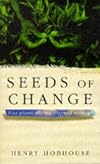
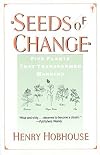
Seeds of Change: Five Plants That Transformed Mankind
by Henry Hobhouse
On This Page
Description
A fascinating account of how five plants-quinine, sugarcane, tea, cotton and the potato-have impacted on humanity since the 16th century. The significance of these plants has been felt socially, industrially, and economically in myriad ways. A few examples give the flavor of this book. By alleviating the debilitating effects of malaria, quinine opened up the tropics making possible the development of the resources of Africa and Asia, plus making available vast numbers of people for cheap show more labor. Millions of black people were taken to the Caribbean to grow sugarcane, for which there was an addictive demand. A great demand also developed for tea in Europe because it was a stimulating, nonalcoholic drink. To pay for the tea, the British exchanged opium, which caused the decline of China. Cotton prolonged the use of slavery, a lucrative trade in itself, and ultimately led to Civil War in the US even though slavery had already fallen into disfavor in other parts of the world. By citing many primary sources, Hobhouse graphically illustrates the changes in the course of human history that are attributable to plants rather than to the human factors usually cited. New insights and perspectives on the impact of plants and nature gleaned from this book are compelling. Highly recommended.-C.S. Dunn, University of North Carolina at Wilmington--Choice Reviews. show lessTags
Recommendations































Member Reviews
A personal and highly original take on the history of six commercial plants, Seeds of Change illuminates how sugar, tea, cotton, the potato, quinine, and the cocoa plant have shaped our past. In this fascinating account, the impassioned Henry Hobhouse explains the consequences of these plants with attention-grabbing historical moments. While most records of history focus on human influence, Hobhouse emphasizes how plants too are a central and influential factor in the historical process. Seeds of Change is a captivating and invaluable addition to our understanding of modern culture.
A short social history of six plants important in human development - quinine, cotton ,sugar(cane), tea, cotton and coca. Very readable and interesting although I have a few reservations in my areas of expertise which is a bit worrying for the overall content. Firstly I am unconvinced by the epidemiology of malaria discussed in the quinine section. Secondly in the section on sugar is (fatally?) flawed by Hobhouse's convinced adherence to the long discredited belief that sugar is addictive. Finally he confuses not just the false 'addiction ' of sugar but also the stimulants of habituation (tea , coffee) with the truly addictive tobacco and heroin. The section on coca , already weakened by this confusion leaps, from a discussion of the , show more fairly benign, use of coca leaves to pure cocaine with very little explanation.
My Folio society edition is a well made book with a very attractive cover and illustrations.
Overall interesting but.... show less
My Folio society edition is a well made book with a very attractive cover and illustrations.
Overall interesting but.... show less
Ratings
Members
- Recently Added By
Author Information
6 Works 646 Members
Henry Hobhouse was born in Somerset, England in 1924 and educated at Eton. He worked as a journalist for The Economist, Daily Express, and the Wall Street Journal. He was one of the first directors of CBS-TV News
Some Editions
Series
Belongs to Publisher Series
dtv (30052)
Work Relationships
Is expanded in
Common Knowledge
- Original title
- Seeds of Change: Five Plants That Transformed Mankind
- Original publication date
- 1985
Classifications
- Genres
- Nonfiction, Science & Nature, History, Food & Cooking
- DDC/MDS
- 581.6 — Natural sciences & mathematics Plants (Botany) Specific topics in natural history of plants Miscellaneous nontaxonomic kinds of plants
- LCC
- SB71 .H63 — Agriculture Horticulture. Plant propagation. Plant breeding Plant culture History
Statistics
- Members
- 159
- Popularity
- 206,399
- Reviews
- 2
- Rating
- (4.00)
- Languages
- English, German
- Media
- Paper
- ISBNs
- 8
- ASINs
- 3