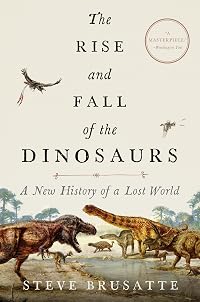
The Rise and Fall of the Dinosaurs: A New History of a Lost World
by Stephen L. Brusatte
On This Page
Description
A sweeping and revelatory new history of the age of dinosaurs, from one of our finest young scientists."THE ULTIMATE DINOSAUR BIOGRAPHY." — Scientific American
The dinosaurs. Sixty-six million years ago, the Earth's most fearsome creatures vanished. Today they remain one of our planet's great mysteries. Now The Rise and Fall of the Dinosaurs reveals their extraordinary, 200-million-year-long story as never before.
In this captivating narrative (enlivened with more than seventy original show more illustrations and photographs), Steve Brusatte, a young American paleontologist who has emerged as one of the foremost stars of the field—naming fifteen new species and leading groundbreaking scientific studies and fieldwork—masterfully tells the complete, surprising, and new history of the dinosaurs, drawing on cutting-edge science to dramatically bring to life their lost world and illuminate their enigmatic origins, spectacular flourishing, astonishing diversity, cataclysmic extinction, and startling living legacy. Captivating and revelatory, The Rise and Fall of the Dinosaurs is a book for the ages.
Brusatte traces the evolution of dinosaurs from their inauspicious start as small shadow dwellers—themselves the beneficiaries of a mass extinction caused by volcanic eruptions at the beginning of the Triassic period—into the dominant array of species every wide-eyed child memorizes today, T. rex, Triceratops, Brontosaurus, and more. This gifted scientist and writer re-creates the dinosaurs' peak during the Jurassic and Cretaceous, when thousands of species thrived, and winged and feathered dinosaurs, the prehistoric ancestors of modern birds, emerged. The story continues to the end of the Cretaceous period, when a giant asteroid or comet struck the planet and nearly every dinosaur species (but not all) died out, in the most extraordinary extinction event in earth's history, one full of lessons for today as we confront a "sixth extinction."
Brusatte also recalls compelling stories from his globe-trotting expeditions during one of the most exciting eras in dinosaur research—which he calls "a new golden age of discovery"—and offers thrilling accounts of some of the remarkable findings he and his colleagues have made, including primitive human-sized tyrannosaurs; monstrous carnivores even larger than T. rex; and paradigm-shifting feathered raptors from China.
An electrifying scientific history that unearths the dinosaurs' epic saga, The Rise and Fall of the Dinosaurs will be a definitive and treasured account for decades to come.
. show less
Tags
Recommendations














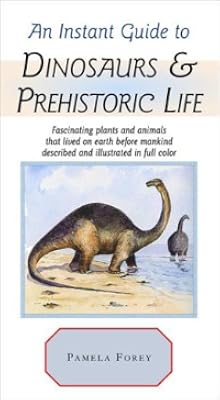


Member Recommendations

Member Reviews
Excellent history for a general reader by a practicing dinosaur paleontologist. There's a lot of information but presented in a narrative non-fiction technique making it easy to follow, and Brusatte is an entertaining and likeable guide.
From ch.8 about birds, birds are dinosaurs, not an evolutionary lineage or dino-light version, actual dinosaurs. Lightweight hollow bones, super-efficient lungs, high intelligence, high metabolism, fast movement - everything we associate with a bird is the same as a dinosaur, because they are dinosaurs. Feathers and wings developed in dinosaurs as with peacocks for display and protection - the smaller animals found they could get lift from early wings in an evolutionary accident - flight was not show more intentional but when it occurred happen-chance, it quickly took off in many directions.
Dinosaurs lasted nearly 200 million years, a stretch of time so vast as to challenge the imagination. Brusatte does a good job giving the highlights - mass extinctions, evolutionary success stories. The shifting geography of the continents as they drifted apart played into why and how dinosaurs evolved due to climatic changes brought on by long-term volcanic and weather patterns. Time can drive great change. Dinosaurs were not an evolutionary dead-end they are still living. Their demise from the top spot was a random event, but they could return to dominance again should "intelligent" mammals leave the world to the birds. show less
From ch.8 about birds, birds are dinosaurs, not an evolutionary lineage or dino-light version, actual dinosaurs. Lightweight hollow bones, super-efficient lungs, high intelligence, high metabolism, fast movement - everything we associate with a bird is the same as a dinosaur, because they are dinosaurs. Feathers and wings developed in dinosaurs as with peacocks for display and protection - the smaller animals found they could get lift from early wings in an evolutionary accident - flight was not show more intentional but when it occurred happen-chance, it quickly took off in many directions.
Dinosaurs lasted nearly 200 million years, a stretch of time so vast as to challenge the imagination. Brusatte does a good job giving the highlights - mass extinctions, evolutionary success stories. The shifting geography of the continents as they drifted apart played into why and how dinosaurs evolved due to climatic changes brought on by long-term volcanic and weather patterns. Time can drive great change. Dinosaurs were not an evolutionary dead-end they are still living. Their demise from the top spot was a random event, but they could return to dominance again should "intelligent" mammals leave the world to the birds. show less
The first time I read this book, I borrowed it from Kindle Unlimited and read it as I fell asleep. I was at the height of my self-education on chickens and, considering my hens are modern dinosaurs, it felt right to learn about their ancestors.
This time I just felt like visiting with dinosaurs again and the audio was available on Libby. I never would have read this had it not been on KU back then. A book about DINOSAURS? ME?!
Brusatte makes the science easy to follow and interesting. I like his asides about how he knows the other researchers (and making sure they're getting the credit they deserve, too!), his stories about being an annoying teen bothering scientists who would become his advisors, and even the fact that he's a little show more braggadocious—the man is allowed to expound on his own personal glories in a book he is writing about the field he works in. This jives with other science-themed books I love—Suzanne Simard's Finding the Mother Tree wouldn't be nearly as interesting without her memoir intertwined with the science (she received significant pushback on her theories which makes that personal story all the more necessary). Basically, I like to get to know a scientist as I'm learning about the field they've dedicated their life to: see Lab Girl and A Billion Butterflies. While those are marketed as "memoirs", they're also very informative about the science Jahren and Shukla studied.
Finally, the narration by Patrick Lawlor is great and kind of enthusiastic, which is how I imagine Brusatte delivers a lecture. (Granted, I listened at 1.25x, so it probably makes him sound even more excited.) show less
This time I just felt like visiting with dinosaurs again and the audio was available on Libby. I never would have read this had it not been on KU back then. A book about DINOSAURS? ME?!
Brusatte makes the science easy to follow and interesting. I like his asides about how he knows the other researchers (and making sure they're getting the credit they deserve, too!), his stories about being an annoying teen bothering scientists who would become his advisors, and even the fact that he's a little show more braggadocious—the man is allowed to expound on his own personal glories in a book he is writing about the field he works in. This jives with other science-themed books I love—Suzanne Simard's Finding the Mother Tree wouldn't be nearly as interesting without her memoir intertwined with the science (she received significant pushback on her theories which makes that personal story all the more necessary). Basically, I like to get to know a scientist as I'm learning about the field they've dedicated their life to: see Lab Girl and A Billion Butterflies. While those are marketed as "memoirs", they're also very informative about the science Jahren and Shukla studied.
Finally, the narration by Patrick Lawlor is great and kind of enthusiastic, which is how I imagine Brusatte delivers a lecture. (Granted, I listened at 1.25x, so it probably makes him sound even more excited.) show less
Was anything that I learned half a century ago accurate, or anything in the Jurassic Park movie? Seems not.... This is very much for dino fans, very readable, but not super-strict on phrasing for best presentation of the science, not enough pictures of models of dinos.
So, yeah, the bad: writes of evolutionary development as if it were intentional. Speaks of T.Rex and Triceratops as 'rivals.'* Too many scientific names of species I've never heard of for me to able to keep track w/out those missing pictures. Some awkward stretches for humor.
The good: Once I got the hang of reading it w/out fretting that I wasn't keeping track of every species named, I found it very engaging. And, yes, enlightening. And Brusatte does teach something about show more science. For example he does admit that new finds may overturn current assumptions, and he does explain *how* a lot of stuff that is understood came to be figured out:
"We can tell that Rex had some of the largest and most powerful jaw muscles of any dinosaur, based on the very broad and deep gullies on the skull bones where the muscles attached."
One species mentioned early I am going to google image search: Effigia okeeffeae....
... and "human-sized ominvorous theropods called oviraptororsaurs."
... and *The Age of Reptiles* mural.... balaur bondoc
"Proper grasslands would not develop until... many tens of millions of years after the dinosaurs cleared out." (I have to pick the nit of the word choice 'cleared.' Did dinosaurs prevent grass from evolving to become grasslands? I doubt it....)
"The Gobi fossils tell us that the ancestors of birds got smart before they took to the skies." Also got feathers, wings, and efficient lungs 'flow-through' lungs before that, too. "The feathers of nonflying, winged dinosaurs were a rainbow of different colors..." discovered from Jakob Vinther's studies of melanosomes, and probably used for display.
Walter Alvarez is Luis Alvarez' son.
Anyway, you can see that the good outweighs the bad. And no, despite all my notes, you can't skip this book if you're interested in the subject... I only mentioned a few of the my favorite bits; there are many more that you'll find interesting, too.
*"a person or thing competing with another for the same objective or for superiority in the same field of activity" ... not competing against each other for life... show less
So, yeah, the bad: writes of evolutionary development as if it were intentional. Speaks of T.Rex and Triceratops as 'rivals.'* Too many scientific names of species I've never heard of for me to able to keep track w/out those missing pictures. Some awkward stretches for humor.
The good: Once I got the hang of reading it w/out fretting that I wasn't keeping track of every species named, I found it very engaging. And, yes, enlightening. And Brusatte does teach something about show more science. For example he does admit that new finds may overturn current assumptions, and he does explain *how* a lot of stuff that is understood came to be figured out:
"We can tell that Rex had some of the largest and most powerful jaw muscles of any dinosaur, based on the very broad and deep gullies on the skull bones where the muscles attached."
One species mentioned early I am going to google image search: Effigia okeeffeae....
... and "human-sized ominvorous theropods called oviraptororsaurs."
... and *The Age of Reptiles* mural.... balaur bondoc
"Proper grasslands would not develop until... many tens of millions of years after the dinosaurs cleared out." (I have to pick the nit of the word choice 'cleared.' Did dinosaurs prevent grass from evolving to become grasslands? I doubt it....)
"The Gobi fossils tell us that the ancestors of birds got smart before they took to the skies." Also got feathers, wings, and efficient lungs 'flow-through' lungs before that, too. "The feathers of nonflying, winged dinosaurs were a rainbow of different colors..." discovered from Jakob Vinther's studies of melanosomes, and probably used for display.
Walter Alvarez is Luis Alvarez' son.
Anyway, you can see that the good outweighs the bad. And no, despite all my notes, you can't skip this book if you're interested in the subject... I only mentioned a few of the my favorite bits; there are many more that you'll find interesting, too.
*"a person or thing competing with another for the same objective or for superiority in the same field of activity" ... not competing against each other for life... show less
Author Stephen Brusatte's passion for dinosaurs practically jumps of the pages of this fascinating book and the writing flows so effortlessly it's like listening to a conversation. He includes plenty of background and anecdotes about the paleontologists (and enthusiasts) who discovered and shaped so much of what we know about dinosaurs and the time they lived in, or maybe I should say live in because of birds. For me, the most interesting and eye‑opening part of this is the chapter about the dinosaur-bird connection, particularly because it's so clearly explained. Honestly, there isn’t a dull page in the entire book.
This was an interesting, engaging read and a good overview of current understanding of the dinosaurs and their eras. Thorough without being dense, balanced but entertaining, and accessible to adult dinosaur fans and those who aren’t fans yet. And there are pictures, so you’re not relying only on descriptions. (Could’ve done with more pics, though. All the pics!)
I liked the way Brusatte told the story. He moves easily between tracing the evolution of dinosaurs themselves to the geology and climate they lived with, from past and current methods of paleontology to the explanation for how the popular knowledge of dinosaurs has veered away from the science. He paints a wonderful, evocative portrait of the dinosaurs’ lives and times, show more better than dino art does for me, and also introduces us briefly to some of the modern and historical scientists who’ve been solving dino mysteries. And he acknowledges the gaps we still have and talks about how new research methods are uncovering new facts as we speak!
The biggest things that bugged me were stylistic. I think Brusatte was trying for a narrative style that both is aimed at the lowest common denominator and that mimics his lecture style, because he keeps varying his word choices in odd and humourous ways. (Giving the T. rex chompers and not teeth is one that sticks in my mind.)
He also tends to describe dinosaurs with size comparisons to modern things—poodles, school buses, army tanks—without giving corresponding length measurements, and frequently describes scientists in terms I found a little too familiar and irrelevant. I’d rather read about their work than their goth fashion or habit of dragging bar fridges to dig sites, y’know? (I also look at some of his female descriptions with mild side-eye.) That said, as someone who can’t visualize length at the best of times, the size comparisons were helpful and the scientist descriptions did push them out of “scientist” and into “person”.
All in all, this might not be the best science book I’ve read—those have a little more detail and density and feature a majority of things I don’t know yet—but was definitely a good, informative, and fun one. Recommended to the casual reader but probably not an actual paleontologist. (I assume they’ll know everything in this already.) It did make me excited about paleontology all over again though and you bet when the next major fossil hits the news, I’ll have a clearer picture of where it fits and why it’s important!
Warnings: Dinosaurs killing dinosaurs, and a graphic depiction of the K-T extinction event.
7/10 show less
I liked the way Brusatte told the story. He moves easily between tracing the evolution of dinosaurs themselves to the geology and climate they lived with, from past and current methods of paleontology to the explanation for how the popular knowledge of dinosaurs has veered away from the science. He paints a wonderful, evocative portrait of the dinosaurs’ lives and times, show more better than dino art does for me, and also introduces us briefly to some of the modern and historical scientists who’ve been solving dino mysteries. And he acknowledges the gaps we still have and talks about how new research methods are uncovering new facts as we speak!
The biggest things that bugged me were stylistic. I think Brusatte was trying for a narrative style that both is aimed at the lowest common denominator and that mimics his lecture style, because he keeps varying his word choices in odd and humourous ways. (Giving the T. rex chompers and not teeth is one that sticks in my mind.)
He also tends to describe dinosaurs with size comparisons to modern things—poodles, school buses, army tanks—without giving corresponding length measurements, and frequently describes scientists in terms I found a little too familiar and irrelevant. I’d rather read about their work than their goth fashion or habit of dragging bar fridges to dig sites, y’know? (I also look at some of his female descriptions with mild side-eye.) That said, as someone who can’t visualize length at the best of times, the size comparisons were helpful and the scientist descriptions did push them out of “scientist” and into “person”.
All in all, this might not be the best science book I’ve read—those have a little more detail and density and feature a majority of things I don’t know yet—but was definitely a good, informative, and fun one. Recommended to the casual reader but probably not an actual paleontologist. (I assume they’ll know everything in this already.) It did make me excited about paleontology all over again though and you bet when the next major fossil hits the news, I’ll have a clearer picture of where it fits and why it’s important!
Warnings: Dinosaurs killing dinosaurs, and a graphic depiction of the K-T extinction event.
7/10 show less
Been to the Peabody and its iconic mural in New Haven a couple times, and often pass the triceratops statue on the way to the tax preparer or Yale HR. The Dinosaur Heresies (Robert Bakker) & T-Rex and the Crater of Doom (Walter Alvarez) – the last (& probably only) books read on the topic as an adult. Rise is a pop-sci update on discoveries since the 1980s.
Noteworthy as updates:
• Fossil discoveries in Latin America, Africa, China (will India have the next big find? Volcanic activity in China/Mongolia captured a large number of birds and theropods & India had quite a bit of volcanic activity); if you follow this sort of thing there have been a number of such announcements on blogs and websites in the past decade
• Discovery in show more China of feathered theropods confirming theories of a number of paleontologists in the 80s. Brusatte extends this to arguing that birds are direct descendants of theropods, although it seems there were plenty of birds (not pteradactyls which are not considered dinosaurs) flying around already in the Cretaceous period when considerable theropod evolution was taking place (pteradactyls are not classified as dinosaurs, but the argument is that birds are descendants of the theropods)
• Effect of computer programs on paleontology re dinosaur speciation and evolution – even the color of feathers; many “discoveries” the result of computer study of fossils from old museum collections; digital models to determine appearance and weight from incomplete fossilized skeleton
Not necessarily new, but impressive or interesting to me:
• Extraordinarily vivid depiction of the impact, and the impact on earth’s ecology, of the Chixulub asteroid/comet collision that brought the Cretaceous to a horrible end; plus the relatively “normal” mass extinction that ended the Permian, clearing the table for the dinosaurs
• Continental drift and speciation – island evolutionary speciation extended to the land masses of separating Pangea and supported by the discoveries outside North America
• Breathing systems of the dinosaurs and birds; ability to absorb oxygen while exhaling; distribution of oxygen caches within the body
• Significance of dinosaurs’ hollow bones; beyond an alternative oxygen cache, allows for growth of extremely long neck and tail of sauropods but – doesn’t explain how hollow bones can support weights of 50 tons?
Other thoughts::
• The Gaia thesis is all very well, but mass extinction is a reminder that earth, not just the universe, can be extremely hostile to life; life seems very incidental
• Maybe the impetus to the Creationist viewpoint is a way to avoid dealing with the Creator’s penchant for mass extinctions; one can imagine the ammunition this would give to Voltaire
• This book is popular science not a textbook (check the references for textbooks in the notes); can’t understand some of the Mean Girls sniping in some of the reviews on Amazon and Goodreads. Got this out of the New Haven Library rather than purchasing due to the negative comments, but the author made a field of study I probably wouldn’t find all that interesting quite absorbing, not unlike a police procedural.
NOTES:
Eras:
• Paleozoic (Permian Period)
• Mesozoic (Dinosaur Era).: Triassic Period , 150-200 million years ago -- Jurassic Period, 200-145 million years ago -- Cretaceous, 145-66 million years ago
• Cenozoic (Paleogene Period)
Dinosaur Orders:
• Theropods (meat eaters, e.g Velociraptors, T-Rex, Allosaurus, birds [?, e.g. penguins, hawks, archaeoptyrex])
• Sauropods (long-neck plant eaters, e.g. brontosaurs, titanosaurs)
• Ornithiscians (short-neck plant eaters, e.g. ceratopsians [triceratops, etc. w/crests and horns), duckbills, stegosaurs, ankylosaurus)
NOT dinosaurs: plesiosaurs, mosasurs, crocodiles, pteradactyls show less
Noteworthy as updates:
• Fossil discoveries in Latin America, Africa, China (will India have the next big find? Volcanic activity in China/Mongolia captured a large number of birds and theropods & India had quite a bit of volcanic activity); if you follow this sort of thing there have been a number of such announcements on blogs and websites in the past decade
• Discovery in show more China of feathered theropods confirming theories of a number of paleontologists in the 80s. Brusatte extends this to arguing that birds are direct descendants of theropods, although it seems there were plenty of birds (not pteradactyls which are not considered dinosaurs) flying around already in the Cretaceous period when considerable theropod evolution was taking place (pteradactyls are not classified as dinosaurs, but the argument is that birds are descendants of the theropods)
• Effect of computer programs on paleontology re dinosaur speciation and evolution – even the color of feathers; many “discoveries” the result of computer study of fossils from old museum collections; digital models to determine appearance and weight from incomplete fossilized skeleton
Not necessarily new, but impressive or interesting to me:
• Extraordinarily vivid depiction of the impact, and the impact on earth’s ecology, of the Chixulub asteroid/comet collision that brought the Cretaceous to a horrible end; plus the relatively “normal” mass extinction that ended the Permian, clearing the table for the dinosaurs
• Continental drift and speciation – island evolutionary speciation extended to the land masses of separating Pangea and supported by the discoveries outside North America
• Breathing systems of the dinosaurs and birds; ability to absorb oxygen while exhaling; distribution of oxygen caches within the body
• Significance of dinosaurs’ hollow bones; beyond an alternative oxygen cache, allows for growth of extremely long neck and tail of sauropods but – doesn’t explain how hollow bones can support weights of 50 tons?
Other thoughts::
• The Gaia thesis is all very well, but mass extinction is a reminder that earth, not just the universe, can be extremely hostile to life; life seems very incidental
• Maybe the impetus to the Creationist viewpoint is a way to avoid dealing with the Creator’s penchant for mass extinctions; one can imagine the ammunition this would give to Voltaire
• This book is popular science not a textbook (check the references for textbooks in the notes); can’t understand some of the Mean Girls sniping in some of the reviews on Amazon and Goodreads. Got this out of the New Haven Library rather than purchasing due to the negative comments, but the author made a field of study I probably wouldn’t find all that interesting quite absorbing, not unlike a police procedural.
NOTES:
Eras:
• Paleozoic (Permian Period)
• Mesozoic (Dinosaur Era).: Triassic Period , 150-200 million years ago -- Jurassic Period, 200-145 million years ago -- Cretaceous, 145-66 million years ago
• Cenozoic (Paleogene Period)
Dinosaur Orders:
• Theropods (meat eaters, e.g Velociraptors, T-Rex, Allosaurus, birds [?, e.g. penguins, hawks, archaeoptyrex])
• Sauropods (long-neck plant eaters, e.g. brontosaurs, titanosaurs)
• Ornithiscians (short-neck plant eaters, e.g. ceratopsians [triceratops, etc. w/crests and horns), duckbills, stegosaurs, ankylosaurus)
NOT dinosaurs: plesiosaurs, mosasurs, crocodiles, pteradactyls show less
A while ago, I found a book my parents bought for me when I was five or six years old (mid-1950s) during a visit to the American Museum of Natural History in New York. It was a child's introduction to the evolution of animals and it focussed on dinosaurs. Much of that book is badly outdated, from the depictions of unfeathered dinosaurs to the then mystery of the dinosaurs disappearance. Brusatte covers all that has been learned since the 1950s, and puts what we knew then and now in the context of the geology, geography, climate and animal populations of each period. Sure, he highlights Tyrannosaurus rex and some other star animals, but he carefully traces what we know about their evolution and their habits. He also points out that show more dinosaurs were never the only creatures in their various environments and that a good bit of what we consider the age of dinosaurs was actually dominated by other reptiles. I kept turning the pages to see what else I didn't know! show less
Members
- Recently Added By
Lists

Top Five Books of 2022
736 works; 272 members

Big History
72 works; 1 member

Science: Zoology
107 works; 1 member

Books Read in 2018
4,360 works; 110 members

2018 Ten Best Science Books
10 works; 1 member

Books Read in 2019
4,052 works; 108 members

Books Read in 2020
4,379 works; 124 members

Overdue Podcast
808 works; 9 members

Books Read in 2023
5,638 works; 147 members

Books to Read
95 works; 2 members

Books Read in 2024
4,727 works; 128 members

In Our Time books
4,934 works; 2 members
Author Information

14 Works 3,739 Members
Steve Brusatte, PhD, is an American paleontologist who teaches at the University of Edinburgh. He is the internationally bestselling author of The Rise and Fall of the Dinosaurs.
Some Editions
Awards and Honors
Awards
Distinctions
Series
Belongs to Publisher Series
Work Relationships
Common Knowledge
- Canonical title
- The Rise and Fall of the Dinosaurs: A New History of a Lost World
- Original title
- The Rise and Fall of the Dinosaurs: A New History of a Lost World
- Original publication date
- 2018-05-03
- People/Characters
- dinosaurs; Steve Brusatte
- Important places
- Pangaea
- Important events
- Prehistoric Age; Mesozoic Era; Extinction of the dinosaurs
- Publisher's editor
- Hubbard, Peter; Harvie, Robin
- Blurbers
- Zimmer, Carl; Shubin, Neil; Fortey, Richard; Brannen, Peter
- Original language
- English
- Canonical DDC/MDS
- 567.9
- Canonical LCC
- QE760.8
Classifications
Statistics
- Members
- 2,606
- Popularity
- 7,267
- Reviews
- 66
- Rating
- (4.04)
- Languages
- 10 — Chinese, Dutch, English, French, German, Hungarian, Italian, Spanish, Turkish, Portuguese (Portugal)
- Media
- Paper, Audiobook, Ebook
- ISBNs
- 44
- ASINs
- 13