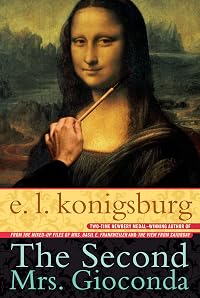
The Second Mrs. Gioconda
by E. L. Konigsburg
On This Page
Description
Relates, from the point of view of his servant Salai, how Leonardo da Vinci came to paint the Mona Lisa.Tags
Recommendations












Member Recommendations

raizel Another book by Konigsburg which in part deals with people who merit further examination.
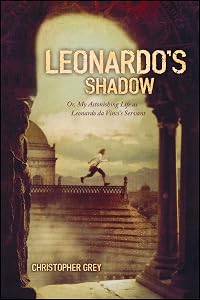
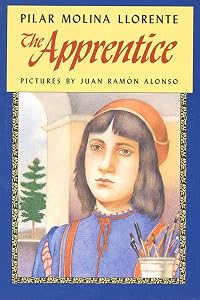
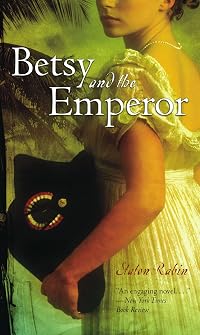
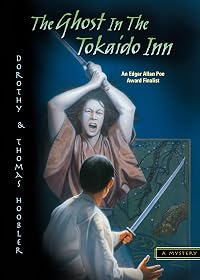
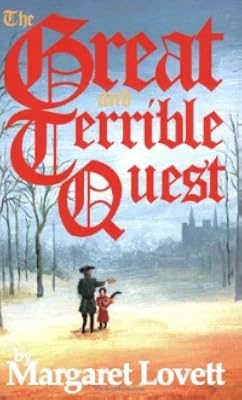
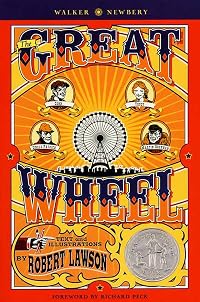
Caramellunacy Both are young adult historicals about serving Leonardo da Vinci. Leonardo's Shadow is about the artist's time in Milan painting The Last Supper. The Second Mrs. Gioconda is about the creation of the Mona Lisa - and the development of Leonardo's relationship with Salai - thief turned servant.

HollyMS Both are youth works about the Mona Lisa.
Member Reviews
One thing Konisgburg always does well is 'subtle depths.' Some of the other reviewers wanted more characterization... apparently they weren't willing to read between the lines. Others wanted more of the model 'Mona Lisa' herself... but that wasn't the point. Others wanted more history... not remembering that not enough is known to build a novel on, and such is admitted in the preface.
Anyway, thoughtful and poignant, with some truly beautiful bits, as is usual from this author.
I love when Beatrice teaches Salai about art, in the process of telling him why he is important to Leonardo: "A person looking at a work of art should not be slapped to attention; he should be wooed." And: "[Leonardo] needs a wild element. All great art needs it: show more something that leaps and flickers.... He is too self-conscious. When he has an important commission... he ties up all his instincts." show less
Anyway, thoughtful and poignant, with some truly beautiful bits, as is usual from this author.
I love when Beatrice teaches Salai about art, in the process of telling him why he is important to Leonardo: "A person looking at a work of art should not be slapped to attention; he should be wooed." And: "[Leonardo] needs a wild element. All great art needs it: show more something that leaps and flickers.... He is too self-conscious. When he has an important commission... he ties up all his instincts." show less
this is where I start really appreciating how her protoganists are not perfect and we're not trying to change them so they are.
esp with leonardo, it's gotta be hard not to go all "Great man" trope and make him be everything. instead we see the thin skin and a self-distancing --- and friends who love him for who he is and want him to be happy. loving people as they are is an amazing thing to see in kidlit
esp with leonardo, it's gotta be hard not to go all "Great man" trope and make him be everything. instead we see the thin skin and a self-distancing --- and friends who love him for who he is and want him to be happy. loving people as they are is an amazing thing to see in kidlit
A round-about way of giving insight into Leonardo da Vinci's personality, Konigsburg's story is given from the perspective of one of his assistants. We are also sympathetic to The Duke's young wife and come to respect her honesty and ability to find/create joy in the life she was dealt. Altho we know the book will be about the Mona Lisa, it isn't until the very end that we find out who was the model for this painting. Very creative & believable presentation of life in Renaissance Italy (tho what do I know). I liked hearing about some of the inventions, and all the different interests of DaVinci.
I thoroughly enjoyed this and will keep the book to share with friends & visitors.
I thoroughly enjoyed this and will keep the book to share with friends & visitors.
E.L. Konigsburg wondered why one of the greatest artists of all times would want to paint the portrait of the unglamorous, second wife of a merchant. Taking a few documents referring to one of Leonardo da Vinci's servants, called Salai, and a possible friendship with Beatrice, the wife of the Duke of Milan, Konigburg writes a fascinating story of friendship, the need for opposites to create great art, inner beauty and coming of age. I enjoyed her use of language: Salai uses slang, especially the word, "guy," when he speaks.
There are black-and-white reproductions of the paintings discussed in the book at the very end.
There are black-and-white reproductions of the paintings discussed in the book at the very end.
Ms. Konigsburg marvels me with her virtuousity. The last book I read was Up from Jericho Tel and that was an excellent read. In this book, the story revolves around Leondardo da Vinci, his larcenous apprentice, Salai, and Il Moro's wife, Beatrice.
It is an interesting character study of Leonardo: he is independent, unemotional, brilliant, and competitive. Salai, observes his master intently and makes friends with Il Moro's wife, Beatrice. Beatrice, second chosen, because IL Moro could not marry Isabelle, is plain. Since she was not beautiful her husband abandons her at every chance. Beatrice, however, is intelligent, witty, clever, and mischievous. She is the perfect match for Salai and she delights in Salai's company because they both show more are cut from the same cloth. Her husband, IL Moro, was not in love with when they wed, but he soon discovers that her beauty is in her character. At the end, the reader will understand how and why the famous Mona Lisa was painted.
I found this book to be well-written and inspirational. It reinforces the concept that beauty is in the eye of the beholder. show less
It is an interesting character study of Leonardo: he is independent, unemotional, brilliant, and competitive. Salai, observes his master intently and makes friends with Il Moro's wife, Beatrice. Beatrice, second chosen, because IL Moro could not marry Isabelle, is plain. Since she was not beautiful her husband abandons her at every chance. Beatrice, however, is intelligent, witty, clever, and mischievous. She is the perfect match for Salai and she delights in Salai's company because they both show more are cut from the same cloth. Her husband, IL Moro, was not in love with when they wed, but he soon discovers that her beauty is in her character. At the end, the reader will understand how and why the famous Mona Lisa was painted.
I found this book to be well-written and inspirational. It reinforces the concept that beauty is in the eye of the beholder. show less
This is another fictional tale about the lives of historical people--in this case Leonardo da Vinci and his servant, Salai. Salai is only known through a few references in Leonardo's papers. The earlier ones refer to him as a thief and general scoundrel, the later ones have Leonardo giving him money and remembering him in his will. Ms. Konigsburg weaves a tale in an effort to connect the two faces of Salai and, more importantly, to try gain some insight on what the mind of one of the greatest geniuses of history was like. It's a nice book, but in the end I fell like rating it as waiting room material. I don't know if it's just because today's a rainy day and I'm feeling somber, or if maybe I've just been reading too much historical show more fiction.
--J. show less
--J. show less
Sigh. My pile of books to review is getting so large I'm having trouble seeing my new books through the stack. Guess I'd better get reviewing.
So, this book is kind of weird, and it's one of those "I though it would go this way, but it went that way" books. And not in a good way. It was sad, and it seemed like Konigsburg was just toying with our emotions. I didn't really care about the MC, and when I googled the actual events (it's the kind of book that makes you do research afterward, I'll give it that) it was very clear she took quite a few liberties with some of the actual people involved.
That's to say, it's not all bad. It's educational (it touches on a lot of info about Leonardo da Vinci), and might make people interested in the show more Mona Lisa. Maybe I'm coming across more negative than I really feel about the book, because I read it a few weeks ago (thus the long list of books to review . . . ), but I didn't feel a spark. Or even a zing. (For those of you who have seen Hotel Transylvania, that make a little bit more sense).
Go read Mixed Up Files. Believe me, that beats this by a mile in every way. show less
So, this book is kind of weird, and it's one of those "I though it would go this way, but it went that way" books. And not in a good way. It was sad, and it seemed like Konigsburg was just toying with our emotions. I didn't really care about the MC, and when I googled the actual events (it's the kind of book that makes you do research afterward, I'll give it that) it was very clear she took quite a few liberties with some of the actual people involved.
That's to say, it's not all bad. It's educational (it touches on a lot of info about Leonardo da Vinci), and might make people interested in the show more Mona Lisa. Maybe I'm coming across more negative than I really feel about the book, because I read it a few weeks ago (thus the long list of books to review . . . ), but I didn't feel a spark. Or even a zing. (For those of you who have seen Hotel Transylvania, that make a little bit more sense).
Go read Mixed Up Files. Believe me, that beats this by a mile in every way. show less
Members
- Recently Added By
Lists

Sonlight Books
1,487 works; 25 members

A High School Trip to Italy
55 works; 7 members

CCE 1000 Good Books List
1,033 works; 12 members

Read Alouds for CC Cycle 2
17 works; 2 members

Historical Fiction
889 works; 91 members

Currently Reading Aloud at the Peterson House
8 works; 1 member
Author Information

38+ Works 37,593 Members
Elaine Lobl Konigsburg, noted children's writer and illustrator, was born February 10, 1930 in New York City. She received a BS in chemistry from Carnegie Institute of Technology (now Carnegie-Mellon University) in 1952. She did graduate study at the University of Pittsburgh. Her best-known titles included A Proud Taste for Scarlet and Miniver, show more The Second Mrs. Giaconda, Father's Arcane Daughter, and Throwing Shadows. She won the Newbery Honor in 1968 for From the Mixed-Up Files of Mrs. Basil E. Frankweiler and the William Allen White Award in 1970. She won the Newbery Medal again in 1997 for The View from Saturday. From the Mixed-Up Files of Mrs. Basil E. Frankweiler was adapted into a motion picture starring Ingrid Bergman in 1973 and later released as The Hideaways in 1974. It became a television film starring Lauren Bacall in 1995. Jennifer, Hecate, Macbeth, William McKinley, and Me, Elizabeth was adapted for television as Jennifer and Me for NBC-TV in 1973. She died on April 19, 2013 from complications of a stroke that she had suffered a week prior at the age of 83. (Bowker Author Biography) show less
Awards and Honors
Work Relationships
Common Knowledge
- Canonical title
- The Second Mrs. Gioconda
- Original publication date
- 1975
- People/Characters
- Leonardo da Vinci; Salai; Beatrice d'Este, duchess of Milan; Lisa del Giocondo
- Important places
- Milan, Lombardy, Italy
- Dedication
- First and Last
for Paul, Laurie, and Ross - First words
- Why, people ask, why did Leonardo da Vinci chose to paint the portrait of the second wife of an unimportant Florentine merchant when dukes and duchesses all over Italy and the King of France as well, were all begging for a po... (show all)rtrait by his hand?
- Quotations
- "It is not so much a work of art as it is a labor of art. I think Messer Leonardo impresses more when he tries less. ... A person looking at a work of art should not be slapped to attention; he should be wooed." (p. 92)
"Salai, I ask you to see to it that Master Leonardo keeps something wild, something irrespnsible in his work." (p. 93) - Last words
- (Click to show. Warning: May contain spoilers.)"I'm Mr. Gioconda."
Classifications
- Genres
- Kids, Tween, Fiction and Literature, Children's Books
- DDC/MDS
- 813.54 — Literature & rhetoric American literature in English American fiction in English 1900-1999 1945-1999
- LCC
- PZ7 .K8352 .S — Language and Literature Fiction and juvenile belles lettres Fiction and juvenile belles lettres Juvenile belles lettres
- BISAC
Statistics
- Members
- 1,468
- Popularity
- 15,907
- Reviews
- 12
- Rating
- (3.60)
- Languages
- English, Italian, Norwegian
- Media
- Paper, Ebook
- ISBNs
- 18
- ASINs
- 6