
On This Page
Description
If you think that Arthur Conan Doyle's literary output begins and ends with Sherlock Holmes stories, The White Company will come as a pleasant surprise. This historical action-adventure novel is set against the backdrop of the medieval Hundred Years' War. It follows a company of brave archers who pit their battlefield skills against all comers in a quest for honor and civil order. This novel is an engaging read that is sure to please fans of historical fiction and tales of the battlefield..
Tags
Recommendations




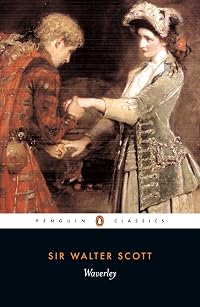
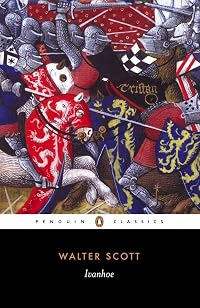


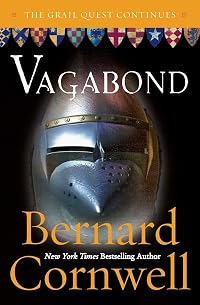




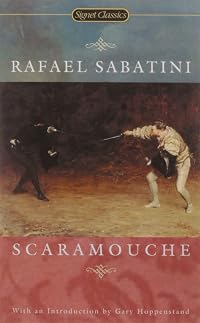

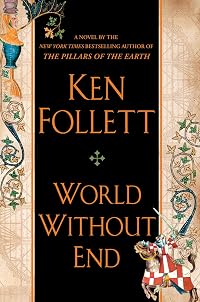







Member Recommendations
themulhern Girl is saved from a monastic life by her blond true love, with drama.
Member Reviews
Not only am I an unabashed fan of old-fashioned, rip-roaring adventures, I am also on record as having described Sir Arthur Conan Doyle as one of the most natural storytellers in the English language. Which makes it rather embarrassing for me to admit that The White Company, a lusty historical adventure-romance about English knights in the 14th century, was a rather tedious and unimpressive read.
The final 'last stand' battle between the English knights and a Franco-Spanish army is quite thrilling, in a bluff, jingoistic way, but it's preceded by three hundred pages of cod-heroic noodling. Quite unlike Doyle's Sherlock Holmes stories, which retain a freshness more than a century after they were written, The White Company is told in a show more deliberately archaic, overly-romantic style reminiscent of Sir Walter Scott. It's all 'hark' and 'prithee' and 'forsooth', which makes it hard to follow; a style not helped by being laden with an excess of detail, down to the scars and hair colour of each minor character and the quality of the carpets and vases in each nobleman's castle.
Doyle's purple prosing proves fatal to a story that was already struggling to get going. Surprisingly, his storytelling knack seems to have deserted him, and we jump from one confusing chapter to another in a mass of verbiage, loose association and misfiring Chaucerian humour. None of the characters grow, and even Alleyne, through whose eyes we see most of the story, has a disappointingly pedestrian coming-of-age story arc. The only action comes at the end, and while it's entertaining enough, it's poorly set up. We have little idea of the wider stakes and don't care enough about the characters. Even if we did, these final chapters are not enough to redeem the book. Many readers won't even make it that far. show less
The final 'last stand' battle between the English knights and a Franco-Spanish army is quite thrilling, in a bluff, jingoistic way, but it's preceded by three hundred pages of cod-heroic noodling. Quite unlike Doyle's Sherlock Holmes stories, which retain a freshness more than a century after they were written, The White Company is told in a show more deliberately archaic, overly-romantic style reminiscent of Sir Walter Scott. It's all 'hark' and 'prithee' and 'forsooth', which makes it hard to follow; a style not helped by being laden with an excess of detail, down to the scars and hair colour of each minor character and the quality of the carpets and vases in each nobleman's castle.
Doyle's purple prosing proves fatal to a story that was already struggling to get going. Surprisingly, his storytelling knack seems to have deserted him, and we jump from one confusing chapter to another in a mass of verbiage, loose association and misfiring Chaucerian humour. None of the characters grow, and even Alleyne, through whose eyes we see most of the story, has a disappointingly pedestrian coming-of-age story arc. The only action comes at the end, and while it's entertaining enough, it's poorly set up. We have little idea of the wider stakes and don't care enough about the characters. Even if we did, these final chapters are not enough to redeem the book. Many readers won't even make it that far. show less
I loved this one. I'm very happy I discovered this pearl by Sir Arthur Conan Doyle, an author I've come to appreciate after reading all the Sherlock Holmes short stories and novellas available.
I was surprised to read Doyle engaged with a historical novel, and at the depth of his research. Also the writing style is quite different from the elegant, yet very fresh style employed in the Sherlock Holmes stories, it aims to capture the spirit of the time portrayed, which is the earlier part of the Hundred Years War.
This novel centers around four characters, mainly Alleyne Edricson and Sir Nigel Loring, and then the veteran archer Samkin Aylward and freshly recruited John of Hordle. The book is riddled with comic relief scenes, and it's show more intriguing to see how the author conveyed the medieval feel with impeccable British humor.
The descriptions of the landscape are lavish, rich, masterfully rendered, and those of the scenes, people and objects carefully depicted. I lack the historical background to judge the minutiae, but with a modern word, the world-building is truly compelling and I was amazed at Doyle's writing style versatility. The registry is intentionally archaic, probably to further immerse the reader in the epic of the time, but wholly understandable (just a little galore of thou, art, shalt, fain, rede and the likes, it's never bad to learn new words after all), even for me who read English as a secondary language. It's atmospheric!
The characters are wonderfully stereotyped, in a very clever manner because each integrates with the others to sweep the reader in the English countryside, on-board overloaded vessels, in the lists at Bordeaux, in the war-stricken French countryside until the lands of Spain. Doyle subtly, and none-too-subtly at times, intertwines his own views about classes, the roles of men and women in the society and the widespread inequality between peasants and gentles, highlighting the much more "advanced" philosophy of England (let's state facts, there's still a royal family in the UK) compared with the other rules of the period, and its archery might.
The book mainly follows pious Alleyne, when, being twenty of age, he is released to the world from the abbey of Beaulieu as per his deceased sire's will, so he can see it with his own eyes before committing his life one way of another. Doyle critics the church's tenets, petty rules and conservative attitude which ensnares men in a "narrow, stagnant circle of existence" with a sharp-edged sarcasm, but also through young Alleyne, grown-up but ignorant of the world, presents a colorful society rife with "injustice and violence and the hardness of man to man", where the lights and shadows of life are never clearly divided.
As he travels on, he meets with a motley of characters exacerbating the various aspects of humanity, the good and the bad, and he's soon accompanied by Sir Loring, the steadfast embodiment of the ballads' ideal of chivalry (at least in manner), roguish bear-sized John, still berated by his elder mother and witty, picaresque Aylward, whose vision of the world and manner of speech are a joy from start to end.
The reader learns with the naive protagonist that "what men are and what men profess to be are very wide asunder" and at times, "ignorance may be more precious than wisdom", so not to lose faith in your neighbor by too much cynicism.
The namesake White Company is met way into the second half of the book, but the tale centers around it and eventually the Spanish campaign of prince Edward of England.
The story is interesting, featuring knights, romance, family feuds, feat-of-arms, tilts, romance, battle, bloodshed, military strategies, a little coming-of-age (no, Alleyne doesn't rush back to the abbey :) ) and it's quite fast-paced, even rushed at the end (I felt the last part could have been elaborated further); it's totally, utterly, absolutely hilarious, partial to the "grandeur anglaise" -but it's not impeding, apart probably from the scene of chapter XXIX- and describing human condition with a levity of great quality. Vividly recommended.
"Your Company has been, then, to bow knee before our holy father, the Pope Urban, the prop and centre of Christendom?" asked Alleyne, much interested. "Perchance you have yourself set eyes upon his august face?"
"Twice I saw him," said the archer [Aylward]. "He was a lean little rat of a man, with a scab on his chin. The first time we had five thousand crowns out of him, though he made much ado about it. The second time we asked ten thousand, but it was three days before we could come to terms, and I am of opinion myself that we might have done better by plundering the palace. His chamberlain and cardinals came forth, as I remember, to ask whether we would take seven thousand crowns with his blessing and a plenary absolution, or the ten thousand with his solemn ban by bell, book and candle. We were all of one mind that it was best to have the ten thousand with the curse...." show less
I was surprised to read Doyle engaged with a historical novel, and at the depth of his research. Also the writing style is quite different from the elegant, yet very fresh style employed in the Sherlock Holmes stories, it aims to capture the spirit of the time portrayed, which is the earlier part of the Hundred Years War.
This novel centers around four characters, mainly Alleyne Edricson and Sir Nigel Loring, and then the veteran archer Samkin Aylward and freshly recruited John of Hordle. The book is riddled with comic relief scenes, and it's show more intriguing to see how the author conveyed the medieval feel with impeccable British humor.
The descriptions of the landscape are lavish, rich, masterfully rendered, and those of the scenes, people and objects carefully depicted. I lack the historical background to judge the minutiae, but with a modern word, the world-building is truly compelling and I was amazed at Doyle's writing style versatility. The registry is intentionally archaic, probably to further immerse the reader in the epic of the time, but wholly understandable (just a little galore of thou, art, shalt, fain, rede and the likes, it's never bad to learn new words after all), even for me who read English as a secondary language. It's atmospheric!
The characters are wonderfully stereotyped, in a very clever manner because each integrates with the others to sweep the reader in the English countryside, on-board overloaded vessels, in the lists at Bordeaux, in the war-stricken French countryside until the lands of Spain. Doyle subtly, and none-too-subtly at times, intertwines his own views about classes, the roles of men and women in the society and the widespread inequality between peasants and gentles, highlighting the much more "advanced" philosophy of England (let's state facts, there's still a royal family in the UK) compared with the other rules of the period, and its archery might.
The book mainly follows pious Alleyne, when, being twenty of age, he is released to the world from the abbey of Beaulieu as per his deceased sire's will, so he can see it with his own eyes before committing his life one way of another. Doyle critics the church's tenets, petty rules and conservative attitude which ensnares men in a "narrow, stagnant circle of existence" with a sharp-edged sarcasm, but also through young Alleyne, grown-up but ignorant of the world, presents a colorful society rife with "injustice and violence and the hardness of man to man", where the lights and shadows of life are never clearly divided.
As he travels on, he meets with a motley of characters exacerbating the various aspects of humanity, the good and the bad, and he's soon accompanied by Sir Loring, the steadfast embodiment of the ballads' ideal of chivalry (at least in manner), roguish bear-sized John, still berated by his elder mother and witty, picaresque Aylward, whose vision of the world and manner of speech are a joy from start to end.
The reader learns with the naive protagonist that "what men are and what men profess to be are very wide asunder" and at times, "ignorance may be more precious than wisdom", so not to lose faith in your neighbor by too much cynicism.
The namesake White Company is met way into the second half of the book, but the tale centers around it and eventually the Spanish campaign of prince Edward of England.
The story is interesting, featuring knights, romance, family feuds, feat-of-arms, tilts, romance, battle, bloodshed, military strategies, a little coming-of-age (
"Your Company has been, then, to bow knee before our holy father, the Pope Urban, the prop and centre of Christendom?" asked Alleyne, much interested. "Perchance you have yourself set eyes upon his august face?"
"Twice I saw him," said the archer [Aylward]. "He was a lean little rat of a man, with a scab on his chin. The first time we had five thousand crowns out of him, though he made much ado about it. The second time we asked ten thousand, but it was three days before we could come to terms, and I am of opinion myself that we might have done better by plundering the palace. His chamberlain and cardinals came forth, as I remember, to ask whether we would take seven thousand crowns with his blessing and a plenary absolution, or the ten thousand with his solemn ban by bell, book and candle. We were all of one mind that it was best to have the ten thousand with the curse...." show less
_The White Company_ by Sir Arthur Conan Doyle is equal parts boy’s own adventure and historical fiction of the Hundred Years’ War. It reminded me very much of the spirit of Sir Walter Scott’s [b:Ivanhoe|6440|Ivanhoe|Walter Scott|http://photo.goodreads.com/books/1327980637s/6440.jpg|1039021], though it’s been so long since I read the latter story I wouldn’t want to draw too many specific comparisons. The story is that of a young aristocrat, Alleyne Edricson, who leaves the safe confines of the abbey where he was raised in order to see the world for a year before deciding on the path his life is to follow. From the first Doyle fills his tale with action that is tempered with descriptive passages detailing the varied aspects of show more medieval life of England and France in the fourteenth century. One gets a detailed sense of a world in which the habitations of man were widely interspersed amongst the ever present wilderness with areas of cultivation spread between.
The story Doyle tells straddles a strange line, for while there are parts that read like an idyllic paen to the simpler and purer days of yore, he does not shy away from presenting hard truths regarding the savagery, poverty, and tyranny that were also pervasive at the time. One is often left wondering whether Doyle wanted to praise or berate the era, to simplify it or acknowledge its complexities, but perhaps he simply felt that, like any other age, there was equal measure of both praise and blame to be given to it. Alleyne’s relative innocence and inexperience with the world outside of abbey walls allows him to be an excellent stand-in for the reader, as he experiences for the first time the realities of the wider medieval world. As though immersed in a kind of Canterbury Tales Alleyne meets pardoners, friars, palmers, hucksters, knights, peasants, franklins and soldiers allowing the reader to experience a veritable cross-section of medieval society in all of its varied glory. Sometimes this can come across as a bit too pat, as Doyle manages to have Alleyne cross paths with nearly every segment of medieval society on his journeys along the highways and byways of England and France.
The characters of Alleyne, with his wide-eyed innocence, and Sir Nigel Loring, with his almost simplistically quixotic belief in the tenets of chivalry, give Doyle the chance to indulge in elements of chivalric romance, while the more hard-bitten archer Samkin Aylward and his less idealistic comrades in the White Company allow for a more pragmatic look at medieval warfare to be examined. Still, for all of the historical detail that Conan Doyle may have laden his story with, it definitely seems to come down on the side of idealistic chivalry; for despite its acknowledgment of the unending warfare with the goal of plunder that turned half of France into a wasted no-man’s land, sly allusions to the inherent naiveté of many of the ideals of chivalry through the literally and figuratively myopic Sir Nigel, and various references to the downtrodden peasantry (including a scene in which a tyrannical seigneur’s castle is attacked and destroyed by a starving peasant mob) the novel still often reads like the Middle Ages as produced by Metro-Goldwyn-Mayer.
It was still an enjoyable read and further goes to show me Conan Doyle’s range as a writer. show less
The story Doyle tells straddles a strange line, for while there are parts that read like an idyllic paen to the simpler and purer days of yore, he does not shy away from presenting hard truths regarding the savagery, poverty, and tyranny that were also pervasive at the time. One is often left wondering whether Doyle wanted to praise or berate the era, to simplify it or acknowledge its complexities, but perhaps he simply felt that, like any other age, there was equal measure of both praise and blame to be given to it. Alleyne’s relative innocence and inexperience with the world outside of abbey walls allows him to be an excellent stand-in for the reader, as he experiences for the first time the realities of the wider medieval world. As though immersed in a kind of Canterbury Tales Alleyne meets pardoners, friars, palmers, hucksters, knights, peasants, franklins and soldiers allowing the reader to experience a veritable cross-section of medieval society in all of its varied glory. Sometimes this can come across as a bit too pat, as Doyle manages to have Alleyne cross paths with nearly every segment of medieval society on his journeys along the highways and byways of England and France.
The characters of Alleyne, with his wide-eyed innocence, and Sir Nigel Loring, with his almost simplistically quixotic belief in the tenets of chivalry, give Doyle the chance to indulge in elements of chivalric romance, while the more hard-bitten archer Samkin Aylward and his less idealistic comrades in the White Company allow for a more pragmatic look at medieval warfare to be examined. Still, for all of the historical detail that Conan Doyle may have laden his story with, it definitely seems to come down on the side of idealistic chivalry; for despite its acknowledgment of the unending warfare with the goal of plunder that turned half of France into a wasted no-man’s land, sly allusions to the inherent naiveté of many of the ideals of chivalry through the literally and figuratively myopic Sir Nigel, and various references to the downtrodden peasantry (including a scene in which a tyrannical seigneur’s castle is attacked and destroyed by a starving peasant mob) the novel still often reads like the Middle Ages as produced by Metro-Goldwyn-Mayer.
It was still an enjoyable read and further goes to show me Conan Doyle’s range as a writer. show less
A delightful and strange adventure story in the vein of The Three Musketeers or The Scarlet Pimpernel, but also an early foreshadow of the Mannerpunk genre which grew out of Peake's Gormenghast books.
The well-researched text creates a believable world which is undoubtedly (and delightfully) removed from the modern. Not only does Doyle (of Sherlock Holmes fame) create a fairly accurate portrait of ever-warring Feudal Europe, but at least proposes a psychological type for the soldiers of the time.
Of course, to take such a type from (even contemporary) works is a bit of a silly falsehood, and with characteristic British whimsy, Doyle births a cast which seems realistic not despite but because of its deep-seated eccentricity. Of course, it show more is precisely this method which will grip Peake (in the wake of Chekhov) in his surrealistic works.
Though once quite popular, this tale has become somewhat less well-known, perhaps because it is easy to take from it a stance of bravado, militarism, and anglocentrism. Perhaps there will come to us a dissolving of such strong self-identifications with such things that people will no longer feel a need to oppose fictional portrayals, and Doyle and Kipling may return with a grain of salt. show less
The well-researched text creates a believable world which is undoubtedly (and delightfully) removed from the modern. Not only does Doyle (of Sherlock Holmes fame) create a fairly accurate portrait of ever-warring Feudal Europe, but at least proposes a psychological type for the soldiers of the time.
Of course, to take such a type from (even contemporary) works is a bit of a silly falsehood, and with characteristic British whimsy, Doyle births a cast which seems realistic not despite but because of its deep-seated eccentricity. Of course, it show more is precisely this method which will grip Peake (in the wake of Chekhov) in his surrealistic works.
Though once quite popular, this tale has become somewhat less well-known, perhaps because it is easy to take from it a stance of bravado, militarism, and anglocentrism. Perhaps there will come to us a dissolving of such strong self-identifications with such things that people will no longer feel a need to oppose fictional portrayals, and Doyle and Kipling may return with a grain of salt. show less
Oh, what language did Sir Arthur Conan Doyle use! What vocabulary! Verily, it was a delight to read such writing, even though I had previously never read anything by this author. It was recommended to me here, probably based on the [a:Bernard Cornwell|12542|Bernard Cornwell|https://d.gr-assets.com/authors/1240500522p2/12542.jpg]'s books I read. The edition I read was the original, unabridged text, as stated inside by the publisher.
Since the story takes place in the context of the Hundred Years War, differently described and yet similar to said Cornwell's works. Arthur Conan Doyle made use of old English and French vocabulary and wording, which not only made it a joy to read and make the story more vivid, but it also made it a refreshing show more read when used to modern English. Other readers mention, as similarly styled, [a:Walter Scott|4345|Walter Scott|https://d.gr-assets.com/authors/1204065181p2/4345.jpg]'s [b:Ivanhoe|15994726|Ivanhoe|Walter Scott|https://d.gr-assets.com/books/1405869464s/15994726.jpg|1039021], which is also on my TBR-list (To Be Read).
In short, even though other reviewers were better at describing the story: it's about an aristocratic boy who grew up in the abbey of Beaulieu, sent there by his father. It was arranged that at the age of 20, Alleyne Edricson was to leave the safe premises of the abbey and go out into the world. He is set to go visit (and live?) with his brother, the Socman of Minstead, but he sees his brother mistreating a young princess. Alleyne tries to intervene, but it leads to him being attacked by his brother, for he had to give up land to the abbey for the upbringing of Alleyne. So Alleyne has to flee and so his adventures begin.
Alleyne obviously knows nothing of the world, more so of the word of God, and with this baggage he sets out to discover humanity. And is perplexed of how one human can maltreat another, be it with words or actions. He prefers to reconciliate people, have them set aside their quarrels and issues.
He meets a few knights, archers (part of the White Company), and so arrives at the castle of Sir Nigel Loring, who is bound to march to war with Spain. Alleyne becomes the lord's squire, since he can read, write and paint, while the lord is of course skilled in other domains.
The description of the adventures preceding the war itself (which breaks loose in the last /- 100 pages), of the various factions (English, French, Spanish), the various kings, warlords, et cetera shows that Sir Doyle really has made his homework and put a lot of effort in writing a worthwhile story.
The book is a very nice read about life in the 14th century, about hardship, about love, about friendship, and more. Arthur Conan Doyle applied a very descriptive style to demonstrate this; the environment, the clothing, the dialogues, everything. All to make you imagine better what happened, bow it happened, but also to eaily put yourself in the shoes of e.g. Alleyne, Nigel Loring or other characters, but of course foremost Alleyne, since he's a central and vital character (his upbringing contrasting with his real life experiences).
If you like to read something refreshing, compared to modern writings, then I can really recommend this book. show less
Since the story takes place in the context of the Hundred Years War, differently described and yet similar to said Cornwell's works. Arthur Conan Doyle made use of old English and French vocabulary and wording, which not only made it a joy to read and make the story more vivid, but it also made it a refreshing show more read when used to modern English. Other readers mention, as similarly styled, [a:Walter Scott|4345|Walter Scott|https://d.gr-assets.com/authors/1204065181p2/4345.jpg]'s [b:Ivanhoe|15994726|Ivanhoe|Walter Scott|https://d.gr-assets.com/books/1405869464s/15994726.jpg|1039021], which is also on my TBR-list (To Be Read).
In short, even though other reviewers were better at describing the story: it's about an aristocratic boy who grew up in the abbey of Beaulieu, sent there by his father. It was arranged that at the age of 20, Alleyne Edricson was to leave the safe premises of the abbey and go out into the world. He is set to go visit (and live?) with his brother, the Socman of Minstead, but he sees his brother mistreating a young princess. Alleyne tries to intervene, but it leads to him being attacked by his brother, for he had to give up land to the abbey for the upbringing of Alleyne. So Alleyne has to flee and so his adventures begin.
Alleyne obviously knows nothing of the world, more so of the word of God, and with this baggage he sets out to discover humanity. And is perplexed of how one human can maltreat another, be it with words or actions. He prefers to reconciliate people, have them set aside their quarrels and issues.
He meets a few knights, archers (part of the White Company), and so arrives at the castle of Sir Nigel Loring, who is bound to march to war with Spain. Alleyne becomes the lord's squire, since he can read, write and paint, while the lord is of course skilled in other domains.
The description of the adventures preceding the war itself (which breaks loose in the last /- 100 pages), of the various factions (English, French, Spanish), the various kings, warlords, et cetera shows that Sir Doyle really has made his homework and put a lot of effort in writing a worthwhile story.
The book is a very nice read about life in the 14th century, about hardship, about love, about friendship, and more. Arthur Conan Doyle applied a very descriptive style to demonstrate this; the environment, the clothing, the dialogues, everything. All to make you imagine better what happened, bow it happened, but also to eaily put yourself in the shoes of e.g. Alleyne, Nigel Loring or other characters, but of course foremost Alleyne, since he's a central and vital character (his upbringing contrasting with his real life experiences).
If you like to read something refreshing, compared to modern writings, then I can really recommend this book. show less
I gave it my best shot, but only got halfway. Too many thees and thous, a deeply annoying female love interest, and Doyle's conviction that becoming a mercenary is a glorious and manly endeavor (as opposed to becoming a monk and pursuing a life of scholarship, hard work, and devotion to God)shot it down for me. On the plus side, great illustrations.
Substance: A romance of the old style, with a naive young man released from the monastery where he was raised to spend a year in the world before taking vows, if he still chooses. It is clear from this story of war and love that he won't. Barring a few instances where transitions from peril to safety lack some essential continuity, most of the episodes are entertaining.
Style: Doyle throws around terms of heraldry and history with mad abandon. He does not gloss over the unseemly aspects of life in the Middle Ages, but stays on the high ground. A mild humor (also evident in the Holmes canon) runs as an undercurrent throughout the work.
Style: Doyle throws around terms of heraldry and history with mad abandon. He does not gloss over the unseemly aspects of life in the Middle Ages, but stays on the high ground. A mild humor (also evident in the Holmes canon) runs as an undercurrent throughout the work.
Members
- Recently Added By
Lists

Pleasant Surprises: Books That Exceeded Our Expectations
418 works; 143 members

CCE 1000 Good Books List
1,033 works; 12 members

Favorite Childhood Books
1,646 works; 518 members

Literature of Honor for Boys
91 works; 3 members

A Rainbow of Books: Colors in the Title
570 works; 24 members

Books mentioned in Julian Symons’ Bloody Murder
438 works; 6 members

Ambleside Year 7
69 works; 1 member

HMS: Make Your Child a Lover of Books, Books for Boys
28 works; 2 members
Author Information

4,002+ Works 169,784 Members
The most famous fictional detective in the world is Arthur Conan Doyle's Sherlock Holmes. However, Doyle was, at best, ambivalent about his immensely successful literary creation and, at worst, resentful that his more "serious" fiction was relatively ignored. Born in Edinburgh, Doyle studied medicine from 1876 to 1881 and received his M.D. in show more 1885. He worked as a military physician in South Africa during the Boer War and was knighted in 1902 for his exceptional service. Doyle was drawn to writing at an early age. Although he attempted to enter private practice in Southsea, Portsmouth, in 1882, he soon turned to writing in his spare time; it eventually became his profession. As a Liberal Unionist, Doyle ran, unsuccessfully, for Parliament in 1903. During his later years, Doyle became an avowed spiritualist. Doyle sold his first story, "The Mystery of the Sasassa Valley," to Chambers' Journal in 1879. When Doyle published the novel, A Study in Scarlet in 1887, Sherlock Holmes was introduced to an avid public. Doyle is reputed to have used one of his medical professors, Dr. Joseph Bell, as a model for Holmes's character. Eventually, Doyle wrote three additional Holmes novels and five collections of Holmes short stories. A brilliant, though somewhat eccentric, detective, Holmes employs scientific methods of observation and deduction to solve the mysteries that he investigates. Although an "amateur" private detective, he is frequently called upon by Scotland Yard for assistance. Holmes's assistant, the faithful Dr. Watson, provides a striking contrast to Holmes's brilliant intellect and, in Doyle's day at least, serves as a character with whom the reader can readily identify. Having tired of Holmes's popularity, Doyle even tried to kill the great detective in "The Final Problem" but was forced by an outraged public to resurrect him in 1903. Although Holmes remained Doyle's most popular literary creation, Doyle wrote prolifically in other genres, including historical adventure, science fiction, and supernatural fiction. Despite Doyle's sometimes careless writing, he was a superb storyteller. His great skill as a popular author lay in his technique of involving readers in his highly entertaining adventures. (Bowker Author Biography) show less

Arthur Conan Doyle has a Legacy Library. Legacy libraries are the personal libraries of famous readers, entered by LibraryThing members from the Legacy Libraries group.
Some Editions
Awards and Honors
Series

Belongs to Publisher Series
Work Relationships
Is contained in
Conan Doyle's Best Books in Three Volumes, Vol. 3: The White Company and Beyond the City by Arthur Conan Doyle
Conan Doyle's Best Books in Three Volumes: A Study in Scarlet and Other Stories; The Sign of the Four and Other Stories; The White Company and Beyond the City by Arthur Conan Doyle (indirect)
Common Knowledge
- Canonical title
- The White Company
- Original title
- The White Company
- Original publication date
- 1891
- People/Characters
- Sam Aylward; Nigel Loring; Alleyne Edricson; John Hordle; Edward the Black Prince
- Important places
- Beaulieu Abbey, Hampshire, England, UK
- Important events
- Hundred Years' War
- Dedication
- To the Hope of the Future
The reunion of the English-speaking races
This little chronicle of our common
Ancestry is inscribed
South Norwood,
September 29, 1891 - First words
- The great bell of Beaulieu was ringing.
- Last words
- (Click to show. Warning: May contain spoilers.)Shall they not muster at her call?
- Blurbers
- Churchill, Winston
- Original language*
- Inglés
*Some information comes from Common Knowledge in other languages. Click "Edit" for more information.
Classifications
Statistics
- Members
- 1,434
- Popularity
- 16,402
- Reviews
- 23
- Rating
- (3.63)
- Languages
- 9 — English, Estonian, French, Hungarian, Italian, Portuguese, Russian, Spanish, Swedish
- Media
- Paper, Audiobook, Ebook
- ISBNs
- 142
- ASINs
- 76