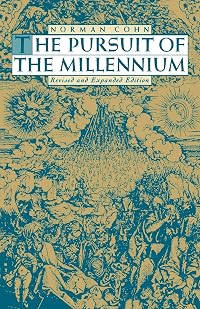
The Pursuit of the Millennium: Revolutionary Millenarians and Mystical Anarchists of the Middle Ages
by Norman Cohn
On This Page
Description
The end of the millennium has always held the world in fear of earthquakes, plague, and the catastrophic destruction of the world. At the dawn of the 21st millennium the world is still experiencing these anxieties, as seen by the onslaught of fantasies of renewal, doomsday predictions, and New Age prophecies. This fascinating book explores the millenarianism that flourished in western Europe between the eleventh and sixteenth centuries. Covering the full range of revolutionary and anarchic show more sects and movements in medieval Europe, Cohn demonstrates how prophecies of a final struggle between the hosts of Christ and Antichrist melded with the rootless poor's desire to improve their own material conditions, resulting in a flourishing of millenarian fantasies. The only overall study of medieval millenarian movements, The Pursuit of the Millennium offers an excellent interpretation of how, again and again, in situations of anxiety and unrest, traditional beliefs come to serve as vehicles for social aspirations and animosities. show lessTags
Recommendations






















Member Reviews
Such an interesting book. If you take a look at the bibliography you’ll find a massive list of heavy-duty texts mostly in Latin, German, and French. I have no idea how Cohn has managed to transform this into such an enjoyable and easy read.
Anyway, he covers a huge range of millenarian groups. At one end of the scale you have the harmless Ranters who just want to have sex with each other and would probably be happy with a night out on the Bigg Market.
At the other end of the scale you have the real millenarian revolutionaries, and it’s here that Cohn flips the human psyche on its back and has a good poke around in its dark underside. These groups share eschatological beliefs that Cohn traces back to early Jewish and Christian show more apocalyptic works. You know the kind of thing: Anti-Christ and the Second Coming. A massive slaughter where the earth is purified of the followers of Anti-Christ followed by a thousand years of bliss on earth. These groups, mostly consisting of poor people, coalesce about someone thought to be a prophet or living God and rampage across the continent, killing whoever they think is evil. This is usually the Jews, clerics, or the rich. Sometimes all three. On the face of it, this looks to me like some form of human sacrifice.
I found the accounts quite disturbing, and I had to keep telling myself that these people were abnormal. Unfortunately I couldn’t convince myself that this was the case. Cohn draws some convincing parallels between them and the Nazi and Communists movements of the Twentieth Century. I see that various reviewers over on Goodreads see parallels with a whole range more recent groups. I suspect that people will be seeing parallels with their own times from now until Domesday.
Cohn identifies three things that underlie all outbreaks of the behaviour: an increase in population; rapid social change; rapid economic change. He also points out that outbreaks often follow famines and plagues. I couldn’t help noticing that those three requirements might be said to have held true for the United States since the beginning of the colonial period and that millenarian beliefs are really popular over there. Now let’s look at Trump. He targets two groups as evil. Immigrants (the very cause of population growth) and the political elite. He releases footage of himself being prayed over by pastors. He promises miracle cures involving injecting beach into the veins and bringing light inside the body. Q-Anon appears to have thought he was waging a secret war against a paedophile death cult. Plague strikes the US causing rapid economic change and BLM protests sweep the world causing rapid social change.
When they stormed the Capitol I couldn’t believe what I was seeing. I just couldn’t understand why they would want to set up a monarchy. If I was going to storm the Capitol I’d want tanks, artillery and control of the air as an absolute minimum. These people were doing it with sticks and seemed surprised when they failed. Having read this book I think I understand them a bit better. I feel a bit sorry for them really. They honestly thought they were purifying the earth.
Well, I’m sure this was the last time people will getting up to that sort of thing and we can all rest easy in our beds. show less
Anyway, he covers a huge range of millenarian groups. At one end of the scale you have the harmless Ranters who just want to have sex with each other and would probably be happy with a night out on the Bigg Market.
At the other end of the scale you have the real millenarian revolutionaries, and it’s here that Cohn flips the human psyche on its back and has a good poke around in its dark underside. These groups share eschatological beliefs that Cohn traces back to early Jewish and Christian show more apocalyptic works. You know the kind of thing: Anti-Christ and the Second Coming. A massive slaughter where the earth is purified of the followers of Anti-Christ followed by a thousand years of bliss on earth. These groups, mostly consisting of poor people, coalesce about someone thought to be a prophet or living God and rampage across the continent, killing whoever they think is evil. This is usually the Jews, clerics, or the rich. Sometimes all three. On the face of it, this looks to me like some form of human sacrifice.
I found the accounts quite disturbing, and I had to keep telling myself that these people were abnormal. Unfortunately I couldn’t convince myself that this was the case. Cohn draws some convincing parallels between them and the Nazi and Communists movements of the Twentieth Century. I see that various reviewers over on Goodreads see parallels with a whole range more recent groups. I suspect that people will be seeing parallels with their own times from now until Domesday.
Cohn identifies three things that underlie all outbreaks of the behaviour: an increase in population; rapid social change; rapid economic change. He also points out that outbreaks often follow famines and plagues. I couldn’t help noticing that those three requirements might be said to have held true for the United States since the beginning of the colonial period and that millenarian beliefs are really popular over there. Now let’s look at Trump. He targets two groups as evil. Immigrants (the very cause of population growth) and the political elite. He releases footage of himself being prayed over by pastors. He promises miracle cures involving injecting beach into the veins and bringing light inside the body. Q-Anon appears to have thought he was waging a secret war against a paedophile death cult. Plague strikes the US causing rapid economic change and BLM protests sweep the world causing rapid social change.
When they stormed the Capitol I couldn’t believe what I was seeing. I just couldn’t understand why they would want to set up a monarchy. If I was going to storm the Capitol I’d want tanks, artillery and control of the air as an absolute minimum. These people were doing it with sticks and seemed surprised when they failed. Having read this book I think I understand them a bit better. I feel a bit sorry for them really. They honestly thought they were purifying the earth.
Well, I’m sure this was the last time people will getting up to that sort of thing and we can all rest easy in our beds. show less
“The thing that hath been, it is that which shall be; and that which is done is that which shall be done: and there is no new thing under the sun.” These words of Solomon came to mind as I read Norman Cohn’s excellent The Pursuit of the Millennium. The roots of our leftist egalitarian utopias are far deeper than acknowledged. To one with a longer historical view none of this should come as a surprise. The communist hells of the past century and the future dystopias which may yet lie ahead have their origins in such unlikely places as Tabor in Bohemia and Münster in Westphalia. The Pursuit of the Millennium tells us this story.
As Cohn explains, the apocalyptic has been with Judaism since the Babylonian Captivity and with show more Christianity from the start (see his Cosmos, Chaos and the World to Come for more on this). With the passing of the first generations of Christians, it became apparent that the Second Coming was not as imminent as feared, and the orthodox view of the Millennium (the thousand-year reign of Christ) emerged. St. Augustine best explained it-the Millennium being a figurative not literal device embodied by existence of the Church itself. As the Roman world began to crumble, biblical prophecy became conflated with other works, such as the Sibylline Oracles, and from this emerged a new series of prophecies focused on the figure of the “Emperor of the Last Days”. This righteous ruler would challenge the Anti-Christ and pave the way for Christ’s return. Oddly enough, the initial focus of these prophecies was the Emperor Constans-a horrible despot. With the coming of the Dark Ages, there is a break in this tradition, but here and there messianic figures emerge, called by Cohn Propheta. These men (and very, very rarely, women) would claim the mantle of prophets or messiahs, and were almost always outside the official church and political establishment.
A point Cohn makes, but to me does not stress enough, is on the origin of these Propheta and their followers. The medieval world was one of hierarchical order, where one’s pace in society was rather rigidly defined (for good or ill). Because of this society was extraordinarily stable. However, as prosperity returned at the end of the Tenth Century, urban life rebounded and new classes of laborer emerged. These people lacked the social moorings of the manor or the town guilds and thus found themselves adrift, often without even the stability of extended family. It was from this group that the Propheta found their most enthusiastic followers. The Propheta themselves are, in Cohn’s words, from the “intellectual or semi-intellectual” strands of society; ex-clergymen, educated merchants or lower nobility. Much like the leaders of the French and Russian Revolutions, these leaders are not from the classes whose interests they purport to support. One can see a danger of education, as there are often not enough social slots for the intelligentsia to full, and as they are not temperamentally suited or trained for anything else, they turn to the fringe
The teeming furor of these new dispossessed initially found an outlet in the Crusades. Just prior to the beginning of actual military operations was the Peoples’ Crusade. Famously launched with little reference to reality the original leader of the crusade was Peter the Hermit. He introduced a stock feature of later Propheta, the “Heavenly Letter”, purportedly given to him from above as a writ authorizing the movement and giving him authority. The ill-starred expedition started off with horrible instances of anti-Jewish violence in the Rhineland, which was considered a warm-up for attacking the other enemy of Christianity in the Middle East, Islam. This aspect of anti-Semitism was a common feature of many of these movements, first finding a mass outlet here. The Crusade ended in disaster when it was dispersed by the Turks as it arrived in Asia Minor. Survivors of the Peoples’ Crusade were later found attached to the dreadfully enigmatic person of King Tafur, supposedly a Norman knight who renounced his worldly status. He led these survivors, a motley band of animalistic degenerates called Tafurs. Avowedly poor and wretched, they were used as shock troops by the other Crusaders because of their wild fanaticism. Their degradation was such that it led to stories of their having practiced cannibalism on the Arabs.
Later crusading movements, such as the Children’s Crusade or Shepherds’ Crusade featured similar leaders to Peter. These crusades involved the poor rather than noblemen. They combined the anti-Semitic rhetoric and action of the Peoples’ Crusade with a new focus on fighting the rich-personified as Dives the rich man of the Parable of Lazarus and Dives, and Dives passions, personified as Avaritia and Luxuria-avarice and luxury. This inevitably led to confrontations with worldly ecclesiastical authorities. Millennial movements from here on out increasingly centered on the example of the perceived poverty of Christ and the early church. Small groups called Beghards were present in most large towns. They were lay religious groups who lived in communal poverty in imitation of what they interpreted as the example of the Apostles. These groups had wildly different relations with the Church-some completely orthodox and affiliated with parish churches, monasteries, convents and cathedral chapters, others were barely Christian. All shared a disdain for wealth and property. Many of the female adherents of these communities were unmarried noblewomen or unmarried younger daughters of the upper middle class burghers. Again, these women were those who didn’t fit into an accepted position of medieval life.
As the crusades wore on, messianic hopes began again to coalesce around political figures. A prominent example was Baldwin V of Flanders and Latin Emperor of Constantinople, who died in prison in Bulgaria. After his death, a Pseudo-Baldwin imposter appeared in Flanders and attracted an enormous following, actually being recognized as the actual Baldwin by some authorities. This period saw a revival of the Emperor of the Last Days prophesy, with Pseudo-Baldwin being an early example. An odd feature of these political messianic prophesies is that they seem to be attached to men that were not good rulers in real life, either tyrants like Constans or Frederick II “the first totalitarian” or failures like Baldwin. Make of that what you will.
A decade or so before this there emerged Joachim of Fiore, a monk who created a new system of prophecy which proved extraordinarily influential in the coming centuries, directly influencing later famous individuals from Dante to Columbus. What Joachim propounded was that history was divided into three ages. The First was the age of the Father, the era of the law. The Second was the age of the Son or of the Gospel. The Third, which was coming soon, was the age of the Holy Spirit. This age would see the end of history and the transformation of the world into “…one vast monastery, in which all men would be contemplative monks rapt in mystical ecstasy”. This would be achieved by 1260 and would be accomplished by a vanguard of monks preaching apostolic poverty. As Cohn states, this otherworldly and humble Calabrian mystic would be horrified by the direction his work would lead to-by people who never heard of him. Everyone from Marx with his three stage history of primitive communism, class society and pure communism, to the New Age and their Age of Aquarius, to the Nazis and their thousand-year Third Reich, to Christian Zionists in America today owe their origins to the work of this man. More immediately, the Joachimite mantle was picked up by the new Franciscan order, the repressed spiritual wing of which saw itself as Joachim’s revolutionary vanguard of the Third Age.
Numerous pseudo-Joachimite works were produced in the decades following Joachim’s death which combined the long-dormant idea of the Emperor of the Last Days as a political savior with those of Joachimite religious salvation. The longing for a political savior found ultimate expression in the cult of the Emperor Frederick II. The real Frederick’s remarkable career is outside the scope of Cohn’s work, but his example spurred a host of prophecy and Propheta who would push beyond the envelope of Christianity all together. In some ways they startlingly presaged Nazism in Germany, in their breaking of traditional order, religious hierarchy and intense anti-Semitism. I found the work of one of these Propheta, the “Revolutionary of the Rhine” to be remarkably out of place in the Middle Ages. Its tone of anti-Christianity, nationalism and racial identity frighteningly presages the horrors of the Twentieth Century.
Another group inspired by Jochamite prophesies was the nebulous movement known as Flagellants. Famous for their self-inflicted whipping, this movement grew quickly in the wake of the Black Death. The Flagellants sought to purge and purify Christendom of the sin which they felt had lead God to punish Europe with the Plague. They came complete with “Heavenly Letters” like Peter the Hermit, and, taking from Joachim of Fiore, they saw themselves as the revolutionary vanguard of the Third Age. As the movement spread north from Italy, it took on a more heretical and anti-clerical character, which seems to have been common to all these movements in Germany. The spectacle of these mass pilgrimages of Flagellant must have made an impression difficult to imagine today-perhaps comparable to the processions on Day of Ashura in Shia Islamic lands or Good Friday in the Philippines. In Germany the movement focused on a Propheta named Konrad Schmidt, another of these dispossessed intellectuals, a literate layman who had studied biblical and Joachimite prophecy in a monastery. He built up his movement inn Thuringia and eventually claimed to be the incarnation of Frederick II. As he became drunk with power-a thing we see again and again with these leaders-Schmidt changed his moral code to basically being how closely his followers obeyed his will. Schmidt was eventually captured and executed, but small groups of secret flagellants survived until the Reformation.
This growing antinominian streak of millennial heretics saw another incarnation in the widespread heresy of the Brethren of the Free Spirit. This seems to have first emerged from the followers of a French theologian at the University of Paris and with the French Royal Court named Amalric and a goldsmith or alchemist named William Aurifex. They picked up on the pantheism of the neo-Platonic philosopher Plotinus and applied it to Joachim’s three age theory, with God incarnate in each age, in the First as Abraham, the Second as Christ, and the Third, as, well, them. Even after Amalric’s arrest and recantation the movement remained popular among the newly dispossessed of the rich county of Champagne, and spread from there.
The Free Spirit’s combination of personal mysticism, combined with a temporary voluntary poverty ending in an apotheosis, proved difficult to uproot, even if it was never really popular among the masses. Once godhood was achieved, by definition it became impossible for the adept to sin, leading to gross flaunting of common morality. The adepts considered themselves to be above gluttony, greed, lust or sloth and could commit these sins at no personal peril. This naturally led to them considering the uninitiated as mere fodder for their appetites. One almost universal criticism of adepts was their dishonesty, as they felt no compunctions about lying to anyone. One adept described his morality as “Whatever the eye sees and covets, let the hand graspeth.” Some morality! I wondered why moderns who today ascribe to similar philosophical systems to the mystical anarchy and antinomianism espoused by the Free Spirit do not take it to its logical conclusions-as the Free Spirit did. These predecessors of Nietzscheans, Ranters in the English Civil war, Quakers, hippies and bourgeois Bohemians of today seem to have tailed out with the beginnings of the Reformation, in that one thing that Catholics, Lutherans and Calvinists could agree on was that the Brethren of the Free Spirit were dangerous heretics.
In the century prior to Luther was the proto-protestant Hussite movement in Bohemia and Moravia. Of interest to Cohn is their more radical wing, the Taborites. The cross-pollination of European thought at this time is evident from the presence in these regions of the Pikarti, radical Free Spirit members fleeing the persecutions in Picardy at the time (in later days, Anabaptists would seek out Bohemians or go to Bohemia to meet with the remnants of Taborites). The Taborites were radical millenialists who latched on to the communitarian communism of the Beghards. They centered on a new town they built called Tabor, after the mountain in the Holy Land, and from there attempted to put into practice their beliefs. At first, they were enormously successful (partly from the presence of Jan Zizka, a military genius), but over time, a more radical wing emerged. Called the Adamites after their leader Adam Moses, they were Free Spirit brethren who added free love and nudity to their mix. Zizka eventually turned on the Adamites and wiped them out. The other surviving Taborites lasted a decade on raiding their productive neighbors, as their internal communism destroyed production in their territories. As Cohn relates, the peasants came to hate them more than their former noble lords for their oppressive policies and confiscatory taxes. Eventually, the moderate Hussites suppressed the movement, and in time the entire area was brought back under the sway of the Catholic Church.
The last group profiled by Cohn is the Anabaptists. Oddly, their direct descendants survive today as Mennonites and Amish, but at their founding were among the most violent and radical religious groups to have ever existed. The story of the Anabaptists is ripe with historical parallels. In one of their founders, Thomas Müntzer, there is perhaps a bit of Trotsky. Cohn describes him as an “eternal student”, like the bourgeois radicals of the Twentieth Century, quick to escalate to violence, while condemning its use by his opponents. In the leading Anabaptists, John Bockelson could be described as Hitler, a bloody, overweening tyrant. Dusentschur became “bearer of the sword of justice”-a prototype of Himmler. Rothmann, the Propheta preacher, filled the role of Goebbels, writing propaganda tracts for the regime.
They first arrived in Münster as the town wavered between Catholicism and Lutheranism. The Anabaptists used the surprisingly liberal-minded toleration of the town and its council as a cover to slowly subvert the government, as communists later would do. Once they formed a working majority, they immediately clamped down on all resistance. They expelled the remaining Catholics and Lutherans in the midst of a horrible blizzard with only the clothes on their back, and seized all the property of the exiles, much like the Khmer Rouge would do when they took Phnom Penh (minus the snowstorm). Bockelson’s rule became more and more oppressive, with Dusentschur’s agents searching all residences for supplies and killing anyone who objected. Bockelson eventually instituted the death penalty for almost every violation of the Anabaptist code, even for such minor things as quarreling. As the average inhabitant of the town sunk into near starvation, the leading Anabaptists lived in extreme luxury-adapting the Free Spirit belief that as the anointed, they were above the temptations of such things and could therefore enjoy them. Again mirroring the totalitarian regimes of the Twentieth Century, the Anabaptists proved several orders of magnitude more tyrannical than the bishopric and town council regime they overthrew for “being tyrannical”. This high-handedness and hypocrisy isolated the Münster Anabaptists from other Anabaptist groups, and without outside support, the town finally fell. The leaders were executed and publicly displayed from the tower of a church in the town.
Norman Cohn’s medieval tour-de-force is a masterpiece. He is extremely even-handed, using whenever possible the actual works of the heretical groups themselves (some of them only recently discovered) and finding that they did more or less believe and act as their enemies claimed they did. This book has earned its classic status and should enjoy a far wider readership that it has. The temptation to radically transform society is doomed to horrible bloody failure. The sheer arrogance and hypocrisy of these groups is astonishing. In complete contradiction to their stated goals, one finds again and again these Propheta embracing the Luxuira and Avaritia they claim to despise. Their moral systems inevitably collapsed into the self-centered hedonism of a petulant child who will not accept limits on their appetites or even begin to acknowledge the possibility that they could be in the slightest way wrong. This holds even when every outside observer can plainly see that they are social, cultural and economic disasters. The Greeks would have called this overweening fanatical faith in the Propheta’s self-derived creeds hubris and would not have been in the least bit surprised at the results. This is an object lesson for any would-be radical reformer, one which will of course be ignored, for as we all know, “this time it’s different” and “now we know better”. show less
As Cohn explains, the apocalyptic has been with Judaism since the Babylonian Captivity and with show more Christianity from the start (see his Cosmos, Chaos and the World to Come for more on this). With the passing of the first generations of Christians, it became apparent that the Second Coming was not as imminent as feared, and the orthodox view of the Millennium (the thousand-year reign of Christ) emerged. St. Augustine best explained it-the Millennium being a figurative not literal device embodied by existence of the Church itself. As the Roman world began to crumble, biblical prophecy became conflated with other works, such as the Sibylline Oracles, and from this emerged a new series of prophecies focused on the figure of the “Emperor of the Last Days”. This righteous ruler would challenge the Anti-Christ and pave the way for Christ’s return. Oddly enough, the initial focus of these prophecies was the Emperor Constans-a horrible despot. With the coming of the Dark Ages, there is a break in this tradition, but here and there messianic figures emerge, called by Cohn Propheta. These men (and very, very rarely, women) would claim the mantle of prophets or messiahs, and were almost always outside the official church and political establishment.
A point Cohn makes, but to me does not stress enough, is on the origin of these Propheta and their followers. The medieval world was one of hierarchical order, where one’s pace in society was rather rigidly defined (for good or ill). Because of this society was extraordinarily stable. However, as prosperity returned at the end of the Tenth Century, urban life rebounded and new classes of laborer emerged. These people lacked the social moorings of the manor or the town guilds and thus found themselves adrift, often without even the stability of extended family. It was from this group that the Propheta found their most enthusiastic followers. The Propheta themselves are, in Cohn’s words, from the “intellectual or semi-intellectual” strands of society; ex-clergymen, educated merchants or lower nobility. Much like the leaders of the French and Russian Revolutions, these leaders are not from the classes whose interests they purport to support. One can see a danger of education, as there are often not enough social slots for the intelligentsia to full, and as they are not temperamentally suited or trained for anything else, they turn to the fringe
The teeming furor of these new dispossessed initially found an outlet in the Crusades. Just prior to the beginning of actual military operations was the Peoples’ Crusade. Famously launched with little reference to reality the original leader of the crusade was Peter the Hermit. He introduced a stock feature of later Propheta, the “Heavenly Letter”, purportedly given to him from above as a writ authorizing the movement and giving him authority. The ill-starred expedition started off with horrible instances of anti-Jewish violence in the Rhineland, which was considered a warm-up for attacking the other enemy of Christianity in the Middle East, Islam. This aspect of anti-Semitism was a common feature of many of these movements, first finding a mass outlet here. The Crusade ended in disaster when it was dispersed by the Turks as it arrived in Asia Minor. Survivors of the Peoples’ Crusade were later found attached to the dreadfully enigmatic person of King Tafur, supposedly a Norman knight who renounced his worldly status. He led these survivors, a motley band of animalistic degenerates called Tafurs. Avowedly poor and wretched, they were used as shock troops by the other Crusaders because of their wild fanaticism. Their degradation was such that it led to stories of their having practiced cannibalism on the Arabs.
Later crusading movements, such as the Children’s Crusade or Shepherds’ Crusade featured similar leaders to Peter. These crusades involved the poor rather than noblemen. They combined the anti-Semitic rhetoric and action of the Peoples’ Crusade with a new focus on fighting the rich-personified as Dives the rich man of the Parable of Lazarus and Dives, and Dives passions, personified as Avaritia and Luxuria-avarice and luxury. This inevitably led to confrontations with worldly ecclesiastical authorities. Millennial movements from here on out increasingly centered on the example of the perceived poverty of Christ and the early church. Small groups called Beghards were present in most large towns. They were lay religious groups who lived in communal poverty in imitation of what they interpreted as the example of the Apostles. These groups had wildly different relations with the Church-some completely orthodox and affiliated with parish churches, monasteries, convents and cathedral chapters, others were barely Christian. All shared a disdain for wealth and property. Many of the female adherents of these communities were unmarried noblewomen or unmarried younger daughters of the upper middle class burghers. Again, these women were those who didn’t fit into an accepted position of medieval life.
As the crusades wore on, messianic hopes began again to coalesce around political figures. A prominent example was Baldwin V of Flanders and Latin Emperor of Constantinople, who died in prison in Bulgaria. After his death, a Pseudo-Baldwin imposter appeared in Flanders and attracted an enormous following, actually being recognized as the actual Baldwin by some authorities. This period saw a revival of the Emperor of the Last Days prophesy, with Pseudo-Baldwin being an early example. An odd feature of these political messianic prophesies is that they seem to be attached to men that were not good rulers in real life, either tyrants like Constans or Frederick II “the first totalitarian” or failures like Baldwin. Make of that what you will.
A decade or so before this there emerged Joachim of Fiore, a monk who created a new system of prophecy which proved extraordinarily influential in the coming centuries, directly influencing later famous individuals from Dante to Columbus. What Joachim propounded was that history was divided into three ages. The First was the age of the Father, the era of the law. The Second was the age of the Son or of the Gospel. The Third, which was coming soon, was the age of the Holy Spirit. This age would see the end of history and the transformation of the world into “…one vast monastery, in which all men would be contemplative monks rapt in mystical ecstasy”. This would be achieved by 1260 and would be accomplished by a vanguard of monks preaching apostolic poverty. As Cohn states, this otherworldly and humble Calabrian mystic would be horrified by the direction his work would lead to-by people who never heard of him. Everyone from Marx with his three stage history of primitive communism, class society and pure communism, to the New Age and their Age of Aquarius, to the Nazis and their thousand-year Third Reich, to Christian Zionists in America today owe their origins to the work of this man. More immediately, the Joachimite mantle was picked up by the new Franciscan order, the repressed spiritual wing of which saw itself as Joachim’s revolutionary vanguard of the Third Age.
Numerous pseudo-Joachimite works were produced in the decades following Joachim’s death which combined the long-dormant idea of the Emperor of the Last Days as a political savior with those of Joachimite religious salvation. The longing for a political savior found ultimate expression in the cult of the Emperor Frederick II. The real Frederick’s remarkable career is outside the scope of Cohn’s work, but his example spurred a host of prophecy and Propheta who would push beyond the envelope of Christianity all together. In some ways they startlingly presaged Nazism in Germany, in their breaking of traditional order, religious hierarchy and intense anti-Semitism. I found the work of one of these Propheta, the “Revolutionary of the Rhine” to be remarkably out of place in the Middle Ages. Its tone of anti-Christianity, nationalism and racial identity frighteningly presages the horrors of the Twentieth Century.
Another group inspired by Jochamite prophesies was the nebulous movement known as Flagellants. Famous for their self-inflicted whipping, this movement grew quickly in the wake of the Black Death. The Flagellants sought to purge and purify Christendom of the sin which they felt had lead God to punish Europe with the Plague. They came complete with “Heavenly Letters” like Peter the Hermit, and, taking from Joachim of Fiore, they saw themselves as the revolutionary vanguard of the Third Age. As the movement spread north from Italy, it took on a more heretical and anti-clerical character, which seems to have been common to all these movements in Germany. The spectacle of these mass pilgrimages of Flagellant must have made an impression difficult to imagine today-perhaps comparable to the processions on Day of Ashura in Shia Islamic lands or Good Friday in the Philippines. In Germany the movement focused on a Propheta named Konrad Schmidt, another of these dispossessed intellectuals, a literate layman who had studied biblical and Joachimite prophecy in a monastery. He built up his movement inn Thuringia and eventually claimed to be the incarnation of Frederick II. As he became drunk with power-a thing we see again and again with these leaders-Schmidt changed his moral code to basically being how closely his followers obeyed his will. Schmidt was eventually captured and executed, but small groups of secret flagellants survived until the Reformation.
This growing antinominian streak of millennial heretics saw another incarnation in the widespread heresy of the Brethren of the Free Spirit. This seems to have first emerged from the followers of a French theologian at the University of Paris and with the French Royal Court named Amalric and a goldsmith or alchemist named William Aurifex. They picked up on the pantheism of the neo-Platonic philosopher Plotinus and applied it to Joachim’s three age theory, with God incarnate in each age, in the First as Abraham, the Second as Christ, and the Third, as, well, them. Even after Amalric’s arrest and recantation the movement remained popular among the newly dispossessed of the rich county of Champagne, and spread from there.
The Free Spirit’s combination of personal mysticism, combined with a temporary voluntary poverty ending in an apotheosis, proved difficult to uproot, even if it was never really popular among the masses. Once godhood was achieved, by definition it became impossible for the adept to sin, leading to gross flaunting of common morality. The adepts considered themselves to be above gluttony, greed, lust or sloth and could commit these sins at no personal peril. This naturally led to them considering the uninitiated as mere fodder for their appetites. One almost universal criticism of adepts was their dishonesty, as they felt no compunctions about lying to anyone. One adept described his morality as “Whatever the eye sees and covets, let the hand graspeth.” Some morality! I wondered why moderns who today ascribe to similar philosophical systems to the mystical anarchy and antinomianism espoused by the Free Spirit do not take it to its logical conclusions-as the Free Spirit did. These predecessors of Nietzscheans, Ranters in the English Civil war, Quakers, hippies and bourgeois Bohemians of today seem to have tailed out with the beginnings of the Reformation, in that one thing that Catholics, Lutherans and Calvinists could agree on was that the Brethren of the Free Spirit were dangerous heretics.
In the century prior to Luther was the proto-protestant Hussite movement in Bohemia and Moravia. Of interest to Cohn is their more radical wing, the Taborites. The cross-pollination of European thought at this time is evident from the presence in these regions of the Pikarti, radical Free Spirit members fleeing the persecutions in Picardy at the time (in later days, Anabaptists would seek out Bohemians or go to Bohemia to meet with the remnants of Taborites). The Taborites were radical millenialists who latched on to the communitarian communism of the Beghards. They centered on a new town they built called Tabor, after the mountain in the Holy Land, and from there attempted to put into practice their beliefs. At first, they were enormously successful (partly from the presence of Jan Zizka, a military genius), but over time, a more radical wing emerged. Called the Adamites after their leader Adam Moses, they were Free Spirit brethren who added free love and nudity to their mix. Zizka eventually turned on the Adamites and wiped them out. The other surviving Taborites lasted a decade on raiding their productive neighbors, as their internal communism destroyed production in their territories. As Cohn relates, the peasants came to hate them more than their former noble lords for their oppressive policies and confiscatory taxes. Eventually, the moderate Hussites suppressed the movement, and in time the entire area was brought back under the sway of the Catholic Church.
The last group profiled by Cohn is the Anabaptists. Oddly, their direct descendants survive today as Mennonites and Amish, but at their founding were among the most violent and radical religious groups to have ever existed. The story of the Anabaptists is ripe with historical parallels. In one of their founders, Thomas Müntzer, there is perhaps a bit of Trotsky. Cohn describes him as an “eternal student”, like the bourgeois radicals of the Twentieth Century, quick to escalate to violence, while condemning its use by his opponents. In the leading Anabaptists, John Bockelson could be described as Hitler, a bloody, overweening tyrant. Dusentschur became “bearer of the sword of justice”-a prototype of Himmler. Rothmann, the Propheta preacher, filled the role of Goebbels, writing propaganda tracts for the regime.
They first arrived in Münster as the town wavered between Catholicism and Lutheranism. The Anabaptists used the surprisingly liberal-minded toleration of the town and its council as a cover to slowly subvert the government, as communists later would do. Once they formed a working majority, they immediately clamped down on all resistance. They expelled the remaining Catholics and Lutherans in the midst of a horrible blizzard with only the clothes on their back, and seized all the property of the exiles, much like the Khmer Rouge would do when they took Phnom Penh (minus the snowstorm). Bockelson’s rule became more and more oppressive, with Dusentschur’s agents searching all residences for supplies and killing anyone who objected. Bockelson eventually instituted the death penalty for almost every violation of the Anabaptist code, even for such minor things as quarreling. As the average inhabitant of the town sunk into near starvation, the leading Anabaptists lived in extreme luxury-adapting the Free Spirit belief that as the anointed, they were above the temptations of such things and could therefore enjoy them. Again mirroring the totalitarian regimes of the Twentieth Century, the Anabaptists proved several orders of magnitude more tyrannical than the bishopric and town council regime they overthrew for “being tyrannical”. This high-handedness and hypocrisy isolated the Münster Anabaptists from other Anabaptist groups, and without outside support, the town finally fell. The leaders were executed and publicly displayed from the tower of a church in the town.
Norman Cohn’s medieval tour-de-force is a masterpiece. He is extremely even-handed, using whenever possible the actual works of the heretical groups themselves (some of them only recently discovered) and finding that they did more or less believe and act as their enemies claimed they did. This book has earned its classic status and should enjoy a far wider readership that it has. The temptation to radically transform society is doomed to horrible bloody failure. The sheer arrogance and hypocrisy of these groups is astonishing. In complete contradiction to their stated goals, one finds again and again these Propheta embracing the Luxuira and Avaritia they claim to despise. Their moral systems inevitably collapsed into the self-centered hedonism of a petulant child who will not accept limits on their appetites or even begin to acknowledge the possibility that they could be in the slightest way wrong. This holds even when every outside observer can plainly see that they are social, cultural and economic disasters. The Greeks would have called this overweening fanatical faith in the Propheta’s self-derived creeds hubris and would not have been in the least bit surprised at the results. This is an object lesson for any would-be radical reformer, one which will of course be ignored, for as we all know, “this time it’s different” and “now we know better”. show less
If the word “Millennium” appears among the secular nowadays, it usually refers to a thousand-year period in the common calendar; i.e. “The First Millennium”. For historian Norman Cohn, however, the title of The Pursuit of the Millennium had nothing to do with Y2K problems. Cohn’s study identifies a surprising number – well, surprising to me, at least – of European medieval heretical movements associated with bringing on “The Millennium”, not “a millennium” – a thousand-year period identified in the Book of Revelations when Christ would return to Earth and reign with the saints and martyrs in Jerusalem. (I note from a little Web research that there are very divergent views over what exactly the verses in show more Revelations mean. I’m not going there.) The aims and methods of a lot of the movement still resonate today – sometimes in a pretty disturbing fashion.
Cohn identifies a number of themes among the millenarian believers. They’re not necessary all present in all such groups, nor is the order necessarily the same as listed here, but there’s typically two or more involved:
* There once was a “Golden Age” in which all were equal and no one had to work, because the Earth produced abundant food free for the taking. (Interestingly, the “Golden Age” idea seems to have its root in Greco-Roman mythology rather than the Garden of Eden).
* In a variant, all women were in common in the Golden Age as well. (Men being what they are, nobody seems to have suggested that women got their choice of men, rather than the other way around).
* In a more Christian variant, the Apostles “held all things in common” and therefore this is the ideal state for Christians.
* A “good Emperor” will appear.
* The “good Emperor” is a known member of some European noble family.
* The “good Emperor” seems to be deceased, but is actually “sleeping” or “in hiding” somewhere.
* The “good Emperor” will right all wrongs and redistribute wealth such that the “Golden Age” is restored.
* The “good Emperor” will lead the faithful to Jerusalem and retake it.
* On the way to Jerusalem the faithful will kill all the Jews.
* Once the faithful are established, they are no longer subject to Biblical or common law.
* Various prophetic books – sometimes by Christian authors, sometimes by the Sibyls – detail these events.
So, successive variants of “the good Emperor” include “King Tafur”, a mythical leader of a crusading band of poor; Charlemagne; Holy Roman Emperor Henry IV; Godfrey of Bouillon; Raymond of St. Giles; Emmerich, Count of Leningen; Louis VII of France; some later King of France who would simultaneously be Pope; Baldwin, Count of Flanders; an unidentified person called “the Master of Hungary”; and Holy Roman Emperor Frederick II. (Oddly, Frederick Barbarossa, who actually died on Crusade and who is rumored to be sleeping somewhere in a mountain until his beard grows three times around a table, doesn’t seem to figure as a potential “good Emperor’; nor does King Arthur, who’s also supposed to be “sleeping” somewhere).
Some of these candidates were just bruited about by various itinerant preachers; others, such as Count Emmerich, actually led bands in the general direction of Jerusalem; and still others were supposed to arise only after their followers had shown sufficient devotion – usually by looting and killing Jews.
As the Middle Ages progressed, the prevailing memes changed somewhat; millenarian revolutions were more likely to be based on religious reformation and/or primitive Communism. Cohn discusses the Hussite wars at considerable length. I had heard of the Hussites before, but only in the context of the military genius of John Žižka; Cohn explains the religo-political dimensions. John Hus himself was not particularly radical, merely disagreeing with doctrine on such things as the divine vs. human nature of the Papacy. Hus also didn’t contribute much to the Hussite movement, since he was burned at the stake before it really got started (the initial event is usually considered to be the First Defenestration of Prague, always a fun topic to bring up in casual conversation). Like a lot of religious movements the Hussites quickly splintered into increasingly radical subgroups; the original Hussites became Utraquists, and confined their main doctrinal request to the right to receive wine at Communion in addition to bread. The program of the more radical Taborites isn’t clear, because the victors burned all their publications; however their basic belief seems to be killing everyone that wasn’t a Taborite. The Taborites spun off an even more radical group, the Adamites, who went naked and prohibited chastity and most of the other classical virtues, on the grounds that the New Testament granted harlots and publicans the Kingdom of Heaven and therefore being drunk and promiscuous were mandatory. The Taborites eventually turned on the Adamites, even while fighting off their own enemies, to the extent that after burning the Adamite leader (“Adam Moses”) they sunk his ashes in a river.
The Reformation brought a change to millennial movements, especially as the Pope became identified with the Antichrist of Revelation, and as the Bible became increasingly available for individual interpretation. The parable of Dives and Lazarus and the verse in Acts that states that the Apostles had everything in common caused a lot of class conflict; I hate to seem blasphemous but it probably would have been much better for the future history of the world if the Apostles had invested in mutual funds or incorporated and issued stock. The “all things in common” doctrine caused especial problems as it was discovered – and as it would be discovered over and over and over again – that communitarian idealism always runs aground on the rock of human behavior. Cohn devotes a whole chapter to the “Kingdom of Münster” that started out as an egalitarian Protestant democratic movement and ended up as a totalitarian state that Stalin would have envied. The initial Münster dictator was Jan Matthys, who confiscated all privately owned money, then food, then houses, then books (all books other than the Bible were burned). Matthys eventually took his divinely approved status a little too seriously and led a handful of men outside the walls to lift the siege imposed by former Bishop. The expected army of angels did not appear and Matthys and his men were butchered. This did not end the Münster theocracy, however, as Jan Bockelson (aka Jan of Leyden) took over for Matthys. Bockelson rewrote the Münster legal code, imposing the death penalty for just about everything - murder, theft, lying, slander, avarice, quarreling, and insubordination to authority – any kind of insubordination, including children against parents, wives against husbands, and anybody against Bockelson. Bockelson also added labor to the list of community property; all artisans were required to work for the “community”, and finally women, making polygamy not only allowed but mandatory (Bockelson took 15 wives – but they all had to obey his first wife, under penalty of death for insubordination). Bockelson then announced he was King – not just of Münster, but of the entire world. He renamed all the streets in Münster and personally selected names for all newborns; issued a new coinage (interesting, as money had no function in Münster); had magnificent regalia crafted for himself and his harem (accomplished by confiscating all “surplus” clothing from the inhabitants); and began public executions – numerous because just about anything was a capital crime, and usually personally performed by Bockelson. Eventually the siege tightened to the point where Münster could no longer resist, and Bockelson and his “court” were captured. Queen Divara was beheaded and Bockelson and two other Münster leaders were slowly burned to death with hot irons, then exhibited in cages suspended from a church tower.
Engagingly written, with lots of fascinating detail and good references. Could use some maps, but detailed locations of the events are not particularly relevant to the history. As mentioned, there are uncomfortable resemblances between many of the millenarian movements and recent events; the ease with which popular and democratic reform movements turned into brutal and fanatical totalitarian regimes is especially unsettling. show less
Cohn identifies a number of themes among the millenarian believers. They’re not necessary all present in all such groups, nor is the order necessarily the same as listed here, but there’s typically two or more involved:
* There once was a “Golden Age” in which all were equal and no one had to work, because the Earth produced abundant food free for the taking. (Interestingly, the “Golden Age” idea seems to have its root in Greco-Roman mythology rather than the Garden of Eden).
* In a variant, all women were in common in the Golden Age as well. (Men being what they are, nobody seems to have suggested that women got their choice of men, rather than the other way around).
* In a more Christian variant, the Apostles “held all things in common” and therefore this is the ideal state for Christians.
* A “good Emperor” will appear.
* The “good Emperor” is a known member of some European noble family.
* The “good Emperor” seems to be deceased, but is actually “sleeping” or “in hiding” somewhere.
* The “good Emperor” will right all wrongs and redistribute wealth such that the “Golden Age” is restored.
* The “good Emperor” will lead the faithful to Jerusalem and retake it.
* On the way to Jerusalem the faithful will kill all the Jews.
* Once the faithful are established, they are no longer subject to Biblical or common law.
* Various prophetic books – sometimes by Christian authors, sometimes by the Sibyls – detail these events.
So, successive variants of “the good Emperor” include “King Tafur”, a mythical leader of a crusading band of poor; Charlemagne; Holy Roman Emperor Henry IV; Godfrey of Bouillon; Raymond of St. Giles; Emmerich, Count of Leningen; Louis VII of France; some later King of France who would simultaneously be Pope; Baldwin, Count of Flanders; an unidentified person called “the Master of Hungary”; and Holy Roman Emperor Frederick II. (Oddly, Frederick Barbarossa, who actually died on Crusade and who is rumored to be sleeping somewhere in a mountain until his beard grows three times around a table, doesn’t seem to figure as a potential “good Emperor’; nor does King Arthur, who’s also supposed to be “sleeping” somewhere).
Some of these candidates were just bruited about by various itinerant preachers; others, such as Count Emmerich, actually led bands in the general direction of Jerusalem; and still others were supposed to arise only after their followers had shown sufficient devotion – usually by looting and killing Jews.
As the Middle Ages progressed, the prevailing memes changed somewhat; millenarian revolutions were more likely to be based on religious reformation and/or primitive Communism. Cohn discusses the Hussite wars at considerable length. I had heard of the Hussites before, but only in the context of the military genius of John Žižka; Cohn explains the religo-political dimensions. John Hus himself was not particularly radical, merely disagreeing with doctrine on such things as the divine vs. human nature of the Papacy. Hus also didn’t contribute much to the Hussite movement, since he was burned at the stake before it really got started (the initial event is usually considered to be the First Defenestration of Prague, always a fun topic to bring up in casual conversation). Like a lot of religious movements the Hussites quickly splintered into increasingly radical subgroups; the original Hussites became Utraquists, and confined their main doctrinal request to the right to receive wine at Communion in addition to bread. The program of the more radical Taborites isn’t clear, because the victors burned all their publications; however their basic belief seems to be killing everyone that wasn’t a Taborite. The Taborites spun off an even more radical group, the Adamites, who went naked and prohibited chastity and most of the other classical virtues, on the grounds that the New Testament granted harlots and publicans the Kingdom of Heaven and therefore being drunk and promiscuous were mandatory. The Taborites eventually turned on the Adamites, even while fighting off their own enemies, to the extent that after burning the Adamite leader (“Adam Moses”) they sunk his ashes in a river.
The Reformation brought a change to millennial movements, especially as the Pope became identified with the Antichrist of Revelation, and as the Bible became increasingly available for individual interpretation. The parable of Dives and Lazarus and the verse in Acts that states that the Apostles had everything in common caused a lot of class conflict; I hate to seem blasphemous but it probably would have been much better for the future history of the world if the Apostles had invested in mutual funds or incorporated and issued stock. The “all things in common” doctrine caused especial problems as it was discovered – and as it would be discovered over and over and over again – that communitarian idealism always runs aground on the rock of human behavior. Cohn devotes a whole chapter to the “Kingdom of Münster” that started out as an egalitarian Protestant democratic movement and ended up as a totalitarian state that Stalin would have envied. The initial Münster dictator was Jan Matthys, who confiscated all privately owned money, then food, then houses, then books (all books other than the Bible were burned). Matthys eventually took his divinely approved status a little too seriously and led a handful of men outside the walls to lift the siege imposed by former Bishop. The expected army of angels did not appear and Matthys and his men were butchered. This did not end the Münster theocracy, however, as Jan Bockelson (aka Jan of Leyden) took over for Matthys. Bockelson rewrote the Münster legal code, imposing the death penalty for just about everything - murder, theft, lying, slander, avarice, quarreling, and insubordination to authority – any kind of insubordination, including children against parents, wives against husbands, and anybody against Bockelson. Bockelson also added labor to the list of community property; all artisans were required to work for the “community”, and finally women, making polygamy not only allowed but mandatory (Bockelson took 15 wives – but they all had to obey his first wife, under penalty of death for insubordination). Bockelson then announced he was King – not just of Münster, but of the entire world. He renamed all the streets in Münster and personally selected names for all newborns; issued a new coinage (interesting, as money had no function in Münster); had magnificent regalia crafted for himself and his harem (accomplished by confiscating all “surplus” clothing from the inhabitants); and began public executions – numerous because just about anything was a capital crime, and usually personally performed by Bockelson. Eventually the siege tightened to the point where Münster could no longer resist, and Bockelson and his “court” were captured. Queen Divara was beheaded and Bockelson and two other Münster leaders were slowly burned to death with hot irons, then exhibited in cages suspended from a church tower.
Engagingly written, with lots of fascinating detail and good references. Could use some maps, but detailed locations of the events are not particularly relevant to the history. As mentioned, there are uncomfortable resemblances between many of the millenarian movements and recent events; the ease with which popular and democratic reform movements turned into brutal and fanatical totalitarian regimes is especially unsettling. show less
'The Pursuit of the Millennium' analyses the heretical sects that periodically sprang up to spread apocalyptic sentiment and foment upheaval around Europe during the Middle Ages. The period is not one I've studied or know much about, but I'm always fascinated by apocalyptic visions over the centuries. 'The Pursuit of the Millennium' is fluidly written and full of fascinating material, however it is not the most comfortable book to read. Cohn repeatedly emphasises the link between appalling hardships and outbreaks of Millenarianism, such as outbreaks of plague, famine, and/or war. The vigour and cruelty with which these heresies were promulgated by their originators and then crushed by the Catholic church further emphasises how bleak show more life could be during the Middle Ages. Although it contained much variation, generally forms of Millenarianism supplied some hope to desperate people. At the very beginning of the book, Cohn helpfully defines his terms:
The collective and terrestrial aspects give the book its subtitle, 'Revolutionary Millenarians and Mystical Anarchists of the Middle Ages'. At a time when politics was religion (apologies to actual historians for that gross over-generalisation), radical resistance to wealth inequality and the political ascendancy of the church took the form of heresy. Cohn traces the recurrence of certain patterns and ideas across the centuries, including communal property, enforcing poverty upon the clergy, and arguing that people cannot sin if aware of their own divinity. While the history of these ideas is really interesting, the history of their application is a depressing reminder of what a violent period the Middle Ages were. Notably, pogroms against the Jewish population occurred with horrifying regularity.
I was also struck by the fact that nearly all heretical movements identified by Cohn were led by one or more very charismatic people, usually men. At that time, with communication and social mobility strictly limited, proclaiming yourself a chosen one and starting a sect were perhaps the most effective ways to gain material benefit from personal charisma.
To the contemporary reader, accustomed to individualism and comfort, the ascetic aspects of these movements seem particularly strange. Weirdest of all are the flagellants, with their intensely masochistic rites:
It is notable that the height of this particular movement coincided with the horror of the Black Death, also that apparently it did not spread to England, and that flagellants 'played an important part' in the most significant massacres of Jews prior to the 20th century. Even the Pope condemned the flagellants for 'shedding the blood of Jews'. Once flagellants came to be seen as destabilising society, they were burnt after mass trials. Cohn observes that this suppression of the flagellants was largely carried out by local authorities across Germany rather than the Inquisition. This, he suggests, implies that the flagellants were social revolutionaries as well as heretics. The interplay between rebellion and heresy is examined in careful detail for each historically specific movement.
The book proceeds chronologically, concluding with Anabaptism during the Reformation and including an appendix of primary sources about the Ranters, who emerged during the English Civil War. At the very end Cohn summarises his central thesis by linking the currents of apocalyptic thinking with 20th century ideologies. He was writing between 1946 and 1956, so his commentary concerns Nazism and Soviet Communism, making it historically interesting in itself. Throughout the book, however, I found unsettling relevance to the 21st century as well, especially in the very final paragraph:
Millenarian sects or movements always picture salvation as
a) Collective, in the sense that it is to be enjoyed by the faithful as a collectivity;
b) Terrestrial, in the sense that it is to be realised on this earth and not in some other-worldly heaven;
c) Immanent, in the sense that it is to come both soon and suddenly;
d) Total, in the sense that it is utterly to transform life on earth, so that the new dispensation will be no mere improvement on the present but perfection itself;
e) Miraculous, in the sense that it is to be accomplished by, or with the help of, supernatural agencies.
The collective and terrestrial aspects give the book its subtitle, 'Revolutionary Millenarians and Mystical Anarchists of the Middle Ages'. At a time when politics was religion (apologies to actual historians for that gross over-generalisation), radical resistance to wealth inequality and the political ascendancy of the church took the form of heresy. Cohn traces the recurrence of certain patterns and ideas across the centuries, including communal property, enforcing poverty upon the clergy, and arguing that people cannot sin if aware of their own divinity. While the history of these ideas is really interesting, the history of their application is a depressing reminder of what a violent period the Middle Ages were. Notably, pogroms against the Jewish population occurred with horrifying regularity.
I was also struck by the fact that nearly all heretical movements identified by Cohn were led by one or more very charismatic people, usually men. At that time, with communication and social mobility strictly limited, proclaiming yourself a chosen one and starting a sect were perhaps the most effective ways to gain material benefit from personal charisma.
To the contemporary reader, accustomed to individualism and comfort, the ascetic aspects of these movements seem particularly strange. Weirdest of all are the flagellants, with their intensely masochistic rites:
The men beat themselves rhythmically with leather scourges armed with iron spikes, singing hymns meanwhile in celebration of Christ's passion and the glory of the Virgin. [...] Each day two complete flagellations were performed in public; and each night a third was performed in the privacy of the bedroom. The flagellants did their work with such thoroughness that often the spikes of the scourge stuck in their flesh and had to be wrenched out. Their blood spurted on to the walls and their bodies turned to swollen masses of blue flesh.
It is notable that the height of this particular movement coincided with the horror of the Black Death, also that apparently it did not spread to England, and that flagellants 'played an important part' in the most significant massacres of Jews prior to the 20th century. Even the Pope condemned the flagellants for 'shedding the blood of Jews'. Once flagellants came to be seen as destabilising society, they were burnt after mass trials. Cohn observes that this suppression of the flagellants was largely carried out by local authorities across Germany rather than the Inquisition. This, he suggests, implies that the flagellants were social revolutionaries as well as heretics. The interplay between rebellion and heresy is examined in careful detail for each historically specific movement.
The book proceeds chronologically, concluding with Anabaptism during the Reformation and including an appendix of primary sources about the Ranters, who emerged during the English Civil War. At the very end Cohn summarises his central thesis by linking the currents of apocalyptic thinking with 20th century ideologies. He was writing between 1946 and 1956, so his commentary concerns Nazism and Soviet Communism, making it historically interesting in itself. Throughout the book, however, I found unsettling relevance to the 21st century as well, especially in the very final paragraph:
A boundless, millennial promise made with boundless, prophet-like conviction to a number of rootless and desperate men in the midst of a society where traditional norms and relationships are disintegrating - here, it would seem, lay the source of that subterranean medieval fanaticism which has been studied in this book. It may be suggested that here, too, lies the source of the giant fanaticisms which in our day have convulsed the world.show less
Like most people, I was shocked and intrigued by the enigma of ISIS, how it spread so quickly, how it attracted so wide a band of support and how easily it initially fared against the Kurds. Unlike a number of folks I turned consequently to Norman Cohn. Cohn qualifies the successes, however fleeting of Millennial cults by stressing how such always appeared in the wake of larger rebellions or movements. I find it fascinating that so many individuals appeared to be the reincarnations of lost leaders. I suppose I can understand someone hearing voices and believing they are a prophet or even the divine, but when a number of people claim to be Barbarossa so that a prophecy can be fulfilled, well, that sort of baffles me. I then think of show more Teddy Brewster in Arsenic and Old Lace and all appears well again. Maybe “well” is a poor adjective in the wake of a pogrom or the sacking of a monastery. What is one to make of the phenomenon of the flagellants? This literal craze flashed across Europe and exacted a lethal response to Jews everywhere. Residing at the core of all is this a desire to return to the Natural State where all was communal and there was no crime or avarice. See John Gray[b:Black Mass: Apocalyptic Religion and the Death of Utopia|360648|Black Mass Apocalyptic Religion and the Death of Utopia|John N. Gray|https://d.gr-assets.com/books/1390134668s/360648.jpg|1334977] for further examples of this lunacy. I should be careful with my descriptions. Lord knows there were sociological forces at play, the sense of dislocation after feudalism ended, thus limiting the ties with the extended family as well as towards the manor.
Cohn provides a fascinating account of the history of these movements in Northern Europe. Apparently the activity there was practically dwarfed by the resonance in the Mediterranean basin. Paul Bryant in his masterful review notes how common it is historically for cult/movement leaders to pronounce polygamy or a free love of sorts. This wasn't near as prolific as the killing of Jews in Cohn's survey. I suppose the more cynical would allude to a Lacanian blockage. show less
Cohn provides a fascinating account of the history of these movements in Northern Europe. Apparently the activity there was practically dwarfed by the resonance in the Mediterranean basin. Paul Bryant in his masterful review notes how common it is historically for cult/movement leaders to pronounce polygamy or a free love of sorts. This wasn't near as prolific as the killing of Jews in Cohn's survey. I suppose the more cynical would allude to a Lacanian blockage. show less
A rigorous and informative history of millenarian ecstatic movements from the 800s through the 1500s including my favorite, the Anabaptist takeover of Muenster town. Mostly told in an episodic fashion, every 5th chapter or so steps back and provides a reset in socio-economic stimuli behind these movements. Told from a perspective on history that is obviously reacting to Marxist events in the authors own time, it concludes by tying medieval eschatological utopian movements with the Marxist drive for utopian end of history, which was a little too tidy for my tastes. The author also is devoid of humor, although is not averse to descriptive passages regarding the misery his subjects experience.
This important and original book relates the manifestations of medieval hysteria to the totalitarian movements of our own time. With impeccable scholarship and exhausting bibliographies and index, professor Cohn has explored these subterranean popular revolts which so often sent tremors through the massive structure of medieval society.
Members
- Recently Added By
Lists

Bibliography of New World Utopias by Paul Kagan
53 works; 2 members

Books in the Bibliography of The History of Hell by Alice K. Turner
155 works; 1 member

In Our Time books
4,934 works; 2 members
Author Information

6 Works 1,801 Members
Awards and Honors
Common Knowledge
- Canonical title
- The Pursuit of the Millennium: Revolutionary Millenarians and Mystical Anarchists of the Middle Ages
- Original publication date
- 1957
- Canonical DDC/MDS
- 270.5
Classifications
- Genres
- History, Nonfiction, Religion & Spirituality, General Nonfiction
- DDC/MDS
- 270.5 — Religion History of Christianity History, geographic treatment, biography of Christianity Later medieval; Renaissance (1200-1517)
- LCC
- BR270 .C6 — Philosophy, Psychology and Religion Christianity Christianity History By period Early and medieval
- BISAC
Statistics
- Members
- 1,076
- Popularity
- 23,790
- Reviews
- 13
- Rating
- (4.20)
- Languages
- 8 — Arabic, English, French, German, Italian, Norwegian (Bokmål), Portuguese, Spanish
- Media
- Paper, Ebook
- ISBNs
- 20
- ASINs
- 22