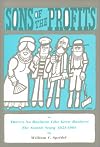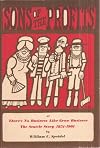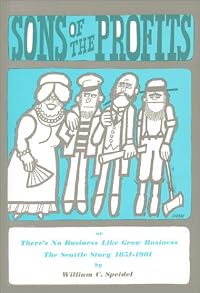
Sons of the Profits
by William C. Speidel
On This Page
Description
This is the story of how the fellas, beginning with Arthur Denny, who built Seattle made their money.Tags
Recommendations



















Member Recommendations
Member Reviews
Somehow, I guess I never thought I'd read a history book that detailed how much help prostitutes were to the growth of a major city. But that's one of the things I learned in the very irreverent Sons of the Profits, which details less of the grand views and more of the muddy underside of the founding of Seattle. The author, when he was alive, gave tours of the true Seattle underground, and reading the book was like reading his script, complete with sarcastic asides. However, I'm not from Seattle -- I read the book for a little inside information for a future trip -- and so I'm not as intimately familiar with all the street names and regional references, so I would have liked to have seen a few more maps to get my bearings. (I also might show more have liked the stories to tie in a little more to modern times, but perhaps the author was being prudent in not connecting current high society with the rogues gallery he profiles.) I suspect more people might enjoy history if it were taught with stories like these interspersed with the usual boring lists of dates.
-----------------
LT Haiku:
Quick money (and girls) --
Seattle's founders are
All in for themselves. show less
-----------------
LT Haiku:
Quick money (and girls) --
Seattle's founders are
All in for themselves. show less
This one's a snarky history of the beginnings of Seattle, written by the founder of the Underground Tour. Mr. Speidel has an entertaining mix of irreverence and respect for Seattle's founders. It's a book well worth checking out.
--J.
--J.
Corro and I tripped and suffered as tourist hustlees do on our way to the corner of Yesler and 1st. It was in July that we were introduced to Bill Speidel and the disparate underground ruination of Seattle’s own Skid Road, to the city’s beginnings as a failed township at Alki Pt. run by two of Portland’s very own hungry for bigger and brighter things, to the nation-wide political tug-o-war over the UP’s northwest expansion and Washington/Tacoma’s capitalhood, and to the 1889 fire that gave Seattle the makeover necessary to later bring in the swarms of settlers and fortune seekers foolhardy enough to risk it all in the rush for the wild Klondike dream—the sort of crowd that let Seattle grow into the bustling metropolis of show more artfags and crack-addict hobos sucking dick in every backalley it is today.
Aw gee, that’s a little much, idn’t it? Trying too hard is too hard. Mill Street & 1st. Pioneer Square, in some ways the historical epicenter of Seattle: The former yard of Seattle’s own bastard blood business tycoon Henry Yesler, the location was the first great success for Seattle, the original progenitor for the city’s future, and turned Yesler from a 2-cents-to-his-name bum into the city’s wealthiest and greediest asshat. It was by this yard that Yesler, with the help of other early Sons of the Profits, built the Sound’s first saw mill, which with the booming Californian demand for lumber in the mid 19th century brought enough prosperity to save a town that by all accounts deserved to fail to neighboring rivals in the better-located and more aggressively-funded Tacoma.
Today—no one calls it Mill Street anymore, and no one really calls it Skid Road, either. It’s been too many years since lumber or anything other than cars and people was last seen tumbling (or skidding) down that hillacious hill we now know as Yesler Way in honor of that selfish prick we owe so much to—even if all he did in his later years was demand the hanging of criminals on his yard and attempt again and again to sue his own city and delay the post-fire reconstruction. Yesler’s old ‘front yard’ that caused such a ruckus circa 1890 is now Pioneer Square, a quaint little plaza around which today’s oldest still-standing Seattlean buildings are located—all of them built after the 1889 Great Seattle Fire—, where Bill Speidel himself, the man sittin’ kids like me on his lap for ‘Back in my day…’ after ‘Back in my day…’ stories of the Seattle’s earliest years opened shop and fought to preserve the underground remnants of Seattle’s burned-up or sunken (and still-sinking) past one whole century after the town’s conception, and where one sight really sticks out like a sore thumb to most tourists: A massive totem pole from the northern Kinninook clan. It’s a little puzzling why shipmates aboard the City of Seattle swam ashore at Fort Tongass and thought this 60-foot graveyard pole constructed circa 1790 was the perfect fit for Seattle’s streets, so perfect in fact that it was worth sawing in two and struggling weakly to paddle on back to the ship figuring no Indian in their right mind would care if Seattle done gone stole’d their history. A little more couldn’t hurt.*
Bill Speidel manages to keep this grandfatherly story-telling tone throughout his 50-year Seattle history, and while it doesn’t make for the greatest writing in the world, it keeps things entertaining—particularly refreshing for a historical study—, keeps ya turnin’ dem pages and chuckling along with his cheap gags and hefty amount of shining personality. My only complaint is: while learning about the importance of the train to Seattle’s growth, and just how complex the battle for it with so many other cities in the area was, Speidel devoted much too much space to the dramatic city v. city battle.** It just dragged on and on and then moved on; forget this, there are more important developments elsewhere. What’s old Arthur Denny been up to? This is his town, after all, and we haven’t heard from him at all yet, have we? Towards the end of his days—towards the end of all the Sons’ days—towards the end there, he decided it was up and time he became mayor—this was his town! right? right!—and he would have, too, if it wasn’t for those meddling women, with their votes counting in a progressive town such as Seattle! There’s only one way to handle such a situation, and that’s to Praise the Lord and take away those game-changing votes, delay national women’s suffrage another 32 years! Progress! (sneer. wheeze) that’s for the pussies in Tacoma.
I wish I could have known a woman like Lou Graham, Seattle’s hostess, her Madame. She arrived much like Yesler did, nearly penniless and filled with ambition; and just as quickly she rose to the top of Seattle’s ladder, leading her young, busting—or, ohmm, you know what I mean—army of ‘seamstresses’ into the pants of every Seattle Son, and if you ever experience the legacy of Speidel’s influence in Seattle, i.e., his Underground Tour—highest recommendations—there are toilets!—, you’d get the impression Graham built the entire city her own self, that she’s responsible for the wealth and brilliance of the city as it stands today. The color of that woman! Stepping outside of the seamstress business, she was a woman to make loans, and contributed to many of Seattle’s businesses and much of her children’s education and she always stopped to save many a Son in the early 1890s after the fire leveled much of the city and panic left many on the verge of ruin. I wish every city had a ballsy cat of a chronicler with Bill Speidel’s strong humor. I wanna know it all, baby doll. Seattle, Seattle, sweet Seattle, God, I miss Seattle. There’ll be a time…
And when I’m flying into Seattle again I can lean over the lap of my neighbor, camera in hand, clicking away as the stratocumulaic masses pawing over the plane’s breadth give way to a fractured landscape littered lovingly with a variance of architecture and citizens, admiring the historical beauty of it all; I can wax eccentric tourguide to my altogether annoyed neighborly audience: “oh! oh! oh! and there’s Alki Point, where in 1853 Charlie Terry founded the town of Alki, a word borrowed from the nearby Duwamish Indian tribe meaning ‘by and by,’ as in, ‘by and by a town will grow’—cute, I know—as the primary rival to Arthur Denny’s Seattle, or New York as it was known at the time, named so as to lure in unsuspecting scallywags and men of business looking for the wealth and livelihood associated with the burgeoning evolutionary expanse of Whitman’s Paumanok, but don’t worry, haw haw haw, the high winds they experienced around the coast, which would have been about…well, let’s say about there back in the 19th century, caused it to ultimately fail, leaving Terry to rid himself of the lands to the town doctor-slash-drunk David “Doc” Maynard and move into Denny’s settlement, and—oh! yes! over there where you see that golf course and the little thick gathering of woods, that’s where the long-since vanished town of Newcastle was once located. Y’see, when Seattle was fighting for control of the railroad (and it was a losing battle, mind you), the rich ore deposits in the Newcastle mine….”
F.V.: 80%
[179]
*After an arsonist attack in 1938, Chief-of-All-Women’s honorary graveyard totem was replaced by a much less mindblowing replica that still stands today.
**Tacoma proved a nuisance, backed by the wealthy easterner Charles Wright, a guy who hated all things Puget Sound, they seemed to constantly have the edge over Seattle with so much green support and slandering of Seattle’s fine name haw haw. Seattle won when after the years started piling up, ‘n’ things were lookin’ grim, the citizens threw up their arms and said Eff this, working together under lousy conditions to get themselves the railroad in their own unique way. Suck it, Tacoma. Suck it good.+
+Unfortunately, Tacoma did well regardless. Also unfortunately, the other big contenders, nice towns with bright, hopeful futures like Port Townsend and Walla Walla, were left to rot. show less
Aw gee, that’s a little much, idn’t it? Trying too hard is too hard. Mill Street & 1st. Pioneer Square, in some ways the historical epicenter of Seattle: The former yard of Seattle’s own bastard blood business tycoon Henry Yesler, the location was the first great success for Seattle, the original progenitor for the city’s future, and turned Yesler from a 2-cents-to-his-name bum into the city’s wealthiest and greediest asshat. It was by this yard that Yesler, with the help of other early Sons of the Profits, built the Sound’s first saw mill, which with the booming Californian demand for lumber in the mid 19th century brought enough prosperity to save a town that by all accounts deserved to fail to neighboring rivals in the better-located and more aggressively-funded Tacoma.
Today—no one calls it Mill Street anymore, and no one really calls it Skid Road, either. It’s been too many years since lumber or anything other than cars and people was last seen tumbling (or skidding) down that hillacious hill we now know as Yesler Way in honor of that selfish prick we owe so much to—even if all he did in his later years was demand the hanging of criminals on his yard and attempt again and again to sue his own city and delay the post-fire reconstruction. Yesler’s old ‘front yard’ that caused such a ruckus circa 1890 is now Pioneer Square, a quaint little plaza around which today’s oldest still-standing Seattlean buildings are located—all of them built after the 1889 Great Seattle Fire—, where Bill Speidel himself, the man sittin’ kids like me on his lap for ‘Back in my day…’ after ‘Back in my day…’ stories of the Seattle’s earliest years opened shop and fought to preserve the underground remnants of Seattle’s burned-up or sunken (and still-sinking) past one whole century after the town’s conception, and where one sight really sticks out like a sore thumb to most tourists: A massive totem pole from the northern Kinninook clan. It’s a little puzzling why shipmates aboard the City of Seattle swam ashore at Fort Tongass and thought this 60-foot graveyard pole constructed circa 1790 was the perfect fit for Seattle’s streets, so perfect in fact that it was worth sawing in two and struggling weakly to paddle on back to the ship figuring no Indian in their right mind would care if Seattle done gone stole’d their history. A little more couldn’t hurt.*
Bill Speidel manages to keep this grandfatherly story-telling tone throughout his 50-year Seattle history, and while it doesn’t make for the greatest writing in the world, it keeps things entertaining—particularly refreshing for a historical study—, keeps ya turnin’ dem pages and chuckling along with his cheap gags and hefty amount of shining personality. My only complaint is: while learning about the importance of the train to Seattle’s growth, and just how complex the battle for it with so many other cities in the area was, Speidel devoted much too much space to the dramatic city v. city battle.** It just dragged on and on and then moved on; forget this, there are more important developments elsewhere. What’s old Arthur Denny been up to? This is his town, after all, and we haven’t heard from him at all yet, have we? Towards the end of his days—towards the end of all the Sons’ days—towards the end there, he decided it was up and time he became mayor—this was his town! right? right!—and he would have, too, if it wasn’t for those meddling women, with their votes counting in a progressive town such as Seattle! There’s only one way to handle such a situation, and that’s to Praise the Lord and take away those game-changing votes, delay national women’s suffrage another 32 years! Progress! (sneer. wheeze) that’s for the pussies in Tacoma.
I wish I could have known a woman like Lou Graham, Seattle’s hostess, her Madame. She arrived much like Yesler did, nearly penniless and filled with ambition; and just as quickly she rose to the top of Seattle’s ladder, leading her young, busting—or, ohmm, you know what I mean—army of ‘seamstresses’ into the pants of every Seattle Son, and if you ever experience the legacy of Speidel’s influence in Seattle, i.e., his Underground Tour—highest recommendations—there are toilets!—, you’d get the impression Graham built the entire city her own self, that she’s responsible for the wealth and brilliance of the city as it stands today. The color of that woman! Stepping outside of the seamstress business, she was a woman to make loans, and contributed to many of Seattle’s businesses and much of her children’s education and she always stopped to save many a Son in the early 1890s after the fire leveled much of the city and panic left many on the verge of ruin. I wish every city had a ballsy cat of a chronicler with Bill Speidel’s strong humor. I wanna know it all, baby doll. Seattle, Seattle, sweet Seattle, God, I miss Seattle. There’ll be a time…
And when I’m flying into Seattle again I can lean over the lap of my neighbor, camera in hand, clicking away as the stratocumulaic masses pawing over the plane’s breadth give way to a fractured landscape littered lovingly with a variance of architecture and citizens, admiring the historical beauty of it all; I can wax eccentric tourguide to my altogether annoyed neighborly audience: “oh! oh! oh! and there’s Alki Point, where in 1853 Charlie Terry founded the town of Alki, a word borrowed from the nearby Duwamish Indian tribe meaning ‘by and by,’ as in, ‘by and by a town will grow’—cute, I know—as the primary rival to Arthur Denny’s Seattle, or New York as it was known at the time, named so as to lure in unsuspecting scallywags and men of business looking for the wealth and livelihood associated with the burgeoning evolutionary expanse of Whitman’s Paumanok, but don’t worry, haw haw haw, the high winds they experienced around the coast, which would have been about…well, let’s say about there back in the 19th century, caused it to ultimately fail, leaving Terry to rid himself of the lands to the town doctor-slash-drunk David “Doc” Maynard and move into Denny’s settlement, and—oh! yes! over there where you see that golf course and the little thick gathering of woods, that’s where the long-since vanished town of Newcastle was once located. Y’see, when Seattle was fighting for control of the railroad (and it was a losing battle, mind you), the rich ore deposits in the Newcastle mine….”
F.V.: 80%
[179]
*After an arsonist attack in 1938, Chief-of-All-Women’s honorary graveyard totem was replaced by a much less mindblowing replica that still stands today.
**Tacoma proved a nuisance, backed by the wealthy easterner Charles Wright, a guy who hated all things Puget Sound, they seemed to constantly have the edge over Seattle with so much green support and slandering of Seattle’s fine name haw haw. Seattle won when after the years started piling up, ‘n’ things were lookin’ grim, the citizens threw up their arms and said Eff this, working together under lousy conditions to get themselves the railroad in their own unique way. Suck it, Tacoma. Suck it good.+
+Unfortunately, Tacoma did well regardless. Also unfortunately, the other big contenders, nice towns with bright, hopeful futures like Port Townsend and Walla Walla, were left to rot. show less
Mildly interesting - probably would have been far more interesting if I'd ever lived, or even spent any time, in Seattle. A breezy storyteller style, which was somewhat odd for a clearly well- and deeply-researched book. The problem is that that storyteller style meant a _lot_ of detail, enough to swamp me at times - particularly when he kept going back over the same period while focusing on a different group and different events. The fire was while Lou was a madam, what about Pinnell? Were there two separate attempts by the railroad to use the exact same methods to kill off Seattle (delaying mail and passengers, among other things), when it didn't work the first time? Or were those techniques only used once and Speidel told us about show more them twice from two different viewpoints? And so on. The last section focuses on the Alaskan gold rush, and how Seattle made a fortune off it - I think that era was only covered once, which made it clearer. The other thing was, the few decent people he talks about...weren't as interesting to the author as the greedy, largely amoral lot that fit the name "Sons of the Profits", so we spend most of the book deeply immersed in nasty people and their plots to make more money. It got a little dull at times. I'm glad I read it...I might even reread (or at least skim), if I were going to Seattle and planning to tour the underground. I don't see any reason other than that for rereading, for me. show less
My wife grew up in Seattle. While we were dating, we went on the Seattle underground tour, and now it's time to read the book. That said, there are lots of names that would be much more meaningful to a Seattle native.
This book reminded me that whether the person was a hero or villain, society tends to glorify them after they are dead. The people mentioned here gained wealth at other's expense (I am putting it very politely), and now are revered as the founders of Seattle. There are a few other characters mentioned because of their interactions with the founders.
An easy read with a few main characters, with lots of others that are also important in the development of the city, and a few who only appear briefly.
This book reminded me that whether the person was a hero or villain, society tends to glorify them after they are dead. The people mentioned here gained wealth at other's expense (I am putting it very politely), and now are revered as the founders of Seattle. There are a few other characters mentioned because of their interactions with the founders.
An easy read with a few main characters, with lots of others that are also important in the development of the city, and a few who only appear briefly.
2012: This book was mostly very entertaining, but there were a couple of chapters I got a bit bored with. It certainly made history seem exciting and taught me more about my adopted city.
2017: Re-read this book as research for a novel I was writing for NaNoWriMo that dealt some with Seattle history. It did manage to give me some ideas for real-life city founders I wanted to include in the novel, but other times I was frustrated because I wanted to hear more descriptions about the personalities of certain individual people and there was not a lot there. Also I did not really pay enough attention the first time I read it to the lack of discussion of women--only a very small handful make an appearance. Other than these issues though I show more still found it an entertaining look at Seattle history. show less
2017: Re-read this book as research for a novel I was writing for NaNoWriMo that dealt some with Seattle history. It did manage to give me some ideas for real-life city founders I wanted to include in the novel, but other times I was frustrated because I wanted to hear more descriptions about the personalities of certain individual people and there was not a lot there. Also I did not really pay enough attention the first time I read it to the lack of discussion of women--only a very small handful make an appearance. Other than these issues though I show more still found it an entertaining look at Seattle history. show less
This is an irreverent and historically accurate tale of the founding and growth of Seattle. Diving into the dirt of the city makes it an entertaining read, although the harping on the greet of the founders does get a little old.
Members
- Recently Added By
Lists

Set in the Pacific Northwest
136 works; 7 members
Author Information

7 Works 700 Members
Common Knowledge
- Original publication date
- 1967
- People/Characters
- Arthur A. Denny; David Denny; David Swinson "Doc" Maynard; Henry Yesler
- Important places
- Seattle, Washington, USA
- Dedication
- In the spirit of Seattle's founding fathers, this book is dedicated with warmest appreciation to the most important people in the world -- the men, women and children who buy it.
- First words
- I'm sure there must have been somebody who participated in the construction of Seattle without first determining whether there was a buck in it for himself, but this book isn't about him.
- Quotations
- Henry Yeller was a bastard ... but I hasten to add, not merely because of the accidental circumstance of his birth. .... Unlike the others, Henry not only was born to the title, he worked at earning it day after day and year... (show all) after year with a greater degree of success over a longer period of time than anybody else.
The cause of death of the three men [who were lynched] is listed as: "Irate citizens."
As a result, they left us with an official historical heritage about as rich as a bowl of broth made from the shadow of a chicken.
Lou stood about five feet, two inches ... and at chest height, she was about three feet thick.
One of the problems that goes with being a good woman is that she has to have something good to do. Nowadays, all the goodness is being done by the federal government and the welfare agencies ... and all the good women in tow... (show all)n tend to become alcoholics because they have nothing good to do. - Last words
- (Click to show. Warning: May contain spoilers.)And she's been the big city every since.
Classifications
Statistics
- Members
- 499
- Popularity
- 60,138
- Reviews
- 9
- Rating
- (3.44)
- Languages
- English
- Media
- Paper
- ISBNs
- 2
- ASINs
- 15