On This Page
Description
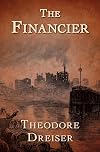
Acclaimed American journalist and fiction writer penned a number of noteworthy classics in his day, including Sister Carrie and An American Tragedy. His 1912 novel The Financier was the first in a trilogy of works following the life and career of Frank Cowperwood, a Philadelphia-born entrepreneur whose rising fortunes and intermittent disasters are emblematic of many of those who populated nineteenth-century America..
Tags
Recommendations


























Member Reviews
An interesting trend in literary fiction is for some really good writers to base the plots of their novels on events surrounding crises or other calamities in the financial markets. From Tom Wolfe’s The Bonfire of the Vanities and Don DeLillo’s Cosmopolis to the more recent A Week in December by Sebastian Faulks and Other People’s Money by Justin Cartwright, authors frequently use economic chaos in some way as a backdrop for their stories as well as a metaphor for the social critique they are trying to convey. Indeed, fiction of this ilk is often a thinly veiled morality tale, with the financial institution (e.g., bank, hedge fund) or businessperson (e.g., stockbroker, money manager) playing the role of the evil menace and show more would-be destroyer of all that is decent and good.
With the stock market panics of 1987, 2001, and 2008 fresh in our collective memory, it would be easy to view this literary movement as a contemporary fashion. That would be wrong, however. Written more than a century ago, Theodore’s Dreiser’s The Financier tells the story of the rise, fall, and resurrection of Frank Cowperwood, a man whose personal and professional machinations frame a gripping account of the tumultuous United States capital markets in the post-Civil War era, before the country itself was even 100 years old. Based on the true history of Charles Yerkes, a legendary trader and tycoon of the day, the novel is set in Philadelphia and describes Frank’s comfortable but humble origins as well as the economic and emotional carnage he creates on the way to building his financial empire.
Cowperwood’s genius lies in his ability to recognize investment opportunities and then manipulate a financial system almost completely devoid of meaningful regulation to his own advantage. Starting with little more than a keen mind, a strong work ethic, and a disregard for political and social norms, Frank creates wealth for himself in a very old-fashioned way—by borrowing lots of money and then making more right bets in the stock market than wrong ones. As is often the case when using such massive amounts of financial leverage, though, his downfall—which is truly steep—comes when a stock market crash caused by the Great Chicago Fire of 1871 leaves him without enough money to repay his loans. This chain of events leads to a brief prison term for embezzlement after which another market crash in 1873 provides him with the opportunity to once again use other people’s misfortune (and money) to his benefit. The novel ends with Frank and his long-time mistress leaving their respective families for a fresh start in Chicago.
The Financier is the first of Dreiser’s Trilogy of Desire and is followed by The Titan and The Stoic, which continue the Yerkes/Cowperwood saga. This was not always an easy book to read; the author’s so-called gritty naturalism style of prose led to what at times was a densely worded and overly detailed story that was decidedly old-fashioned in tone by modern standards. Nevertheless, I found the scope and imagination of the tale to be quite compelling and, from a historical perspective, it was also a book that taught me a lot about some crucial events that previously were little more than footnotes in my mind. To his credit, Dreiser neither glorifies nor demonizes Frank for the myriad choices he makes in his personal and business affairs, meaning that he offers the reader no easy answers as to what is right and what is wrong. Without question, this remains relevant fiction that deserves to be read for years to come. show less
With the stock market panics of 1987, 2001, and 2008 fresh in our collective memory, it would be easy to view this literary movement as a contemporary fashion. That would be wrong, however. Written more than a century ago, Theodore’s Dreiser’s The Financier tells the story of the rise, fall, and resurrection of Frank Cowperwood, a man whose personal and professional machinations frame a gripping account of the tumultuous United States capital markets in the post-Civil War era, before the country itself was even 100 years old. Based on the true history of Charles Yerkes, a legendary trader and tycoon of the day, the novel is set in Philadelphia and describes Frank’s comfortable but humble origins as well as the economic and emotional carnage he creates on the way to building his financial empire.
Cowperwood’s genius lies in his ability to recognize investment opportunities and then manipulate a financial system almost completely devoid of meaningful regulation to his own advantage. Starting with little more than a keen mind, a strong work ethic, and a disregard for political and social norms, Frank creates wealth for himself in a very old-fashioned way—by borrowing lots of money and then making more right bets in the stock market than wrong ones. As is often the case when using such massive amounts of financial leverage, though, his downfall—which is truly steep—comes when a stock market crash caused by the Great Chicago Fire of 1871 leaves him without enough money to repay his loans. This chain of events leads to a brief prison term for embezzlement after which another market crash in 1873 provides him with the opportunity to once again use other people’s misfortune (and money) to his benefit. The novel ends with Frank and his long-time mistress leaving their respective families for a fresh start in Chicago.
The Financier is the first of Dreiser’s Trilogy of Desire and is followed by The Titan and The Stoic, which continue the Yerkes/Cowperwood saga. This was not always an easy book to read; the author’s so-called gritty naturalism style of prose led to what at times was a densely worded and overly detailed story that was decidedly old-fashioned in tone by modern standards. Nevertheless, I found the scope and imagination of the tale to be quite compelling and, from a historical perspective, it was also a book that taught me a lot about some crucial events that previously were little more than footnotes in my mind. To his credit, Dreiser neither glorifies nor demonizes Frank for the myriad choices he makes in his personal and business affairs, meaning that he offers the reader no easy answers as to what is right and what is wrong. Without question, this remains relevant fiction that deserves to be read for years to come. show less
"This was his hour. Like a wolf prowling under glittering, bitter stars in the night, he was looking down into the humble folds of simple men and seeing what their ignorance and their unsophistication would cost them"(441).
These lines describe Frank Cowperwood upon his hearing that Jay Cooke and Co. have failed. They show him, and by extrapolation all of his kind, as a predatory animal. Yet these lines are applied to a thirty-six year old man, a veteran of the stock exchange, and one who has learned how ruthless the world of finance can be. It would not be fair, based solely on this image, to call Cowperwood an animal. Unfortunately, imagery throughout the book does lead us to exactly such a conclusion. Even at age ten Frank show more demonstrates animalistic qualities. after watching a captive lobster catch and devour a squid, he guesses "That's the way it had to be and trots home(8).
Nor is Cowperwood the only financier described animalistically. Steemberger, a beef speculator, has a face "something like that of a pig"(12); brokers on the exchange "were like certain fish waiting for a certain bait"(40); Edward Butler, the trashman-turned contractor-turned political insider who is so abused by Cowperwood, on the other hand, is "hale and strong like seasoned hickory"(67). These illustrations refer to men of power in general, though, and our concern is specifically with Cowperwood. Even in his first financial transaction, the purchase and resale of Castille soap, Frank is "like a young hound on the scent of game"(19). Later, during the stock crisis caused by the Chicago fire, he is described as a snake watching a bird(180).
These examples of the imagery used to describe Cowperwood should convincingly show that, from the narrator's perspective at least, he is nothing but a hungry, wild animal, grasping for profit the way a wolf tears into a lamb. As such, he is in no way worthy of admiration, in spite of his civilized demeanor and presentation of himself. Instead, he should be seen as dangerous, something to be avoided, if not shot on sight. Yes, like the lion, Cowperwood is a fine and glorious beast, powerful and handsome. But the placid demeanor demonstrated while sitting in the shade only masks the passionate power of the creature, and should not fool anyone into coming within its reach. show less
These lines describe Frank Cowperwood upon his hearing that Jay Cooke and Co. have failed. They show him, and by extrapolation all of his kind, as a predatory animal. Yet these lines are applied to a thirty-six year old man, a veteran of the stock exchange, and one who has learned how ruthless the world of finance can be. It would not be fair, based solely on this image, to call Cowperwood an animal. Unfortunately, imagery throughout the book does lead us to exactly such a conclusion. Even at age ten Frank show more demonstrates animalistic qualities. after watching a captive lobster catch and devour a squid, he guesses "That's the way it had to be and trots home(8).
Nor is Cowperwood the only financier described animalistically. Steemberger, a beef speculator, has a face "something like that of a pig"(12); brokers on the exchange "were like certain fish waiting for a certain bait"(40); Edward Butler, the trashman-turned contractor-turned political insider who is so abused by Cowperwood, on the other hand, is "hale and strong like seasoned hickory"(67). These illustrations refer to men of power in general, though, and our concern is specifically with Cowperwood. Even in his first financial transaction, the purchase and resale of Castille soap, Frank is "like a young hound on the scent of game"(19). Later, during the stock crisis caused by the Chicago fire, he is described as a snake watching a bird(180).
These examples of the imagery used to describe Cowperwood should convincingly show that, from the narrator's perspective at least, he is nothing but a hungry, wild animal, grasping for profit the way a wolf tears into a lamb. As such, he is in no way worthy of admiration, in spite of his civilized demeanor and presentation of himself. Instead, he should be seen as dangerous, something to be avoided, if not shot on sight. Yes, like the lion, Cowperwood is a fine and glorious beast, powerful and handsome. But the placid demeanor demonstrated while sitting in the shade only masks the passionate power of the creature, and should not fool anyone into coming within its reach. show less
“In short, he was one of those early, daring manipulators who later were to seize upon other and even larger phases of American natural development for their own aggrandizement.”
― Theodore Dreiser, The Financier
If there was ever a novel spotlighting American character, this is it. Theodore Dreiser goes right to the heart of the heart of American business and industry with this novel featuring Frank Cowperwood, a man who is a financial genius and leader by instinct and by nature. In this first of the Cowperwood trilogy, the author sets his tale in 19th century horse-and-buggy Philadelphia. Reading this novel is one memorable experience: it is as if you are right there in Philadelphia with Cowperwood and all the other men and women, show more walking the streets, sitting in on business meetings, living the cycle of work-a-day everyday life.
What does it take to grow up to be a captain of industry, to amass fortune and wealth beyond measure, to be a titan among men? Here is how Dreiser describes his main character, “Frank Cowperwood, even at ten, was a natural-born leader. . . . he was looked upon as one whose common sense could unquestionably be trusted in all cases. He was a sturdy youth, courageous and defiant. . . From the very start of life, he wanted to know about economics and politics. He cared nothing for books.” I mention ‘cared nothing for books’ since anybody reading this review presumably is, like myself, a reader of books. Well, that’s what separates bookworms like us from Mr. Frank – we enjoy curling up with a good book far from the maddening crowd; Frank enjoys being at the center of the maddening crowd, giving exacting orders a mile a minute and making money, lots of money.
Dreiser writes how as a boy Frank wondered how life was organized and found his answer watching the drama in a merchant’s fish tank, a drama taking place over the course of several days, that of a lobster hunting and finally killing and eating a squid. This incident made a profound impression on young Frank. He finally understood how life works: life feeds on life, one animal feeds on another animal, men feed on other men. The animals and men who are the best equipped and the strongest will win. This raw-boned naturalism and what would come to be known as Social Darwinism would remain Frank Cowperwood’s unswerving view of life.
Although Cowperwood is a financial wizard, a man who masters the world of money and the game of influencing people the way those top Castilians in Hermann Hesse’s ‘The Glass Bead Game’ master their game of mathematical-musical metaphysics, his life expands in other ways, particularly in his appreciation of visual beauty, the beauty of women and the beauty of art. Here are the author’s words on Cowperwood’s collecting art objects in his new home: “He foresaw a home which would be chaste, soothing, and delightful to look upon. If he hung pictures, gilt frames were to be the setting large and deep: and if he wished a picture-gallery, the library could be converted into that, and the general living-room, which lay between the library and the parlor on the second-floor, could be turned into a combination library and living-room.”
Back on Cowperwood’s appreciation of the beauty of women. Without going into the particulars of the women involved, it is worth highlighting how his relationship with women brings him into conflict with others, usually older men and women, who hold to traditional moral and religious values. Indeed, this contrast between the America of religious believers and the America of the naturalistic, materialistic non-believers like Cowperwood is part of Dreiser’s overarching social commentary. When men confront Cowperwood with religion and morals, he simply replies that they have one view of life and he has quite another.
For 500 pages we follow Cowperwood through his ups of amassing millions and downs of losing millions and then up again. Toward the end of the novel, he muses, “I am as rich as I was, and only a little older. They caught me once but thy will not catch me again.” He realizes his life destiny, his life meaning, is one of grandeur, one of tremendous wealth and influence and that his future lies well beyond the city limits of Philadelphia, in a city to the west, a city providing ample financial elbow room and entrepreneurial leg room to accord with his ambition and his magnificence. The 19th century thinker Friedrich Nietzsche said, “We should face our destiny with courage.” Frank Cowperwood was no reader of philosophy, but he would have wholeheartedly agreed with the German philosopher on this point. show less
It's just amazing that Dreiser (1871-1945) wrote this gritty novel in 1912, before anyone even thought of derivatives, credit default swaps, sub-prime "liar loan" mortgages and no-fault (for bankers and brokers, that is) national financial meltdowns. Frank Cowperwood is the ethically-challenged "financier" whose star and fortunes rise so marvelously and then collapse with equal flare. He seems so absolutely convincingly contemporary that I had recurring transient episodes of inverted déjà vu as I followed his desperate ambition and burnout.
Frank is a first-rate villain. He burns his friends and enemies with equal disdain, he channels Gordon Gekko with suitably theatrical energy, and he is most deliciously unrepentant when his schemes show more go awry, his loans get called and his empire crashes around him.
I say "deliciously unrepentant" because, unlike his contemporary villainous free spirits of Wall Street, Frank promptly goes to jail for his crimes.
"The Financier" so obviously is the kind of novel that might be written by a baroque clone of Michael Lewis. If you'd like to work out a bit of the residual rage you feel about the man-made financial cesspool we've been wallowing in for the last few years, try this American classic. show less
Frank is a first-rate villain. He burns his friends and enemies with equal disdain, he channels Gordon Gekko with suitably theatrical energy, and he is most deliciously unrepentant when his schemes show more go awry, his loans get called and his empire crashes around him.
I say "deliciously unrepentant" because, unlike his contemporary villainous free spirits of Wall Street, Frank promptly goes to jail for his crimes.
"The Financier" so obviously is the kind of novel that might be written by a baroque clone of Michael Lewis. If you'd like to work out a bit of the residual rage you feel about the man-made financial cesspool we've been wallowing in for the last few years, try this American classic. show less
Given the havoc that bankers and financiers cause in society, it is remarkable that hardly any information on what a financier is can be found on for instance Wikipedia, other than that they are people who make their money through investments. It is therefore hard to quickly determine how far back the history of financiers goes, the Renaissance, probably; the South Sea Bubble of 1720 is often cited as one of the first great speculation scandals.
Reading The financier (1912) by Theodore Dreiser gives readers an uncanny sense of recognition, as the main character of the novel, Frank Cowperwood could just have sprung up from the pages of a contemporary newspaper, or e-Reader, for that matter.
The financier is the first volume in a trilogy, show more but can very well be read on its own. It describes a complete cycle of fortune, misfortune and recovery of Cowperwood. As a son of a banker, nonetheless, young Frank set out to make his fortune all by himself, starting very modestly by buying a chest of soap and selling it at a profit. In the first twelve chapters, the novel develops rapidly, seeing young Cowperwood setting up as a brokerage, at first as a partner and increasingly independently, running across Mr Butler's pretty young daughter, as early as in chapter 12.
As a young, and upcoming financier, he marries the affluent widow, several years his senior. In his burgeoning wealth, Cowperwood buys a house, soon to be replaced by a more magnificent mansion, decorated by a fashionable architect, Ellsworth.
Young Cowperwood begins an affair with the young Aileen Butler; her father has them shadowed by private detectives and leaks evidence of adultery to Cowperwood's wife. The hatred of old Mr Butler knows no boundaries and he is bent on destroying Cowperwood, and separating him from his daughter.
Growing wealthy through the Civil War Years, the Great Chicago Fire of 1871 leads to Cowperwood's bankruptcy, as he is unable to find money to financy his creditors. The financial crisis caused by the Fire leads to the uncovering of a network of illicit borrowings and speculation with money from the city's Treasury. Cowperwood is made a scapegoat and goes to jail.
His lover, Aileen, visits him in jail and remains loyal until he is released two years later. Money works in jail to ease some of the discomfort. Soon after his release, Cowperwood starts with new energy to recoop his lost wealth.
Although the novel starts and developes rapidly, the story is dragged out throughout the bankruptcy and jail episodes. Nonetheless, the novel seems to need this volume, and it never seems too wordy or lengthy. The novel is simply elaborate and descriptive in great detail, but it seems appropriate to tell the story with so much detail. It certainly helps to be interested or even a bit knowledgeable in the world of finance, to know the difference between various types of financiers and financial services, and the bulk of the story is developed in this environment.
Frank Cowperwood is portrait as a sympathetic financier, whose passion for Aileen seems sincere, although his earlier marriage to the rich widow was probably not. He is a man of good taste. The other characters, old Mr Cowperwood, Mr Butler and other characters, such as Stener are all described in psychologically very convincing portraits, and the tragedy of the novel is sufficiently moving.
While not the easiest novel to read, The financier is still very rewarding. show less
Reading The financier (1912) by Theodore Dreiser gives readers an uncanny sense of recognition, as the main character of the novel, Frank Cowperwood could just have sprung up from the pages of a contemporary newspaper, or e-Reader, for that matter.
The financier is the first volume in a trilogy, show more but can very well be read on its own. It describes a complete cycle of fortune, misfortune and recovery of Cowperwood. As a son of a banker, nonetheless, young Frank set out to make his fortune all by himself, starting very modestly by buying a chest of soap and selling it at a profit. In the first twelve chapters, the novel develops rapidly, seeing young Cowperwood setting up as a brokerage, at first as a partner and increasingly independently, running across Mr Butler's pretty young daughter, as early as in chapter 12.
As a young, and upcoming financier, he marries the affluent widow, several years his senior. In his burgeoning wealth, Cowperwood buys a house, soon to be replaced by a more magnificent mansion, decorated by a fashionable architect, Ellsworth.
Young Cowperwood begins an affair with the young Aileen Butler; her father has them shadowed by private detectives and leaks evidence of adultery to Cowperwood's wife. The hatred of old Mr Butler knows no boundaries and he is bent on destroying Cowperwood, and separating him from his daughter.
Growing wealthy through the Civil War Years, the Great Chicago Fire of 1871 leads to Cowperwood's bankruptcy, as he is unable to find money to financy his creditors. The financial crisis caused by the Fire leads to the uncovering of a network of illicit borrowings and speculation with money from the city's Treasury. Cowperwood is made a scapegoat and goes to jail.
His lover, Aileen, visits him in jail and remains loyal until he is released two years later. Money works in jail to ease some of the discomfort. Soon after his release, Cowperwood starts with new energy to recoop his lost wealth.
Although the novel starts and developes rapidly, the story is dragged out throughout the bankruptcy and jail episodes. Nonetheless, the novel seems to need this volume, and it never seems too wordy or lengthy. The novel is simply elaborate and descriptive in great detail, but it seems appropriate to tell the story with so much detail. It certainly helps to be interested or even a bit knowledgeable in the world of finance, to know the difference between various types of financiers and financial services, and the bulk of the story is developed in this environment.
Frank Cowperwood is portrait as a sympathetic financier, whose passion for Aileen seems sincere, although his earlier marriage to the rich widow was probably not. He is a man of good taste. The other characters, old Mr Cowperwood, Mr Butler and other characters, such as Stener are all described in psychologically very convincing portraits, and the tragedy of the novel is sufficiently moving.
While not the easiest novel to read, The financier is still very rewarding. show less
Frank Cowperwood, impatient to leave school as a boy, learns all he needs to know on the street and from his banker father. Soon he is trading for profit and moving up from one firm to another. In Philadelphia, he begins to skim from the city as a broker and is only discovered by the disaster of the great fire. He endures a nasty prison sentence, meted out to him by men who are as guilty or more guilty of fraud and corruption than he is, and, when freed, swiftly regains his fortune in speculation. His love life matches his financial life, with Frank marrying an upper class older widow and then having an affair with a young woman because here as with all else, he is a strong man, and strong men must satisfy their appetites. A book to show more elucidate that the latest rounds of corruption on Wall Street is nothing new under the American sun. show less
“In short, he was one of those early, daring manipulators who later were to seize upon other and even larger phases of American natural development for their own aggrandizement.”
― Theodore Dreiser, The Financier
If there was ever a novel spotlighting American character, this is it. Theodore Dreiser goes right to the heart of the heart of American business and industry with this novel featuring Frank Cowperwood, a man who is a financial genius and leader by instinct and by nature. In this first of the Cowperwood trilogy, the author sets his tale in 19th century horse-and-buggy Philadelphia. Reading this novel is one memorable experience: it is as if you are right there in Philadelphia with Cowperwood and all the other men and women, show more walking the streets, sitting in on business meetings, living the cycle of work-a-day everyday life.
What does it take to grow up to be a captain of industry, to amass fortune and wealth beyond measure, to be a titan among men? Here is how Dreiser describes his main character, “Frank Cowperwood, even at ten, was a natural-born leader. . . . he was looked upon as one whose common sense could unquestionably be trusted in all cases. He was a sturdy youth, courageous and defiant. . . From the very start of life, he wanted to know about economics and politics. He cared nothing for books.” I mention ‘cared nothing for books’ since anybody reading this review presumably is, like myself, a reader of books. Well, that’s what separates bookworms like us from Mr. Frank – we enjoy curling up with a good book far from the maddening crowd; Frank enjoys being at the center of the maddening crowd, giving exacting orders a mile a minute and making money, lots of money.
Dreiser writes how as a boy Frank wondered how life was organized and found his answer watching the drama in a merchant’s fish tank, a drama taking place over the course of several days, that of a lobster hunting and finally killing and eating a squid. This incident made a profound impression on young Frank. He finally understood how life works: life feeds on life, one animal feeds on another animal, men feed on other men. The animals and men who are the best equipped and the strongest will win. This raw-boned naturalism and what would come to be known as Social Darwinism would remain Frank Cowperwood’s unswerving view of life.
Although Cowperwood is a financial wizard, a man who masters the world of money and the game of influencing people the way those top Castilians in Hermann Hesse’s ‘The Glass Bead Game’ master their game of mathematical-musical metaphysics, his life expands in other ways, particularly in his appreciation of visual beauty, the beauty of women and the beauty of art. Here are the author’s words on Cowperwood’s collecting art objects in his new home: “He foresaw a home which would be chaste, soothing, and delightful to look upon. If he hung pictures, gilt frames were to be the setting large and deep: and if he wished a picture-gallery, the library could be converted into that, and the general living-room, which lay between the library and the parlor on the second-floor, could be turned into a combination library and living-room.”
Back on Cowperwood’s appreciation of the beauty of women. Without going into the particulars of the women involved, it is worth highlighting how his relationship with women brings him into conflict with others, usually older men and women, who hold to traditional moral and religious values. Indeed, this contrast between the America of religious believers and the America of the naturalistic, materialistic non-believers like Cowperwood is part of Dreiser’s overarching social commentary. When men confront Cowperwood with religion and morals, he simply replies that they have one view of life and he has quite another.
For 500 pages we follow Cowperwood through his ups of amassing millions and downs of losing millions and then up again. Toward the end of the novel, he muses, “I am as rich as I was, and only a little older. They caught me once but thy will not catch me again.” He realizes his life destiny, his life meaning, is one of grandeur, one of tremendous wealth and influence and that his future lies well beyond the city limits of Philadelphia, in a city to the west, a city providing ample financial elbow room and entrepreneurial leg room to accord with his ambition and his magnificence. The 19th century thinker Friedrich Nietzsche said, “We should face our destiny with courage.” Frank Cowperwood was no reader of philosophy, but he would have wholeheartedly agreed with the German philosopher on this point. show less
Members
- Recently Added By
Published Reviews
We remember Theodore Dreiser mainly for his deeply felt tales of have-nots who
yearn for much more than the world gives them. In "An American Tragedy," his 1925
masterpiece, a young man's longing for money and social standing leads him to the
electric chair. But Mr. Dreiser also wrote admiringly of the wealthy, and this year marks
the 100th anniversary of "The Financier," his sweeping and minutely show more observed story of
an enormously successful capitalist.
"The Financier" centers on Frank Algernon Cowperwood, whom the author repeatedly
describes as possessing "force." Cowperwood proves himself both skilled and resilient
in the financial marketplace. He also keeps a cool head when he's discovered sleeping
with his business partner's daughter. Mr. Dreiser so insistently interleaves stockmarket
intrigue with sex, in fact, that one critic described Cowperwood's story as a
club sandwich of "slices of business alternating with erotic episodes."
But Cowperwood is no Gordon Gekko. He's suave, not rapacious. And unlike Gekko,
who celebrates greed, Cowperwood asserts simply, "I satisfy myself."
Mr. Dreiser drew Cowperwood from life—specifically, the life of Charles Tyson Yerkes,
one of the more freewheeling Gilded Age robber barons. Mr. Yerkes made his fortune
in municipal rapid transit, but before he started buying up cable-car companies he was
a stock and bond broker and speculator.
Mr. Dreiser fictionalizes Mr. Yerkes's personality, but follows his business life closely in
the novel. The result is an amazingly intricate description of high-rolling 19th-century
finance.
Cowperwood practices a situational morality that "varies with conditions, if not
climates." Invited into shady parley with the Philadelphia city treasurer, he cuts a
backroom deal that anoints him an investment banker for the city, allowing him to
speculate with the city's short-term loan issues. Although he does so prudently,
investing in local street railways (the rapid transit of the time), he gets caught short
when the Great Chicago Fire of 1871 triggers a run on his secret holdings before the
usual end-of-month settlement. Thus exposed, Cowperwood and the treasurer are
convicted of embezzlement and sent to prison.
Mr. Dreiser's detailed account of these machinations, and of the financier's
imprisonment, are drawn faithfully from the historical record. But the novelist imagines
a scene when the young lover of the adulterous Cowperwood comes to visit him in the
penitentiary and the chastened financier weeps in her arms.
From this low point, Mr. Dreiser's hero soon regains his financial and emotional
dominance. Pardoned after 13 months, he re-enters the financial fray on a smaller
scale. He quickly becomes rich again when he leverages a stake of $75,000 into more
than $1 million over a few days. Acting aggressively in a stricken market, he shorts the
stocks of companies related to the firm of Jay Cooke, whose spectacular failure to
complete a transcontinental railroad led to what became known as the Panic of 1873.
Here again, Mr. Dreiser barely fictionalizes the real-life maneuvers of Mr. Yerkes. Mr.
Dreiser follows Cowperwood's further adventures in the Windy City in "The
Titan" (1914), the second volume of what would eventually become his "Trilogy of
Desire."
Desire was Mr. Dreiser's lifelong subject. His fascination with what people want—and
what keeps them wanting, and how their social situations shape what they
want—forms the through-line that connects all of his books. Cowperwood gets just
about everything he wants, but it is Mr. Dreiser's constant probing of the intertwined
needs for money, art, glory, sex and so much else that makes "The Financier" the
greatest of all American business novels.
But what makes Cowperwood want? Mr. Dreiser imagines a scene in which young
Cowperwood witnesses a lobster and a squid caged together in a fishmonger's tank.
Over several days, he observes the squid getting more and more ragged, with pieces
of it "snapped off" until it finally falls prey to the lobster's relentless pursuit. Critics have
made a lot of this spectacle, mostly reading it as a primal scene that answers for
Cowperwood a question that Mr. Dreiser never stopped asking: How is life organized?
But no one pays attention to what follows the underwater drama. The boy runs home
to tell his parents about what he's seen, but they show no concern. "What makes you
take interest in such things?" asks his mother, while his father reacts "indifferently."
Joining the lobster-squid drama together with its family aftermath allows us to view
Cowperwood as a man-child of desire. His insatiable acquisitiveness—which extends
to his love life—extends likewise from his understanding that "things lived on each
other," and also from a desire to gain approval from others by demonstrating his
prowess on an increasingly grander scale.
It also helps to account for his weeping in prison. Mr. Dreiser portrays Cowperwood,
for all of his bland and ruthless competence, as someone who needs sympathy. In this
respect he is perhaps not so different from Dreiser characters like the pitiful George
Hurstwood of "Sister Carrie" (1900) or the pathetically striving Clyde Griffiths of "An
American Tragedy."
Mr. Dreiser's novels describe in unparalleled detail the myriad industrial, technological
and social changes in the U.S. at the turn of the last century. "The Financier" has aged
gracefully not least because Cowperwood's world remains familiar. Readers will
recognize the contours of today's financial markets in Mr. Dreiser's story (and a new
edition of "The Financier," from the University of Illinois Press, restores descriptions of
Cowperwood's financial dealings that Mr. Dreiser cut for the novel's 1927 rerelease).
Today's readers will also spot some familiar tensions: It's not a far leap from the
causes of Cowperwood's Philadelphia downfall to a discussion of how much
transparency should be required in, say, the market for credit-default swaps.
Mr. Yerkes eventually wound down, dying short of his dearest triumph, a planned
consolidation of London's transit system. Perhaps because of this real-life anticlimax,
Mr. Dreiser spent many years trying to close Cowperwood's story. He worked on the
final volume of the trilogy, "The Stoic," until he died in 1945. (The novel was released
posthumously in 1947.) "The Financier" hints at no such hesitation. The novel instead
unveils one of Mr. Dreiser's most energetic and accomplished characters in the early
stages of his ascent, in a financial arena whose basic rules—and players—have
changed but little. show less
yearn for much more than the world gives them. In "An American Tragedy," his 1925
masterpiece, a young man's longing for money and social standing leads him to the
electric chair. But Mr. Dreiser also wrote admiringly of the wealthy, and this year marks
the 100th anniversary of "The Financier," his sweeping and minutely show more observed story of
an enormously successful capitalist.
"The Financier" centers on Frank Algernon Cowperwood, whom the author repeatedly
describes as possessing "force." Cowperwood proves himself both skilled and resilient
in the financial marketplace. He also keeps a cool head when he's discovered sleeping
with his business partner's daughter. Mr. Dreiser so insistently interleaves stockmarket
intrigue with sex, in fact, that one critic described Cowperwood's story as a
club sandwich of "slices of business alternating with erotic episodes."
But Cowperwood is no Gordon Gekko. He's suave, not rapacious. And unlike Gekko,
who celebrates greed, Cowperwood asserts simply, "I satisfy myself."
Mr. Dreiser drew Cowperwood from life—specifically, the life of Charles Tyson Yerkes,
one of the more freewheeling Gilded Age robber barons. Mr. Yerkes made his fortune
in municipal rapid transit, but before he started buying up cable-car companies he was
a stock and bond broker and speculator.
Mr. Dreiser fictionalizes Mr. Yerkes's personality, but follows his business life closely in
the novel. The result is an amazingly intricate description of high-rolling 19th-century
finance.
Cowperwood practices a situational morality that "varies with conditions, if not
climates." Invited into shady parley with the Philadelphia city treasurer, he cuts a
backroom deal that anoints him an investment banker for the city, allowing him to
speculate with the city's short-term loan issues. Although he does so prudently,
investing in local street railways (the rapid transit of the time), he gets caught short
when the Great Chicago Fire of 1871 triggers a run on his secret holdings before the
usual end-of-month settlement. Thus exposed, Cowperwood and the treasurer are
convicted of embezzlement and sent to prison.
Mr. Dreiser's detailed account of these machinations, and of the financier's
imprisonment, are drawn faithfully from the historical record. But the novelist imagines
a scene when the young lover of the adulterous Cowperwood comes to visit him in the
penitentiary and the chastened financier weeps in her arms.
From this low point, Mr. Dreiser's hero soon regains his financial and emotional
dominance. Pardoned after 13 months, he re-enters the financial fray on a smaller
scale. He quickly becomes rich again when he leverages a stake of $75,000 into more
than $1 million over a few days. Acting aggressively in a stricken market, he shorts the
stocks of companies related to the firm of Jay Cooke, whose spectacular failure to
complete a transcontinental railroad led to what became known as the Panic of 1873.
Here again, Mr. Dreiser barely fictionalizes the real-life maneuvers of Mr. Yerkes. Mr.
Dreiser follows Cowperwood's further adventures in the Windy City in "The
Titan" (1914), the second volume of what would eventually become his "Trilogy of
Desire."
Desire was Mr. Dreiser's lifelong subject. His fascination with what people want—and
what keeps them wanting, and how their social situations shape what they
want—forms the through-line that connects all of his books. Cowperwood gets just
about everything he wants, but it is Mr. Dreiser's constant probing of the intertwined
needs for money, art, glory, sex and so much else that makes "The Financier" the
greatest of all American business novels.
But what makes Cowperwood want? Mr. Dreiser imagines a scene in which young
Cowperwood witnesses a lobster and a squid caged together in a fishmonger's tank.
Over several days, he observes the squid getting more and more ragged, with pieces
of it "snapped off" until it finally falls prey to the lobster's relentless pursuit. Critics have
made a lot of this spectacle, mostly reading it as a primal scene that answers for
Cowperwood a question that Mr. Dreiser never stopped asking: How is life organized?
But no one pays attention to what follows the underwater drama. The boy runs home
to tell his parents about what he's seen, but they show no concern. "What makes you
take interest in such things?" asks his mother, while his father reacts "indifferently."
Joining the lobster-squid drama together with its family aftermath allows us to view
Cowperwood as a man-child of desire. His insatiable acquisitiveness—which extends
to his love life—extends likewise from his understanding that "things lived on each
other," and also from a desire to gain approval from others by demonstrating his
prowess on an increasingly grander scale.
It also helps to account for his weeping in prison. Mr. Dreiser portrays Cowperwood,
for all of his bland and ruthless competence, as someone who needs sympathy. In this
respect he is perhaps not so different from Dreiser characters like the pitiful George
Hurstwood of "Sister Carrie" (1900) or the pathetically striving Clyde Griffiths of "An
American Tragedy."
Mr. Dreiser's novels describe in unparalleled detail the myriad industrial, technological
and social changes in the U.S. at the turn of the last century. "The Financier" has aged
gracefully not least because Cowperwood's world remains familiar. Readers will
recognize the contours of today's financial markets in Mr. Dreiser's story (and a new
edition of "The Financier," from the University of Illinois Press, restores descriptions of
Cowperwood's financial dealings that Mr. Dreiser cut for the novel's 1927 rerelease).
Today's readers will also spot some familiar tensions: It's not a far leap from the
causes of Cowperwood's Philadelphia downfall to a discussion of how much
transparency should be required in, say, the market for credit-default swaps.
Mr. Yerkes eventually wound down, dying short of his dearest triumph, a planned
consolidation of London's transit system. Perhaps because of this real-life anticlimax,
Mr. Dreiser spent many years trying to close Cowperwood's story. He worked on the
final volume of the trilogy, "The Stoic," until he died in 1945. (The novel was released
posthumously in 1947.) "The Financier" hints at no such hesitation. The novel instead
unveils one of Mr. Dreiser's most energetic and accomplished characters in the early
stages of his ascent, in a financial arena whose basic rules—and players—have
changed but little. show less
added by browner56
Author Information

159+ Works 13,771 Members
Theodore Dreiser was born in Terre Haute, Indiana, the twelfth of 13 children. His childhood was spent in poverty, or near poverty, and his family moved often. In spite of the constant relocations, Dreiser managed to attend school, and, with the financial aid of a sympathetic high school teacher, he was able to attend Indiana University. However, show more the need for income forced him to leave college after one year and take a job as a reporter in Chicago. Over the next 10 years, Dreiser held a variety of newspaper jobs in Pittsburgh, St. Louis, and finally New York. He published his first novel, Sister Carrie in 1900, but because the publisher's wife considered its language and subject matter too "strong", it was barely advertised and went almost unnoticed. Today it is regarded as one of Dreiser's best works. It is the story of Carrie, a young woman from the Midwest, who manages to rise to fame and fortune on the strength of her personality and ambition, through her acting talent, and via her relationships with various men. Much of the book's controversy came from the fact that it portrayed a young woman who engages in sexual relationships without suffering the poverty and social downfall that were supposed to be the "punishment" for such "sin." Dreiser's reputation has increased instrumentally over the years. His best book and first popular success, An American Tragedy (1925), is now considered a major American novel, and his other works are widely taught in college courses. Like Sister Carrie, An American Tragedy also tells the story of an ambitious young person from the Midwest. In this case, however, the novel's hero is a man who is brought to ruin because of a horrible action he commits - he murders a poor young woman whom he has gotten pregnant, but whom he wants to discard in favor of a wealthy young woman who represents luxury and social advancement. As Dreiser portrays him, the young man is a victim of an economic system that torments so many with their lack of privilege and power and temps them to unspeakable acts. Dreiser is also known for the Coperwood Trilogy - The Financier (1912), The Titan (1914), and the posthumously published The Store (1947). Collectively the three books paint the portrait of a brilliant and ruthless "financial buccaneer." Dreiser is associated with Naturalism, a writing style that also includes French novelist Emile Zola. Naturalism seeks to portray all the social forces that shape the lives of the characters, usually conveying a sense of the inevitable doom that these forces must eventually bring about. Despite this apparent pessimism, Dreiser had faith in socialism as a solution to what he saw as the economic injustices of American capitalism. His socialist views were reinforced by a trip to the newly socialist Soviet Union, and in fact, Dreiser is still widely read in that country. There, as here, he is seen as a powerful chronicler of the injustices and ambitions of his time. Dreiser officially joined the Communist Party shortly before his death in 1945. (Bowker Author Biography) show less
Some Editions
Series

Belongs to Publisher Series
Work Relationships
Common Knowledge
- Canonical title
- The Financier
- Alternate titles
- The Financier
- Original publication date
- 1912
- People/Characters
- Frank Algernon Cowperwood; Aileen Butler; Lillian Semple; George W. Stener; Edward Malia Butler; Henry A. Mollenhauer (show all 7); Senator Mark Simpson
- Important places
- Philadelphia, Pennsylvania, USA
- Important events
- Great Chicago Fire (1871)
- First words
- THE PHILADELPHIA into which Frank Algernon Cowperwood was born was a city of two hundred and fifty thousand and more. It was set with handsome parks, notable buildings, and crowded with his- toric memories. Many of the things... (show all) that we and he knew later were not then in existence—the telegraph, telephone, express company, ocean steamer, city delivery of mails. There were no postage-stamps or registered letters. The street car had not arrived. In its place were hosts of omnibuses, and for longer travel the slowly developing rail- road system still largely connected by canals.
- Quotations
- It (the law) was a miasma of misinterpretation where the ills of life festered, and also a place where the accidentally wounded were ground between the upper and the nether millstones of force or chance.
- Last words
- (Click to show. Warning: May contain spoilers.)What wise man might not read from such a beginning, such an end?
Classifications
Statistics
- Members
- 606
- Popularity
- 48,048
- Reviews
- 18
- Rating
- (3.85)
- Languages
- 6 — Czech, English, German, Russian, Spanish, Swedish
- Media
- Paper, Audiobook, Ebook
- ISBNs
- 97
- UPCs
- 1
- ASINs
- 33