
Alfred Kazin (1915–1998)
Author of A Walker in the City
About the Author
Alfred Kazin, a literary critic and professor of English literature, was born in Brooklyn on June 5, 1915. He was educated at City College and Columbia University. Kazin established his own critical reputation in the mid-1940s with On Native Grounds (1942), a study of American literature. His later show more work, Bright Book of American Life (1973), is both a recapitulation of modernism and an evaluation of American writers who have achieved prominence since 1945. Modernism, a favorite topic of Kazin, is in his view a literary revolution marked by spontaneity and individuality but lacking in precisely the mass culture appeal necessary to its survival. Contemporaries (1962) includes reflective essays on travel, five essays on Freud, and some very perceptive essays on literary and political matters. The final section, "The Critic's Task," concerns itself with the critic's function within a popular and an academic context and with critical theory and principles. Starting Out in the Thirties (1965) describes Kazin's early years with The New Republic as book reviewer and evaluates his contemporaries in a period when the depression and radical political thought, pro and con, deeply affected literary production. In the midst of the current antihumanistic trend in literary theory, Kazin remains a literary critic of the old school, believing in the relevance of literature to modern life. Alfred Kazin died on June 5, 1998. (Bowker Author Biography) show less
Works by Alfred Kazin
On Native Grounds: An Interpretation Of Modern American Prose Literature (Harvest Book) (1983) 186 copies, 2 reviews
The World of History: Great Historical Writings by Henry Steele Commager and Others (A Mentor Book) (1954) — Editor — 6 copies
2: La grande liberazione, 1918-1929 2 copies
Literature as a necessity of life 2 copies
The Open Street 2 copies
The Indispensable Blake 1 copy
(La nuova terra : storia della letteratura americana) : 1. : La ricerca della realtà : 1890-1917 1 copy
Theodore Dreiser 1 copy
(La nuova terra : storia della letteratura americana) : 3. : La letteratura della crisi : 1930-1940 1 copy
Contemporaries. Essays 1 copy
Associated Works
A Sense of History: The Best Writing from the Pages of American Heritage (1985) — Contributor — 492 copies, 4 reviews
For the Love of Books: 115 Celebrated Writers on the Books They Love Most (1999) — Contributor — 479 copies, 4 reviews
An American Album: One Hundred and Fifty Years of Harper's Magazine (2000) — Contributor — 145 copies, 1 review
Forgotten Heroes: Inspiring American Portraits from Our Leading Historians (1999) — Contributor — 125 copies, 1 review
Writing New York: A Literary Anthology (Expanded 10th-Anniversary Edition) (2008) — Contributor — 102 copies, 1 review
New York Panorama: A Comprehensive Guide to the Metropolis (1938) — Introduction, some editions — 60 copies
Alger Hiss, Whittaker Chambers, and the Schism in the American Soul (2002) — Contributor — 25 copies, 1 review
African American History Collection, CD 2. The Negro in American Culture — Contributor — 1 copy
Tagged
Common Knowledge
- Birthdate
- 1915-06-05
- Date of death
- 1998-06-05
- Gender
- male
- Education
- City College of New York
- Occupations
- writer
literary critic - Organizations
- American Academy of Arts and Letters (Literature, 1965)
The New Republic
Fortune - Awards and honors
- American Academy of Arts and Letters Academy Award (Literature, 1949)
- Relationships
- Birstein, Ann (spouse | 1952-1982)
Kazin, Michael (son) - Cause of death
- cancer (prostate, bone)
- Nationality
- USA
- Birthplace
- Brooklyn, New York, USA
- Places of residence
- New York, New York, USA
- Place of death
- Manhattan, New York, USA
- Associated Place (for map)
- New York, USA
Members
Reviews
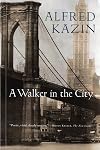
I didn't exactly enjoy "A Walker in the City" but I'm glad that it exists. If nothing else, it effectively preserves the author's memories of growing up in the poor Jewish section of Brownsville, Brooklyn in the twenties and thirties, and that's not nothing. Kazin writes both vividly and sentimentally, if not particularly economically, and the book might be called, in a narrow way, a success. Readers interested in the works of say, Mailer, Roth and Bellow might find something of interest show more here, although it should be noted that Kazin seems to have grown up significantly poorer than most of their characters -- middle-class Jews lived about a neighborhood away from his family. Kazin's a bit unlike them in temperament, too, resembling -- as another reviewer has noted -- nobody so much as the shy, sensitive narrator of Henry Roth's "Call It Sleep." This, and the highly constricted artistic elitism that Kazin grows into as a teenager may not endear him to every reader. Nor will his penchant for nostalgia, which seems to have formed early -- many of these walks around New York were made while looking for the vanished, grimy, gas-lit New York of an earlier era. In truth, "A Walker in the City" works best as a collection of lovely images and sentences. There's a bit of Joycean rapture here, but little narrative push. Still, I hardly minded, even though the book put me to sleep on more than one occasion. Certain audiences, though, may really like this one more than I did. show less

A quick read, filled with longing reminiscences and elegant prose, A WALKER IN THE CITY has been on my long-range to-read list for probably fifty years, ever since I heard it lavishly praised by some of my favorite profs in grad school. And now, after waiting so long, the actual reading seems a bit anticlimactic, as some of Kazin's memories seem only 'quaint,' by today's standards. But Alfred Kazin's memories of growing up poor, and a stutterer, in Brooklyn's Jewish ghetto of Brownsville, show more are still pretty darned interesting, conveying all the sights, sounds and smells of the tenements, the markets, the street vendors and the old wooden synagogue.
Kazin's memories range from his childhood through adolescence, when sex, he learned -
"... in the 'Coney Island' dives, outside the school, was like going to the toilet ... Sex was a grim test where sooner or later you would have to prove yourself doing things to women."
Kazin's stories almost immediately reminded me of Henry Roth's classic novel of that same era, CALL IT SLEEP, which I did read during grad school, as well as some of Philip Roth's early works, especially his coming-of-age novel, LETTING GO.
I especially enjoyed the final piece where Alfred ventured out of Brownsville, discovered a much larger public library, and began devouring books by Blake, Whitman, Hemingway, O'Neill and countless other great writers that I would be discovering myself 30-40 years later.
A very good book that has stayed in print for nearly 70 years now. I'm glad I finally read it. Very highly recommended.
- Tim Bazzett, author of the memoir, BOOKLOVER show less
Kazin's memories range from his childhood through adolescence, when sex, he learned -
"... in the 'Coney Island' dives, outside the school, was like going to the toilet ... Sex was a grim test where sooner or later you would have to prove yourself doing things to women."
Kazin's stories almost immediately reminded me of Henry Roth's classic novel of that same era, CALL IT SLEEP, which I did read during grad school, as well as some of Philip Roth's early works, especially his coming-of-age novel, LETTING GO.
I especially enjoyed the final piece where Alfred ventured out of Brownsville, discovered a much larger public library, and began devouring books by Blake, Whitman, Hemingway, O'Neill and countless other great writers that I would be discovering myself 30-40 years later.
A very good book that has stayed in print for nearly 70 years now. I'm glad I finally read it. Very highly recommended.
- Tim Bazzett, author of the memoir, BOOKLOVER show less
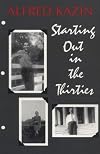
A few years back I read Alfred Kazin's first memoir, A WALKER IN THE CITY, about his Brownsville and Brooklyn boyhood, and quite enjoyed it, since, as an English major, I read many of his book reviews, essays and columns back in college and grad school. So this sequel, STARTING OUT IN THE THIRTIES (1962) - a 1989 reprint from Cornell University Press - caught my attention at a recent AAUW used book sale. It covers Kazin's life from age nineteen in 1934 through 1940, in the depths of the show more Great Depression, with a brief Epilogue from 1945. On page one, he tells us -
"... I was a 'Socialist,' like everyone else I knew ... 'Socialism' was a way of life, since everyone else I knew in New York was a Socialist, more or less ..."
This rather sets the tone for a volume with much to say about not just Socialism, but also Marxism and Communism and various other 'isms' at play in those very hard times. Kazin was fortunate to get a job writing for the "New Republic" magazine, under Malcolm Cowley, which didn't pay much, but it gave him a foothold and then a platform in the literary world, where he met folks like Clifford Odets, Elia Kazan, James T. Farrell, Henry Roth, Richard Wright, Erskine Caldwell, John Steinbeck, Henry Miller, William Saroyan, Granville Hicks, Mary McCarthy and more. Thirty years later I was reading the works of all those writers, and, as part of my collage research papers, I also read many of Kazin's (and Hicks's and Leslie Fiedler's) reviews, so yeah, I could relate. But there is also quite a lot here about Stalin's purges and gulags, and then Hitler's sudden rise to power.
He also tells of his many friendships and of meeting his first wife, Natasha, in the summer of 1938, their marriage two weeks later, and their idyllic early years together. And of his summer in Provincetown on Cape Cod in 1940, where numerous intellectuals gathered.
I must confess that I skimmed parts of the book, the tedious (to me) sections about the politics and tensions of the times. There is, I believe a third volume of memoirs by Kazin, but I think I'll probably pass on that one. This one was a "just okay" read. But hey, it was only a buck, so I'm not complaining. Enough said.
- Tim Bazzett, author of the memoir, BOOKLOVER show less
"... I was a 'Socialist,' like everyone else I knew ... 'Socialism' was a way of life, since everyone else I knew in New York was a Socialist, more or less ..."
This rather sets the tone for a volume with much to say about not just Socialism, but also Marxism and Communism and various other 'isms' at play in those very hard times. Kazin was fortunate to get a job writing for the "New Republic" magazine, under Malcolm Cowley, which didn't pay much, but it gave him a foothold and then a platform in the literary world, where he met folks like Clifford Odets, Elia Kazan, James T. Farrell, Henry Roth, Richard Wright, Erskine Caldwell, John Steinbeck, Henry Miller, William Saroyan, Granville Hicks, Mary McCarthy and more. Thirty years later I was reading the works of all those writers, and, as part of my collage research papers, I also read many of Kazin's (and Hicks's and Leslie Fiedler's) reviews, so yeah, I could relate. But there is also quite a lot here about Stalin's purges and gulags, and then Hitler's sudden rise to power.
He also tells of his many friendships and of meeting his first wife, Natasha, in the summer of 1938, their marriage two weeks later, and their idyllic early years together. And of his summer in Provincetown on Cape Cod in 1940, where numerous intellectuals gathered.
I must confess that I skimmed parts of the book, the tedious (to me) sections about the politics and tensions of the times. There is, I believe a third volume of memoirs by Kazin, but I think I'll probably pass on that one. This one was a "just okay" read. But hey, it was only a buck, so I'm not complaining. Enough said.
- Tim Bazzett, author of the memoir, BOOKLOVER show less

Hailed by people whose opinion I respect as one of the greatest of all memoirs; I'm not in a position to judge, since I probably haven't read as many as those who confidently make such pronouncements. But I'm glad they pointed me toward this; it is very, very good.
Lists
Awards


You May Also Like


Associated Authors
Statistics
- Works
- 42
- Also by
- 35
- Members
- 1,954
- Popularity
- #13,155
- Rating
- 3.9
- Reviews
- 11
- ISBNs
- 69
- Languages
- 3
- Favorited
- 4