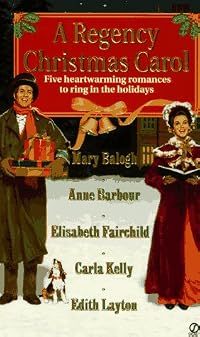
A Regency Christmas Carol [1997: Bond Street Carolers/ Melody/ Mistletoe Kiss/ Make a Joyful Noise/ Earl's Nightingale]
by Edith Layton (Contributor)
A Regency Christmas [Signet] (2nd Set - 1997)
On This Page
Description
Ring in a joyous holiday season as five of romance's most beloved Regency authors bring you this special melodious collection! Mary Balogh, Anne Barbour, Elisabeth Fairchild, Carla Kelly, and Edith Layton weave these spectacular song-inspired tales, capturing the true spirit of the holidays: the giving and receiving of the gift of love!Tags
Recommendations









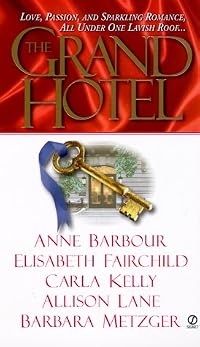
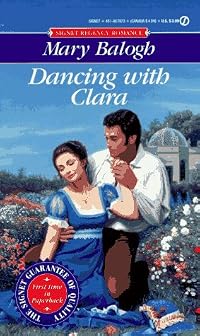
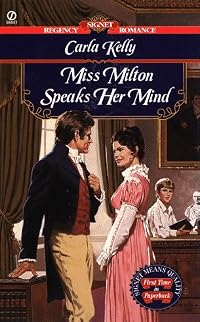


Member Reviews
Five Christmas novellas with a musical theme make up this anthology, opening with Mary Balough’s ‘The Bond Street Carollers’. This is my second favourite of the five.
Roderick starts out as a cynic with no fondness for company or Christmas. This begins to change when he hears young Matthew singing solo in the street alongside his fellow carollers. Roderick’s nature changes further when meeting Matthew’s mother Fanny.
The plot revolves around Roderick wanting to include Matthew in a Christmas concert, which naturally brings him closer to Fanny.
The most engaging part of this story was Roderick’s interaction with Fanny’s four-year-old daughter Katie. I love their first meeting when Katie, having seen Roderick admiring her show more brother’s singing, wanders over, tugs on his coat, and tells him her name. Roderick stares at her through a monocle, stating, ‘Is it, indeed?’ to which Katie, a little disheartened with his severe reply, states, ‘Yes, it is.’ I found this amusing and sweet.
All my favourite scenes in this novella feature Roderick and Katie. I love the contrast between this tall and cynical man who ordinarily has no patience with children, and the adorable little girl who isn’t scared to approach him and wishes he could become her papa on Christmas Day.
While I liked the story in the most part, some of the style elements were annoying. The beginning was meandering and unengaging to the point that I almost stopped reading. Long-winded explanation and static description at the start of a story is not the best way to hook the reader and make them want to continue. Luckily, some action and dialogue finally surface when Roderick stops to hear Matthew sing and Katie introduces herself.
A pet hate of mine is the overuse of ‘had’ in the past perfect. One six-line paragraph features ‘had’ eight times. A little revision could’ve removed most, if not all. When an author frequently states, ‘He had done this, she had done that,’ they’re reporting on events rather than taking the reader through the action as it unfolds. This makes for passive reading.
All five stories feature their share of passive prose similar to the above, along with too many adverbs, ‘telling’ instead of ‘showing’, using reported speech, and starting sentences with the passive ‘There were/was’.
Despite the above criticisms, ‘The Bond Street Carollers’ is an enjoyable story. Out of the five, it captures the spirit of Christmas the most.
Edith Layton’s ‘The Earl's Nightingale’ is the second story. For me, this was the weakest because it has lots of ‘telling’ instead of ‘showing’, plus it substitutes ‘Christmas’ for ‘holiday’ several times – I detest the modern habit of people saying ‘Happy Holidays’ or referring to Christmas as ‘the holiday’. It’s an expression that’s thankfully rare in England, and I may be wrong with me not having read heavily on the Regency period, but I can’t imagine anyone in nineteenth-century England referring to Christmas as ‘the holiday’. I’d never heard the term at all until this century. I gathered in some instances that the author was avoiding repeating ‘Christmas’, as in one short paragraph ‘Christmas’ is used three times, as is ‘the holiday’, but a bit of imagination and revision could’ve resolved this.
As for the story, I like the premise of a special birdcage that frequently changes ownership and how it affects several characters. It’s not a bad story in itself, but because of the persistent ‘telling’, it didn’t impress me as much as it could’ve if events were ‘shown’.
Elisabeth Fairchild’s ‘The Mistletoe Kiss’ is the third story. Like the previous tales, it’s spoiled at times with ‘telling’. For example, the likes of ‘Contance was surprised’ could easily have been ‘shown’.
Despite this, I did enjoy this tale. I’m often drawn to stories about governesses. This governess meets a moody earl who’s unpopular with the villagers. A cute little girl in the governess’s charge is the first person to draw the miserable man out of the shadows when they visit him.
When the governess takes an interest in him, he soon comes out of the doldrums. The see each other when a new bell-ringer is needed for Christmas. He offers to help, so she teaches him, and things develop from there.
A good story and relatable characters.
Up fourth is Carla Kelly’s ‘Make a Joyful Noise’. I liked this one a lot. A widower takes a shine to a widow. He has children and a mother to love him; she has in-laws who don’t want her living with them.
He admires her but is weary to approach her until the opportunity arises that gives him a genuine reason to seek her out, namely that his mother is called away, leaving him in charge of the Christmas choir, which is in dire need of a soprano, and as luck would have it, the lonely widow has a perfect voice.
His son and daughter also take a shine to the widow, as she does to them.
An engaging story throughout. Arguably the best of the five stories.
Anne Barbour’s ‘Melody’ is about an American man who inherits an earldom and returns to England to see his estate with no intention of staying long. He didn’t count on meeting Melody, though, who’s a companion to one of his female relatives.
It’s a pleasant enough story with believable characters and I liked it in the most part.
I was, however, distracted at times by annoying adverbs. Adverbs ‘tell’, and in most cases can be cut or replaced with a strong verb. For example, ‘She lifted her brows questioningly’ highlights how some adverbs make a sentence clunky, and in this case, the context and the action of brow raising ‘shows’ the reader that the character is questioning, rendering the adverb superfluous.
The story also has several instances of a character gasping. This has a melodramatic effect, along with being unrealistic. It’s rare to hear someone gasp in everyday circumstances – I’ve never heard anyone gasp at surprising or unusual events. People catch their breath. They only gasp in severe circumstance, like after being doused in freezing water, or after staying under water too long, and so on.
Gasping and adverbs aside, this final novella was a good read.
In the most part, I enjoyed this collection. It’s good December reading.
Took me longer to finish than expected as I was reading it online via the Internet Archive’s Open Library and, on multiple occasions, I’d visit the site to find someone else was borrowing the book. Anyway, you can find it on their if you want to read it for free. show less
Roderick starts out as a cynic with no fondness for company or Christmas. This begins to change when he hears young Matthew singing solo in the street alongside his fellow carollers. Roderick’s nature changes further when meeting Matthew’s mother Fanny.
The plot revolves around Roderick wanting to include Matthew in a Christmas concert, which naturally brings him closer to Fanny.
The most engaging part of this story was Roderick’s interaction with Fanny’s four-year-old daughter Katie. I love their first meeting when Katie, having seen Roderick admiring her show more brother’s singing, wanders over, tugs on his coat, and tells him her name. Roderick stares at her through a monocle, stating, ‘Is it, indeed?’ to which Katie, a little disheartened with his severe reply, states, ‘Yes, it is.’ I found this amusing and sweet.
All my favourite scenes in this novella feature Roderick and Katie. I love the contrast between this tall and cynical man who ordinarily has no patience with children, and the adorable little girl who isn’t scared to approach him and wishes he could become her papa on Christmas Day.
While I liked the story in the most part, some of the style elements were annoying. The beginning was meandering and unengaging to the point that I almost stopped reading. Long-winded explanation and static description at the start of a story is not the best way to hook the reader and make them want to continue. Luckily, some action and dialogue finally surface when Roderick stops to hear Matthew sing and Katie introduces herself.
A pet hate of mine is the overuse of ‘had’ in the past perfect. One six-line paragraph features ‘had’ eight times. A little revision could’ve removed most, if not all. When an author frequently states, ‘He had done this, she had done that,’ they’re reporting on events rather than taking the reader through the action as it unfolds. This makes for passive reading.
All five stories feature their share of passive prose similar to the above, along with too many adverbs, ‘telling’ instead of ‘showing’, using reported speech, and starting sentences with the passive ‘There were/was’.
Despite the above criticisms, ‘The Bond Street Carollers’ is an enjoyable story. Out of the five, it captures the spirit of Christmas the most.
Edith Layton’s ‘The Earl's Nightingale’ is the second story. For me, this was the weakest because it has lots of ‘telling’ instead of ‘showing’, plus it substitutes ‘Christmas’ for ‘holiday’ several times – I detest the modern habit of people saying ‘Happy Holidays’ or referring to Christmas as ‘the holiday’. It’s an expression that’s thankfully rare in England, and I may be wrong with me not having read heavily on the Regency period, but I can’t imagine anyone in nineteenth-century England referring to Christmas as ‘the holiday’. I’d never heard the term at all until this century. I gathered in some instances that the author was avoiding repeating ‘Christmas’, as in one short paragraph ‘Christmas’ is used three times, as is ‘the holiday’, but a bit of imagination and revision could’ve resolved this.
As for the story, I like the premise of a special birdcage that frequently changes ownership and how it affects several characters. It’s not a bad story in itself, but because of the persistent ‘telling’, it didn’t impress me as much as it could’ve if events were ‘shown’.
Elisabeth Fairchild’s ‘The Mistletoe Kiss’ is the third story. Like the previous tales, it’s spoiled at times with ‘telling’. For example, the likes of ‘Contance was surprised’ could easily have been ‘shown’.
Despite this, I did enjoy this tale. I’m often drawn to stories about governesses. This governess meets a moody earl who’s unpopular with the villagers. A cute little girl in the governess’s charge is the first person to draw the miserable man out of the shadows when they visit him.
When the governess takes an interest in him, he soon comes out of the doldrums. The see each other when a new bell-ringer is needed for Christmas. He offers to help, so she teaches him, and things develop from there.
A good story and relatable characters.
Up fourth is Carla Kelly’s ‘Make a Joyful Noise’. I liked this one a lot. A widower takes a shine to a widow. He has children and a mother to love him; she has in-laws who don’t want her living with them.
He admires her but is weary to approach her until the opportunity arises that gives him a genuine reason to seek her out, namely that his mother is called away, leaving him in charge of the Christmas choir, which is in dire need of a soprano, and as luck would have it, the lonely widow has a perfect voice.
His son and daughter also take a shine to the widow, as she does to them.
An engaging story throughout. Arguably the best of the five stories.
Anne Barbour’s ‘Melody’ is about an American man who inherits an earldom and returns to England to see his estate with no intention of staying long. He didn’t count on meeting Melody, though, who’s a companion to one of his female relatives.
It’s a pleasant enough story with believable characters and I liked it in the most part.
I was, however, distracted at times by annoying adverbs. Adverbs ‘tell’, and in most cases can be cut or replaced with a strong verb. For example, ‘She lifted her brows questioningly’ highlights how some adverbs make a sentence clunky, and in this case, the context and the action of brow raising ‘shows’ the reader that the character is questioning, rendering the adverb superfluous.
The story also has several instances of a character gasping. This has a melodramatic effect, along with being unrealistic. It’s rare to hear someone gasp in everyday circumstances – I’ve never heard anyone gasp at surprising or unusual events. People catch their breath. They only gasp in severe circumstance, like after being doused in freezing water, or after staying under water too long, and so on.
Gasping and adverbs aside, this final novella was a good read.
In the most part, I enjoyed this collection. It’s good December reading.
Took me longer to finish than expected as I was reading it online via the Internet Archive’s Open Library and, on multiple occasions, I’d visit the site to find someone else was borrowing the book. Anyway, you can find it on their if you want to read it for free. show less
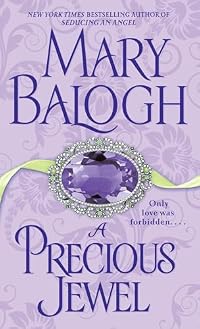
Mary Balogh - "The Bond Street Carolers"
Anne Barbour - "Melody"
Elisabeth Fairchild - "Yuletide Belles"
Carla Kelly - "Make a Joyful Noise" (wonderful story)
Edith Layton - "The Earl's Nightingale"
Anne Barbour - "Melody"
Elisabeth Fairchild - "Yuletide Belles"
Carla Kelly - "Make a Joyful Noise" (wonderful story)
Edith Layton - "The Earl's Nightingale"
Feb 20, 2008Romanian
Ratings
Members
- Recently Added By
Author Information

Edith Layton received a degree in creative writing and theater from Hunter College. Before becoming a full-time author, she worked for various media including a radio station and a major motion picture company. She wrote over 30 novels during her lifetime including Alas, My Love and Bride Enchanted. She received a Lifetime Achievement Award from show more Romantic Times. She died from ovarian cancer on June 2, 2009. (Bowker Author Biography) show less
All Editions
Series

Belongs to Publisher Series
Work Relationships
Common Knowledge
- Canonical title
- A Regency Christmas Carol [1997: Bond Street Carolers/ Melody/ Mistletoe Kiss/ Make a Joyful Noise/ Earl's Nightingale]
- Original title
- A Regency Christmas Carol [1997]
- Alternate titles
- The Bond Street Carolers (by Mary Balogh) (by Mary Balogh); The Earl's Nightingale (by Edith Layton) (by Edith Layton); The Mistletoe Kiss (by Elisabeth Fairchild) (by Elisabeth Fairchild); Make a Joyful Noise (by Carla Kelly) (by Carla Kelly); Melody (by Anne Barbour) (by Anne Barbour)
- Original publication date
- 1997-11
- People/Characters
- Peter Chard, Marquis of Wythe; Fanny Berlinton; Rosie Weatherby; Matthew Berlington; Roderick Ames, Baron Heath
- Important places
- London, England, UK
- Important events
- Christmas
- Disambiguation notice
- Please do not combine individual stories with the complete anthology. This is important because many of the stories are available in multiple anthologies, and also as single titles.
Anthology includes:
<... (show all)i>The Bond Street Carolers by Mary Balogh
The Earl's Nightingale by Edith Layton
The Mistletoe Kiss by Elisabeth Fairchild
Make a Joyful Noise by Carla Kelly
Melody by Anne Barbour
Classifications
- Genres
- Fiction and Literature, Romance
- DDC/MDS
- 813.0108334 — Literature & rhetoric American literature in English American fiction in English By type Short fiction
- LCC
- PS648 .C45 .R44 — Language and Literature American literature American literature Collections of American literature Prose (General)
- BISAC
Statistics
- Members
- 128
- Popularity
- 254,271
- Reviews
- 2
- Rating
- (3.54)
- Languages
- English
- Media
- Paper
- ISBNs
- 1