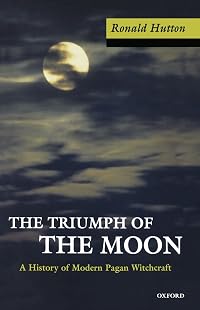
The Triumph of the Moon: A History of Modern Pagan Witchcraft
by Ronald Hutton
On This Page
Description
Ronald Hutton is known for his colorful, provocative, and always exhaustively researched studies on original subjects. This work is no exception: the first full-scale scholarly study of the only religion England has ever given the world, that of modern pagan witchcraft, which has now spread from English shores across four continents. Hutton examines the nature of that religion and its development, and offers a microhistory of attitudes to paganism, witchcraft, and magic in British society show more since 1800. Village cunning folk and Victorian ritual magicians, classicists and archaeologists, leaders of woodcraft and scouting movements, Freemasons and members of rural secret societies, all appear in the pages of this audiobook. Also included are some of the leading figures of English literature, from the Romantic poets to WB Yeats, DH Lawrence, and Robert Graves, as well as the main personalities who have represented pagan witchcraft to the world since 1950. show lessTags
Recommendations




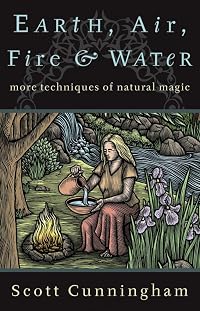
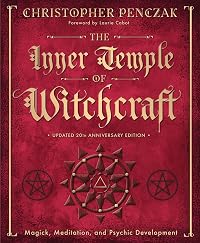
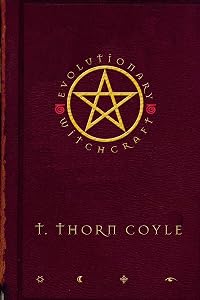
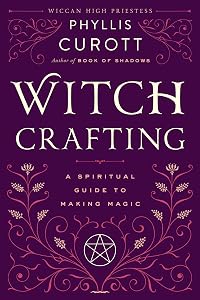



Member Recommendations
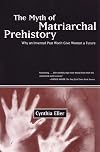
The Myth of Matriarchal Prehistory: Why An Invented Past Will Not Give Women a Future by Cynthia Eller
aulsmith Both books debunk the idea that current Neo-pagan ideas have historical roots. Both are sympathetic to the reasons why these myths about the past have emerged.
40
Member Reviews
Hutton did an impeccable job, as always, laying out the historical elements at play with unshakable logic and an abundance of kindness and generosity. None but Hutton could point out how much of a sneaky liar someone was with such polite factual sass, while also giving them deeply human grace and the benefit of the doubt. Hutton has mastered the one-two-punch of delivering heartening humanist prose to refocus the reader from the mire of details and ideas. I would encourage anyone who is curious about modern magic and modern paganism to invest some time in this book; none will give you greater insight. Feels great to have finally finished this foundational book. It was only when I put it down that I noticed the moon will be completely show more full in just a few hours. A triumph indeed. show less
The most important book ever written on neo-paganism and the new occult traditions. Hutton is an outstanding historian, and the material is presented in such a way that the reader is given all possible theories, and then the most likely based on the evidence. Myths, modern and ancient are debunked and nowhere has this had a more profound effect than on Wicca.
The inventor of Wicca (Gerald Gardner) is placed in his correct context - not of a mage presenting the secrets of pagan witchcraft to the world but a showman inventing a pseudo-history for his new occult movement.
Hutton treats neo-paganism and Wicca with respect and tolerance while cleaning away the lies and mis-information. He also address the origins of the neopagan movement - a show more fascinating tale of gentlemen playing at "druids", enlightemment poets and Late Victorian Spiritualism.
Anyone interested in the occult, and in witchcraft should read this book and anyone interested in Paganism/Neo-paganism should definately read it. One can only emerge better educated and more aware of the reality rather than the mythology, of neo-paganism show less
The inventor of Wicca (Gerald Gardner) is placed in his correct context - not of a mage presenting the secrets of pagan witchcraft to the world but a showman inventing a pseudo-history for his new occult movement.
Hutton treats neo-paganism and Wicca with respect and tolerance while cleaning away the lies and mis-information. He also address the origins of the neopagan movement - a show more fascinating tale of gentlemen playing at "druids", enlightemment poets and Late Victorian Spiritualism.
Anyone interested in the occult, and in witchcraft should read this book and anyone interested in Paganism/Neo-paganism should definately read it. One can only emerge better educated and more aware of the reality rather than the mythology, of neo-paganism show less
Ronald Hutton’s history of 20th-century Witchcraft and Wicca is a comprehensive and compelling examination of the subject. No other book to date gives such a clear and entertaining view of the origins and development of religious Witchcraft in the modern world. Hutton clearly has substantial sympathy for his subjects, and he is respectful to both living and dead practitioners, but he does not settle for unsubstantiated claims, and he deftly dispels a number of myths and long-standing controversies.
The book is divided into two sections, and the first section is a set of interlinked historical essays that describe various movements, ideas, and institutions that served as contributory streams to religious Witchcraft. These contributors show more include Romantic literary paganism, the Frazerian and ritualist schools of anthropology, folklorism, Freemasonry, ceremonial magic, Thelema, and Woodcraft Chivalry, among others. In the second section, Hutton provides a full narrative of the emergence and evolution of modern British Witchcraft, beginning with Gerald Gardner, and addressing all the major leaders, groups, “traditions,” and schools. The unique mutations of the Craft in North America are addressed only to the extent that their influence migrated back to England. (Jack Parsons’ abortive Witchcraft thus passes without notice.) Hutton also traces the reactions of the press, politics, popular culture, and the academy to the increasing presence and visibility of Witchcraft.
In light of Aleister Crowley’s published disdain for “witches,” it is ironic that so many British Wiccan luminaries claimed to have had instruction from the Beast. Hutton carefully checks these allegations against Crowley’s own exhaustive diaries; Gardner is the only one who seems to have had a genuine claim in that department.
Hutton calls Wicca “the only religion England has ever given the world.” I don’t know that I would agree with him, since despite the prudent claims of Freemasonry to be “religious, not a religion,” it probably qualifies as well, from a scholar’s perspective. In fact, Hutton’s grasp of Masonry leaves a little bit to be desired; as for instance when he calls the Royal Arch “the highest, most exclusive and most prestigious of all Masonic degrees.” (p. 219) Where it counts in relation to his central topic, however, Hutton delivers the goods, instancing such items as this Fellow Craft ritual closing circa 1800:
"Happy have we met, Happy have we been,
"Happy may we part, And happy meet again!" (p. 56)
I find it hard to imagine how any present-day Witch can afford to be without the information in this book. Anyone with any experience of Wicca should be fascinated by it, and anyone interested in contemporary religion will be enriched by it. After having read it cover-to-cover, I continue to take my copy off the shelf for purposes of reference and research. show less
The book is divided into two sections, and the first section is a set of interlinked historical essays that describe various movements, ideas, and institutions that served as contributory streams to religious Witchcraft. These contributors show more include Romantic literary paganism, the Frazerian and ritualist schools of anthropology, folklorism, Freemasonry, ceremonial magic, Thelema, and Woodcraft Chivalry, among others. In the second section, Hutton provides a full narrative of the emergence and evolution of modern British Witchcraft, beginning with Gerald Gardner, and addressing all the major leaders, groups, “traditions,” and schools. The unique mutations of the Craft in North America are addressed only to the extent that their influence migrated back to England. (Jack Parsons’ abortive Witchcraft thus passes without notice.) Hutton also traces the reactions of the press, politics, popular culture, and the academy to the increasing presence and visibility of Witchcraft.
In light of Aleister Crowley’s published disdain for “witches,” it is ironic that so many British Wiccan luminaries claimed to have had instruction from the Beast. Hutton carefully checks these allegations against Crowley’s own exhaustive diaries; Gardner is the only one who seems to have had a genuine claim in that department.
Hutton calls Wicca “the only religion England has ever given the world.” I don’t know that I would agree with him, since despite the prudent claims of Freemasonry to be “religious, not a religion,” it probably qualifies as well, from a scholar’s perspective. In fact, Hutton’s grasp of Masonry leaves a little bit to be desired; as for instance when he calls the Royal Arch “the highest, most exclusive and most prestigious of all Masonic degrees.” (p. 219) Where it counts in relation to his central topic, however, Hutton delivers the goods, instancing such items as this Fellow Craft ritual closing circa 1800:
"Happy have we met, Happy have we been,
"Happy may we part, And happy meet again!" (p. 56)
I find it hard to imagine how any present-day Witch can afford to be without the information in this book. Anyone with any experience of Wicca should be fascinated by it, and anyone interested in contemporary religion will be enriched by it. After having read it cover-to-cover, I continue to take my copy off the shelf for purposes of reference and research. show less
From my booklog:
Holy crap, I finally finished it. Never thought I'd see the day. Now, don't get me wrong: I really like this book. It should be required reading by anyone looking to call themselves Wiccan, maybe even anyone looking to call themselves pagan at all. There's so much misinformation out there about the history of Western Witchcraft that it'd do some real good if more people read this book.
But ye gods, it's dense as all get out. The type is tiny, the paragraphs are long, the language is complex. Hutton has a delightful dry wit, which I quite enjoyed, but this isn't the sort of book you curl up with for a few relaxing hours. It's slow going. Fascinating, but not at all a quick read.
Anyway. Hutton traces the modern pagan show more movement in the UK back to its roots and examines what, exactly, its actual history is. Lots of good stuff here, though fans of the "OMG, once upon a time, everyone was MATRIARCHAL and it was UTOPIA and then evil MEN came along and wrecked it all, and all the witches went into hiding until Gerald Gardener brought the tradition back into the public eye! NEVER AGAIN THE BURNING TIMES!" history may be rather distressed to find that's a load of hooey.
Interestingly, Hutton's dissection of the actual history behind Wicca and other modern pagan traditions doesn't negate their spiritual validity at all, just the validity of the histories people like telling. Good stuff. show less
Holy crap, I finally finished it. Never thought I'd see the day. Now, don't get me wrong: I really like this book. It should be required reading by anyone looking to call themselves Wiccan, maybe even anyone looking to call themselves pagan at all. There's so much misinformation out there about the history of Western Witchcraft that it'd do some real good if more people read this book.
But ye gods, it's dense as all get out. The type is tiny, the paragraphs are long, the language is complex. Hutton has a delightful dry wit, which I quite enjoyed, but this isn't the sort of book you curl up with for a few relaxing hours. It's slow going. Fascinating, but not at all a quick read.
Anyway. Hutton traces the modern pagan show more movement in the UK back to its roots and examines what, exactly, its actual history is. Lots of good stuff here, though fans of the "OMG, once upon a time, everyone was MATRIARCHAL and it was UTOPIA and then evil MEN came along and wrecked it all, and all the witches went into hiding until Gerald Gardener brought the tradition back into the public eye! NEVER AGAIN THE BURNING TIMES!" history may be rather distressed to find that's a load of hooey.
Interestingly, Hutton's dissection of the actual history behind Wicca and other modern pagan traditions doesn't negate their spiritual validity at all, just the validity of the histories people like telling. Good stuff. show less
This is the near-definitive account of the new religions that emerged, largely from the UK, in the last century. Hutton is sympathetic but rigorously academic, and has swept away the traditionalist claims of some founders whilst ensuring respect and dignity for practitioners. It is the founding text for understanding the context for any further reading in this field.
Hutton provides an excellent history of the origins of pagan witchcraft, focusing on the groundwork that led to the emergence of Wicca, and changes that occurred after its emergence. This academic work provides a fantastic overview to anyone interested in an anthropological study of this religion.
Having recently read Hutton's latest, _The Witch_, I reread this. I think it holds up well. More recent work clears up some of the ambiguity between witchcraft as proposed pagan precursor religion in Europe and witchcraft as widely spread idea of malignant magic users. I would recommend this work despite the controversy concerning it.
Members
- Recently Added By
Lists

Books That Changed Our Perspective
423 works; 168 members
Author Information

37+ Works 4,650 Members
Ronald Hutton is Professor of History at the University of Bristol.
Work Relationships
Is replied to in
Has as a reference guide/companion
Common Knowledge
- Original publication date
- 1999
- People/Characters
- Gerald Gardner; Aleister Crowley
- Dedication
- For Palden Jenkins and Lindsay River
Classifications
Statistics
- Members
- 1,083
- Popularity
- 23,575
- Reviews
- 17
- Rating
- (4.47)
- Languages
- English
- Media
- Paper, Audiobook, Ebook
- ISBNs
- 12
- UPCs
- 1
- ASINs
- 5