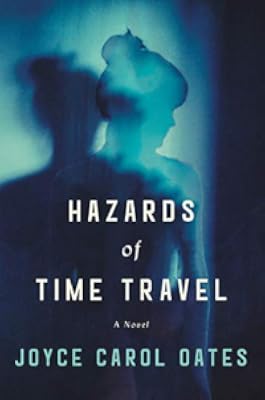
Hazards of Time Travel: A Novel
by Joyce Carol Oates
On This Page
Description
An ingenious, dystopian novel of one young woman's resistance against the constraints of an oppressive society, from the inventive imagination of Joyce Carol Oates"Time travel" — and its hazards—are made literal in this astonishing new novel in which a recklessly idealistic girl dares to test the perimeters of her tightly controlled (future) world and is punished by being sent back in time to a region of North America — "Wainscotia, Wisconsin"—that existed eighty years before. Cast show more adrift in time in this idyllic Midwestern town she is set upon a course of "rehabilitation"—but cannot resist falling in love with a fellow exile and questioning the constrains of the Wainscotia world with results that are both devastating and liberating.
Arresting and visionary, Hazards of Time Travel is both a novel of harrowing discovery and an exquisitely wrought love story that may be Joyce Carol Oates's most unexpected novel so far.
. show less
Tags
Recommendations


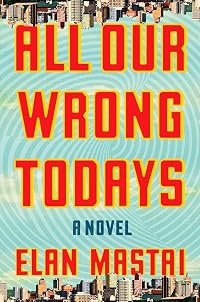
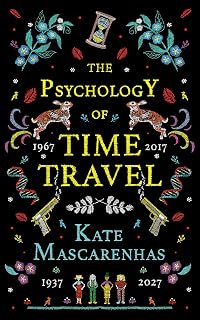
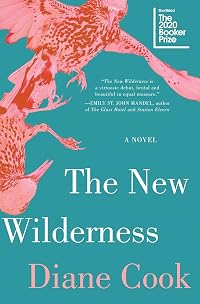
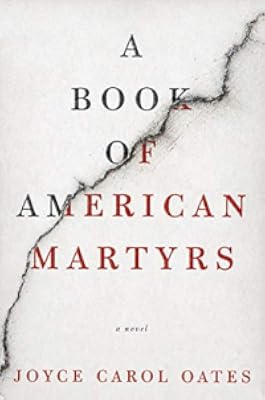
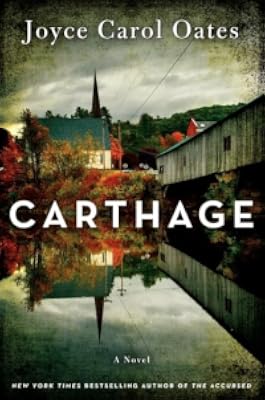
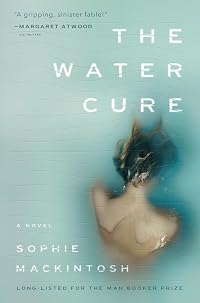
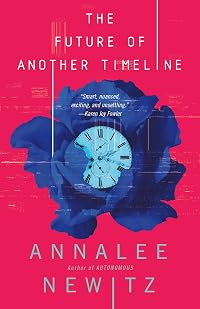
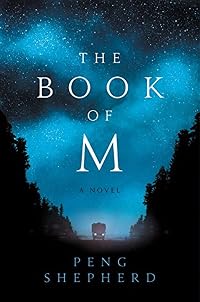
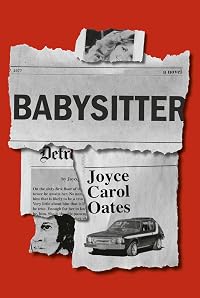
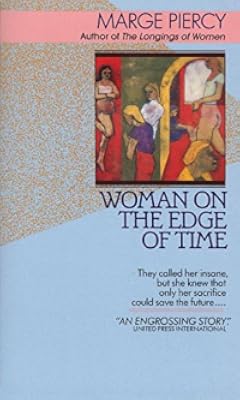
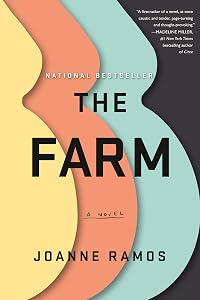
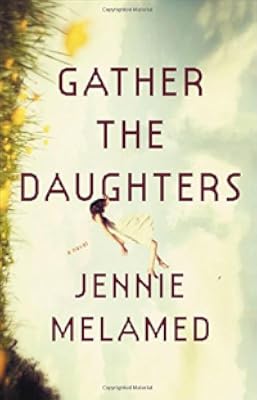

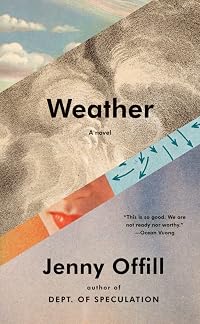
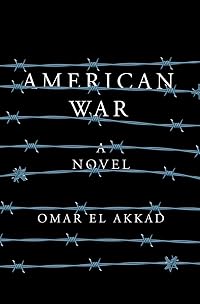
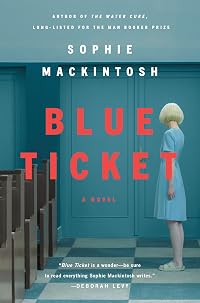

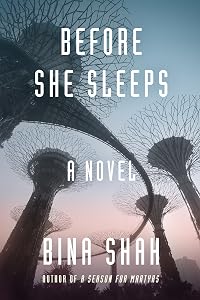
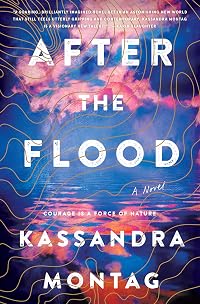

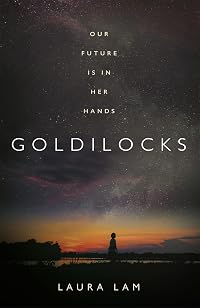

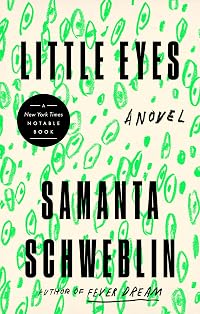
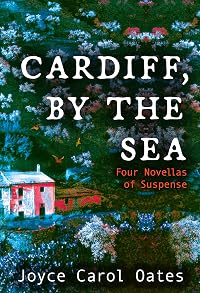
Member Recommendations
Member Reviews
Can Joyce Carol Oates Disappoint?
Sadly, the answer is yes. When it seemed all these years that Joyce Carol Oates had few limitations, that she could tackle any number of topics, from race relations to neuroscience, we discover she has one. What Margaret Atwood terms speculative fiction seems to have stumped her.
Her newest, The Hazards of Time Travel, has little to do with time travel other than as a plot device to set up a pale tale of loneliness, self-discovery, and romance. Yes, time travel is a tricky business, what with all of its inherent pitfalls, and, true, some authors have successfully dispensed with any logical or illogical rationale (think the very successful and appealing The Time Traveler’s Wife, or the wondrously show more rewarding Life After Life). However, these stories offered the reader something else to hold their interest, like plot, characters, family, and locale.
As for the dystopian bits, these really are either poorly thought out, or JCO failed to include her background sketches for the near future, twenty years hence, totalitarian USA. We certainly get her riff on current affairs and the scary tolerance of, and by some desire for, authoritarian government, as well as her pointed observation that affairs can head south in a mere political blink of the eye. She, however, aside from the current situation, gives us little context, and, let’s face it, readers of dystopian fiction adore fleshed out context. For certain, the little she reveals of our near future is scary, but there isn’t enough of it, what there is feels a tad ridiculous, and worst, sorry to say, cartoonish and clichéd, as in “This will make your head explode.”
As for her characterization of the protagonists, Adriane/Mary Ellen and Wolfman, the former strikes a reader as engaging as brittle glass and the latter as too self-absorbed to be the target of anybody’s affection, even a disoriented seventeen-year-old girl’s. The strongest emotion readers, other than those thoroughly attuned to the pining heart of a naive child and an unhappy adult, is indifference.
If all these were not sufficient, JCO has employed a few of her more irritating writing tendencies, in particular here the distance she creates between narrator and subject that stimulates little more than an emotion of boredom, combined with a very annoying constant repetition of a character’s full name that, in a word, is maddening.
Even JCO’s most faithful and forgiving readers may have a problem with this effort. In the novel, Oates includes a nod to virtual reality and virtual worlds (partly in an unsuccessful attempt at introducing ambiguity, something perhaps better left to the real master of this technique, Philip K. Dick). This will lead readers to wonder where the real JCO lurks, for The Hazards of Time Travel must have been authored by an imperfect avatar. show less
Sadly, the answer is yes. When it seemed all these years that Joyce Carol Oates had few limitations, that she could tackle any number of topics, from race relations to neuroscience, we discover she has one. What Margaret Atwood terms speculative fiction seems to have stumped her.
Her newest, The Hazards of Time Travel, has little to do with time travel other than as a plot device to set up a pale tale of loneliness, self-discovery, and romance. Yes, time travel is a tricky business, what with all of its inherent pitfalls, and, true, some authors have successfully dispensed with any logical or illogical rationale (think the very successful and appealing The Time Traveler’s Wife, or the wondrously show more rewarding Life After Life). However, these stories offered the reader something else to hold their interest, like plot, characters, family, and locale.
As for the dystopian bits, these really are either poorly thought out, or JCO failed to include her background sketches for the near future, twenty years hence, totalitarian USA. We certainly get her riff on current affairs and the scary tolerance of, and by some desire for, authoritarian government, as well as her pointed observation that affairs can head south in a mere political blink of the eye. She, however, aside from the current situation, gives us little context, and, let’s face it, readers of dystopian fiction adore fleshed out context. For certain, the little she reveals of our near future is scary, but there isn’t enough of it, what there is feels a tad ridiculous, and worst, sorry to say, cartoonish and clichéd, as in “This will make your head explode.”
As for her characterization of the protagonists, Adriane/Mary Ellen and Wolfman, the former strikes a reader as engaging as brittle glass and the latter as too self-absorbed to be the target of anybody’s affection, even a disoriented seventeen-year-old girl’s. The strongest emotion readers, other than those thoroughly attuned to the pining heart of a naive child and an unhappy adult, is indifference.
If all these were not sufficient, JCO has employed a few of her more irritating writing tendencies, in particular here the distance she creates between narrator and subject that stimulates little more than an emotion of boredom, combined with a very annoying constant repetition of a character’s full name that, in a word, is maddening.
Even JCO’s most faithful and forgiving readers may have a problem with this effort. In the novel, Oates includes a nod to virtual reality and virtual worlds (partly in an unsuccessful attempt at introducing ambiguity, something perhaps better left to the real master of this technique, Philip K. Dick). This will lead readers to wonder where the real JCO lurks, for The Hazards of Time Travel must have been authored by an imperfect avatar. show less
The quality of the language and its flow save this read from disaster. The parallels with the self-repressions of 1959-1960 and the state repressions of the 2010s is good, but for a book which discusses free-will there is nothing but ambiguity to be found.
Can Joyce Carol Oates Disappoint?
Sadly, the answer is yes. When it seemed all these years that Joyce Carol Oates had few limitations, that she could tackle any number of topics, from race relations to neuroscience, we discover she has one. What Margaret Atwood terms speculative fiction seems to have stumped her.
Her newest, The Hazards of Time Travel, has little to do with time travel other than as a plot device to set up a pale tale of loneliness, self-discovery, and romance. Yes, time travel is a tricky business, what with all of its inherent pitfalls, and, true, some authors have successfully dispensed with any logical or illogical rationale (think the very successful and appealing The Time Traveler’s Wife, or the wondrously show more rewarding Life After Life). However, these stories offered the reader something else to hold their interest, like plot, characters, family, and locale.
As for the dystopian bits, these really are either poorly thought out, or JCO failed to include her background sketches for the near future, twenty years hence, totalitarian USA. We certainly get her riff on current affairs and the scary tolerance of, and by some desire for, authoritarian government, as well as her pointed observation that affairs can head south in a mere political blink of the eye. She, however, aside from the current situation, gives us little context, and, let’s face it, readers of dystopian fiction adore fleshed out context. For certain, the little she reveals of our near future is scary, but there isn’t enough of it, what there is feels a tad ridiculous, and worst, sorry to say, cartoonish and clichéd, as in “This will make your head explode.”
As for her characterization of the protagonists, Adriane/Mary Ellen and Wolfman, the former strikes a reader as engaging as brittle glass and the latter as too self-absorbed to be the target of anybody’s affection, even a disoriented seventeen-year-old girl’s. The strongest emotion readers, other than those thoroughly attuned to the pining heart of a naive child and an unhappy adult, is indifference.
If all these were not sufficient, JCO has employed a few of her more irritating writing tendencies, in particular here the distance she creates between narrator and subject that stimulates little more than an emotion of boredom, combined with a very annoying constant repetition of a character’s full name that, in a word, is maddening.
Even JCO’s most faithful and forgiving readers may have a problem with this effort. In the novel, Oates includes a nod to virtual reality and virtual worlds (partly in an unsuccessful attempt at introducing ambiguity, something perhaps better left to the real master of this technique, Philip K. Dick). This will lead readers to wonder where the real JCO lurks, for The Hazards of Time Travel must have been authored by an imperfect avatar. show less
Sadly, the answer is yes. When it seemed all these years that Joyce Carol Oates had few limitations, that she could tackle any number of topics, from race relations to neuroscience, we discover she has one. What Margaret Atwood terms speculative fiction seems to have stumped her.
Her newest, The Hazards of Time Travel, has little to do with time travel other than as a plot device to set up a pale tale of loneliness, self-discovery, and romance. Yes, time travel is a tricky business, what with all of its inherent pitfalls, and, true, some authors have successfully dispensed with any logical or illogical rationale (think the very successful and appealing The Time Traveler’s Wife, or the wondrously show more rewarding Life After Life). However, these stories offered the reader something else to hold their interest, like plot, characters, family, and locale.
As for the dystopian bits, these really are either poorly thought out, or JCO failed to include her background sketches for the near future, twenty years hence, totalitarian USA. We certainly get her riff on current affairs and the scary tolerance of, and by some desire for, authoritarian government, as well as her pointed observation that affairs can head south in a mere political blink of the eye. She, however, aside from the current situation, gives us little context, and, let’s face it, readers of dystopian fiction adore fleshed out context. For certain, the little she reveals of our near future is scary, but there isn’t enough of it, what there is feels a tad ridiculous, and worst, sorry to say, cartoonish and clichéd, as in “This will make your head explode.”
As for her characterization of the protagonists, Adriane/Mary Ellen and Wolfman, the former strikes a reader as engaging as brittle glass and the latter as too self-absorbed to be the target of anybody’s affection, even a disoriented seventeen-year-old girl’s. The strongest emotion readers, other than those thoroughly attuned to the pining heart of a naive child and an unhappy adult, is indifference.
If all these were not sufficient, JCO has employed a few of her more irritating writing tendencies, in particular here the distance she creates between narrator and subject that stimulates little more than an emotion of boredom, combined with a very annoying constant repetition of a character’s full name that, in a word, is maddening.
Even JCO’s most faithful and forgiving readers may have a problem with this effort. In the novel, Oates includes a nod to virtual reality and virtual worlds (partly in an unsuccessful attempt at introducing ambiguity, something perhaps better left to the real master of this technique, Philip K. Dick). This will lead readers to wonder where the real JCO lurks, for The Hazards of Time Travel must have been authored by an imperfect avatar. show less
A thought twisting study of the nature of time and certainty. A young woman is somehow transported to an earlier time by a government that seeks to control thoughts. She meets a psychology teacher that enthralls her. He then vanishes and she somehow gets involved with a young man of the earlier era where she lives. That time seems real and the time she had been taken from seems a fantasy. To some extent the story is a commentary on authoritarianism.
In a future New Jersey where behavior and thinking is tightly controlled, and people are labeled by their loyalty and skin color, an idealistic young woman, valedictorian of her class, writes a seemingly innocent graduation speech consisting only of questions. At rehearsal, Adrianne is very publicly arrested, subsequently tortured and “exiled” back in time to 1959 Wainscotia, Wisconsin. She is told that she has a chip in her brain to prevent further infractions, and that they are else wise monitoring her. She is allowed to go to university here; her name is now Mary Ellen, and she is forbidden to discuss her previous life.
Mary Ellen must adjust to the wonders and horrors of a pre-digital age (and here I can imagine the fun that show more JCO, who was born in ’38, had in recreating the 1959 university scene, complete with typewriters, paper books, and sweater sets). In her isolation and loneliness, she becomes romantically infatuated with a young assistant professor of psychology named Ira Wolfman and imagines he is also another exile from the future. It is this infatuation that drives much of the last half of the book.
This is the age of B. F. Skinner and his theories about human behavior, which he called “radical behaviorism.” There is much in the book about Skinner and the various “current” theories of human behavior. The reader can imagine perhaps how the alternate future might come about and how our heroine and others are being controlled (rats in a maze.…etc.) Wolfman probably gets his name from a famous patient of Freud’s (as has been noted to me) but first thoughts were of the wolf of fairytales (Angela Carter’s work came to mind).
I am both a fan of JCO’s work, and of dystopias—and have read much of both. And while I raced through this book I was ultimately disappointed. Where my expectations too high? Perhaps. The “exquisitely wrought love story” as the book’s jacket describes it, is a young woman’s over-hyped infatuation. In the end I thought the book didn’t know what it wanted to be, and I was unsure of its message — better to live in the “now” wherever that may be? There are far better JCO novels, and far better dystopian novels to read, but see what you think. show less
Mary Ellen must adjust to the wonders and horrors of a pre-digital age (and here I can imagine the fun that show more JCO, who was born in ’38, had in recreating the 1959 university scene, complete with typewriters, paper books, and sweater sets). In her isolation and loneliness, she becomes romantically infatuated with a young assistant professor of psychology named Ira Wolfman and imagines he is also another exile from the future. It is this infatuation that drives much of the last half of the book.
This is the age of B. F. Skinner and his theories about human behavior, which he called “radical behaviorism.” There is much in the book about Skinner and the various “current” theories of human behavior. The reader can imagine perhaps how the alternate future might come about and how our heroine and others are being controlled (rats in a maze.…etc.) Wolfman probably gets his name from a famous patient of Freud’s (as has been noted to me) but first thoughts were of the wolf of fairytales (Angela Carter’s work came to mind).
I am both a fan of JCO’s work, and of dystopias—and have read much of both. And while I raced through this book I was ultimately disappointed. Where my expectations too high? Perhaps. The “exquisitely wrought love story” as the book’s jacket describes it, is a young woman’s over-hyped infatuation. In the end I thought the book didn’t know what it wanted to be, and I was unsure of its message — better to live in the “now” wherever that may be? There are far better JCO novels, and far better dystopian novels to read, but see what you think. show less
I was beyond excited when I heard that one of my favorite authors Joyce Carol Oates had a new novel out. And not only that, it was dystopian, one of my favorite fiction genres! The only thing to make this better would have been if she chose to co-author with Stephen King!
Quite simply, I loved this book. It was thrilling (I had to know what happened next and this was a hard book for me to have to put down), there was a good dose of romance involved, and it was overall captivating. I know most readers are going to pre-judge this book once they hear the description “teen protagonist” and “dystopian setting”. Fear not, this is not another Hunger Games/Divergent wannabe!
The setting & brief history of events describing the show more dystopian setting is eerily reminiscent of today’s political and cultural climate(s). Unlike some dystopian stories, the future in this one is one that doesn’t seem far fetched or hard reaching to imagine happening.
My only complaint about this book is the ending. I so wanted this book to be heftier as Miss Oates’s other works tend to be. I felt there was much more to be told in the protagonist’s story, and wished that certain events would have happened that didn’t come to fruition. show less
Quite simply, I loved this book. It was thrilling (I had to know what happened next and this was a hard book for me to have to put down), there was a good dose of romance involved, and it was overall captivating. I know most readers are going to pre-judge this book once they hear the description “teen protagonist” and “dystopian setting”. Fear not, this is not another Hunger Games/Divergent wannabe!
The setting & brief history of events describing the show more dystopian setting is eerily reminiscent of today’s political and cultural climate(s). Unlike some dystopian stories, the future in this one is one that doesn’t seem far fetched or hard reaching to imagine happening.
My only complaint about this book is the ending. I so wanted this book to be heftier as Miss Oates’s other works tend to be. I felt there was much more to be told in the protagonist’s story, and wished that certain events would have happened that didn’t come to fruition. show less
Great premise, but the execution was lacking. The writing is clear and fluid but not particularly inspired, and gets bogged down in heavy-handed social commentary. GoodReads reports that the book was published in 2018 but it feels more like 2004 at the height of the post 9/11 frenzy of Patriot Act surveillance, Abu Graib/Guantanamo abuses, endless Orwellian wars in far-away places, GW Bush's anti-intellectualism, etc. Reading it now in 2024 it feels two decades out of date.
The other big problem is the story itself. It veers away from the storyline to superficially ponder BF Skinner's behaviourism, the nature of reality, individual vs state power structures, and other mid-20th century pop-psych ideas. But then the story resumes, there's show more an obvious romance, then another one out of the blue. In the end, nothing is really resolved and the book doesn't really go anywhere meaningful. show less
The other big problem is the story itself. It veers away from the storyline to superficially ponder BF Skinner's behaviourism, the nature of reality, individual vs state power structures, and other mid-20th century pop-psych ideas. But then the story resumes, there's show more an obvious romance, then another one out of the blue. In the end, nothing is really resolved and the book doesn't really go anywhere meaningful. show less
Members
- Recently Added By
Lists

Top Five Books of 2018
802 works; 265 members

KayStJ's to-read list
1,616 works; 11 members

Llibres que he llegit el 2024
77 works; 1 member
Author Information

481+ Works 62,308 Members
Joyce Carol Oates was born on June 16, 1938 in Lockport, New York. She received a bachelor's degree in English from Syracuse University and a master's degree in English from the University of Wisconsin. She is the author of numerous novels and collections of short stories. Her works include We Were the Mulvaneys, Blonde, Bellefleur, You Must show more Remember This, Because It Is Bitter, Because It Is My Heart, Solstice, Marya : A Life, and Give Me Your Heart. She has received numerous awards including the National Book Award for Them, the PEN/Malamud Award for Excellence in Short Fiction, and the F. Scott Fitzgerald Award for Lifetime Achievement in American Literature. She was a finalist for the 2015 Pulitzer Prize for Fiction with her title Lovely, Dark, Deep. She also wrote a series of suspense novels under the pseudonym Rosamond Smith. In 2015, her novel The Accursed became listed as a bestseller on the iBooks chart. She worked as a professor of English at the University of Windsor, before becoming the Roger S. Berlind Distinguished Professor of Humanities at Princeton University. She and her late husband Raymond J. Smith operated a small press and published a literary magazine, The Ontario Review. (Bowker Author Biography) Joyce Carol Oates is one of the most eminent and prolific literary figures and social critics of our times. She has won the National Book Award and several O. Henry and Pushcart prizes. Among her other awards are an NEA grant, a Guggenheim fellowship, the PEN/Malamud Lifetime Achievement Award, and the F. Scott Fitzgerald Award for Lifetime Achievement in American Literature. (Publisher Provided) show less
Some Editions
Awards and Honors
Awards
Distinctions
The Guardian Book of the Day (2018-11-29)
Common Knowledge
- Original title
- Hazards of Time Travel
- People/Characters
- Adriane Strohl; Ira Wolfman
- Epigraph
- A self is simply a device for representing a functionally unified system of responses.
R. F. Skinner, Science and Human Behavior - Dedication
- For Stig Björkman,
and for
Charlie Gross - First words
- They would not have come for me, naively I drew their attention to me.
- Last words
- (Click to show. Warning: May contain spoilers.)Stay with us as long as you like.
- Canonical DDC/MDS
- 813.54
- Canonical LCC
- PS3565.A8
Classifications
Statistics
- Members
- 497
- Popularity
- 60,731
- Reviews
- 32
- Rating
- (3.17)
- Languages
- English, French, Italian, Spanish
- Media
- Paper, Audiobook, Ebook
- ISBNs
- 24
- ASINs
- 7