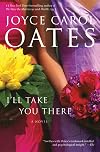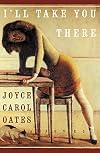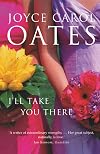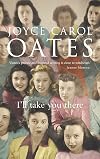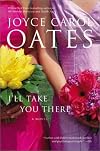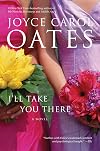
I'll Take You There
by Joyce Carol Oates
On This Page
Description
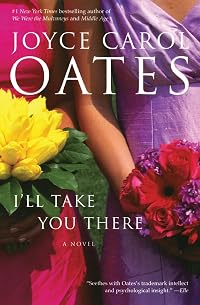
I'll Take You There is told by a woman looking back on her first years of college at Syracuse in the 1970s. Her story, softened by the gauze of memory and the relief of having survived, nonetheless captures a harrowing ordeal of alienation and despair, heightened by a wrenching interracial love affair and her father's death.Cursed by insatiable yearning and constant dissatisfaction, "Anellia" has always been haunted by her mother. With her father and brothers making her feel responsible for show more her mother's death, she longs for acceptance and the warmth of human compassion. When Anellia begins college, she naively seeks that compassion at a sorority house, with disastrous results. Gradually she descends to deeper levels of estrangement, until she is nearly an outcast. She is swept up in a turbulent love affair with a black philosophy student only to be abandoned. Her sense of rejection reaches a turning point when she's called away to be with her dying father.
With deftly cast philosophical meditations—on love, death, identity, the body—I'll Take You There is a portrait of a young woman surprised to discover strength in simply enduring. It is a thought-provoking meditation on the existential questions that arise in burgeoning adulthood, a tender evocation of the dignity and power of young love.
. show less
Tags
Recommendations


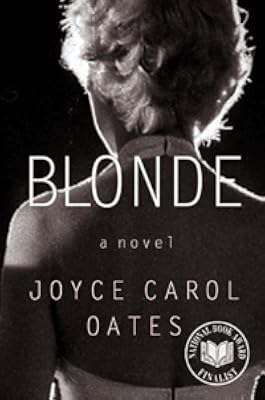
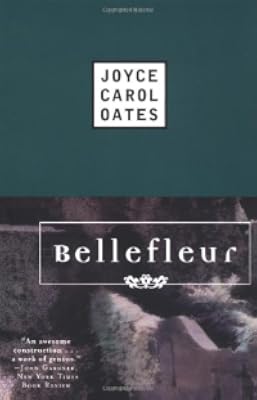
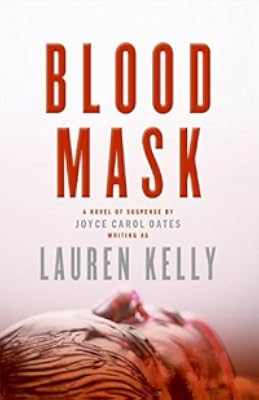



Member Reviews
Finally a Joyce Carol Oates novel that hooked me from page one and kept me hanging on to the bitter end. I'LL TAKE YOU THERE is a pretty real look at college life in the early sixties, especially how it was for an extremely brainy, sensitive girl from a poor farming family there on scholarship. The setting is Syracuse, where Oates herself did her undergraduate years and began writing her first published stories. The narrator calls herself 'Anellia,' though she tells us it is not her real name, but part of an attempt to reinvent herself, to distance herself from her unhappy childhood. We learn she was the youngest of four, and the only girl of an impoverished farm family in upstate New York. Her mother died when she was a baby, and her show more father was rarely home. Raised by an unaffectionate grandmother and ignored by her much older brothers, she hopes joining a sorority will give her the sisters she never had. Nope. She is far too intelligent to fit into the catty pettiness of the sorority, and far too poor to afford it. In her second year she begins a passionate, gritty affair with a black doctoral student in philosophy ten years her senior, a time filled with heartache, uncertainty and ostracism.
If you were a female college student in the sixties, this gripping story will take you back. If you weren't, Joyce Carol Oates will take you there. My very highest recommendation.
- Tim Bazzett, author of the memoir BOOKLOVER show less
If you were a female college student in the sixties, this gripping story will take you back. If you weren't, Joyce Carol Oates will take you there. My very highest recommendation.
- Tim Bazzett, author of the memoir BOOKLOVER show less
JCO's I'll Take You There is set in the early 1960's at a private college in Upstate New York, but it could be set anywhere, at any time in the contemporary era. Like so many of her other books, this is a story with rich character development focusing on people who are broken, struggling with their place in the world, their "otherness", and their inability to conform to socially expected norms.
"Anellia", as she calls herself, is a fish out of water. She's left a working class family embroiled in turmoil and dysfunction to pursue a better life and intellectual development as a scholarship recipient to the University. She's the poor child surrounded by elites with no further ambitions than to find a suitably rich husband - and she's show more promptly exploited for her intelligence, her desire to fit in, and her need to re-create herself.
Anellia fails - and she fails in a big way - but in her failing she learns about accepting herself and develops the ability to recognize and embrace the "outsider" qualities in others. In time, she survives, she thrives, and by the end, she's developing a sense of identity that encompasses her past, present, and future.
I've read several of JCO's books and thought highly of them all. If you're already a fan, this one is certainly worth reading. Whether you were an adult in the early 1960s or hadn't even been born yet, there are many common-points across time about the creation of social groups and the experiences of those who are rejected entry to them. Some things have changed with time, and some things have not, I'll Take You There explores them thoroughly. show less
"Anellia", as she calls herself, is a fish out of water. She's left a working class family embroiled in turmoil and dysfunction to pursue a better life and intellectual development as a scholarship recipient to the University. She's the poor child surrounded by elites with no further ambitions than to find a suitably rich husband - and she's show more promptly exploited for her intelligence, her desire to fit in, and her need to re-create herself.
Anellia fails - and she fails in a big way - but in her failing she learns about accepting herself and develops the ability to recognize and embrace the "outsider" qualities in others. In time, she survives, she thrives, and by the end, she's developing a sense of identity that encompasses her past, present, and future.
I've read several of JCO's books and thought highly of them all. If you're already a fan, this one is certainly worth reading. Whether you were an adult in the early 1960s or hadn't even been born yet, there are many common-points across time about the creation of social groups and the experiences of those who are rejected entry to them. Some things have changed with time, and some things have not, I'll Take You There explores them thoroughly. show less
If you were politically aware in the 1960s, and especially if you were at university around that time, then this book will bring back memories. It's worth reading just for JCO's take on that situation of which she was very much a part. In fact, I reckon there's a lot of autobiography in this novel (I've just recently read her memoir written on the death of her husband, but looking back to their early relationship in the time this book is set). It's much more than of historical interest though. The un-named main character has a personal growth experience with which many readers will find empathy. JCO's perspective added significantly to my understanding of self, but could add much more to a reader who is a white female in a mixed-colour show more society. There's a fairly heavy philosophy orientation which is really integral with the story and enriches it a lot.
JCO also makes a strong bid to rescue the semi-colon from demise, single-handedly using up the whole North American quota for one year :-) . I haven't noticed whether this is a feature of her other stories. show less
JCO also makes a strong bid to rescue the semi-colon from demise, single-handedly using up the whole North American quota for one year :-) . I haven't noticed whether this is a feature of her other stories. show less
Joyce Carol Oates böcker är lätta att känna igen, de är fyllda av känslor och djup , Jag ska ta dig dit är inget undantag. Det är ingen tjock bok ändå så är den fylld av ensamhet och smärta , den känns längre.
Det e inte alla som klarar av Joyce Carol Oates texter, då hans böcker är inte alltid helt lättlästa, men jag tycker de är magiska. :
Det e inte alla som klarar av Joyce Carol Oates texter, då hans böcker är inte alltid helt lättlästa, men jag tycker de är magiska. :
JCO introduces her readers to a fascinating woman in this novel. She is desperate to fit into almost any place that will have her; she seeks identity, companionship and a sense of belonging that has eluded her all of her life. As is often the case, our greatest strength may also be our greatest detriment. "Annelia's" intellectual pursuits and abilities lead her to seek definition through another character, Vernor, who uses and discards her just as her sorority did. I felt intense compassion for Annelia in her quest for friendship and belonging. Often the most vulnerable among us are those most victimized: which comes first? I found the philosophical quotations and discussions that weave through this book in increasing frequency to be an show more integral part of the exploration of the initiation into adulthood. show less
Here is another beautifully written story by Joyce Carol Oates. She perfectly captures the emotions and obsessions of the young protagonist, so that she is scarily easy to relate to. I see pieces of myself in "Anellia," and reading her experiences, I could empathize with her. Oates is a master in weaving stories!
An unflinching view of the life of an obsessive college student describing her run-in with sorority life and her compulsive love for a black philosophy graduate student. Remarkable prose. Piercing and haunting.
Members
- Recently Added By
Lists

Favorite Coming of Age Novels.
164 works; 51 members
Author Information

473+ Works 63,230 Members
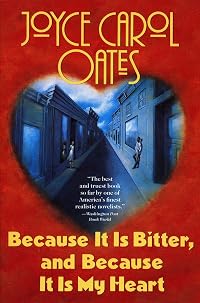
Joyce Carol Oates was born on June 16, 1938 in Lockport, New York. She received a bachelor's degree in English from Syracuse University and a master's degree in English from the University of Wisconsin. She is the author of numerous novels and collections of short stories. Her works include We Were the Mulvaneys, Blonde, Bellefleur, You Must show more Remember This, Because It Is Bitter, Because It Is My Heart, Solstice, Marya : A Life, and Give Me Your Heart. She has received numerous awards including the National Book Award for Them, the PEN/Malamud Award for Excellence in Short Fiction, and the F. Scott Fitzgerald Award for Lifetime Achievement in American Literature. She was a finalist for the 2015 Pulitzer Prize for Fiction with her title Lovely, Dark, Deep. She also wrote a series of suspense novels under the pseudonym Rosamond Smith. In 2015, her novel The Accursed became listed as a bestseller on the iBooks chart. She worked as a professor of English at the University of Windsor, before becoming the Roger S. Berlind Distinguished Professor of Humanities at Princeton University. She and her late husband Raymond J. Smith operated a small press and published a literary magazine, The Ontario Review. (Bowker Author Biography) Joyce Carol Oates is one of the most eminent and prolific literary figures and social critics of our times. She has won the National Book Award and several O. Henry and Pushcart prizes. Among her other awards are an NEA grant, a Guggenheim fellowship, the PEN/Malamud Lifetime Achievement Award, and the F. Scott Fitzgerald Award for Lifetime Achievement in American Literature. (Publisher Provided) show less
Some Editions
Series
Belongs to Publisher Series
Fischer Taschenbuch (51071)
Common Knowledge
- Canonical title
- I'll Take You There
- Original title
- I'll Take You There
- Original publication date
- 2002
- Important places
- Syracuse, New York, USA
- First words
- In those days in the early Sixties we were not women yet but girls.
- Blurbers
- Moreau, Jeanne
Classifications
Statistics
- Members
- 672
- Popularity
- 42,852
- Reviews
- 13
- Rating
- (3.38)
- Languages
- 7 — English, French, German, Greek, Italian, Portuguese, Swedish
- Media
- Paper, Audiobook, Ebook
- ISBNs
- 23
- ASINs
- 5