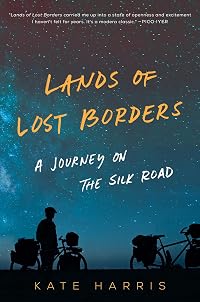
Lands of Lost Borders: A Journey on the Silk Road
by Kate Harris
On This Page
Description
"Lands of Lost Borders carried me up into a state of openness and excitement I haven't felt for years. It's a modern classic."-Pico Iyer A brilliant, fierce writer, and winner of the 2019 RBC Taylor Prize, makes her debut with this enthralling travelogue and memoir of her journey by bicycle along the Silk Road-an illuminating and thought-provoking fusion of The Places in Between, Lab Girl, and Wild that dares us to challenge the limits we place on ourselves and the natural world. As a show more teenager, Kate Harris realized that the career she craved-to be an explorer, equal parts swashbuckler and metaphysician-had gone extinct. From what she could tell of the world from small-town Ontario, the likes of Marco Polo and Magellan had mapped the whole earth; there was nothing left to be discovered. Looking beyond this planet, she decided to become a scientist and go to Mars. In between studying at Oxford and MIT, Harris set off by bicycle down the fabled Silk Road with her childhood friend Mel. Pedaling mile upon mile in some of the remotest places on earth, she realized that an explorer, in any day and age, is the kind of person who refuses to live between the lines. Forget charting maps, naming peaks: what she yearned for was the feeling of soaring completely out of bounds. The farther she traveled, the closer she came to a world as wild as she felt within. Lands of Lost Borders, winner of the 2018 Banff Adventure Travel Award and a 2018 Nautilus Award, is the chronicle of Harris's odyssey and an exploration of the importance of breaking the boundaries we set ourselves; an examination of the stories borders tell, and the restrictions they place on nature and humanity; and a meditation on the existential need to explore-the essential longing to discover what in the universe we are doing here. Like Rebecca Solnit and Pico Iyer, Kate Harris offers a travel account at once exuberant and reflective, wry and rapturous. Lands of Lost Borders explores the nature of limits and the wildness of the self that can never fully be mapped. Weaving adventure and philosophy with the history of science and exploration, Lands of Lost Borders celebrates our connection as humans to the natural world, and ultimately to each other-a belonging that transcends any fences or stories that may divide us. show lessTags
Recommendations


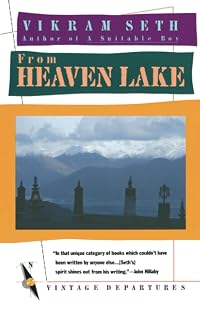

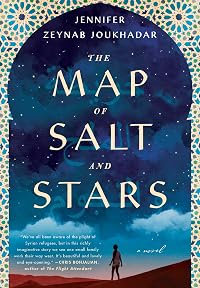
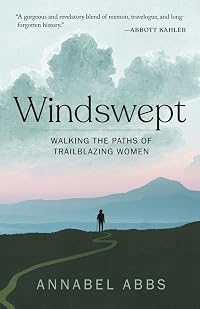
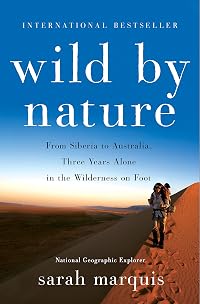

Member Recommendations
Member Reviews
Lands of Lost Borders is a travel memoir that recounts Kate Harris’s bicycle journey along the Silk Road with her friend Mel Yule. They traverse the remote regions of Central Asia, from Turkey to Tibet. Along the way, Harris reflects on her fascination with exploration and drive to live life to the fullest. Their journey takes them through diverse landscapes, such as deserts, mountains, isolated villages, the Steppe, Tibetan Plateau, and hot and humid regions of India. They face numerous challenges such as bureaucracy, governmental restrictions, checkpoints, complex visa processes, suspicious border guards, cultural issues, equipment failures, and adverse weather conditions.
From a young age, Harris was captivated by the idea of show more discovering new worlds, and even aspired to join a trip to Mars one day. Her narrative emphasizes that exploration is not solely about crossing geographical borders but about challenging the limitations we impose on ourselves. Harris and Yule’s journey as female travelers is another important aspect of the book. It portrays two capable women in what has historically been a male-dominated field. Quite a few people they meet are surprised that two women would even attempt such a crossing.
The narrative is nonlinear at times, weaving together present-day experiences on the Silk Road with memories from Harris’s earlier life and reflections on the history of exploration. The structure is episodic, with each chapter focusing on a different stage of the journey or a different theme. I enjoyed it as an example of someone who pushes boundaries and seeks new experiences. While I would never attempt such a journey, I always enjoy learning more about our world from those who do. show less
From a young age, Harris was captivated by the idea of show more discovering new worlds, and even aspired to join a trip to Mars one day. Her narrative emphasizes that exploration is not solely about crossing geographical borders but about challenging the limitations we impose on ourselves. Harris and Yule’s journey as female travelers is another important aspect of the book. It portrays two capable women in what has historically been a male-dominated field. Quite a few people they meet are surprised that two women would even attempt such a crossing.
The narrative is nonlinear at times, weaving together present-day experiences on the Silk Road with memories from Harris’s earlier life and reflections on the history of exploration. The structure is episodic, with each chapter focusing on a different stage of the journey or a different theme. I enjoyed it as an example of someone who pushes boundaries and seeks new experiences. While I would never attempt such a journey, I always enjoy learning more about our world from those who do. show less
After cycling (illegally) across the Tibetan plateau in the university summer vacation, Kate Harris and her primary school friend Melissa come back a few years later to spend a year cycling the entire Silk Road from Istanbul to India. But it turns out that this isn't (just) another of those entertaining stories of punctures, visa problems, goat's-head soup, horrible weather and unwisely-chosen campsites, written to justify the year off from normal life. Harris is a science graduate whose aim since early childhood has been to become an astronaut and go to Mars, and she's also spent part of the time in between the two trips as a Rhodes Scholar in Oxford working on the unintended political impact of scientific exploration, so she spends a show more lot of time digressing from the day-to-day descriptions of travel into reflections on the meaning and purpose of travel and exploration and her own motives in travelling. She also talks a lot about borders, where they come from and what they mean, in the context of the many borders they have to cross in Central Asia. It's a bit of a mixed bag: there are some very obvious observations and some quite profound ones, and she cites interesting, obscure travellers with the same gusto as she pulls out ubiquitous bits of the quotations dictionary. But overall, I found it a thoughtful, stimulating kind of a travel book, certainly a writer to watch out for in the future. show less
Starting 2020 off with a non-fiction. I enjoyed a lot of it but was totally put off by the science in the second part. The ride through the silk road was wonderful and the descriptive writing was enchanting and astonishing. But at times, maybe because there was little to see, it seemed like a rush to go nowhere...which I think she mentioned towards the end.
Yet, I liked it. She quoted my favorite lines from a great movie, Contact"They should have sent a poet"
I also felt that she included a lot of her Oxford thesis about the history of science.
Yet, I liked it. She quoted my favorite lines from a great movie, Contact"They should have sent a poet"
I also felt that she included a lot of her Oxford thesis about the history of science.
Kate Harris grew up dreaming about being an explorer like Marco Polo, but realized she'd been born too late to explore any land that hadn't previously been explored. Plan B was to become an astronaut, until she worked her way to MIT and realized that space exploration is mostly theoretical and always hermetically sealed. Back to Plan A, she decided to bike the Silk Road with a childhood friend, to see parts of the world seldom seen by foreigners, to cross through constantly shifting borders.
"Nationality is babyishness for the most part," said Ralph Waldo Emerson, and for the most part I agreed. The more I learned about the South Caucasus, with its closed borders and warring enclaves, the more the place seemed like a playground game of show more capture-the-flag turned vicious, all in the dubious name of nationalism. And yet political frontiers, while sometimes solid as brick, are finally only as strong as shared belief--the flag-waving faith that the name "Turkey," say, or "Armenia," represents some kind of genuine, immaculate sovereignty, etched out and inviolable. But when Polo traveled through the South Caucasus in the thirteenth century, he visited Silk Road territories long since vanished or metamorphosed, such as Lesser and Greater Hermenia, Turcomania, Georgiana, and Zorzania. "Names are only the guests of reality," the Chinese sage Hsu Yu noted in 2300 BCE, suggesting that borders are little more than collective myths--fictions that a certain number of people, for a certain period of time, believe are fact.
After a brief taste of Ms. Harris's first time sneaking into Tibet (I know! She's insane! And she did it more than once!), she drags through her childhood and academic years, before finally returning to the trip that is the main focus of the book. Overall, the narrative is pretty slow, sprinkled with too many asides about semi-related topics like the Wright brothers. Even though the book isn't terribly long, I feel like some serious editing would make for a more interesting read. My favorite parts of the book, like most travel books, are the interactions with locals, the cultural miscommunications.
After a perfunctory glance at our passports, the Georgian border guards hiked along with us, happy for company on their long patrol.
Back at park headquarters, we spent the evening attempting to interview another Giorgi, this one the head of administration at Lagodekhi Protected Areas. The dark-eyed, bearded man was a younger, swarthier version of our stalwart guide, but unlike Ranger Giorgi, who didn't know any English, this Giorgi spoke "a leetle," which proved less communicative than none at all.
"So what kinds of endangered animals live in the Lagodekhi reserve?" Mel asked.
"No, no, no," said Giorgi dismissively. "There are no dangerous animals here."
"Sorry, I think we've confused you," I tried. "By 'endangered animals,' we mean species at risk."
"No, no, you are not at risk, I am saying!" said Giorgi, indignant. "Ladies, there is no dangers in Lagodekhi!"
And on it went, for about an hour. At which point we gave up, thanked him, and walked away more bewildered than ever. I consoled myself with the fact that the Peace Corps volunteer we'd spoken to the day before had still seemed pretty lost despite living in Lagodekhi for nearly two years. "So what do people do here for a living?" I'd asked. "I'm not...sure," he'd confessed with a helpless, homesick look.
Worth a peruse: The blog that Ms. Harris and her friend, Melissa, kept is Cycling Silk.
Read for book group, March 2019. show less
"Nationality is babyishness for the most part," said Ralph Waldo Emerson, and for the most part I agreed. The more I learned about the South Caucasus, with its closed borders and warring enclaves, the more the place seemed like a playground game of show more capture-the-flag turned vicious, all in the dubious name of nationalism. And yet political frontiers, while sometimes solid as brick, are finally only as strong as shared belief--the flag-waving faith that the name "Turkey," say, or "Armenia," represents some kind of genuine, immaculate sovereignty, etched out and inviolable. But when Polo traveled through the South Caucasus in the thirteenth century, he visited Silk Road territories long since vanished or metamorphosed, such as Lesser and Greater Hermenia, Turcomania, Georgiana, and Zorzania. "Names are only the guests of reality," the Chinese sage Hsu Yu noted in 2300 BCE, suggesting that borders are little more than collective myths--fictions that a certain number of people, for a certain period of time, believe are fact.
After a brief taste of Ms. Harris's first time sneaking into Tibet (I know! She's insane! And she did it more than once!), she drags through her childhood and academic years, before finally returning to the trip that is the main focus of the book. Overall, the narrative is pretty slow, sprinkled with too many asides about semi-related topics like the Wright brothers. Even though the book isn't terribly long, I feel like some serious editing would make for a more interesting read. My favorite parts of the book, like most travel books, are the interactions with locals, the cultural miscommunications.
After a perfunctory glance at our passports, the Georgian border guards hiked along with us, happy for company on their long patrol.
Back at park headquarters, we spent the evening attempting to interview another Giorgi, this one the head of administration at Lagodekhi Protected Areas. The dark-eyed, bearded man was a younger, swarthier version of our stalwart guide, but unlike Ranger Giorgi, who didn't know any English, this Giorgi spoke "a leetle," which proved less communicative than none at all.
"So what kinds of endangered animals live in the Lagodekhi reserve?" Mel asked.
"No, no, no," said Giorgi dismissively. "There are no dangerous animals here."
"Sorry, I think we've confused you," I tried. "By 'endangered animals,' we mean species at risk."
"No, no, you are not at risk, I am saying!" said Giorgi, indignant. "Ladies, there is no dangers in Lagodekhi!"
And on it went, for about an hour. At which point we gave up, thanked him, and walked away more bewildered than ever. I consoled myself with the fact that the Peace Corps volunteer we'd spoken to the day before had still seemed pretty lost despite living in Lagodekhi for nearly two years. "So what do people do here for a living?" I'd asked. "I'm not...sure," he'd confessed with a helpless, homesick look.
Worth a peruse: The blog that Ms. Harris and her friend, Melissa, kept is Cycling Silk.
Read for book group, March 2019. show less
Kate and friend Mel set out on an epic journey which takes them across the famous silk road. Traveling from Turkey to Tibet with on a bicycle with a tent for shelter and a lot of courage and determination, Kate guides the reader along the journey with tales of previous explorers and interesting facts about some of the places along the trip.
The opening of Lands of Lost Borders focuses on the author and her journey through life up to the point where she drops out of MIT and decides to hit the open road in search of adventure. It was interesting getting to know the author and finding out more about what compelled her to embark on an exploration of her own. While I liked the book, I did feel that it dealt a lot with the past and perhaps the show more author's need to convey what she learned in her Master's degree of the History of Science, instead of focusing more on her current travels through some fascinating countries. I would have liked to know more about the local people and their cultures. Sometimes while reading this book, I had the feeling that I, along with the author was a million miles away from the silk road. I'm not sure what I was expecting, but I think I was waiting for more of a connection to the present. The book is, however, well written and it is clear the author put a lot of time and effort into this work.
Thanks to Goodreads and William Morrow for allowing me to read this book in exchange for an honest review.
More reviews at: www.susannesbooklist.blogspot.com show less
The opening of Lands of Lost Borders focuses on the author and her journey through life up to the point where she drops out of MIT and decides to hit the open road in search of adventure. It was interesting getting to know the author and finding out more about what compelled her to embark on an exploration of her own. While I liked the book, I did feel that it dealt a lot with the past and perhaps the show more author's need to convey what she learned in her Master's degree of the History of Science, instead of focusing more on her current travels through some fascinating countries. I would have liked to know more about the local people and their cultures. Sometimes while reading this book, I had the feeling that I, along with the author was a million miles away from the silk road. I'm not sure what I was expecting, but I think I was waiting for more of a connection to the present. The book is, however, well written and it is clear the author put a lot of time and effort into this work.
Thanks to Goodreads and William Morrow for allowing me to read this book in exchange for an honest review.
More reviews at: www.susannesbooklist.blogspot.com show less
The Silk Road - Marco Polo springs to mind and his travels are referenced, though perhaps not as much as I would wish. There are however repeated references to Mars - and the stars. While this is a perfectly reasonable pre-occupation for the author, most of it seemed out of place in the context of this book, which did not endear it to me - a personal view.
No real introspection, perhaps because she's always with friends. Though we learn next to nothing about them, either. I think that solo travel gives more interesting stories.
Instead, in the personal parts, she throws in random pieces of science history. But only utterly mundane trivia that we all already know. She says that she blew off her degree in science history, and it shows.
The writing is always flowery and self-indulgent. Sometimes, it works. But you can only compare yourself to Neil Armstrong so many times before I start to worry about your ego.
Maybe I have just read too many of these stories lately, but I also get tired of privileged Western travelers who plop themselves down in random towns, without any plans or any money, show more unprepared.
> I didn't know, despite my best intentions to learn, how to fix a flat tire.
> Before we left, the family in Rize scribbled another family's name and phone number on a piece of paper, and in this manner Mel and I were passed like batons between generous friends all across Turkey. The challenge was locating our would-be hosts in the next town, for typically they didn’t speak English. We stumbled on a fail-safe tactic: upon arriving we'd head to a busy sidewalk and call the host family's number. As soon as someone picked up, we'd hand the cellphone to a random (and now very confused) Turkish person.
Here are some of the worst and best pieces of writing. You can decide which is which.
> The British Antarctic explorer Apsley Cherry-Garrard claimed that "polar exploration is at once the cleanest and most isolated way of having a bad time which has been devised." Winter bike trips in Turkey might be a close second.
> When I woke the next morning the tent ceiling was constellated with frost. All the stars seemed alien, ungathered, and for a moment I felt unsure what planet I was on, the sky above suspiciously crimson. Then I spotted an earthly landmark in the tent’s laundry line, where two pairs of wool socks and my watch drooped stiffly. I sat up to check the time and accidentally brushed the tent wall, sending the visible universe into supernova. Frost flaked off the ceiling, the fabric of space-time buckled and creased, frozen socks drop-kicked my lap. It was eight in the morning.
> In restricting the range of directions you can travel, in charging ordinary movement with momentum, a bike trip offers that rarest, most elusive of things in our frenetic world: clarity of purpose. Your sole responsibility on Earth, as long as your legs last each day, is to breathe, pedal, breathe—and look around. … Every day on a bike trip is like the one before—but it is also completely different, or perhaps you are different, woken up in new ways by the mile. If anything, the world grew more inscrutable the longer I looked at it, and the less focused I was on the brute mechanics of pedaling—aching legs and lungs, kilometers covered and kilometers to come—the more awake I could be to the world around me, its ordinary wonders.
> After all, the term metaphor comes from the Greek meta (above) and pherein (to carry)—to be carried above, a flight into connection, so that after traveling long and far enough every mountain reminds you of another mountain, every river summons another river, and you learn enough landmarks by which to love the whole world
> The flock poured over the land like light, at once particle and wave, moving up the mountain with a liquid grace that left me stunned. show less
Instead, in the personal parts, she throws in random pieces of science history. But only utterly mundane trivia that we all already know. She says that she blew off her degree in science history, and it shows.
The writing is always flowery and self-indulgent. Sometimes, it works. But you can only compare yourself to Neil Armstrong so many times before I start to worry about your ego.
Maybe I have just read too many of these stories lately, but I also get tired of privileged Western travelers who plop themselves down in random towns, without any plans or any money, show more unprepared.
> I didn't know, despite my best intentions to learn, how to fix a flat tire.
> Before we left, the family in Rize scribbled another family's name and phone number on a piece of paper, and in this manner Mel and I were passed like batons between generous friends all across Turkey. The challenge was locating our would-be hosts in the next town, for typically they didn’t speak English. We stumbled on a fail-safe tactic: upon arriving we'd head to a busy sidewalk and call the host family's number. As soon as someone picked up, we'd hand the cellphone to a random (and now very confused) Turkish person.
Here are some of the worst and best pieces of writing. You can decide which is which.
> The British Antarctic explorer Apsley Cherry-Garrard claimed that "polar exploration is at once the cleanest and most isolated way of having a bad time which has been devised." Winter bike trips in Turkey might be a close second.
> When I woke the next morning the tent ceiling was constellated with frost. All the stars seemed alien, ungathered, and for a moment I felt unsure what planet I was on, the sky above suspiciously crimson. Then I spotted an earthly landmark in the tent’s laundry line, where two pairs of wool socks and my watch drooped stiffly. I sat up to check the time and accidentally brushed the tent wall, sending the visible universe into supernova. Frost flaked off the ceiling, the fabric of space-time buckled and creased, frozen socks drop-kicked my lap. It was eight in the morning.
> In restricting the range of directions you can travel, in charging ordinary movement with momentum, a bike trip offers that rarest, most elusive of things in our frenetic world: clarity of purpose. Your sole responsibility on Earth, as long as your legs last each day, is to breathe, pedal, breathe—and look around. … Every day on a bike trip is like the one before—but it is also completely different, or perhaps you are different, woken up in new ways by the mile. If anything, the world grew more inscrutable the longer I looked at it, and the less focused I was on the brute mechanics of pedaling—aching legs and lungs, kilometers covered and kilometers to come—the more awake I could be to the world around me, its ordinary wonders.
> After all, the term metaphor comes from the Greek meta (above) and pherein (to carry)—to be carried above, a flight into connection, so that after traveling long and far enough every mountain reminds you of another mountain, every river summons another river, and you learn enough landmarks by which to love the whole world
> The flock poured over the land like light, at once particle and wave, moving up the mountain with a liquid grace that left me stunned. show less
Members
- Recently Added By
Lists

History: Asia
103 works; 1 member
Author Information
4+ Works 356 Members
Kate Harris is a writer with a knack for getting lost. Her award-winning nature and travel writing has been featured in Outside, The Walrus, and Canadian Geographic, and cited in The Best American Essays and The Best American Travel Writing. A Rhodes scholar and Morehead-Cain scholar, she has been named one of Canada's top modern-day explorers. show more She is the winner of the RBC Taylor Prize, the Ellen Meloy Desert Writers Award, and a Banff Mountain Book Award. She lives of-grid in a log cabin on the border of the Yukon, British Columbia, and Alaska. This is her first book. show less
Awards and Honors
Awards
Distinctions
Common Knowledge
- Original publication date
- 2018
- Important places
- Silk Road; Tibet; Turkey; Uzbekistan; Azerbaijan
Classifications
Statistics
- Members
- 347
- Popularity
- 91,100
- Reviews
- 8
- Rating
- (3.66)
- Languages
- Chinese, English, German
- Media
- Paper, Audiobook, Ebook
- ISBNs
- 16
- ASINs
- 3