On This Page
Description
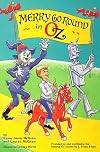
Dorothy, the Cowardly Lion, and Robin Brown, a young boy from Oregon, join old and new friends on a magical quest to solve a mystery.Tags
Recommendations
















Member Reviews
Another landmark Oz book for me and my kid—the last of the Famous Forty! The only memory I have retained of it from my own childhood is the first chapter, where Oregon orphan Robin Brown grabs the brass ring on a merry-go-round and is transported to Oz; literally none of the rest of the book was even remotely familiar as I reread it. This is a shame because as an adult reader, I loved it. This was definitely my favorite post-Baum Oz novel, and to be honest, there's more than a few Baum novels I would say it exceeds too.
The plot owes more to Ruth Plumly Thompson's Oz than Baum's in some ways, reminding of Grampa in Oz in particular, but also Kabumpo in Oz or Purple Prince: the prince of an eccentric, vaguely fairly tale Oz kingdom must show more go on a quest to save his people. (Though unlike in those books, there's no romance element to the quest.) This isn't really the kind of thing Baum went in for, by and large. In this case, the jousting- and genealogy-obsessed Munchkin enclave of Halidom has lost three Golden Circlets that grant its inhabitants strength, intelligence, and skill in handicrafts. Prince Gules goes on a quest to reacquire them, though as he lacks both intelligence and strength, the quest is really being managed by the page Fess, who comes from the neighboring kingdom of Troth; they are accompanied by Fess's pet Flittermouse (half-mouse, half-bat), Gules's steed Fred (who ostentatiously styles himself Federigo, but is secretly descended from a plow-horse), and a fairy Unicorn (supposedly the only unicorn in Oz, but a footnote reminds us there are other unicorns in Oz that the people of Halidom don't know about; see Magic of Oz and Ojo).
Merry Go Round also merges in notes of Gnome King, Yellow Knight, or especially Speedy in its use of a boy American protagonist who gets to Oz in circumstances that are admittedly somewhat dubious and underexplained. Robin Brown is an orphan in foster care who grabs a magic brass ring on a merry-go-round, transporting him to Oz, but also (for reasons never explained) the merry-go-round horse he was riding, which comes to life. He dubs her "Merry Go Round," and he and Merry are of course swept up into a number of adventures as they try to get to the Emerald City, where hopefully Princess Ozma will be able to transport them home and make Merry into a Real Horse.
At first, we go back and forth between the two parties; eventually the book adds in Dorothy and the Cowardly Lion, who are (initially) setting out to see the Easter Bunny to order Easter eggs for an upcoming Easter party in the Emerald City. First Dorothy and the Cowardly Lion encounter the party from Halidom; then all three groups converge in the city of Roundabout, whose inhabitants think Robin is their prophesied king.
I don't think it's a coincidence that coauthor Eloise Jarvis McGraw is basically the only post-Baum "Royal Historian" to have had a career as a children's author outside of the Oz books; indeed, she was a Newbery Honor recipient three different times! More than any other Oz book, this one actually cares about the characters and development of its protagonists. Robin, who always feels passed over, must learn to speak up if he's to help Merry. Gules must learn how to act as a leader. Fess must manage a group of people without letting them know they're being managed. Flitter must learn to be brave. Fred must learn to not be so vain. Merry must learn what a "Real Horse" actually is. All of the McGraws' original characters have little arcs, and while Dorothy and the Cowardly Lion don't really change, she does well by them, too. While the McGraws are clearly imitating Thompson, this is a depth of characterization and theme that Thompson herself never achieved (except, perhaps, in Kabumpo). She's also a more subtle writer than some of her predecessors, with more stuff communicated through allusion at times; I would say the reading level is pitched slightly higher than most Famous Forty books.
It's a large set of characters, and I do think my kid found this a bit hard to keep track of at first; plus, there's a lot of exposition in the first Halidom chapter, and conversely, the lack of direct explanation at some points meant I had to spell things out. But unlike some other Oz books with large casts (e.g., Hidden Valley), the McGraws are very careful to give everyone something meaningful to do, both in terms of little bits of business throughout, also in that every character meaningfully contributes to the problem-solving multiple times. There's, for example, some good gags about the vegetarian food the Cowardly Lion is forced to eat in the Easter Bunny's kingdom, and the escape from the Land of Good Children is an excellent sequence, pure Oz problem solving combined with pure Oz whimsy.
I came to enjoy every single one of these characters, and it seems a shame that though McGraw made two returns to Oz, I don't think she ever followed up on any of these characters. I want to see Robin and Merry come into their own, or what Fess is like as he grows older! (I have a theory about him...) There were a lot of fun, distinct voices to do here. I of course particularly loved doing the over-the-top princely declamations of Prince Gules. The end of the book is good, too; things are wrapped up for everyone quite nicely.
I think it's a long book. (I looked around for a list of Oz book word counts but couldn't find one; some enterprising fan must have done this, though.) It runs the usual twenty-ish chapters, and several Oz books are longer in terms of page count, but I felt like the typeface was smaller and chapters often took almost thirty minutes to read aloud instead of the usual fifteen/twenty. Despite this, we read it less than three weeks (we usually average an Oz book a month) because my kid kept asking for extra chapters, so they must have been into it. They were very into the untangling of the books' two prophecies,* and the finding of the three circlets, and they very much liked the journey map contained in the front of book. I think it was slightly over their head in some spots, in a way no Oz book we've read has been for a while, but in a good way.(The only thing to not like in this regard is more an issue for the child reader than the adult one; by the time the key character of Sir Greves returned in the last couple chapters, I don't think my kid remembered him from the first couple chapters at all!)
Dick Martin illustrates. I didn't care for his take on Dorothy, and he's no John R. Neill, but his style is well-suited to the tone of the book. Like many of the late Famous Forty books, my big issue with the pictures is that there ought to be more of them! show less
The plot owes more to Ruth Plumly Thompson's Oz than Baum's in some ways, reminding of Grampa in Oz in particular, but also Kabumpo in Oz or Purple Prince: the prince of an eccentric, vaguely fairly tale Oz kingdom must show more go on a quest to save his people. (Though unlike in those books, there's no romance element to the quest.) This isn't really the kind of thing Baum went in for, by and large. In this case, the jousting- and genealogy-obsessed Munchkin enclave of Halidom has lost three Golden Circlets that grant its inhabitants strength, intelligence, and skill in handicrafts. Prince Gules goes on a quest to reacquire them, though as he lacks both intelligence and strength, the quest is really being managed by the page Fess, who comes from the neighboring kingdom of Troth; they are accompanied by Fess's pet Flittermouse (half-mouse, half-bat), Gules's steed Fred (who ostentatiously styles himself Federigo, but is secretly descended from a plow-horse), and a fairy Unicorn (supposedly the only unicorn in Oz, but a footnote reminds us there are other unicorns in Oz that the people of Halidom don't know about; see Magic of Oz and Ojo).
Merry Go Round also merges in notes of Gnome King, Yellow Knight, or especially Speedy in its use of a boy American protagonist who gets to Oz in circumstances that are admittedly somewhat dubious and underexplained. Robin Brown is an orphan in foster care who grabs a magic brass ring on a merry-go-round, transporting him to Oz, but also (for reasons never explained) the merry-go-round horse he was riding, which comes to life. He dubs her "Merry Go Round," and he and Merry are of course swept up into a number of adventures as they try to get to the Emerald City, where hopefully Princess Ozma will be able to transport them home and make Merry into a Real Horse.
At first, we go back and forth between the two parties; eventually the book adds in Dorothy and the Cowardly Lion, who are (initially) setting out to see the Easter Bunny to order Easter eggs for an upcoming Easter party in the Emerald City. First Dorothy and the Cowardly Lion encounter the party from Halidom; then all three groups converge in the city of Roundabout, whose inhabitants think Robin is their prophesied king.
I don't think it's a coincidence that coauthor Eloise Jarvis McGraw is basically the only post-Baum "Royal Historian" to have had a career as a children's author outside of the Oz books; indeed, she was a Newbery Honor recipient three different times! More than any other Oz book, this one actually cares about the characters and development of its protagonists. Robin, who always feels passed over, must learn to speak up if he's to help Merry. Gules must learn how to act as a leader. Fess must manage a group of people without letting them know they're being managed. Flitter must learn to be brave. Fred must learn to not be so vain. Merry must learn what a "Real Horse" actually is. All of the McGraws' original characters have little arcs, and while Dorothy and the Cowardly Lion don't really change, she does well by them, too. While the McGraws are clearly imitating Thompson, this is a depth of characterization and theme that Thompson herself never achieved (except, perhaps, in Kabumpo). She's also a more subtle writer than some of her predecessors, with more stuff communicated through allusion at times; I would say the reading level is pitched slightly higher than most Famous Forty books.
It's a large set of characters, and I do think my kid found this a bit hard to keep track of at first; plus, there's a lot of exposition in the first Halidom chapter, and conversely, the lack of direct explanation at some points meant I had to spell things out. But unlike some other Oz books with large casts (e.g., Hidden Valley), the McGraws are very careful to give everyone something meaningful to do, both in terms of little bits of business throughout, also in that every character meaningfully contributes to the problem-solving multiple times. There's, for example, some good gags about the vegetarian food the Cowardly Lion is forced to eat in the Easter Bunny's kingdom, and the escape from the Land of Good Children is an excellent sequence, pure Oz problem solving combined with pure Oz whimsy.
I came to enjoy every single one of these characters, and it seems a shame that though McGraw made two returns to Oz, I don't think she ever followed up on any of these characters. I want to see Robin and Merry come into their own, or what Fess is like as he grows older! (I have a theory about him...) There were a lot of fun, distinct voices to do here. I of course particularly loved doing the over-the-top princely declamations of Prince Gules. The end of the book is good, too; things are wrapped up for everyone quite nicely.
I think it's a long book. (I looked around for a list of Oz book word counts but couldn't find one; some enterprising fan must have done this, though.) It runs the usual twenty-ish chapters, and several Oz books are longer in terms of page count, but I felt like the typeface was smaller and chapters often took almost thirty minutes to read aloud instead of the usual fifteen/twenty. Despite this, we read it less than three weeks (we usually average an Oz book a month) because my kid kept asking for extra chapters, so they must have been into it. They were very into the untangling of the books' two prophecies,* and the finding of the three circlets, and they very much liked the journey map contained in the front of book. I think it was slightly over their head in some spots, in a way no Oz book we've read has been for a while, but in a good way.(The only thing to not like in this regard is more an issue for the child reader than the adult one; by the time the key character of Sir Greves returned in the last couple chapters, I don't think my kid remembered him from the first couple chapters at all!)
Dick Martin illustrates. I didn't care for his take on Dorothy, and he's no John R. Neill, but his style is well-suited to the tone of the book. Like many of the late Famous Forty books, my big issue with the pictures is that there ought to be more of them! show less
One of the late imitation Oz books, which I got more-or-less by accident --I focus on the original Baum series. As the title indicates, a boy (Robin Brown) gets to Oz on a merry go round. There is a modern social touch in that he is a fosterchild from Oregon.
I checked this out of the library when I was in early elementary school (sometime between 1970 and 1974), and even now I remember it fondly. It was one of my favorite Oz books and one of the most memorable. For years afterward, when I rode a merry-go-round I would hope that it would start spinning faster and send me off to Oz.
Copy in excellent with original jacket in Mylar cover
Ratings
Members
- Recently Added By
Lists

Books Read in 2021
5,361 works; 114 members
Author Information

25+ Works 11,792 Members
All Editions
Series


Common Knowledge
- Original publication date
- 1963
- Important places
- Oz
Classifications
Statistics
- Members
- 67
- Popularity
- 465,713
- Reviews
- 4
- Rating
- (3.25)
- Languages
- English
- Media
- Paper
- ISBNs
- 2
- ASINs
- 3