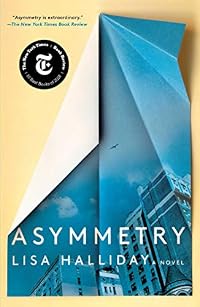
Asymmetry
by Lisa Halliday
On This Page
Description
"Told in three distinct and uniquely compelling sections, Asymmetry explores the imbalances that spark and sustain many of our most dramatic human relations: inequities in age, power, talent, wealth, fame, geography, and justice. The first section, "Folly," tells the story of Alice, a young American editor, and her relationship with the famous and much older writer Ezra Blazer. A tender and exquisite account of an unexpected romance that takes place in New York during the early years of the show more Iraq War, "Folly" also suggests an aspiring novelist's coming-of-age. By contrast, "Madness" is narrated by Amar, an Iraqi-American man who, on his way to visit his brother in Kurdistan, is detained by immigration officers and spends the last weekend of 2008 in a holding room in Heathrow. These two seemingly disparate stories gain resonance as their perspectives interact and overlap, with yet new implications for their relationship revealed in an unexpected coda. A stunning debut from a rising literary star, Asymmetry is an urgent, important, and truly original work that will captivate any reader while also posing arresting questions about the very nature of fiction itself. A debut novel about love, luck, and the inextricability of life and art, from 2017 Whiting Award winner Lisa Halliday" -- show lessTags
Recommendations

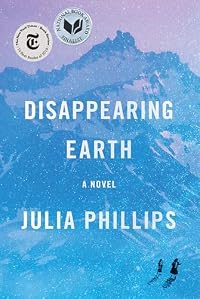
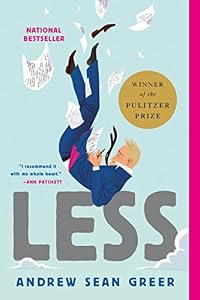

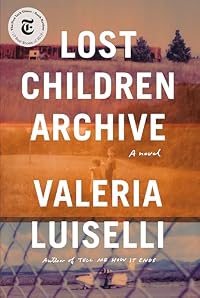
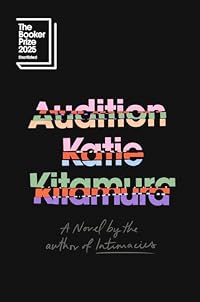
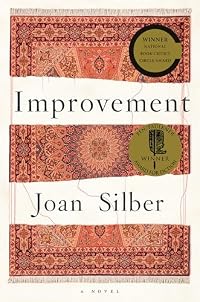
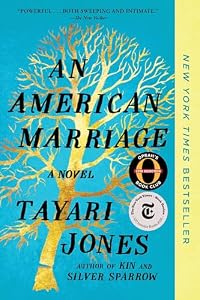
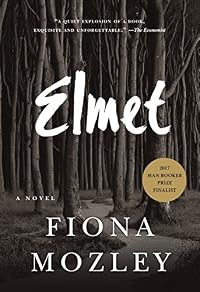

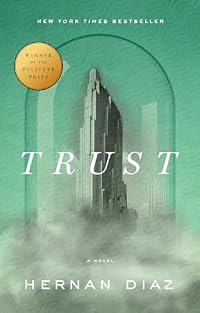

Member Recommendations

Member Reviews
I am nonplussed by this book. I liked the first part very much, though despite its length, it has the characteristics of short stories that I dislike: It seemed fragmentary, a vignette, lacking the development of plot or of characters that novels offer. I wouldn’t have caught on to how the three parts relate to one another if not for the “book club” questions at the end of my e-book edition. And while that seems like an intellectually clever little trick, for me it lacked the emotional resonance that would have given it substance and made it transcend being anything but a clever device. I am puzzled about what some readers seem to find so thought-provoking about it. I’m left feeling that I missed something very significant that show more would have given this book more weight if I caught it. show less
"Some of us wage wars. Others write books. The most delusional ones write books. We have very little choice other than to spend our waking hours trying to sort out and make sense of the perennial pandemonium. To forge patterns and proportions where they don’t actually exist..."
This is an inventive, offbeat novel, that is broken up into 3 sections. The first is a quirky, May-September romance and the second focuses on an Iraqi-American man , being unfairly detained at Heathrow Airport. The similarities slowly begin to reveal themselves, as the narrative advances and it becomes even more interesting, during the unexpected coda.
Obviously this one, is not for everyone, and that is reflected in the mixed reviews it has received. It did show more work for me and I did admire this author's ambition and craftsmanship. A talent to watch. show less
This is an inventive, offbeat novel, that is broken up into 3 sections. The first is a quirky, May-September romance and the second focuses on an Iraqi-American man , being unfairly detained at Heathrow Airport. The similarities slowly begin to reveal themselves, as the narrative advances and it becomes even more interesting, during the unexpected coda.
Obviously this one, is not for everyone, and that is reflected in the mixed reviews it has received. It did show more work for me and I did admire this author's ambition and craftsmanship. A talent to watch. show less
This debut novel by Lisa Halliday is broken into three parts that may or may not be connected. She had a relationship with Philip Roth when she was in her twenties and it is hard to read the book without referring to that romance. There is much to admire in her writing. I especially enjoyed this philosophy a character explains during an interview passage. “It’s human nature to try to impose order and form on even the most defiantly chaotic and amorphous stuff of life. Some of us do it by drafting laws, or by painting lines on the road, or by damming rivers or isolating isotopes or building better bra. Some of us wage wars. Others write books."
That now-old generation of patronizingly sexist and overbearing celebrated male authors gets a mostly tender jabbing here from Halliday, who wryly draws upon her real life “Folly” of sharing Phillip Roth’s bed to sketch out a young blank page of a woman following wherever The Famous One decrepitly leads. She’s kind to herself, and to him, which helps create sympathy for a first-half protagonist who doesn’t demonstrate a great deal of personal agency.
Halliday’s second-half is a clever turn about, fully revealed in a brief ending coda, which now serves up The Famous One without the filter of an underdeveloped pair of rose colored glasses.
Halliday’s second-half is a clever turn about, fully revealed in a brief ending coda, which now serves up The Famous One without the filter of an underdeveloped pair of rose colored glasses.
I'll be thinking about this book for some time. Halliday's structure. The different voices and perspectives. What she says about privilege, class, power, and American culture.
The first and last chapters left me sheathing! I couldn't stomach the lopsided relationship between a young woman (the author) and her much older, famous partner (based on writer Philip Roth).
For the middle chapter, Halliday, like a chimera, shape shifts into the voice of an American-born Iraqi detained at a London airport. We feel his frustration as he waits, but also travel with his thoughts over the experiences that precede the unexpected pause and the questioning he faces as he tries to visit his brother in Iraq. How does a writer so believably bring to life show more someone so different from herself?
Juxtaposed with blunt intention, I'm still considering what the paring of these very different stories means. What it accomplishes is clear: a deeply satisfying read. show less
The first and last chapters left me sheathing! I couldn't stomach the lopsided relationship between a young woman (the author) and her much older, famous partner (based on writer Philip Roth).
For the middle chapter, Halliday, like a chimera, shape shifts into the voice of an American-born Iraqi detained at a London airport. We feel his frustration as he waits, but also travel with his thoughts over the experiences that precede the unexpected pause and the questioning he faces as he tries to visit his brother in Iraq. How does a writer so believably bring to life show more someone so different from herself?
Juxtaposed with blunt intention, I'm still considering what the paring of these very different stories means. What it accomplishes is clear: a deeply satisfying read. show less
Asymmetry comprises 2 novellas and a vignette which to me seem to each stand independent of the others, and by independent I mean they have no connection to one another. I got the feeling the vignette was intended to knit together the novellas, but still I could not discern the connection. This book is written by a very smart writer who has written about very smart people, and I am willing to accept that I may not have understood the connection. That said, I may not be a genius but I believe most people would consider me to be of average or better intelligence; I think it is fair to say that more than half the population would share with me the inability to connect these stories. If I was in a lit course and asked to connect them I show more could write a convincing essay on a post 9-11 world view based solely on people's reactions to Jews and Muslims, with that identity being of far less import to the Jews and Muslims themselves than to the White Christians who actually control what happens in the world. I would be stretching though. There are whiffs of that messaging but I don't think the author really makes that connection, and I am not entirely sure she was trying to make that connection. All this is to say that I decided to review the novellas independently because that is how they read to me.
Both novellas are spectacularly well written. Halliday writes like an editor, and that is a good thing, The stories are perfectly crafted. There is not a spare word, no sentences that are beautiful as diamonds but which do not advance the story. It is clear that Halliday kills her darlings, and I love that in a writer. I love a painting or a sculpture because of how it makes me feel or see the world, but I can spend an hour enthralled by the brushstrokes or nontraditional perspective of a work that as a whole doesn't move me. I revere the work but I also (and nearly equally) revere the craft. The writing craft here succeeds like nobody's business. It is some of the best prose I have ever read, I can see why she and Philip Roth-one of my favorite literary craftsmen-connected. If it were simply about craft, this would have been for me a 5-star read..
When you wield the editor's pen like a scalpel I imagine you leave more words in the bin than on the page. Maybe that is why Halliday didn't make this into two novels? Maybe the more she wrote the less stayed in the manuscript. There was more I wanted to know. Each novella could have been fleshed out (not padded) and would have been more fulfilling for it. I am sure she felt like she said everything she wanted to say with these in the shorter form, but as a reader she did not say everything I wanted to read. Both novellas felt like they had a spectacular beginning and middle and no end at all. I appreciate a writer who makes me do a lot of the work, but in this case I think she left too much open-ended.
A couple notes about the stories themselves. The first, clearly a roman a clef about Halliday's years as Roth's lover, made me feel like a voyeur, and not in an entirely good way. I really enjoyed it, but I felt a little dirty. I know he gave the book his blessing, and God knows he has shared more intimate details about himself than Halliday does here, but it was still a bit squicky for me. It also bothered me that I never fully understood what drew Alice to Ezra. The basis for Ezra's attraction was clear (and not just because we all know Roth was a dirty old man, even when he was still a young man) as she gave him youth and humor and other things that dwindle late in life, and she was his legacy in a way (his not being a father-sort of - was mentioned a lot). I guess I felt like she was very revealing about him, but did not let us know Alice. If she had done that, she would have had that novel, and the story would have been more successful. One quibble, there is a scene where Ezra teaches Alice how to pronounce "Camus" correctly (she has pronounced it as rhyming with "Seamus.") Really? Alice went to Harvard and worked at a major publishing house. She would have heard Camus' name pronounced aloud dozens if not hundreds of times, and she would know how to pronounce French words even if she had never heard them. If Halliday wanted to convey that Ezra was an intellectual and literary guide to Alice, this was a silly device. I assume it was an inside joke, but it bugged me.
The second novella was really intriguing. I love the idea of entering the memories of this brilliant man, Iraqi but not very, Muslim but not very, defined and limited by others' identification of him as no more than an Iraqi Muslim. I wanted more from this story too, more about Amar's family, more about his friends and his life in America, not just his connections to Iraq. What was here was exceptional, but it was not enough.
The vignette -- I don't know. it was fine. The inside Scottish jokes and a rundown of what I imagine might really have been Roth's desert island disks were vaguely amusing. His stories of his father mirrored in some ways the immigrant tale of Amar's family. Again, I think it was supposed to tie together the stories, and that did not work for me. Actually, this rash of books with dual stories that do not connect at the end in a gratifying way, this book as well as the last Nicole Krauss and Jonathan Safran Foer books jump to mind, is starting to get on my nerves.
(ETA: It has been pointed out to me that Alice, the character in the first novella is identified as the writer of the second in that final vignette and elsewhere. I completely missed that. Still, this felt like parts of two unfinished novels.)
In the end I enjoyed the read. I thought about things is a way I have not done before. I liked the stories but felt they were incomplete. She left me wanting more, and there are much worse offenses for a writer. show less
Both novellas are spectacularly well written. Halliday writes like an editor, and that is a good thing, The stories are perfectly crafted. There is not a spare word, no sentences that are beautiful as diamonds but which do not advance the story. It is clear that Halliday kills her darlings, and I love that in a writer. I love a painting or a sculpture because of how it makes me feel or see the world, but I can spend an hour enthralled by the brushstrokes or nontraditional perspective of a work that as a whole doesn't move me. I revere the work but I also (and nearly equally) revere the craft. The writing craft here succeeds like nobody's business. It is some of the best prose I have ever read, I can see why she and Philip Roth-one of my favorite literary craftsmen-connected. If it were simply about craft, this would have been for me a 5-star read..
When you wield the editor's pen like a scalpel I imagine you leave more words in the bin than on the page. Maybe that is why Halliday didn't make this into two novels? Maybe the more she wrote the less stayed in the manuscript. There was more I wanted to know. Each novella could have been fleshed out (not padded) and would have been more fulfilling for it. I am sure she felt like she said everything she wanted to say with these in the shorter form, but as a reader she did not say everything I wanted to read. Both novellas felt like they had a spectacular beginning and middle and no end at all. I appreciate a writer who makes me do a lot of the work, but in this case I think she left too much open-ended.
A couple notes about the stories themselves. The first, clearly a roman a clef about Halliday's years as Roth's lover, made me feel like a voyeur, and not in an entirely good way. I really enjoyed it, but I felt a little dirty. I know he gave the book his blessing, and God knows he has shared more intimate details about himself than Halliday does here, but it was still a bit squicky for me. It also bothered me that I never fully understood what drew Alice to Ezra. The basis for Ezra's attraction was clear (and not just because we all know Roth was a dirty old man, even when he was still a young man) as she gave him youth and humor and other things that dwindle late in life, and she was his legacy in a way (his not being a father-sort of - was mentioned a lot). I guess I felt like she was very revealing about him, but did not let us know Alice. If she had done that, she would have had that novel, and the story would have been more successful. One quibble, there is a scene where Ezra teaches Alice how to pronounce "Camus" correctly (she has pronounced it as rhyming with "Seamus.") Really? Alice went to Harvard and worked at a major publishing house. She would have heard Camus' name pronounced aloud dozens if not hundreds of times, and she would know how to pronounce French words even if she had never heard them. If Halliday wanted to convey that Ezra was an intellectual and literary guide to Alice, this was a silly device. I assume it was an inside joke, but it bugged me.
The second novella was really intriguing. I love the idea of entering the memories of this brilliant man, Iraqi but not very, Muslim but not very, defined and limited by others' identification of him as no more than an Iraqi Muslim. I wanted more from this story too, more about Amar's family, more about his friends and his life in America, not just his connections to Iraq. What was here was exceptional, but it was not enough.
The vignette -- I don't know. it was fine. The inside Scottish jokes and a rundown of what I imagine might really have been Roth's desert island disks were vaguely amusing. His stories of his father mirrored in some ways the immigrant tale of Amar's family. Again, I think it was supposed to tie together the stories, and that did not work for me. Actually, this rash of books with dual stories that do not connect at the end in a gratifying way, this book as well as the last Nicole Krauss and Jonathan Safran Foer books jump to mind, is starting to get on my nerves.
(ETA: It has been pointed out to me that Alice, the character in the first novella is identified as the writer of the second in that final vignette and elsewhere. I completely missed that. Still, this felt like parts of two unfinished novels.)
In the end I enjoyed the read. I thought about things is a way I have not done before. I liked the stories but felt they were incomplete. She left me wanting more, and there are much worse offenses for a writer. show less
One of the most praised US novels of 2018; it's on many Best of Year lists and it has a juicy backstory to boot. I liked parts of it much more than I expected to, but other parts were as bad as I'd feared. Halliday is an excellent mimic, and the characters and settings which are well known to her are often beautifully done. But when she ventures into territory with which she is less familiar, well, here we go again.
I won't recap the plot and structure because it's been the focus of so much of the coverage. Suffice it to say that there are two medium and one short parts, with the first two seeming almost entirely unrelated until the third part, which reveals the connections among all three. This architecture has been much admired, and show more it's understandable. There are hints and easter eggs sprinkled throughout the first two parts which reward close attention but don't feel gimmicky as you read them. And the three parts have very different tonal and stylistic registers, which accentuates their sense of separateness and enhances (for me) the ways in which they eventually come together.
The first part, "Folly," is narrated by Mary-Alice Dodge, a Harvard grad in her mid-20s who is an editor at a prestigious NY publishing house. One afternoon she shares a park bench with an old man, with whom she eventually begins a relationship. The man turns out to be Ezra Blazer, a world-famous novelist who has won every meaningful US literary award; can the Nobel be far behind? Blazer is a pitch-perfect rendition of a 20thC US Great American Novelist. He's based on Philip Roth but you can swap in Saul Bellow and some others and it would still work.
Dan Friedman has written an excellent account of this section in his review: https://www.goodreads.com/review/show.... Read that because I can't top it. I expected to hate this part but I was swept up into the story despite myself. It's very well written and the style works to de-creepify the 25/72 age spread as far as is possible. Alice's POV is muted, as are the emotions, although details are not spared. You do get a sense of why these two people are attracted to each other and why such a relationship is probably a poisoned chalice for Mary-Alice, no matter how fascinating it is for an aspiring author to be in such close proximity to literary creative genius.
And trust me, the baseball parts are key to the verisimilitude. If you know anything about the relationship of baseball and US male-centric literature, you'll recognize what it's doing here. The one misstep for me was the idea that Mary-Alice wouldn't know the great writers that Ezra gives her to read as part of his tutelage. Four years at Harvard, three years and counting at a FSG-type publishing house, and she doesn't know how to prounouce Camus? Yeah, no.
But overall, I admired the first part quite a bit. Then came "Folly," which tells the story of Amar, an Iraqi-American economist who is being detained at Heathrow during a quick stopover between London and Istanbul (he's on his way to Iraq to find out what has happened to his brother Sami). The chapters alternate, between the terrifying mundanity of detention where no one will tell you what is happening but you aren't allowed to leave, and Amar's flashbacks to his past. That past starts when he is a small boy in Bay Ridge, Brooklyn, continues through his Columbia college years and internship in London, trips back and forth to Iraq, and eventual PhD course in economics in LA. The problem I had with Amar was that I never believed in him as a character, not for a moment. Despite being an empiricist, he's incredibly well read in world literature. Despite being born in the 1970s, he's a big fan of jazz artists like Chet Baker. Sure, it's possible, but it's unlikely. He doesn't feel like an economist, or even a doctor-turned economist. He feels like a construct. He frets about not being able to write about Iraq in the 2000s, when he should be fretting about not writing his dissertation. In fact, neither Amar nor Sami feel like immigrant kids raised in the 1980s. They're more like contemporary versions of Ezra's background, which kind of makes sense when you realize what the section is about, but makes no sense when you're reading their story.
On top of Amar-as-construct, though, there's Iraq-as-construct. Amar goes back to Iraq regularly, and his last major trips are after the 2003 US invasion. These sections read like every novel or "creative nonfiction" piece written by Westerners about the Arab Middle East. There are gruesome scenes in hospitals. There are citizen-philosophers who wax lyrically about East-meets-West and cross-cultural rapport (can it really happen? The jury continues to be out), there are car bombs and family gatherings. The women are almost entirely silent, for reasons that I have never understood but see over and over again in these depictions.
Most oddly, however, in all these scenes, the US military is almost entirely absent. Yes, they're the reason all these things have happened. But they are not *present*. Imagine writing a story about the USSR without the government. Or British India without the Raj. That's what this feels like. And Amar barely thinks about what being Iraqi-American means post 2003, except for one or two completely unbelievable moments. Compare Amar to the title character in Mohsin Hamid's The Reluctant Fundamentalist. Compare Halliday's Baghdad to the city in Frankenstein in Baghdad, and you'll realize how weird this all is. And honestly, the big reveal about this section doesn't help. It just makes it feel *more* Western-focused. Also, stylistically, this section is way overwritten and flowery, with infodumps and set-piece orations.
Once we leave Amar and enter the last and shortest section, the novel improves. Ezra returns as the guest in a pitch-perfect depiction of an episode of Desert Island Discs. He's funny, and he's so rude and lecherous that he's almost charming. He neatly ties up the loose ends and then we are done.
I can see why reviewers, especially those who are writers and literary critics, have been so effusive about this debut novel's stylistic achievements. But I am fed up to here with reading novels in which white authors try to understand the post 9/11 world by writing about Muslims. If they really want to understand *their* post 9/11 world, they need to look in their class- and ethnically segregated communities and start working on the truths that are staring them in the face right there. show less
I won't recap the plot and structure because it's been the focus of so much of the coverage. Suffice it to say that there are two medium and one short parts, with the first two seeming almost entirely unrelated until the third part, which reveals the connections among all three. This architecture has been much admired, and show more it's understandable. There are hints and easter eggs sprinkled throughout the first two parts which reward close attention but don't feel gimmicky as you read them. And the three parts have very different tonal and stylistic registers, which accentuates their sense of separateness and enhances (for me) the ways in which they eventually come together.
The first part, "Folly," is narrated by Mary-Alice Dodge, a Harvard grad in her mid-20s who is an editor at a prestigious NY publishing house. One afternoon she shares a park bench with an old man, with whom she eventually begins a relationship. The man turns out to be Ezra Blazer, a world-famous novelist who has won every meaningful US literary award; can the Nobel be far behind? Blazer is a pitch-perfect rendition of a 20thC US Great American Novelist. He's based on Philip Roth but you can swap in Saul Bellow and some others and it would still work.
Dan Friedman has written an excellent account of this section in his review: https://www.goodreads.com/review/show.... Read that because I can't top it. I expected to hate this part but I was swept up into the story despite myself. It's very well written and the style works to de-creepify the 25/72 age spread as far as is possible. Alice's POV is muted, as are the emotions, although details are not spared. You do get a sense of why these two people are attracted to each other and why such a relationship is probably a poisoned chalice for Mary-Alice, no matter how fascinating it is for an aspiring author to be in such close proximity to literary creative genius.
And trust me, the baseball parts are key to the verisimilitude. If you know anything about the relationship of baseball and US male-centric literature, you'll recognize what it's doing here. The one misstep for me was the idea that Mary-Alice wouldn't know the great writers that Ezra gives her to read as part of his tutelage. Four years at Harvard, three years and counting at a FSG-type publishing house, and she doesn't know how to prounouce Camus? Yeah, no.
But overall, I admired the first part quite a bit. Then came "Folly," which tells the story of Amar, an Iraqi-American economist who is being detained at Heathrow during a quick stopover between London and Istanbul (he's on his way to Iraq to find out what has happened to his brother Sami). The chapters alternate, between the terrifying mundanity of detention where no one will tell you what is happening but you aren't allowed to leave, and Amar's flashbacks to his past. That past starts when he is a small boy in Bay Ridge, Brooklyn, continues through his Columbia college years and internship in London, trips back and forth to Iraq, and eventual PhD course in economics in LA. The problem I had with Amar was that I never believed in him as a character, not for a moment. Despite being an empiricist, he's incredibly well read in world literature. Despite being born in the 1970s, he's a big fan of jazz artists like Chet Baker. Sure, it's possible, but it's unlikely. He doesn't feel like an economist, or even a doctor-turned economist. He feels like a construct. He frets about not being able to write about Iraq in the 2000s, when he should be fretting about not writing his dissertation. In fact, neither Amar nor Sami feel like immigrant kids raised in the 1980s. They're more like contemporary versions of Ezra's background, which kind of makes sense when you realize what the section is about, but makes no sense when you're reading their story.
On top of Amar-as-construct, though, there's Iraq-as-construct. Amar goes back to Iraq regularly, and his last major trips are after the 2003 US invasion. These sections read like every novel or "creative nonfiction" piece written by Westerners about the Arab Middle East. There are gruesome scenes in hospitals. There are citizen-philosophers who wax lyrically about East-meets-West and cross-cultural rapport (can it really happen? The jury continues to be out), there are car bombs and family gatherings. The women are almost entirely silent, for reasons that I have never understood but see over and over again in these depictions.
Most oddly, however, in all these scenes, the US military is almost entirely absent. Yes, they're the reason all these things have happened. But they are not *present*. Imagine writing a story about the USSR without the government. Or British India without the Raj. That's what this feels like. And Amar barely thinks about what being Iraqi-American means post 2003, except for one or two completely unbelievable moments. Compare Amar to the title character in Mohsin Hamid's The Reluctant Fundamentalist. Compare Halliday's Baghdad to the city in Frankenstein in Baghdad, and you'll realize how weird this all is. And honestly, the big reveal about this section doesn't help. It just makes it feel *more* Western-focused. Also, stylistically, this section is way overwritten and flowery, with infodumps and set-piece orations.
Once we leave Amar and enter the last and shortest section, the novel improves. Ezra returns as the guest in a pitch-perfect depiction of an episode of Desert Island Discs. He's funny, and he's so rude and lecherous that he's almost charming. He neatly ties up the loose ends and then we are done.
I can see why reviewers, especially those who are writers and literary critics, have been so effusive about this debut novel's stylistic achievements. But I am fed up to here with reading novels in which white authors try to understand the post 9/11 world by writing about Muslims. If they really want to understand *their* post 9/11 world, they need to look in their class- and ethnically segregated communities and start working on the truths that are staring them in the face right there. show less
Members
- Recently Added By
Published Reviews
ThingScore 94
An exceptional debut examines imbalances in love and geopolitics.
Halliday’s structure shows exquisite control of leitmotif and patterning; each half gradually intensifies in emotion to reach a devastating climax. The weakest note is the epilogue, a transcript of a Desert Island Discs interview, in which Blazer is reported to have won the Nobel Prize, approves of the method of the novel we show more are close to finishing, and attempts to seduce Kirsty Young, the presenter. I see why it is there: to make it easier for the reader to connect the two narratives that have gone before, but it lacks their lightness of touch. Blazer’s record choices do, however, make for a great playlist, and listening to them will call further attention to the ambitious music of this exceptional debut. show less
Halliday’s structure shows exquisite control of leitmotif and patterning; each half gradually intensifies in emotion to reach a devastating climax. The weakest note is the epilogue, a transcript of a Desert Island Discs interview, in which Blazer is reported to have won the Nobel Prize, approves of the method of the novel we show more are close to finishing, and attempts to seduce Kirsty Young, the presenter. I see why it is there: to make it easier for the reader to connect the two narratives that have gone before, but it lacks their lightness of touch. Blazer’s record choices do, however, make for a great playlist, and listening to them will call further attention to the ambitious music of this exceptional debut. show less
added by sneuper
Lisa Halliday’s striking debut is certainly – as the title implies – a sharp examination of the unequal power dynamic between men and women, innocence and experience, fame and aspiration. Through its fractured structure and daring incompleteness, it also explores the unreliability of memory, the accidents of history and the exercise and understanding of creativity. Most of all, it show more wonders whether we can ever “penetrate the looking-glass” of our own personality to imagine another consciousness – a question as relevant to human relationships as it is to novel writing. (...)
Can any of us escape our own perspective? What are the risks, if we do not? What is art for, and how do we fit our lives around it? This is a debut asking a dizzying number of questions, many to thrilling effect. That it leaves the reader wondering is a mark of its success. show less
Can any of us escape our own perspective? What are the risks, if we do not? What is art for, and how do we fit our lives around it? This is a debut asking a dizzying number of questions, many to thrilling effect. That it leaves the reader wondering is a mark of its success. show less
added by sneuper
And that is the magic of this exquisite, impressive book: the way it plays with influence and assumption. As Ezra notes, “Our memories are no more reliable than our imaginations, after all. But I’m the first to admit it can be irresistible, contemplating what’s ‘real’ versus ‘imagined’ in a novel.”
(...) For us, the ride is in surrendering to falling down rabbit holes to unknown show more places. The moment “Asymmetry” reaches its perfect ending, it’s all the reader can do to return to the beginning in awe, to discover how Halliday upturned the story again and again. show less
(...) For us, the ride is in surrendering to falling down rabbit holes to unknown show more places. The moment “Asymmetry” reaches its perfect ending, it’s all the reader can do to return to the beginning in awe, to discover how Halliday upturned the story again and again. show less
added by sneuper
Lists

Top Five Books of 2018
802 works; 265 members

Vulture's 100 Best Books of the 21st Century (So Far)
98 works; 9 members

Books Read in 2020
4,379 works; 124 members

Kirkus Starred Fiction Reviews of Books Published in 2018
330 works; 3 members

Publishers Weekly Best Books of the Week / Starred Reviews 2018
78 works; 2 members

Amazon best fictional genre picks monthly for 2018
418 works; 9 members

Obama Reads
181 works; 3 members

Books Read in 2018
4,360 works; 110 members

Books recommended by Barack Obama
295 works; 28 members

Books Read in 2019
4,052 works; 108 members

Barack Obama's Favorite Books of 2018
29 works; 2 members
Author Information

5+ Works 1,217 Members
Some Editions
Awards and Honors
Awards
Distinctions
Series
Belongs to Publisher Series
Gallimard, Folio (6871)
Common Knowledge
- Canonical title
- Asymmetry
- Original publication date
- 2018
- Important places
- Iraq; New York, New York, USA
- Dedication
- For Theo
- First words
- Alice was beginning to get very tired of all this sitting by herself with nothing to do: every so often she tried again to read the book in her lap, but it was made up almost exclusively of long paragraphs, and no quotation m... (show all)arks whatsoever, and what is the point of a book, thought Alice, that does not have any quotation marks?
- Quotations
- ...for a moment Alice saw what she supposed other people would see: a healthy young woman losing time with a decrepit old man.
The pianist returned to her bench...she flung up her wrists, flared her nostrils...the woman’s shoulders rocked forward and back, her foot pumped the damper pedal so
emphatically that even her heel cleared the floor, and... (show all) her head jerked wincingly up and to the side as if sparks were flying off the keyboard and threatening to enter here eyes. - Last words
- (Click to show. Warning: May contain spoilers.)Are you game?
Classifications
Statistics
- Members
- 1,213
- Popularity
- 20,283
- Reviews
- 60
- Rating
- (3.52)
- Languages
- 9 — Danish, Dutch, English, French, German, Italian, Portuguese, Spanish, Swedish
- Media
- Paper, Audiobook, Ebook
- ISBNs
- 28
- ASINs
- 6