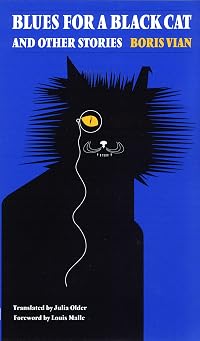
Blues for a Black Cat & Other Stories
by Boris Vian
On This Page
Description
A cocky black cat that drinks cognac and can't stay out of holes, a hyperactive plumber who pulls out all the stops, an expiring jazzman who sells his sweat, a green soldier who moves into a terribly serious position - these are a few of the outrageous and poignant creations of Boris Vian in Blues for a Black Cat and Other Stories. Julia Older makes available for the first time in English this collection of his short fiction, which was originally published as Les Fourmis. In 1949. It is a show more delightful introduction to the work of a much-admired French poet, playwright, and song-writer whose celebrity has continued to grow since his untimely death in 1959. These early stories, written in 1944 and 1945, reveal that Vian was already a master of black humor, wordplay, elegant understatement, and leaps of fancy. "Blues for a Black Cat," bubbling with Vian's sense of mischief and evocative of his love for jazz, shows the seamier side of postwar. Parisian night life. "The Plumber" is the nightmare of every citizen who has been incommoded by expensive repairmen. "Pins and Needles" conveys Vian's daring opposition to World War II (his song "The Deserter" later would be censored by the government for inciting sentiment against the French-Algerian conflict). The other stories - "Cancer," "Dead Fish," "Journey to Khonostrov," "Blue Fairy Tale," "Fog," "Good Students," and "One-Way Street"--Are marked by the same. Verbal Niagaras, zany sexual encounters, and absurd situations. But, as Julia Older points out, parody only heightens the masked terrors of war, poverty, ill health, and unemployment that hound the bizarre protagonists of Vian's fablelike narratives. show lessTags
Recommendations




















Member Reviews
I suspect that I'm missing a lot of the wordplay in the transition to English but it was frequently funny with many sardonic observations. Vian played with the conventions of Storytelling and many of the stories finish with a pleasing sting in the tale. The title story 'Blues for a Black Cat' is at once charming and brutal while 'Journey to Khonostrov' is a bit like Pinter in its silent character who provokes the barbarism of a group when he refuses to observe the conventions of conversation. 'Dead Fish' was maybe the most bizarre and affecting with a pathetic tale of a man who fishes for brains and contends with an intimidating boss while living in a hole and gaining succour from an unidentified 'living thing'. 'The Plumber seemed a show more weaker story with lots of technical detail as in some other stories and I wasn't sure if this was for comic effect as in some absurd literature or just a reflection of Vian the Engineer. Anyway it had me longing for the more surreal lines in the book like 'It was raining octopi'. Overall then, the book was to my taste in its bizarre characters and incident but I didnt enjoy absolutely every line of it. show less
Boris Vian (1920-59) led a rather too short life on this earth. But, within that 39 years, he wrote 10 novels, 42 short stories, 7 theatre pieces, 400 songs, 4 poetry collections, 6 opera libretti, 20 short story and novel translations. He was praised by stalwarts like Jean Paul Sartre, Louis Malle and Eugene Ionesco. His novels range from metaphysical fantasies to hardcore potboilers. “Blues for a Black Cat” is probably his only short story collection translated into English.
This anthology, consisting of 10 brilliant short stories, provides a perfect introduction to the world of Vian—a world full of feverish imagination and uncouth happenings. To give an idea, let me cite one or two examples—in these short stories, you’ll show more find a musician who earns his living by selling his sweat, a cat which has a distinct British accent, and a group of people travelling in train who brutally torture a fellow-traveller for not being talkative enough. In short, it is an explosion of unrestrained imagination which leaves the reader gasping for breath.
But, are these short stories nothing but fantasies, mere spurt of fretful daydreaming, full of clever wordplays and creative juggleries? Sorry, I beg to differ. Through these brilliant fireworks of Vian’s imagination one cannot fail to notice a gloomy world, full of pain and suffering. Vian repeatedly highlights the absurdity of our existence—an existence blighted by oppression, terror and helplessness. That’s why, Vian’s characters are so much plagued by unruly gadgets, brutal superiors or heartless fellow creatures. Also, Vian’s radically transgressive logic hints at the basic irrationality of the world surrounding us. His attitude is quite similar to that of Beckett or Ionesco, but more playful and a lot more mischievous. His scathing black humour reveals the raging mind behind all the apparent fun and fanfare.
Here, I want to specially mention the story “Pins and Needles”, a vitriolic analysis of a war-ridden era. Though one can safely assume that the story describes the landing of allied force in France, the incidents actually take place in an ambiguous time and space. As a reviewer aptly puts it—
“The unstable, shifting nature of Vian's prose—alternating here between deadpan serious and craftily naive—perfectly captures the confusion of the battlefield, rendering the horrendously violent subject matter as black humour of a deeply chilling variety. More than a parody of battlefield horrors, unnerving enough as that may be, the story turns one of the most hallowed battles of recent history into an absurdist melange of death, dismemberment and pain, signifying nothing. An excerpt: "We got behind the tank. I went last because I don't have much confidence in the brakes of those contraptions.... But I don't like the tank's manner of reducing corpses to a pulp with the sort of noise that's hard to remember--at the time you hear it, though, it's pretty unmistakable."”
“Pins and Needles” is probably the best anti-war story I’ve come across, painstakingly revealing the absurdity of war and its meaninglessnes.
Due to his abhorrence to the Cartesian logic of “Cogito Ergo Sum”, Vian became interested in Pataphysics and, as a reviewer rightfully says, “Blues for a Black Cat” betrays “Vian's Pataphysical sensibility and love of language play”. Above all, Vian’s stories are much too funny to be carelessly laughed at. show less
This anthology, consisting of 10 brilliant short stories, provides a perfect introduction to the world of Vian—a world full of feverish imagination and uncouth happenings. To give an idea, let me cite one or two examples—in these short stories, you’ll show more find a musician who earns his living by selling his sweat, a cat which has a distinct British accent, and a group of people travelling in train who brutally torture a fellow-traveller for not being talkative enough. In short, it is an explosion of unrestrained imagination which leaves the reader gasping for breath.
But, are these short stories nothing but fantasies, mere spurt of fretful daydreaming, full of clever wordplays and creative juggleries? Sorry, I beg to differ. Through these brilliant fireworks of Vian’s imagination one cannot fail to notice a gloomy world, full of pain and suffering. Vian repeatedly highlights the absurdity of our existence—an existence blighted by oppression, terror and helplessness. That’s why, Vian’s characters are so much plagued by unruly gadgets, brutal superiors or heartless fellow creatures. Also, Vian’s radically transgressive logic hints at the basic irrationality of the world surrounding us. His attitude is quite similar to that of Beckett or Ionesco, but more playful and a lot more mischievous. His scathing black humour reveals the raging mind behind all the apparent fun and fanfare.
Here, I want to specially mention the story “Pins and Needles”, a vitriolic analysis of a war-ridden era. Though one can safely assume that the story describes the landing of allied force in France, the incidents actually take place in an ambiguous time and space. As a reviewer aptly puts it—
“The unstable, shifting nature of Vian's prose—alternating here between deadpan serious and craftily naive—perfectly captures the confusion of the battlefield, rendering the horrendously violent subject matter as black humour of a deeply chilling variety. More than a parody of battlefield horrors, unnerving enough as that may be, the story turns one of the most hallowed battles of recent history into an absurdist melange of death, dismemberment and pain, signifying nothing. An excerpt: "We got behind the tank. I went last because I don't have much confidence in the brakes of those contraptions.... But I don't like the tank's manner of reducing corpses to a pulp with the sort of noise that's hard to remember--at the time you hear it, though, it's pretty unmistakable."”
“Pins and Needles” is probably the best anti-war story I’ve come across, painstakingly revealing the absurdity of war and its meaninglessnes.
Due to his abhorrence to the Cartesian logic of “Cogito Ergo Sum”, Vian became interested in Pataphysics and, as a reviewer rightfully says, “Blues for a Black Cat” betrays “Vian's Pataphysical sensibility and love of language play”. Above all, Vian’s stories are much too funny to be carelessly laughed at. show less
Had to force myself to finish this one. It often felt like what we'd come up with in high school language classes, thinking we were clever with odd or otherwise-nonsensical combinations of words and situations. Most of any social critique/parody got lost in the surreal-ishness.
A portuguese translation of the french original Les Fourmis, this book of surrealist short stories is a delight. Two of the stories, "As Formigas" and "Blues Para Um Gato Preto", are truly wonderful.
Favorite story: Dead Fish. It was absurd and heartbreaking.
Toujours aussi bon
Comme dans toutes nouvelles, certaines séduisent plus que d'autres. On y retrouve néanmoins tout le mordant, l'humour et la violence de Vian. On retiendra plus particulièrement la force douloureuse des Fourmis et l'humour érotique de L'amour est aveugle.
May 9, 2013French
Members
- Recently Added By
Author Information

250+ Works 8,630 Members
Boris Vian (1920-59) was an engineer, inventor, jazz trumpeter, actor, recording artist, and prolific writer
Some Editions
Series
Belongs to Publisher Series
Common Knowledge
- Canonical title
- Blues for a Black Cat & Other Stories
- Original title
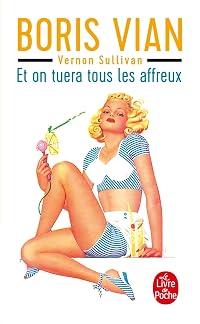
- Les fourmis; Et on tuera tous les affreux; Et on tuera tous les affreux - Les fourmis
- Original publication date
- 1949-07-05 (1e éditions originale française ∙ Editions du Scorpion) (1e éditions originale française ∙ Editions du Scorpion); 2002-08-28 (1e édition française ∙ Libretti ∙ Le livre de poche) (1e édition française ∙ Libretti ∙ Le livre de poche); 1970 (Réédition française, 10/18, Union générale d'éditions) (Réédition française, 10/18, Union générale d'éditions)
- Original language*
- Français
- Disambiguation notice*
- Ce titre "Les fourmis" contient 11 nouvelles :
Les Fourmis
Les Bons Élèves
Le Voyage à Khonostrov
L'Écrevisse
Le Plombier
La Route déserte
Les Poissons morts
Blues pour un chat noir
Le Brou... (show all)illard
L'Oie bleue
Le Figurant
Ce recueil contient les 5 nouvelles suivantes :
Blues pour un chat noir,
Martin m'a téléphoné...,
L'Écrevisse,
Le Rappel,
Les Chiens, le désir et la mort
*Some information comes from Common Knowledge in other languages. Click "Edit" for more information.
Classifications
Statistics
- Members
- 357
- Popularity
- 88,528
- Reviews
- 8
- Rating
- (3.55)
- Languages
- 12 — Czech, English, French, German, Hungarian, Italian, Portuguese, Romanian, Russian, Spanish, Swedish, Turkish
- Media
- Paper, Audiobook, Ebook
- ISBNs
- 27
- ASINs
- 10