
Louis Malle (1932–1995)
Author of Au revoir, les enfants
About the Author
The most commercially successful of the New Wave French film directors of the 1950's is Louis Malle. He started directing in the early 1950's, but it was his 1958 erotic film "The Lovers" that gained him recognition. Since then, he has continued to make films that offer surprising, and occasionally show more shocking, perspectives on conventional morality. "Murmur of the Heart" (1971), is about mother-son incest, and the controversial "Pretty Baby" (1978), his first American film, is set in a New Orleans brothel and features a child. His second American film, the critically acclaimed "Atlantic City" (1980), compassionately depicts the romance between an old man and a young woman. Other notable Malle films are "Lacombe, Lucien" (1973), "My Dinner with Andre" (1981), and "Au Revoir les Enfants" (1987), his account of children growing up in Nazi-occupied France. "Damage" (1992) is another shocking story of a father's obsessive love affair with his son's fiancee, and the eventual destruction that results to all the characters. (Bowker Author Biography) show less
Works by Louis Malle
Eclipse Series 2: The Documentaries of Louis Malle (Vive le Tour / Humain, trop humain / Place de la République / Phantom India / Calcutta / God's Country / ...And the Pursuit of… (2007) 13 copies, 1 review
3 Films by Louis Malle: Au Revoir Les Enfants / Murmur of the Heart / Lacombe, Lucien (1971) 9 copies
Lire et s'entraîner : Louis Malle : Au revoir, les enfants [book + sound recording] (2017) — Writer — 5 copies
Louis Malle: Volume One 4 copies
Au Revoir Les Enfants (Film Study Guide for As/A-level French) (English and French Edition) (2017) 3 copies
Deux films français: Les visiteurs du soir/Le feu follet — Author — 2 copies
Fatale 1 copy
Verhängnis (Damage) 1 copy
Privatleben (Vie privée) 1 copy
Alamo Bay [1985 film] — Director — 1 copy
The Supplements 1 copy
Perdas e Danos 1 copy
Associated Works
Tagged
Common Knowledge
- Canonical name
- Malle, Louis
- Legal name
- Malle, Louis Marie
- Birthdate
- 1932-10-30
- Date of death
- 1995-11-25
- Gender
- male
- Education
- Sorbonne University
IDHEC - Occupations
- film director
screenwriter
producer - Relationships
- Bergen, Candice (spouse)
Deschodt, Anne-Marie (spouse) - Cause of death
- Cancer
- Nationality
- France
- Birthplace
- Thumeries, France
- Places of residence
- France
USA - Place of death
- Beverly Hills, California, USA
- Burial location
- cremated
- Associated Place (for map)
- Beverly Hills, California, USA
Members
Reviews
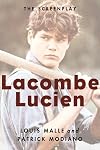
Louis Malle and Patrick Modiano collaborated on a screenplay about the lives of a few individuals in 1944 during the German occupation in France. What is so remarkable about this small book is how so few words or body movements depict the devastating complexity of lives torn by war.
The screenplay opens with a seventeen-year-old boy, Lucien, diligently and thoroughly doing menial labor cleaning in a charitable nursing home. Our judgment of the boy changes much in the process of the play but show more this impression will be one we will be reluctant to divest.
Lucien comes from a small town in southeastern France that is a hotbed of resistance against the occupation. One day, standing on a limestone plateau with a flock of sheep, Lucien sees the wider world stretch out below him. He is just at the age when he realizes he can turn his bicycle in a different direction from the town where he works to seek out a different experience.
The world is full of danger, and one must be constantly vigilant not to fall into a trap, even though ultimately we cannot escape. The ease with which Lucien kills a small bird with his slingshot and leaves it lying in the courtyard is how, at the end, we view this work by Malle and Modiano. Filled with banality, tragedy, and senseless death, we recognize the underlying truth of war and the human condition.
This classic work of literature packs so much humanity into a glance, a phrase, a movement of the arm that it becomes the essential reading experience. It is only 100 pages, short enough to be read in an afternoon or evening, and yet its effects last forever. This is the way to describe people in extremis. It happened just like this.
Re-published by Other Press and due out this week, this is a book you must read to get a glimpse of how great literature manifests.
· show less
The screenplay opens with a seventeen-year-old boy, Lucien, diligently and thoroughly doing menial labor cleaning in a charitable nursing home. Our judgment of the boy changes much in the process of the play but show more this impression will be one we will be reluctant to divest.
Lucien comes from a small town in southeastern France that is a hotbed of resistance against the occupation. One day, standing on a limestone plateau with a flock of sheep, Lucien sees the wider world stretch out below him. He is just at the age when he realizes he can turn his bicycle in a different direction from the town where he works to seek out a different experience.
The world is full of danger, and one must be constantly vigilant not to fall into a trap, even though ultimately we cannot escape. The ease with which Lucien kills a small bird with his slingshot and leaves it lying in the courtyard is how, at the end, we view this work by Malle and Modiano. Filled with banality, tragedy, and senseless death, we recognize the underlying truth of war and the human condition.
This classic work of literature packs so much humanity into a glance, a phrase, a movement of the arm that it becomes the essential reading experience. It is only 100 pages, short enough to be read in an afternoon or evening, and yet its effects last forever. This is the way to describe people in extremis. It happened just like this.
Re-published by Other Press and due out this week, this is a book you must read to get a glimpse of how great literature manifests.
· show less

A pretentious asshole talks about his existential awakening.
1/4 (Bad)
I guess if you want to watch an insufferable Great Artist (who wouldn't condescend to make art) explain what's wrong with the world, you could do that? On purpose? (Spoiler: There are some people who aren't always paying attention to him. Unforgivable. They're dead to him.)
(Jul. 2021)
1/4 (Bad)
I guess if you want to watch an insufferable Great Artist (who wouldn't condescend to make art) explain what's wrong with the world, you could do that? On purpose? (Spoiler: There are some people who aren't always paying attention to him. Unforgivable. They're dead to him.)
(Jul. 2021)

A murderer gets trapped in an elevator at the crime scene.
2/4 (Indifferent).
He's doomed from the beginning of the movie, which is probably something people who like this sort of movie think is poetic or existentially deep. It's bad storytelling. It's still an interesting enough movie that it might have been okay, if the ending weren't extra terrible even apart from the storytelling problem.
2/4 (Indifferent).
He's doomed from the beginning of the movie, which is probably something people who like this sort of movie think is poetic or existentially deep. It's bad storytelling. It's still an interesting enough movie that it might have been okay, if the ending weren't extra terrible even apart from the storytelling problem.

Since I enjoy books about the Holocaust and resistance to it, I inevitably liked this book.
Lists
Awards


You May Also Like


Associated Authors
Statistics
- Works
- 47
- Also by
- 3
- Members
- 1,081
- Popularity
- #23,777
- Rating
- 3.5
- Reviews
- 26
- ISBNs
- 97
- Languages
- 7
- Favorited
- 1

