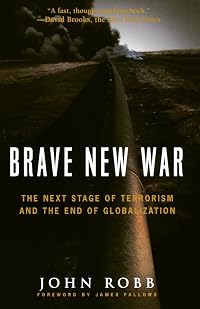
Brave New War: The Next Stage of Terrorism and the End of Globalization
by John Robb
On This Page
Description
""For my money, John Robb, a former Air Force officer and tech guru, is the futurists' futurist."" --""Slate"" The counterterrorism expert John Robb reveals how the same technology that has enabled globalization also allows terrorists and criminals to join forces against larger adversaries with relative ease and to carry out small, inexpensive actions--like sabotaging an oil pipeline--that generate a huge return. He shows how combating the shutdown of the world's oil, high-tech, and show more financial markets could cost us the thing we've come to value the most--worldwide economic and cultural integration--and what we must do now to safeguard against this new method of warfare. show lessTags
Recommendations

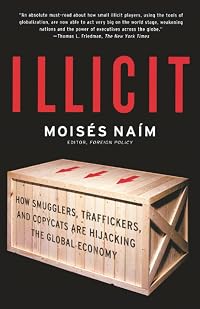
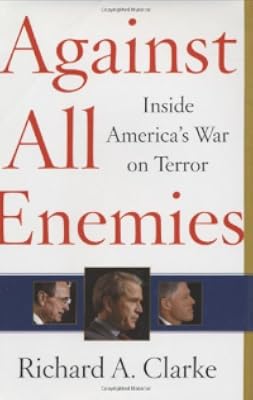
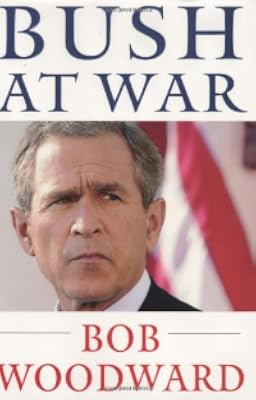
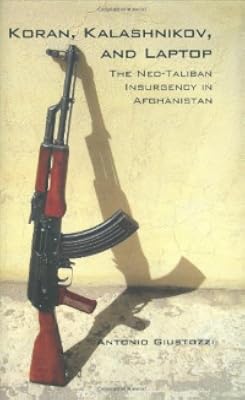

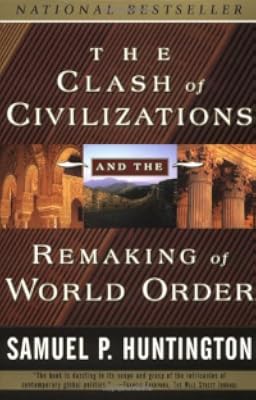
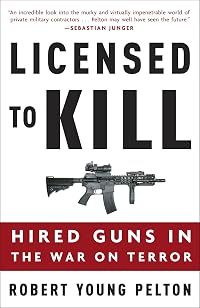
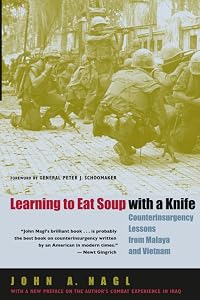
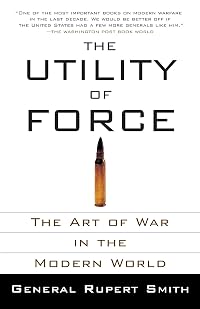

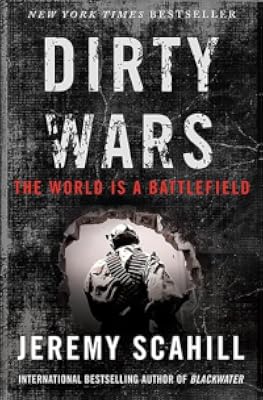
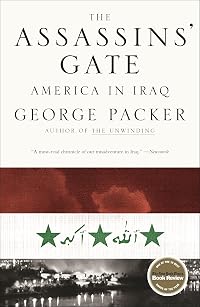
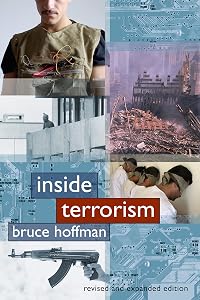
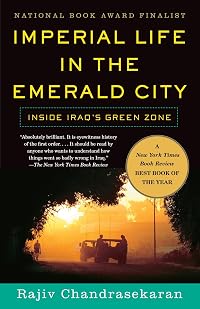




Member Recommendations

Member Reviews
I had the pleasure of reading John Robb's Brave New War: The Next Stage of Terrorism and the End of Globalization over the last week. I've been familiar with his excellent blog, Global Guerrillas, for some time now, but reading the framework that he's constructed for his own analyses has added a great deal of depth to my own understanding of his philosophy.
Brave New War is broken into three parts: "The Future of War is Now," "Global Guerrillas," and "How Globalization Will Put an End to Globalization." The first is devoted to examining the present security situation. This includes the origins and motives for a number of global non-state actors, as well as the American experience in Iraq. This is also where the history of Robb's show more terminology is explained: fourth-generation warfare, effects-based operations, etcetera. He covers a number of other military engagements: the Gulf War, the Chechen War, and others. It's all very plainly written, and definitely where to start if you haven't read his blog or anything else on the subject.
The "Global Guerrillas" section is clearly Robb's baby. He has put a good deal of effort into explaining the dynamics of these groups, and why they're able to act so effectively. It's here more than anywhere else in the book that Robb draws on systems and network theory to better understand the dimensions of global guerrillas. It's here that the book really takes on a coherent shape, and to a certain extent takes on a flavor of business. From the "long tail" and returns on investment to the shadow economy and transnational gangsterism, we truly see why it's globalization driving the new revolution in asymmetric warfare.
The third section is a little different. Rather than explain why the Iraqi oil pipelines are as vulnerable as they are, he turns to networks in the United States to see where our own weaknesses lie. At the outset, Robb clearly states that he's not really writing in order to proscribe a solution, but rather in order to point out the significance of our problems and vulnerabilities. He certainly excels at that, but what struck me were just how good his limited suggestions were. They are as simple as they want us to be, and that's really the core: simplicity. Resiliency, self-sustainability, and general preparedness are really the watchwords of Brave New War. That's not to say we should all be survivalists living off the grid; rather, everyone should be both taking from and contributing to the grid, through local agriculture, family solar power units, and other 'green' developments.
The last part, particularly, was the piece I had missed when trying to follow Robb's other work. His near-apocalyptic claims of the coming collapse of the state are a little overwrought, but even when he slips into hyperbole, there's still an important kernel of truth underlying it. The state is weakening, and in no small part it now falls upon its citizens to maintain their own security.
Mostly, I hope that he's wrong. But in the likely event he's not, then this book will serve as the how-to manual for living in the network-centric world after statehood. show less
Brave New War is broken into three parts: "The Future of War is Now," "Global Guerrillas," and "How Globalization Will Put an End to Globalization." The first is devoted to examining the present security situation. This includes the origins and motives for a number of global non-state actors, as well as the American experience in Iraq. This is also where the history of Robb's show more terminology is explained: fourth-generation warfare, effects-based operations, etcetera. He covers a number of other military engagements: the Gulf War, the Chechen War, and others. It's all very plainly written, and definitely where to start if you haven't read his blog or anything else on the subject.
The "Global Guerrillas" section is clearly Robb's baby. He has put a good deal of effort into explaining the dynamics of these groups, and why they're able to act so effectively. It's here more than anywhere else in the book that Robb draws on systems and network theory to better understand the dimensions of global guerrillas. It's here that the book really takes on a coherent shape, and to a certain extent takes on a flavor of business. From the "long tail" and returns on investment to the shadow economy and transnational gangsterism, we truly see why it's globalization driving the new revolution in asymmetric warfare.
The third section is a little different. Rather than explain why the Iraqi oil pipelines are as vulnerable as they are, he turns to networks in the United States to see where our own weaknesses lie. At the outset, Robb clearly states that he's not really writing in order to proscribe a solution, but rather in order to point out the significance of our problems and vulnerabilities. He certainly excels at that, but what struck me were just how good his limited suggestions were. They are as simple as they want us to be, and that's really the core: simplicity. Resiliency, self-sustainability, and general preparedness are really the watchwords of Brave New War. That's not to say we should all be survivalists living off the grid; rather, everyone should be both taking from and contributing to the grid, through local agriculture, family solar power units, and other 'green' developments.
The last part, particularly, was the piece I had missed when trying to follow Robb's other work. His near-apocalyptic claims of the coming collapse of the state are a little overwrought, but even when he slips into hyperbole, there's still an important kernel of truth underlying it. The state is weakening, and in no small part it now falls upon its citizens to maintain their own security.
Mostly, I hope that he's wrong. But in the likely event he's not, then this book will serve as the how-to manual for living in the network-centric world after statehood. show less
A concise summary of John Robb's Global Guerrilla theory (as tracked on his blog of the past several years). Traces the rise of system disruption attacks and how these are used by non-state groups to conduct open source warfare, leading to virtual states. Has a great deal of criticism of centralized solutions, which makes Robb exceptionally critical of most government policies to deal with the Long War. Argues that police states and preventative war are two natural, yet wrong, responses to the challenge of the Long War. Not sure Robb fairly portrays Barnett (whom he uses as an exemplar of the second policy error), mainly because Robb's prescriptions for resilient platforms are the detailed "how" for the "why" of Barnett's SysAdmin show more force. Also, the minimalist rule set that Robb wants to spread internationally will require diplomacy and will be attempting to attract the Core (since Gap countries, by definition, can't plug in)... all of which is a process of attracting allies and managing relations. This is better known as diplomacy and currently states still can do this.
A very valuable record of Robb's important thinking. It makes excellent connections between fields from network theory to complexity to military theory to law to history to economics. Ultimately, Robb's insights are most useful at the operational and tactical level. show less
A very valuable record of Robb's important thinking. It makes excellent connections between fields from network theory to complexity to military theory to law to history to economics. Ultimately, Robb's insights are most useful at the operational and tactical level. show less
This book provides an original perspective on the presen state of international security. It discusses how effects like the open source movement, increasing complexity in societies, the long tail and black swans change the face of conflict and how they will shape coming attacks on developed states. This short text is a great intuition pump for anyone wondering about the present state of the world.
Robb has some interesting ideas about the future of warfare, namely that "open source" warfare has/will replace conventional warfare. While I can't do his explanation justice, he basically contends that stateless networks will challenge states, by targeting infrastructure not in an attempt to overthrow them but to disrupt them. Thereby allowing groups to work for their own ends without state interference. Definitely worth reading.
Had a ropey introductory 30 pages or so, some better editing here would have made it a lot more accessible, but once you get through that it's a very worthwhile piece, with some serious insights into how globalization has influenced the path of war in Iraq (and elsewhere).
This is basically an analysis of emerging "Fourth Generation Warfare" as it has been dubbed by greater thinkers than John Robb. He is essentially pointing out that state on state warfare is, and has been, for all intents and purposes over and is being replaced by decentralized combat against super-empowered non-state groups (insurgency).
Just received the eagerly awaited review copy of this one -- a seminal work in the current debate about the future of warfare and the nation-state system.
Members
- Recently Added By
Lists

Ryan Holiday's Books To Base Your Life On
97 works; 2 members
Author Information
1 Work 204 Members
Common Knowledge
- Important places
- New York, New York, USA; New Orleans, Louisiana, USA; Madrid, Spain
- First words
- The near future holds mind-bending promise for American business.
- Last words
- (Click to show. Warning: May contain spoilers.)That's a great responsibility and, with luck, an enormous opportunity.
Classifications
- Genres
- Nonfiction, General Nonfiction, Economics, History, Technology
- DDC/MDS
- 363.325 — Society, government, & culture Social problems and social services Public Safety - Police, Crime Investigation Terrorism, Disasters, Civil Defense Social conflict Terrorism
- LCC
- HV6431 .R625 — Social sciences Social pathology. Social and public welfare. Criminology Social pathology. Social and public welfare. Criminology Crimes and offenses
- BISAC
Statistics
- Members
- 203
- Popularity
- 160,351
- Reviews
- 8
- Rating
- (3.93)
- Languages
- English
- Media
- Paper, Ebook
- ISBNs
- 3
- ASINs
- 1