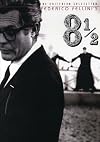
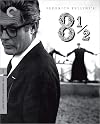
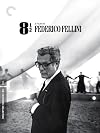
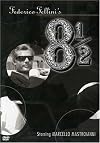
8½ [1963 film]
by Federico Fellini (Director), Ennio Flaiano (Screenwriter)
On This Page
Description
Fellini's autobiographical film about a famous film director who loses his inspiration in the midst of making a film.Tags
Recommendations





Member Recommendations

Member Reviews
An adulterous director doesn't make a movie.
It's an okay movie, and I can see why certain people like it. The lead character (who is a director in pre-production of a movie remarkably similar to 8½) sums it up pretty well: "I really have nothing to say, but I want to say it all the same." I guess it's kind of cute that the movie contains its own criticisms (and there's a lot of that -- it's like the movie is an essay on itself). But what really strikes me about that quotation is that he sees the problem as having "nothing to say," rather than having no story to tell. Maybe it's just me, but I've got this crazy notion that fiction is supposed to tell stories...
It's an okay movie, and I can see why certain people like it. The lead character (who is a director in pre-production of a movie remarkably similar to 8½) sums it up pretty well: "I really have nothing to say, but I want to say it all the same." I guess it's kind of cute that the movie contains its own criticisms (and there's a lot of that -- it's like the movie is an essay on itself). But what really strikes me about that quotation is that he sees the problem as having "nothing to say," rather than having no story to tell. Maybe it's just me, but I've got this crazy notion that fiction is supposed to tell stories...
2024 movie #162. Famous director (Mastroianni) checks into a spa hoping for some peace but is hounded by producers, writers, actors all wanting a piece of his new film, which he has no idea of what it's going to be. Memories and fantasies mingle together in his mind (and on film)
What better way to combine writers block with your own pecadilloes than to turn it into an art film, complete with a script that criticises the script itself? Truly "meta" long before "meta" became a thing. Mastroianni plays Fellini's alter ego, a film director facing a creative block. At one point, Mastroianni says, "I really have nothing to say, but I want to say it all the same." This pretty much sums it up. Fellini has nothing to say but he rambles on for nearly two and half hours not saying it. It's endless scenes of people blabbering about mostly uninteresting things. The dialog comes at a rapid fire pace. Fellini is at his pretentious and self-indulgent worst, and of course the film is universally regarded as a masterpiece. You show more can see why so many (male) directors have been inspired by 8 1/2. It casts the the film director as both lothario and genius. show less
Jan 6, 2026English (UK)
Guido Anselmi, un affermato regista di quarantatré anni, sta elaborando il suo prossimo film. Egli si trova a trascorrere un periodo di riposo in una stazione di cure termali (il set reale fu ambientato nel Lazio, e principalmente a Roma[2]). Guido cerca in quella località di coniugare i propri problemi fisici (stanchezza cardiaca) con quelli della produzione del film, ancora allo stato di preparazione.
La quiete che vorrebbe è continuamente minata dalla presenza delle maestranze del film (produttore, tecnici, attori) che soggiornano nel suo stesso albergo e che vedono in lui l'unico appoggio sicuro. Ma il suo spirito creativo si è inaridito e non riesce a dare una direzione chiara al suo progetto cinematografico. Oltretutto, ai suoi show more problemi professionali si aggiungono grattacapi sentimentali.
L'amante lo raggiunge alle terme e poco dopo arriva anche sua moglie. Sollecitato dal produttore, interrogato dai suoi assistenti e dagli attori che vogliono capire quale storia stia per raccontare, quali intenzioni vorrebbe esprimere, cerca di imbastire alla meglio una trama: un bilancio fatto di rapporti con personaggi reali e di fantasticherie, ricordi, sogni, che si inseriscono all'improvviso negli avvenimenti concreti delle sue giornate e delle sue notti. Dei suoi sogni fanno parte i ricordi del padre e della madre, morti, con i quali egli discorre teneramente, come con persone vicine.
Continui dubbi e incertezze si palesano attraverso una crisi esistenziale senza via d'uscita, in cui non riesce a dare un senso al suo rapporto con gli altri e al suo passato. E tutto questo non fa che rendere consapevole quello smarrimento che egli si porta dentro da anni e che le cure della esistenza quotidiana e del lavoro avevano in parte mascherato. In un onirico, fatato affresco di immagini si alterna un centinaio di personaggi di contorno tra cui spiccano: un intellettuale, che gli è stato messo alle calcagna dal produttore, la moglie, l'amante e la protagonista femminile del film in produzione. show less
La quiete che vorrebbe è continuamente minata dalla presenza delle maestranze del film (produttore, tecnici, attori) che soggiornano nel suo stesso albergo e che vedono in lui l'unico appoggio sicuro. Ma il suo spirito creativo si è inaridito e non riesce a dare una direzione chiara al suo progetto cinematografico. Oltretutto, ai suoi show more problemi professionali si aggiungono grattacapi sentimentali.
L'amante lo raggiunge alle terme e poco dopo arriva anche sua moglie. Sollecitato dal produttore, interrogato dai suoi assistenti e dagli attori che vogliono capire quale storia stia per raccontare, quali intenzioni vorrebbe esprimere, cerca di imbastire alla meglio una trama: un bilancio fatto di rapporti con personaggi reali e di fantasticherie, ricordi, sogni, che si inseriscono all'improvviso negli avvenimenti concreti delle sue giornate e delle sue notti. Dei suoi sogni fanno parte i ricordi del padre e della madre, morti, con i quali egli discorre teneramente, come con persone vicine.
Continui dubbi e incertezze si palesano attraverso una crisi esistenziale senza via d'uscita, in cui non riesce a dare un senso al suo rapporto con gli altri e al suo passato. E tutto questo non fa che rendere consapevole quello smarrimento che egli si porta dentro da anni e che le cure della esistenza quotidiana e del lavoro avevano in parte mascherato. In un onirico, fatato affresco di immagini si alterna un centinaio di personaggi di contorno tra cui spiccano: un intellettuale, che gli è stato messo alle calcagna dal produttore, la moglie, l'amante e la protagonista femminile del film in produzione. show less
Dec 6, 2019Italian
Ratings
Members
- Recently Added By
Published Reviews
ThingScore 83
This portrait of the artist as a middle-aged man is the most brilliant, varied and entertaining movie I’ve seen since Citizen Kane. I saw it twice in as many weeks, and the second time I discovered many points that had escaped me in the first viewing, so headlong is its tempo, so fertile its invention... Is there not something Shakespearean in this range of human experience expressed in show more every mode from high lyric to low comic, from the most formal rhetoric to the most personal impressionism? show less
added by SnootyBaronet
Just as La Dolce Vita confirmed popular suspicions about the depravity of the rich and gifted, 8 1/2 confirms the popular view of the life of a successful genius. We see Guido’s conflicts between his love for his wife, his desire for his mistress, his ideal of innocence, and his dreams of a harem, and we are given to understand that he must come to grips with himself as a precondition to show more “creation.” The multi-ringed circus of 81/2 is such a luxuriously externalized version of an artist’s inner life that it’s more like the fantasy of someone who wishes that he were a movie director—someone who has soaked up those movie versions of an artist’s life, in which in the midst of a carnival or a ball the hero receives inspiration and dashes away to transmute life into art. It’s a deluxe glorification of creative crisis, visually arresting (the dark and light contrasts are extraordinary, magical) but in some essential way conventional-minded. show less
added by SnootyBaronet
Even more than La Dolce Vita, 8½ is a clear demonstration of how Fellini became Italy’s national director and its ambassador to the world – the ambassador who never left home. The totality of his films is more than the sum of its parts, but all his films are contained, at some degree of compression, in 8½:they all lead up to it or lead on from it. Rich even by his standards, his supreme show more masterpiece first conveys its wealth through its sumptuous visual texture. Since Nights of Cabiria, for which the designer Piero Gherardi joined his entourage, Fellini had already put more of his country’s visual excitement into his movies than any other director except perhaps Kurosawa. In 8½, with Di Venanzo lighting Gheradi’s sets, Fellini excelled even his own previous efforts at pulling his tumultuous homeland into shape. show less
added by SnootyBaronet
Author Information

Federico Fellini, the Italian film director and writer, is known for the extravagant personal style he developed early in his career, with its ornate visual effects, uninhibited sentiment, mischievous humor, and romantic fantasy. His collaboration with Roberto Rossellini on Open City (1945) brought him widespread critical acclaim in Italy. Fellini show more first attracted attention abroad with I Vitelloni (1953) and La Strada (1955), which focuses on the poor in a deeply sensitive manner touched with poetry. The latter brought him international success, as did La Dolce Vita (1959), with its portrait of the rich and rootless in a decadent Rome, the autobiographical 8? (1963), and the supple Juliet of the Spirits (1965), inspired by his actress-wife Giulietta Massina. Fellini's penchant for obscurity, his symbolism, and his sharp satire have made him controversial from time to time, but his imaginative impact is uncontested. (Bowker Author Biography) show less

All Editions
Awards and Honors
Awards
Notable Lists
Series
Belongs to Publisher Series
Criterion Laserdiscs (71)
The Criterion Collection (140)
Work Relationships
Is contained in
Has the adaptation
Is parodied in
Has as a supplement
Common Knowledge
- Canonical title
- 8½ [1963 film]
- Original title
- Otto e mezzo
- Alternate titles
- 8 1/2
- Original publication date
- 1963-02-14
- People/Characters
- Guido Anselmi
- Important places
- Rome, Italy; Italy
- Related movies
- 8½ (1963 | IMDb)
- Quotations
- Sgulp
- Original language
- Italian
Classifications
- DDC/MDS
- 791.4372 — Arts & recreation Recreation, sports, and performing arts Public performances Motion pictures, radio, television, podcasting Motion pictures Films; screenplays Single films
- LCC
- PN1997 .O77 — Language and Literature Literature (General) Literature (General) Drama Motion pictures Plays, scenarios, etc.
Statistics
- Members
- 208
- Popularity
- 157,066
- Reviews
- 5
- Rating
- (4.20)
- Languages
- Dutch, English, Italian
- ISBNs
- 10
- UPCs
- 5
- ASINs
- 18