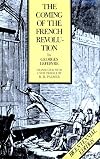
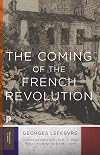
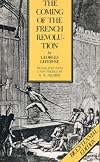
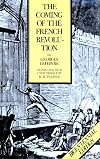
The Coming of the French Revolution
by Georges Lefebvre
On This Page
Description
The Coming of the French Revolution remains essential reading for anyone interested in the origins of this great turning point in the formation of the modern world. First published in 1939, on the eve of the Second World War, and suppressed by the Vichy government, this classic work explains what happened in France in 1789, the first year of the French Revolution. Georges Lefebvre wrote history "from below"-a Marxist approach. Here, he places the peasantry at the center of his analysis, show more emphasizing the class struggles in France and the significant role they played in the coming of the revolution.Eloquently translated by the historian R. R. Palmer and featuring an introduction by Timothy Tackett that provides a concise intellectual biography of Lefebvre and a critical appraisal of the book, this Princeton Classics edition continues to offer fresh insights into democracy, dictatorship, and insurrection. show lessTags
Recommendations





































Member Reviews
Published in 1939 as a celebration of its 150 years, Georges Lefebvre's book offers an easy to understand overview of the beginning of the French Revolution: started by the aristocratie, followed up by the bourgeoisie and, crucially and decisively, later on joined by wide popular revolts in general -peasants in particular- the author indeed let it unfolds under our eyes like a domino effect. Such an overview, sharp, reveals itself to be of an enlightening simplicity. The fact Georges Lefebvre solely deals with the year 1789 (until the imprisonment of the king in the Tuileries) without extrapolating upon the events that will follow up just makes this read even more straightforward.
Sure, he is a classic historian of the French show more Revolution. It doesn't mean, though, that he reduces it only to a simple matter of class struggle. Rightly underlining how cautious we have to be with such a concept for such an event (e.g. there was no unity nor class consciousness among the bourgeoisie and the nobility...) he demonstrates in fact through various factors how it's individuals coming from different strata of society that merged months after months to end the French Old Regime, an end those final stop would ultimately be the Declaration of the Rights of the Man and of the Citizen. Class still matters, but not only.
Thus, reading very simply like a play in four acts (the revolution by the aristocrats, the revolution by the bourgeoisie, the revolution by the people, the revolution by the peasants) 'The Coming of the French Revolution' may still oversimplifies things (in its overall Marxist approach) but, nevertheless, it makes for an accessible and clear snapshots of events otherwise highly complex and controversial. An enlightening read. show less
Sure, he is a classic historian of the French show more Revolution. It doesn't mean, though, that he reduces it only to a simple matter of class struggle. Rightly underlining how cautious we have to be with such a concept for such an event (e.g. there was no unity nor class consciousness among the bourgeoisie and the nobility...) he demonstrates in fact through various factors how it's individuals coming from different strata of society that merged months after months to end the French Old Regime, an end those final stop would ultimately be the Declaration of the Rights of the Man and of the Citizen. Class still matters, but not only.
Thus, reading very simply like a play in four acts (the revolution by the aristocrats, the revolution by the bourgeoisie, the revolution by the people, the revolution by the peasants) 'The Coming of the French Revolution' may still oversimplifies things (in its overall Marxist approach) but, nevertheless, it makes for an accessible and clear snapshots of events otherwise highly complex and controversial. An enlightening read. show less
Two revolutions in two different countries. In one, the bloodthirsty inhabitants turned to a Reign of Terror to achieve their objectives. In the other, disenfranchised shopkeepers threw off their overlords to begin a new nation. The differences between the French and American Revolutions have always intrigued me, which is why I picked up this paperback. What the heck caused the Gallic disturbance to be so...disturbing?
This really is an excellent introduction to the reasons for the French Revolution, focusing on each affected group, from king to nobles to middle class to peasants. This is not an overview of the later Reign of Terror or the beginning of the Empire, so the focus is very strong and full of details.
Still, I wonder how the show more future of France would have turned if there had been stronger protagonists. Danton, Robespierre, Marat, Isnard? Or Adams, Jefferson, Madison, Franklin?
Book Season = Winter (Paris is grey) show less
This really is an excellent introduction to the reasons for the French Revolution, focusing on each affected group, from king to nobles to middle class to peasants. This is not an overview of the later Reign of Terror or the beginning of the Empire, so the focus is very strong and full of details.
Still, I wonder how the show more future of France would have turned if there had been stronger protagonists. Danton, Robespierre, Marat, Isnard? Or Adams, Jefferson, Madison, Franklin?
Book Season = Winter (Paris is grey) show less
Considered a standard work in its time (I was assigned it as a text when young) though now considered perhaps too pro-revolutionary
History
9.78069E 12
Spännande analys som vacklar mellan historiematerialism och annaleskolan. Ifrågasätter de rationella aktörerna. Läsvärd!
Jun 7, 2007Swedish
LBB-5
Jan 24, 2023Catalan
Members
- Recently Added By
Author Information

27+ Works 2,019 Members
Some Editions
Series
Belongs to Publisher Series
Common Knowledge
- Original title
- Quatre-vingt-neuf
- Original publication date
- 1939 (French) (French); 1939
- People/Characters
- Louis XVI, King of France
- Important places
- France
- Important events
- French Revolution
- First words
- The ultimate cause of the French Revolution of 1789 goes deep into the history of France and of the western world.
- Last words
- (Click to show. Warning: May contain spoilers.)Long live the Nation!
- Original language
- French
Classifications
- Genres
- History, Nonfiction, General Nonfiction
- DDC/MDS
- 944.04 — History & geography History of Europe France and Monaco France Revolution 1789-1804
- LCC
- DC138 .L413 — History of Europe, Asia, Africa and Oceania France – Andorra – Monaco History of France Modern, 1515- 1715-1789. 18th century. Louis XV, Louis XVI
- BISAC
Statistics
- Members
- 869
- Popularity
- 31,261
- Reviews
- 7
- Rating
- (3.69)
- Languages
- 7 — English, French, German, Korean, Portuguese (Portugal), Spanish, Swedish
- Media
- Paper, Ebook
- ISBNs
- 14
- ASINs
- 31