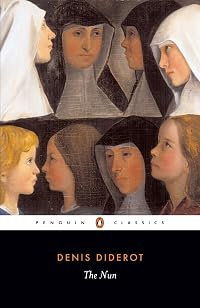
The Nun
by Denis Diderot
On This Page
Description
"This novel takes the life of a young girl forced by her parents to enter a convent as its subject matter and provides an insight into the effects of forced vocations"--Provided by publisher.Tags
Recommendations







































Member Reviews
Reading this book is like watching a train wreck in slow motion. Don't get me wrong - it's not entirely excruciating: in fact, the emotive vividness of the translation was singularly impressive - but Suzanne's feelings of helplessness and entrapment are so inescapably evoked that you can't help but be moved by the sheer vulnerability & utter lack of options for women deprived of family or any means of support in the eighteenth century. Yes, things could be worse, but if we withhold sympathy until we find the worst-case scenario then very few of us could escape unscathed.
After being forced to choose a C16th, 17th or 18th course for my honours in English a while back I chose the most recent - the C18th, being something of a modernist; show more and, of course, hated it as a result. It says a lot for this little book that it's done a lot to reconcile me to an entire century! For this book is inimitably C18th style in its attitudes to women and religious paradigms, yet also, ineluctably universal: the outrageous injustice of Suzanne's treatment at the convent in Longchamp in particular speaks of the misery of bullying everywhere, reminding me of Margaret Atwood's "Cat's Eye", or the 2007 Belgian film "Ben X" directed by Nick Balthazar. Over and over again, human misery is shown to result at the hands of other humans - and that, amongst other reasons, is what makes "The Nun" so depressing to me, and at the same time so inescapably real. show less
After being forced to choose a C16th, 17th or 18th course for my honours in English a while back I chose the most recent - the C18th, being something of a modernist; show more and, of course, hated it as a result. It says a lot for this little book that it's done a lot to reconcile me to an entire century! For this book is inimitably C18th style in its attitudes to women and religious paradigms, yet also, ineluctably universal: the outrageous injustice of Suzanne's treatment at the convent in Longchamp in particular speaks of the misery of bullying everywhere, reminding me of Margaret Atwood's "Cat's Eye", or the 2007 Belgian film "Ben X" directed by Nick Balthazar. Over and over again, human misery is shown to result at the hands of other humans - and that, amongst other reasons, is what makes "The Nun" so depressing to me, and at the same time so inescapably real. show less
Man was born to live with his fellow human beings. Separate him, isolate him, his character will go bad, a thousand ridiculous affects will invade his heart, extravagant thoughts will germinate in his brain, like thorns in an uncultivated land.
Given the untimely arrival of our Arctic Vortex, it is fitting that The Nun shudders with a frozen despair. Bone chilling mornings are well suited for such guided tours of the dark side. Abandon your preconceptions of the Enlightenment and moral cautionary tales, Diderot's creation is terrifying. Apparently it was a practical joke used to trick a friend to return to Paris from the countryside. The novel takes the form of an escaped nun tracing her history in a lengthy letter about a series of show more convents, ones where the prevailing theme is obedience. One thinks of Martin Amis, "give some someone absolute control over another and thoughts soon turn to torture." Forget Sade or Huysmans, I was scared shitless by the novel's second Mother Superior: think Martha Stewart as Torquemada. show less
Given the untimely arrival of our Arctic Vortex, it is fitting that The Nun shudders with a frozen despair. Bone chilling mornings are well suited for such guided tours of the dark side. Abandon your preconceptions of the Enlightenment and moral cautionary tales, Diderot's creation is terrifying. Apparently it was a practical joke used to trick a friend to return to Paris from the countryside. The novel takes the form of an escaped nun tracing her history in a lengthy letter about a series of show more convents, ones where the prevailing theme is obedience. One thinks of Martin Amis, "give some someone absolute control over another and thoughts soon turn to torture." Forget Sade or Huysmans, I was scared shitless by the novel's second Mother Superior: think Martha Stewart as Torquemada. show less
I was inspired to read Diderot’s novel by [b:A Wicked Company: The Forgotten Radicalism of the European Enlightenment|8305177|A Wicked Company The Forgotten Radicalism of the European Enlightenment|Philipp Blom|https://images.gr-assets.com/books/1328841616s/8305177.jpg|13154184], in which the author argued that Rousseau was overrated and Diderot underrated. 'Memoirs of a Nun' had a rather befuddling origin as a prank played on another member of the Enlightenment clique, the Marquis de Croismare. As Diderot wrote, it grew into a bitter satire on France’s religious institutions, thinly disguised as the autobiography of a girl who is forced to become a nun. She is first placed in a fairly pleasant convent, however she is adamant that show more the life of a nun is not for her. She is subsequently ostracised and tortured for trying to leave, but cannot secure her release. She finally ends up in an ostensibly more pleasant convent, in which the Mother Superior keeps a harem of girls. The unfortunate Susan becomes the treasured favourite of this Mother Superior but still wishes to escape.
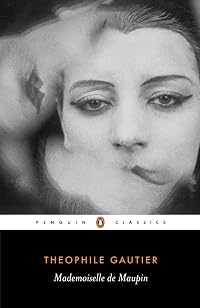
This novel reminded me of Hugo’s lengthy anti-convent rant in book 7 of [b:Les Misérables|24280|Les Misérables|Victor Hugo|https://images.gr-assets.com/books/1411852091s/24280.jpg|3208463], with a dash of Gautier’s saucy [b:Mademoiselle de Maupin|1424687|Mademoiselle de Maupin|Théophile Gautier|https://images.gr-assets.com/books/1419890600s/1424687.jpg|246023]. Susan the reluctant nun is a rather ambivalent character, which makes her more interesting than she initially seems. She is clearly quite well suited to convent life and has no other preferable occupation to go into; she remains adamant that she doesn’t want to be a nun. The novel thus asks the reader, why should Susan be a nun? Why shouldn’t it be her decision? Why should she be trapped in religious life just because she is an illegitimate child? What value do convents have to God if the nuns within have no vocation for it and are prisoners? Diderot was writing in 1760, when asking such questions would get you imprisoned. Indeed, the novel was not published until 1796 and both books I compare it to were written in the following century. 'Memoirs of a Nun' is a peculiar yet powerful polemic. It ends in a confused and abrupt fashion, though. show less
This novel reminded me of Hugo’s lengthy anti-convent rant in book 7 of [b:Les Misérables|24280|Les Misérables|Victor Hugo|https://images.gr-assets.com/books/1411852091s/24280.jpg|3208463], with a dash of Gautier’s saucy [b:Mademoiselle de Maupin|1424687|Mademoiselle de Maupin|Théophile Gautier|https://images.gr-assets.com/books/1419890600s/1424687.jpg|246023]. Susan the reluctant nun is a rather ambivalent character, which makes her more interesting than she initially seems. She is clearly quite well suited to convent life and has no other preferable occupation to go into; she remains adamant that she doesn’t want to be a nun. The novel thus asks the reader, why should Susan be a nun? Why shouldn’t it be her decision? Why should she be trapped in religious life just because she is an illegitimate child? What value do convents have to God if the nuns within have no vocation for it and are prisoners? Diderot was writing in 1760, when asking such questions would get you imprisoned. Indeed, the novel was not published until 1796 and both books I compare it to were written in the following century. 'Memoirs of a Nun' is a peculiar yet powerful polemic. It ends in a confused and abrupt fashion, though. show less
This was a wonderful book about the danger of forcing the monastic life on someone without the disposition. I was fascinated by the book. I think that it can be easily relatable to many people despite its religious nature. Anytime someone is forced to exist in a way that does not correspond to their nature there is suffering.
"It was then that I felt the superiority of the Christian faith over all the other religions of the world; what profound wisdom there was in what blind philosophy calls the folly of the cross."
Suzanne Simonin is a simple French girl who finds herself packaged off to become a nun due to circumstances beyond her control. Suzanne happens to be the product of an affair and her mother decides Suzanne has to make up for those sins. As well, her parents and step-sisters are concerned about family finances as the sisters are in need of dowries. It's decided that to save on costs, Suzanne will enter a convent. There she is subjected to both love and hatred as well as the unwelcome advances of a lecherous Mother Superior.
Some of Diderot's show more writing is lyrical, even poetic. For example, "A novice-mistress is always the most indulgent sister who can be found. Her object is to hide from you all the thorns of the vocation, she subjects you to a course to the most carefully calculated seduction. Her function is to darken still more the shades of night which surround you, to lull you into slumber, to throw dust in your eyes, to fascinate you, and ours paid special attention to me." - page 23
The story is pretty racy for the 1760s and Diderot has an interesting take on homosexuality, a subject which was even more contentious in the 1700s than it is today. The introduction gives us insight into his treatment of it in the book. "Hitherto homosexual behaviour had been considered either an unspeakable abomination in the eyes of God and man or alternatively one of the two or three eternal themes of pornography. Few had treated it objectively and still fewer with any attempt at sympathy or understanding. Diderot does both." While a Mother Superior uses her authority to force herself upon Suzanne, taking advantage of her naivete, Suzanne also has other lesbian experiences within the convent which are far kinder and consensual.
You may be able to tell that Diderot isn't a fan of the church. In fact he was considered to be an atheist. His views on religion may have had something to do with the death of his sister. She was a nun and apparently passed away from being overworked in a convent.
I found this story extremely boring despite being less than 200 pages long. Suzanne is always suffering at the hands of someone. If it isn't her mother than it's her convent. I found it difficult to believe that for most of her stay at the second convent that she would be singled out and harassed. She's thrown in a cell and her fellow nuns steal from her in order to keep her in the convent. Suzanne didn't seem important enough for people to waste their time on her and I also found it frustrating that she skips over various parts of her life in the convent that might have actually been interesting. For example, she tells the reader she won't go into details about her novitiate and yet says that it is the pleasantest period of monastic life.
The book makes more sense when you understand that it wasn't originally intended for public consumption. It was a practical joke to lure one of Diderot's friends, the Marquise de Croismare, back to Paris. The novel is told in a series of letters as if it were a true story. Diderot hoped the Marquise would feel so bad for Suzanne that he would come back to the city and rescue her.
As well the nature of Suzanne's harassment was somewhat sadistic. At times it seemed as if Diderot was almost enjoying describing her torture at the hands of other nuns. show less
Suzanne Simonin is a simple French girl who finds herself packaged off to become a nun due to circumstances beyond her control. Suzanne happens to be the product of an affair and her mother decides Suzanne has to make up for those sins. As well, her parents and step-sisters are concerned about family finances as the sisters are in need of dowries. It's decided that to save on costs, Suzanne will enter a convent. There she is subjected to both love and hatred as well as the unwelcome advances of a lecherous Mother Superior.
Some of Diderot's show more writing is lyrical, even poetic. For example, "A novice-mistress is always the most indulgent sister who can be found. Her object is to hide from you all the thorns of the vocation, she subjects you to a course to the most carefully calculated seduction. Her function is to darken still more the shades of night which surround you, to lull you into slumber, to throw dust in your eyes, to fascinate you, and ours paid special attention to me." - page 23
The story is pretty racy for the 1760s and Diderot has an interesting take on homosexuality, a subject which was even more contentious in the 1700s than it is today. The introduction gives us insight into his treatment of it in the book. "Hitherto homosexual behaviour had been considered either an unspeakable abomination in the eyes of God and man or alternatively one of the two or three eternal themes of pornography. Few had treated it objectively and still fewer with any attempt at sympathy or understanding. Diderot does both." While a Mother Superior uses her authority to force herself upon Suzanne, taking advantage of her naivete, Suzanne also has other lesbian experiences within the convent which are far kinder and consensual.
You may be able to tell that Diderot isn't a fan of the church. In fact he was considered to be an atheist. His views on religion may have had something to do with the death of his sister. She was a nun and apparently passed away from being overworked in a convent.
I found this story extremely boring despite being less than 200 pages long. Suzanne is always suffering at the hands of someone. If it isn't her mother than it's her convent. I found it difficult to believe that for most of her stay at the second convent that she would be singled out and harassed. She's thrown in a cell and her fellow nuns steal from her in order to keep her in the convent. Suzanne didn't seem important enough for people to waste their time on her and I also found it frustrating that she skips over various parts of her life in the convent that might have actually been interesting. For example, she tells the reader she won't go into details about her novitiate and yet says that it is the pleasantest period of monastic life.
The book makes more sense when you understand that it wasn't originally intended for public consumption. It was a practical joke to lure one of Diderot's friends, the Marquise de Croismare, back to Paris. The novel is told in a series of letters as if it were a true story. Diderot hoped the Marquise would feel so bad for Suzanne that he would come back to the city and rescue her.
As well the nature of Suzanne's harassment was somewhat sadistic. At times it seemed as if Diderot was almost enjoying describing her torture at the hands of other nuns. show less
Warning: Possible Spoilers
Mix one cup of anti-Catholic propaganda, two tablespoons of titillation, two teaspoons of prurience, and a soupçon of Enlightenment philosophy (just enough to lift the work from fiction to literature) et voila: Denis Diderot's torrid novel The Nun – a page turner of the first order, one that allows the reader to experience all the guilty pleasures of a bodice ripper along with the consciousness that she or he is reading High Literature. Ah the joy of it all.
Loosely based on a true story, Diderot's novel details the tribulations of Suzanne Simonin, an unloved child forced by her parents to enter a convent against her will. Once there, she discovers, much to her "innocent" horror, the inner and salacious show more workings of convent life: sadomasochism, lesbianism, hysteria, lashing o' the whips, bondage, ripping of nunly bodices, and madness. Fortunately, she brings with her that soupçon of Enlightenment philosophy and her virtue, which miraculously remains intact despite all the attempts on it.
This epistolary novel has many flaws. Its unrelenting anti-Catholicism grates after a while. Its editorial lapses can be confusing although some are highly amusing – namely Suzanne's freely ranging age. Near the beginning, she tells us she is 16. Near the conclusion of her tale, which as Russell Goulbourne (translator of the Oxford edition) states, "must extend over at least 9 years," Suzanne claims to be 20. In the Preface, which Diderot deliberately places at the end of the novel, Madame Madin, who becomes her patron after she escapes the convent, says "her ward is barely 17."
What saves the novel is its heroine, the disingenuous Suzanne whose performance of the coyly innocent young victim (age indeterminate) is a tour de force. A mistress of melodrama, Suzanne strategically creates public scenes, subverts convent rules, and conveniently forgets or omits earlier comments she has made.
Like many a young fictional heroine embarking on an epistolary journey, Suzanne modestly declares she writes, "with neither skill nor artifice, but with the naivety of a young person of my age and with my own native honesty." Yet artifice she masters beautifully. And does she really have "the weak mind of those of my sex"? No unintelligent person declares, "Man is born to live in society. Separate him, isolate him, and his way of thinking will become incoherent, his character will change, a thousand foolish fancies will spring up in his heart, bizarre ideas will take root in his mind like brambles in the wilderness. Put a man in a forest and he will become wild; put him in a cloister, where the idea of coercion joins forces with that of servitude, and it is even worse. You can leave a forest, but you can never leave a cloister." Elsewhere in the same enlightened vein, she asks, "Are convents so essential to the constitution of a state? Did Jesus Christ institute monks and nuns? Can the Church really not do without them? What need has the bridegroom of so many foolish virgins?"
Transferred to the convent of Sainte-Eutrope (after being whipped, stripped, and subjected to degradation at her previous convent because of her public lawsuit to gain release from her vows), the ill-used Suzanne becomes subject to a new Mother Superior who is lesbian, a fact Suzanne resolutely refuses to handle head on. From the start, the Mother Superior takes Suzanne on her lap, caresses her, and gives her special privileges – the reason for which Suzanne behaves with oblivion. One critical afternoon spent with her Mother Superior embracing her, kissing her, and touching her breasts ends when the Mother Superior becomes "deathly pale, her eyes shut, her whole body tensed violently, her lips tightened at first, slightly moistened as if by some kind of foam. And then her mouth opened and she gave a deep sigh, as if she was dying." Afterward, Suzanne examines her conscience and writes, "I thought I glimpsed... but they were such vague, stupid, ridiculous ideas that I dismissed them." When the incident repeats, Suzanne is gripped by "a terror, a trembling, and a dizziness which confirmed in my mind my suspicion that her illness was contagious." Later, Suzanne refuses any explicit naming of the act, primly concluding "I don't know anything, and I prefer that to gaining knowledge which might make me even more wretched than I already am. I have no desires, and I don't want to seek any which I couldn't satisfy."
Throughout the narrative, Suzanne vacillates between feeling and logic, between the desire to present herself in a sweetly sentimental light and her desire to reasonably justify herself to her audience. In the Preface, which concludes the novel, the reader learns that Diderot made a number of revisions to the original manuscript (which started out as a practical joke). The concluding lines sum up this tension between feeling and reason: "if somebody had picked up the first version of the letters in the street, they would have said: `They're beautiful, really beautiful', and if they had picked up the final version, they would have said: `They're really true.' Which are the good ones? Those that would perhaps have earned admiration? Or those that were certain to create the illusion of reality?"
Also posted at http://clubbalzac.blogspot.com/ show less
Mix one cup of anti-Catholic propaganda, two tablespoons of titillation, two teaspoons of prurience, and a soupçon of Enlightenment philosophy (just enough to lift the work from fiction to literature) et voila: Denis Diderot's torrid novel The Nun – a page turner of the first order, one that allows the reader to experience all the guilty pleasures of a bodice ripper along with the consciousness that she or he is reading High Literature. Ah the joy of it all.
Loosely based on a true story, Diderot's novel details the tribulations of Suzanne Simonin, an unloved child forced by her parents to enter a convent against her will. Once there, she discovers, much to her "innocent" horror, the inner and salacious show more workings of convent life: sadomasochism, lesbianism, hysteria, lashing o' the whips, bondage, ripping of nunly bodices, and madness. Fortunately, she brings with her that soupçon of Enlightenment philosophy and her virtue, which miraculously remains intact despite all the attempts on it.
This epistolary novel has many flaws. Its unrelenting anti-Catholicism grates after a while. Its editorial lapses can be confusing although some are highly amusing – namely Suzanne's freely ranging age. Near the beginning, she tells us she is 16. Near the conclusion of her tale, which as Russell Goulbourne (translator of the Oxford edition) states, "must extend over at least 9 years," Suzanne claims to be 20. In the Preface, which Diderot deliberately places at the end of the novel, Madame Madin, who becomes her patron after she escapes the convent, says "her ward is barely 17."
What saves the novel is its heroine, the disingenuous Suzanne whose performance of the coyly innocent young victim (age indeterminate) is a tour de force. A mistress of melodrama, Suzanne strategically creates public scenes, subverts convent rules, and conveniently forgets or omits earlier comments she has made.
Like many a young fictional heroine embarking on an epistolary journey, Suzanne modestly declares she writes, "with neither skill nor artifice, but with the naivety of a young person of my age and with my own native honesty." Yet artifice she masters beautifully. And does she really have "the weak mind of those of my sex"? No unintelligent person declares, "Man is born to live in society. Separate him, isolate him, and his way of thinking will become incoherent, his character will change, a thousand foolish fancies will spring up in his heart, bizarre ideas will take root in his mind like brambles in the wilderness. Put a man in a forest and he will become wild; put him in a cloister, where the idea of coercion joins forces with that of servitude, and it is even worse. You can leave a forest, but you can never leave a cloister." Elsewhere in the same enlightened vein, she asks, "Are convents so essential to the constitution of a state? Did Jesus Christ institute monks and nuns? Can the Church really not do without them? What need has the bridegroom of so many foolish virgins?"
Transferred to the convent of Sainte-Eutrope (after being whipped, stripped, and subjected to degradation at her previous convent because of her public lawsuit to gain release from her vows), the ill-used Suzanne becomes subject to a new Mother Superior who is lesbian, a fact Suzanne resolutely refuses to handle head on. From the start, the Mother Superior takes Suzanne on her lap, caresses her, and gives her special privileges – the reason for which Suzanne behaves with oblivion. One critical afternoon spent with her Mother Superior embracing her, kissing her, and touching her breasts ends when the Mother Superior becomes "deathly pale, her eyes shut, her whole body tensed violently, her lips tightened at first, slightly moistened as if by some kind of foam. And then her mouth opened and she gave a deep sigh, as if she was dying." Afterward, Suzanne examines her conscience and writes, "I thought I glimpsed... but they were such vague, stupid, ridiculous ideas that I dismissed them." When the incident repeats, Suzanne is gripped by "a terror, a trembling, and a dizziness which confirmed in my mind my suspicion that her illness was contagious." Later, Suzanne refuses any explicit naming of the act, primly concluding "I don't know anything, and I prefer that to gaining knowledge which might make me even more wretched than I already am. I have no desires, and I don't want to seek any which I couldn't satisfy."
Throughout the narrative, Suzanne vacillates between feeling and logic, between the desire to present herself in a sweetly sentimental light and her desire to reasonably justify herself to her audience. In the Preface, which concludes the novel, the reader learns that Diderot made a number of revisions to the original manuscript (which started out as a practical joke). The concluding lines sum up this tension between feeling and reason: "if somebody had picked up the first version of the letters in the street, they would have said: `They're beautiful, really beautiful', and if they had picked up the final version, they would have said: `They're really true.' Which are the good ones? Those that would perhaps have earned admiration? Or those that were certain to create the illusion of reality?"
Also posted at http://clubbalzac.blogspot.com/ show less
"The Marquis de Croismare's reply, if he does reply, will serve as the opening lines of this tale."
With these first words, the tale of Suzanne Simonin, a young woman barely in her twenties, who wishes to leave a Paris convent. She describes to the Marquis through her various letters how she came to live in a nunnery thanks to her mother's attempts to hide her daughter's illegitimacy, how she feels little vocation for life as a nun, and worst of all, how the tortures and horrors she endured at the hands of a ruthless and egotistic Mother Superior served to strengthen her resolve to flee.
Author Denis Diderot based this series of letters on an actual incident of 1758 that piqued the interest of his friend the Marquis de Croismare. Though show more the events in his novel are fictitious, they do paint a damning picture of church practices at the time. At the convent of Longchamp, Suzanne suffers because of her desire to leave: forced to wear a hair-shirt, given little to no food for days, all items stolen from her cell, the lock broken and non-repaired, other sisters entering her cell at all hours to keep her from sleeping so she would hopefully miss a prayer session thus deserving more ridicule and harsher penalties. When Suzanne is removed from Longchamp to another nunnery at Arpajon, she finds herself subjected to another (possible) side of convent life. The Reverend Mother takes a liking to Suzanne, turning her affections away from one of the other Sisters, and unsuccessfully attempts to seduce Suzanne.
For the most part, I empathized with Suzanne, all the trials she endured at Longchamp filling me with disgust at the Sisters' inhumanity. But the empathy began to lessen when she reached Arpajon. Diderot makes Suzanne play dumb to the advances of the Reverend Mother, but not once does he have her attempt to put a stop to it until her confessor from a nearby monastery describes how wicked such tastes are and the would go mad and foam at the mouth (which happens to the Reverend Mother). Only then does she put her foot down and avoid the Reverend Mother, treating her a mixture of pity and disgust. She could have stopped the seduction from escalating, but to me seemed very complicit with events, even to the point of encouraging them at times. It seemed to go against the strong character developed at Longchamp, when Suzanne withstood all the torments and harassment with grace and dignity.
Perhaps I'm more disappointed with Diderot's view on homosexuality as a psychological problem rather than with Suzanne's response to it, and I'm still trying to reconcile my modern day ideas with those of the 18th century. show less
With these first words, the tale of Suzanne Simonin, a young woman barely in her twenties, who wishes to leave a Paris convent. She describes to the Marquis through her various letters how she came to live in a nunnery thanks to her mother's attempts to hide her daughter's illegitimacy, how she feels little vocation for life as a nun, and worst of all, how the tortures and horrors she endured at the hands of a ruthless and egotistic Mother Superior served to strengthen her resolve to flee.
Author Denis Diderot based this series of letters on an actual incident of 1758 that piqued the interest of his friend the Marquis de Croismare. Though show more the events in his novel are fictitious, they do paint a damning picture of church practices at the time. At the convent of Longchamp, Suzanne suffers because of her desire to leave: forced to wear a hair-shirt, given little to no food for days, all items stolen from her cell, the lock broken and non-repaired, other sisters entering her cell at all hours to keep her from sleeping so she would hopefully miss a prayer session thus deserving more ridicule and harsher penalties. When Suzanne is removed from Longchamp to another nunnery at Arpajon, she finds herself subjected to another (possible) side of convent life. The Reverend Mother takes a liking to Suzanne, turning her affections away from one of the other Sisters, and unsuccessfully attempts to seduce Suzanne.
For the most part, I empathized with Suzanne, all the trials she endured at Longchamp filling me with disgust at the Sisters' inhumanity. But the empathy began to lessen when she reached Arpajon. Diderot makes Suzanne play dumb to the advances of the Reverend Mother, but not once does he have her attempt to put a stop to it until her confessor from a nearby monastery describes how wicked such tastes are and the would go mad and foam at the mouth (which happens to the Reverend Mother). Only then does she put her foot down and avoid the Reverend Mother, treating her a mixture of pity and disgust. She could have stopped the seduction from escalating, but to me seemed very complicit with events, even to the point of encouraging them at times. It seemed to go against the strong character developed at Longchamp, when Suzanne withstood all the torments and harassment with grace and dignity.
Perhaps I'm more disappointed with Diderot's view on homosexuality as a psychological problem rather than with Suzanne's response to it, and I'm still trying to reconcile my modern day ideas with those of the 18th century. show less
Members
- Recently Added By
Lists

Books featuring monks and/or nuns
166 works; 33 members

Best of French Literature
138 works; 27 members

Favourite Books
1,820 works; 316 members

1,001 BYMRBYD Concensus
723 works; 27 members
Monastic life
31 works; 1 member

My TBR
371 works; 3 members

Favorite Epistolary Fiction
143 works; 144 members

Philip Ward's Lifetime Reading Plan
592 works; 22 members

DigitalDreamDoor top 300
300 works; 4 members

el
1,139 works; 1 member
Talk Discussions
Past Discussions
Diderot - The Nun in Literary Centennials (March 2013)
Author Information

598+ Works 9,232 Members
Denis Diderot was a French philosopher and critic during the Age of Enlightenment. Born in 1713 in Langres, France, Diderot was educated at the University of Paris. From 1745 to 1772 he served as editor of L'Encyclopedie, which he fashioned as a journal of radical revolutionary opinion. He was a leader in the movement to challenge both church and show more state by furthering knowledge. Diderot also wrote several critical and philosophical works including Pensees sur l'interpretation de la nature (Thoughts on the Interpretation of Nature, 1754). In addition, he published essays based on personal experience, as well as several plays. As a philosopher, Diderot speculated on free will and held a completely materialistic view of the universe; he suggested all human behavior is determined by heredity. He is recognized now as an art critic of the first rank. His Essai sur la peinture (Essay on Painting, 1796) won him posthumous praise as a critic of painting technique and aesthetics. He died in Paris in 1784 and was buried in the city's Église Saint-Roch. His heirs sent his vast library to Catherine II, who had it deposited at the National Library of Russia. (Bowker Author Biography) show less
Some Editions
Awards and Honors
Series
Belongs to Publisher Series
Work Relationships
Is contained in
Has the adaptation
Common Knowledge
- Canonical title
- The Nun
- Original title
- La Religieuse
- Alternate titles*
- De non : een schokkende bekentenis
- Original publication date
- 1796
- People/Characters
- Suzanne Simonin
- Important places*
- Communauté des clarisses de Longchamp; Couvent Sainte-Eutrope
- Related movies
- La religieuse (1966 | IMDb)
- First words
- The Marquis de Croismare's reply, if he does reply, will serve as the opening lines of this tale.
By the time The Nun (La Religieuse) was first published in book form in 1796, Diderot had been dead for twelve years. (Introduction) - Quotations
- It might be said that life in any closed institution tends to be over-intense, full of gossip and triviality, factions, intrigues, favoritism, persecution and pettiness, in a word subject to the exaggerated reactions of mass-... (show all)psychology, and that power corrupts, especially the power of women in authority over other women. (Introduction Page 15)
'You don't know what hardship, toil and poverty mean.'
'At least I know the value of freedom and the burden of a state for which one has no vocation' (Page 37) - Last words
- (Click to show. Warning: May contain spoilers.)But it is a result of our nature, and not of artifice on my part.
(Click to show. Warning: May contain spoilers.)Mystification is fundamental to this novel, from its genesis to it aesthetics. (Introduction)
(Click to show. Warning: May contain spoilers.)But it is natural and unaffected. - Original language*
- Frans
*Some information comes from Common Knowledge in other languages. Click "Edit" for more information.
Classifications
Statistics
- Members
- 1,599
- Popularity
- 14,242
- Reviews
- 26
- Rating
- (3.66)
- Languages
- 17 — Catalan, Czech, Dutch, English, French, German, Hungarian, Italian, Norwegian, Polish, Portuguese, Russian, Serbian, Slovak, Spanish, Swedish, Turkish
- Media
- Paper, Audiobook, Ebook
- ISBNs
- 108
- ASINs
- 54