
P. N. Furbank (1920–2014)
Author of E. M. Forster: A Life
About the Author
P. N. Furbank was born Philip Nicholas Furbank in Cranleigh, Surrey on May 23, 1920. He studied at Cambridge University. During World War II, he served in the British Army in Italy. He was a lifelong stammerer, and this challenge led him to leave Cambridge, where he had taught in the late 1940s and show more early 1950s, to work in London as a librarian and an editor. He was a critic and scholar who wrote several books including Italo Svevo: The Man and the Writer, E. M. Forster: A Life, and Diderot: A Critical Biography, which was the first recipient of the Truman Capote Award for Literary Criticism in 1995. He and fellow scholar W. R. Owens began their Daniel Defoe collaboration in the early 1980s, and over 20 years they published four books and were the general editors of a 44-volume collection of Defoe's works. He died on June 27, 2014 at the age of 94. (Bowker Author Biography) show less
Series
Works by P. N. Furbank
Mallarmé on Fashion: A Translation of the Fashion Magazine La Dernière Mode, with Commentary (2004) 11 copies
EM Forster A Life. VOLUME TWO : POLYCRATE'S RING 1914 - 1970: A Life: Polycrates' Ring, 1914-70 v. 2 (1978) 10 copies
Associated Works
Selected Letters of E. M. Forster - Volume One 1879-1920 & Volume Two 1921- 1970 (1983) — Editor — 1 copy
Tagged
Common Knowledge
- Legal name
- Furbank, Philip Nicholas
- Birthdate
- 1920-05-23
- Date of death
- 2014-06-27
- Gender
- male
- Education
- Reigate Grammar School, Surrey, England, UK
University of Cambridge (Emmanuel College) - Occupations
- literary critic
biographer
librarian (King's College, London)
editor
lecturer
Emeritus Professor (Open University) - Organizations
- Open University (UK)
- Relationships
- Beer, Patricia (wife)
Turing, Alan (friend) - Nationality
- UK
- Places of residence
- London, England, UK
- Associated Place (for map)
- England, UK
Members
Reviews

This is a fine book about a wonderful mind; I found Diderot fascinating. Denis Diderot is known as a philosophe, and the major author of the French Encyclopedia, but I first encountered him through his books "Rameau's Nephew" and "D'alembert's Dream". Diderot was a provocative thinker, but always a voracious seeker of knowledge as well, and deeply involved as an agent of change in his society.
The ideas that Diderot helped circulate at the time were Materialism, Atheism, popular democracy, show more and other threats to the established order of God and State, but he managed to be only briefly confined and intermittently censored for his writings. Diderot worked his subversion in a number of ways, not so much intending to subvert, but also uncompromising in his free exercise of thought and expression. Some of his more famous works were not published or widely circulated until after his death, so it is difficult to assess their immediate impacts, but overall he seems to be a central if sometimes hidden force in continental philosophy in the 1700s.
Many of the people Diderot influenced (and was influenced by) have been grouped together as the French Enlightenment. It was clear from this book that Diderot was particularly close to Rousseau and large portions of it are dedicated to their changing relationship.
Friedrich Melchior, Baron von Grimm was a significant figure in Diderot's life, and I'd like to know more about this character who seems to be at work in a subtle and pervasive way in Europe's intellectual developments at that time.Mme d'Epinay, Baron d'Holbach and to an extent Julie de Lespinasse and Madame Helvetius were also important players in Diderot's overlapping circles through their Salons. d'Alembert was Diderot's main partner in the Encyclopedia, and at times his intellectual foil, though d'Alembert seemed to focus more narrowly than Diderot on mathematical and scientific interests.
There is a site dedicated to translating the Encyclopedia of Diderot and d'Alembert: http://quod.lib.umich.edu/d/did/ Decide for yourselves if it is a "confidence trick", as another reviewer characterized it. show less
The ideas that Diderot helped circulate at the time were Materialism, Atheism, popular democracy, show more and other threats to the established order of God and State, but he managed to be only briefly confined and intermittently censored for his writings. Diderot worked his subversion in a number of ways, not so much intending to subvert, but also uncompromising in his free exercise of thought and expression. Some of his more famous works were not published or widely circulated until after his death, so it is difficult to assess their immediate impacts, but overall he seems to be a central if sometimes hidden force in continental philosophy in the 1700s.
Many of the people Diderot influenced (and was influenced by) have been grouped together as the French Enlightenment. It was clear from this book that Diderot was particularly close to Rousseau and large portions of it are dedicated to their changing relationship.
Friedrich Melchior, Baron von Grimm was a significant figure in Diderot's life, and I'd like to know more about this character who seems to be at work in a subtle and pervasive way in Europe's intellectual developments at that time.Mme d'Epinay, Baron d'Holbach and to an extent Julie de Lespinasse and Madame Helvetius were also important players in Diderot's overlapping circles through their Salons. d'Alembert was Diderot's main partner in the Encyclopedia, and at times his intellectual foil, though d'Alembert seemed to focus more narrowly than Diderot on mathematical and scientific interests.
There is a site dedicated to translating the Encyclopedia of Diderot and d'Alembert: http://quod.lib.umich.edu/d/did/ Decide for yourselves if it is a "confidence trick", as another reviewer characterized it. show less
My knowledge of Diderot, which was sketchy in the extreme at the outset, has not been greatly enhanced by this book. Mr. Furbank seems to hold Diderot in the very highest esteem but, his biography paints a picture of a rather unpleasant man.
Based solely upon this book, I would say that Diderot was an atheist and a believer in science in the same way that a spoilt child is convinced that sweeties and not vegetables are the best food. His legendary encyclopaedia seems more of a confidence show more trick and his novels of questionable value.
Not an enjoyable read. show less
Based solely upon this book, I would say that Diderot was an atheist and a believer in science in the same way that a spoilt child is convinced that sweeties and not vegetables are the best food. His legendary encyclopaedia seems more of a confidence show more trick and his novels of questionable value.
Not an enjoyable read. show less
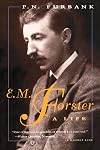
This an excellent biography of one of my favourite authors!
Lists
Awards


You May Also Like


Associated Authors
Statistics
- Works
- 29
- Also by
- 13
- Members
- 424
- Popularity
- #57,553
- Rating
- 3.8
- Reviews
- 3
- ISBNs
- 46
- Languages
- 1