
Philipp Blom
Author of The Vertigo Years: Europe, 1900-1914
About the Author
Philipp Blom, the best-selling author of Fracture: Life and Culture in the West and The Vertigo Years: Europe 1900-1914, lives in Vienna.
Works by Philipp Blom
A Wicked Company: The Forgotten Radicalism of the European Enlightenment (2010) 444 copies, 10 reviews
Nature's Mutiny: How the Little Ice Age of the Long Seventeenth Century Transformed the West and Shaped the Present (2017) 363 copies, 7 reviews
Enlightening the World: Encyclopedia, The Book That Changed the Course of History (2004) 195 copies, 3 reviews
De onderwerping een geschiedenis van de verhouding van de mens tot de natuur (2022) 51 copies, 1 review
Eine italienische Reise: Auf den Spuren des Auswanderers, der vor 300 Jahren meine Geige baute (2018) 41 copies
Angelo Soliman : ein Afrikaner in Wien ; [376. Sonderausstellung des Wien-Museums, Wien-Museum 29. September 2011 bis 29. Jänner 2012] (2011) — Editor; Contributor — 10 copies, 1 review
Gefangen im Panoptikum: Reisenotizen zwischen Aufklärung und Gegenwart (Unruhe bewahren) (2017) 6 copies
Aufklärung in Zeiten der Verdunkelung: Ein kämpferischer Aufruf zu neuer Denkkultur und Klarheit – Notwendigkeit für Fürsorge, Solidarität &… (2023) 2 copies
2009 1 copy
Die historischen Romane 1 copy
Associated Works
Tagged
Common Knowledge
- Canonical name
- Blom, Philipp
- Birthdate
- 1970-01-22
- Gender
- male
- Education
- University of Oxford
- Occupations
- historian
writer
journalist
translator - Awards and honors
- Gleim-Literaturpreis (2011)
- Relationships
- Buckley, Veronica (wife)
- Nationality
- Germany
- Birthplace
- Hamburg, Germany
- Places of residence
- Vienna, Austria
Oxford, Oxfordshire, England, UK
London, England, UK
Paris, France
Los Angeles, California, USA
Members
Reviews
Nature's Mutiny: How the Little Ice Age of the Long Seventeenth Century Transformed the West and Shaped the Present by Philipp Blom
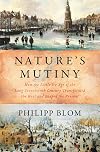
There are basically two ways to approach this book, which is essentially an extended essay. On one hand, you can treat it as a potted history of how the Little Ice Age of the subtitle was a hammer that broke the Medieval mindset and opened the way to the Enlightenment and market values that, twenty or so years ago, seemed to represent the "end of history." However, Blom (who wrote this book as a way of understanding how societies respond to global climate changes), suggests that the our show more much-celebrated market and rationalist values should be understood as a very manicured version of the intellectual ferment of the "long" seventeenth century, and that the way forward is going to depend on setting aside cultural triumphalism and engaging in some hard-headed engagement with the world as it is. This would entail, at the very least, a more modest understanding of our personal place in the world. Otherwise Humanity would seem to be in store for another war of all against all. show less
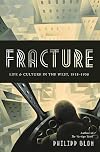
Fracture: Life and Culture in the West, 1918-1938 is a serious but surprisingly enjoyable work of history. The narrative structure presents the twenties as the post-war decade and the thirties as the pre-war decade. Chapters have designated years followed by an assigned title. Within the chapter the discussion may range across the title time frame of 1918-1938, but a logical flow is maintained. Some of the chapters focus on immediately recognizable events or icons - 1925 and the Scopes show more “monkey” trial or the chapter devoted to Betty Boop and her catch phrase of Boop-Boo[-Ba-Doop. But other chapters raise awareness of more negative outcomes – vocabulary such as Homodolor and place names such as Guernica. Author Phlipp Blom discusses the shifts in fashion (Chanel), music (jazz), film (Metropolis) and attitudes on alcohol (Prohibition) but his focus is on the larger story of how American as well as European populations adapted and re-organized in the wake of the shocks introduced by the first World War. He strikes a balance between the attention given over to the essentially frivolous and the attention demanded by the more weighty hardships caused by politicians, economists, and the military.
There are some downsides. Chapters are long – 20-25 pages at a minimum. There may not be clear connections made between events discussed in the chapters designated as post-war and those discussed in the pre-war chapters. But there is a remarkably hefty bibliography as well as a lengthy index.
Definitely a worthwhile read. show less
There are some downsides. Chapters are long – 20-25 pages at a minimum. There may not be clear connections made between events discussed in the chapters designated as post-war and those discussed in the pre-war chapters. But there is a remarkably hefty bibliography as well as a lengthy index.
Definitely a worthwhile read. show less
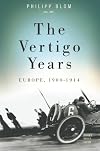
Attempting to write of Europe prior to World War I while adopting the pose that the Twentieth Century was an unwritten book, Blom's overarching response is that this was no "Belle Epoch" but a century that started out compromised. Compromised by its bewilderment that scientific rationality and economic development had produced incomprehensibility and social disorder. Compromised by how sexual relations previously constrained by convention and religion seemed to breaking down. Compromised by show more political leadership unable to recognize that there was a systemic crisis taking place and that even if there had been a general recognition it's unlikely that empty place holders such as the likes of Wilhelm of Germany, Franz Joseph of Austria or Nicholas of Russia could have been circumvented to provide answers. All of this leading to a flight to unreason as the avenue by which to relate to what could not be assimilated, which found a variety of expressions ranging from modern art to fascist politics to desperate throws of the geopolitical dice.
While I'm not really the person for whom this book was written, Blom writes with aplomb and wit and I greatly enjoyed his style. He also does nothing to assuage my own unease at the current state of things. As another generation of futurists noted (the "cyberpunk" writers such as William Gibson & Bruce Sterling) the future is unevenly distributed and the United States seems to be leaving the last time bubbles of 19th-century thinking with about as much grace as the European powers did. In my darkest moments I hope that we do not commemorate the centennial of 1914 with another Great Power war. show less
While I'm not really the person for whom this book was written, Blom writes with aplomb and wit and I greatly enjoyed his style. He also does nothing to assuage my own unease at the current state of things. As another generation of futurists noted (the "cyberpunk" writers such as William Gibson & Bruce Sterling) the future is unevenly distributed and the United States seems to be leaving the last time bubbles of 19th-century thinking with about as much grace as the European powers did. In my darkest moments I hope that we do not commemorate the centennial of 1914 with another Great Power war. show less
Picking up where "Vertigo" left off, Blom continues his examination of the impact of Modernity on Western civilization. The difference here with this year-by-year examination of the shocks of the Twenties & Thirties is that with "Vertigo" Blom could adopt the pose that history was an unwritten book, and that World War I was not inevitable. With this book you're dealing with an environment where the question was not whether the war would come, but when. This is also keeping in mind that Blom show more regards the world wars of the 20th century as being more symptom than cause. While I'm not really the person that this book is written for, I enjoy Blom's writing style and even for an experienced student of the period there are the little details that illuminate. As for Blom's final conclusions, he notes that the great political faiths of the period in question really failed to get to grips with the continuous revolution of Modernity, but the current stasis of the "end of history" seems to mostly hope to hide from the next onslaught, whereas everything suggests that the current era of the global market and the "shock economy" is likely to be as shaken by events as the eras ending in 1914 & 1939 were. show less
Lists
Awards


You May Also Like


Associated Authors
Statistics
- Works
- 36
- Also by
- 4
- Members
- 2,680
- Popularity
- #9,582
- Rating
- 3.9
- Reviews
- 57
- ISBNs
- 150
- Languages
- 9
- Favorited
- 5
