
Peter Parker (1) (1954–)
Author of Isherwood: A Life Revealed
For other authors named Peter Parker, see the disambiguation page.
Series
Works by Peter Parker
Associated Works
Tagged
Common Knowledge
Members
Reviews

Normally, when you turn to a biography it's because you know about the public life of the subject - books written, posts held, prizes won, etc. - and would like to discover something of how all this fits in with their personal life, family background, and so on. With any luck, the biographer has uncovered a few juicy scandals that the subject kept quiet.
With J. R. Ackerley, it's more or less the opposite. Anyone sufficiently interested in him to bother to read this biography has certainly show more read Ackerley's posthumously-published memoir My father and myself, in which he gleefully exposes all the dark secrets of his family background and tells us all about his own outrageous sex life (in My dog Tulip he did the same thing for his dog). The unfortunate biographer is left with filling in a few personal matters that Ackerley couldn't tell us in 1967 (in particular, about his problematic relationship with his sister Nancy, who died in 1979), and with describing Ackerley's worthy but by no means spectacular literary career.
Anyone who has read My father and myself will have been puzzled at the shortness of the list of publications in Ackerley's c.v. - 3 volumes of memoirs, 1.25 collections of poetry, 1 play, 1 novel. We feel instinctively that someone with such a sure touch for light, ironic English prose must have written far more than this. Parker doesn't offer an easy solution to this mystery, but he does give us some clues. One thing that leaps out is that Ackerley was not very much inclined towards fiction - both his play The prisoners of war and his novel We think the world of you are largely autobiographical, and had to be edited carefully to avoid problems with the libel laws. His writing is at its liveliest when he is writing about himself, as in My father and myself and Hindoo holiday, and there he was even more constrained because of the impossibility, during his lifetime, of writing explicitly about homosexuality. Ackerley's close friend, E.M. Forster, had the same difficulty, of course. Ackerley was much more combative than Forster, but even he couldn't risk publishing things that would implicate his friends in what was then considered criminal activity (even assuming any publisher had been brave enough to risk an obscenity prosecution on his behalf).
What also becomes clear from Parker's account was that Ackerley was an obsessive tinkerer, working at his manuscripts for years until they were perfect, and ready to go into battle with all guns blazing if a publisher tried to change something. Under those conditions, it's perhaps surprising he wrote as much as he did. show less
With J. R. Ackerley, it's more or less the opposite. Anyone sufficiently interested in him to bother to read this biography has certainly show more read Ackerley's posthumously-published memoir My father and myself, in which he gleefully exposes all the dark secrets of his family background and tells us all about his own outrageous sex life (in My dog Tulip he did the same thing for his dog). The unfortunate biographer is left with filling in a few personal matters that Ackerley couldn't tell us in 1967 (in particular, about his problematic relationship with his sister Nancy, who died in 1979), and with describing Ackerley's worthy but by no means spectacular literary career.
Anyone who has read My father and myself will have been puzzled at the shortness of the list of publications in Ackerley's c.v. - 3 volumes of memoirs, 1.25 collections of poetry, 1 play, 1 novel. We feel instinctively that someone with such a sure touch for light, ironic English prose must have written far more than this. Parker doesn't offer an easy solution to this mystery, but he does give us some clues. One thing that leaps out is that Ackerley was not very much inclined towards fiction - both his play The prisoners of war and his novel We think the world of you are largely autobiographical, and had to be edited carefully to avoid problems with the libel laws. His writing is at its liveliest when he is writing about himself, as in My father and myself and Hindoo holiday, and there he was even more constrained because of the impossibility, during his lifetime, of writing explicitly about homosexuality. Ackerley's close friend, E.M. Forster, had the same difficulty, of course. Ackerley was much more combative than Forster, but even he couldn't risk publishing things that would implicate his friends in what was then considered criminal activity (even assuming any publisher had been brave enough to risk an obscenity prosecution on his behalf).
What also becomes clear from Parker's account was that Ackerley was an obsessive tinkerer, working at his manuscripts for years until they were perfect, and ready to go into battle with all guns blazing if a publisher tried to change something. Under those conditions, it's perhaps surprising he wrote as much as he did. show less
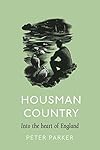
A beautiful extended meditation on Housman’s poetry, its meaning especially to the Great War generation that followed the publication of “A Shropshire Lad” and its continuing impact. It is enjoyably detailed, exploring Housman’s poetry through his life and though landscape that the poems use (although this is often revealed to be the generic English landscape, rather than Shropshire).
There is a chapter on the influence of the poems on English music, which was too detailed for me, show more and a final chapter on the poetry in recent culture, which felt as if it was overstating the case. However there are very interesting chapters on the appropriation of the poetry during the First World War, as expected, but still in the Second World War, and in the discovery of England as a leisure destination between the wars.
The author states that ‘Housman Country’ is very much more than a tourist-board notion, and in this book I go in search of a landscape that is not merely geographical, but also literary, musical, emotional, even, in the broadest sense, spiritual.
The English landscape defines English poetry (from William Wordsworth’s ‘Daffodils’ to Edward Thomas’s ‘Adlestrop’), English painting (Constable and Turner) and English music (Elgar and Vaughan Williams).
The language can at times be overwrought, such as:
In fact, at heart Housman was a romantic – though a romantic of a peculiarly doom-laden and tight-lipped English variety: because one is lapidary, it does not mean one has a heart of stone. The cynicism people detected in Housman’s work was merely the obverse of the romantic medal, for what are cynics if not disappointed romantics?
However, I enjoyed the book immensely, skimming those parts that were too detailed for me, appreciating the frequent quotations, not just from Housman’s poetry, but his prose and that of those who were touched by his poetry. I gained a refreshed and deeper impression of the poetry.
One quote from the poetry:
Clay lies still, but blood’s a rover;
Breath’s a ware that will not keep.
Up, lad: when the journey’s over
There’ll be time enough to sleep.
Go read the poetry, read this book to deepen your understanding of its context and read the poetry. show less
There is a chapter on the influence of the poems on English music, which was too detailed for me, show more and a final chapter on the poetry in recent culture, which felt as if it was overstating the case. However there are very interesting chapters on the appropriation of the poetry during the First World War, as expected, but still in the Second World War, and in the discovery of England as a leisure destination between the wars.
The author states that ‘Housman Country’ is very much more than a tourist-board notion, and in this book I go in search of a landscape that is not merely geographical, but also literary, musical, emotional, even, in the broadest sense, spiritual.
The English landscape defines English poetry (from William Wordsworth’s ‘Daffodils’ to Edward Thomas’s ‘Adlestrop’), English painting (Constable and Turner) and English music (Elgar and Vaughan Williams).
The language can at times be overwrought, such as:
In fact, at heart Housman was a romantic – though a romantic of a peculiarly doom-laden and tight-lipped English variety: because one is lapidary, it does not mean one has a heart of stone. The cynicism people detected in Housman’s work was merely the obverse of the romantic medal, for what are cynics if not disappointed romantics?
However, I enjoyed the book immensely, skimming those parts that were too detailed for me, appreciating the frequent quotations, not just from Housman’s poetry, but his prose and that of those who were touched by his poetry. I gained a refreshed and deeper impression of the poetry.
One quote from the poetry:
Clay lies still, but blood’s a rover;
Breath’s a ware that will not keep.
Up, lad: when the journey’s over
There’ll be time enough to sleep.
Go read the poetry, read this book to deepen your understanding of its context and read the poetry. show less

I can't add more on the content from the previous review, but it's worth mentioning that the book is exceptionally beautiful, with a cover and endpapers featuring reproductions of Agnes Miller Parker's illustrations to A Shropshire Lad. I can't help wondering if the author is any relation?
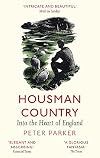
This book is half biography and half literary criticism. Its subject is a man and his poems who conjure up a kind of English identity rooted in the streams, hills, copses, spires, towers and market places of late nineteenth century Shropshire. Housman experienced much loss and was probably, like Henry James, a romantically unembraced gay man. The loss haunts his poem A Shropshire Lad. He was a professor of classic and you can sense the lapidary concision of Horace in his beautiful English show more verse. Parker's book is too long - probably it could have been cut by a third. But for me it is subject matter that is refreshing to visit considering how urban and disconnected to a sense of place the last century has been for us Brits and Australians. show less
Lists
Awards


You May Also Like


Associated Authors
Statistics
- Works
- 10
- Also by
- 2
- Members
- 657
- Popularity
- #38,399
- Rating
- 4.1
- Reviews
- 7
- ISBNs
- 46
- Languages
- 1