
J. R. Ackerley (1896–1967)
Author of My Dog Tulip
About the Author
Works by J. R. Ackerley
Associated Works
The Assassin's Cloak: An Anthology of the World's Greatest Diarists (2000) — Contributor, some editions — 623 copies, 9 reviews
Tagged
Common Knowledge
- Legal name
- Ackerley, Joe Randolph
- Birthdate
- 1896-11-04
- Date of death
- 1967-06-04
- Gender
- male
- Education
- Rossall School, Fleetwood, Lancashire, England, UK
University of Cambridge - Occupations
- journalist
writer
editor
soldier - Organizations
- BBC
The Listener (literary editor)
East Surrey Regiment - Relationships
- Petre, Diana (half-sister)
King, Francis Henry (friend) - Cause of death
- coronary thrombosis
- Nationality
- UK
- Birthplace
- Hern Hill, Kent, London, England, UK
- Places of residence
- London, England, UK
Chhatarpur, Madhya Pradesh, India - Place of death
- Putney, London, England, UK
- Associated Place (for map)
- London, England, UK
Members
Reviews
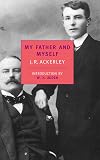
"I was born in 1896 and my parents were married in 1919."
A most intriguing memoir of what-ifs and no resolution. Upon his father's death, Ackerley realises how little he knew about his own father's past and explores it with what personal and public resources available (it's not everyday that one's father is known as the Banana King of London).
A little historical aside: England and Wales decriminalised same-sex sexual relations in 1967, while this book was published posthumously in 1968 show more (although Ackerley claimed he had written it 20 years earlier and just chucked it in a drawer).
As an openly gay man at his time of writing, Ackerley grapples with the lost opportunities of discussing his sexuality with his father. He however was very open with the reader (surprisingly explicit at times - but maybe not surprising when I consider his weird book My Dog Tulip and his father's sometime bawdiness).
As he does, I also wonder how this memoir would've been like if Stockley hadn't convinced him to burn his father's desk of letters. Considering his father's absolute support of him, wanting to read his basically-autobiographical works and not pressuring him to join the fruit business, I think the father and son would've had even more to bond over.
Despite the title, the book actually delves into more than just the two titular people. At times disjointed, its blend of family unconventionality and good writing launches it into the realm of a classic memoir. Knowing next to nothing about Ackerley is probably the best way to get into this. show less
A most intriguing memoir of what-ifs and no resolution. Upon his father's death, Ackerley realises how little he knew about his own father's past and explores it with what personal and public resources available (it's not everyday that one's father is known as the Banana King of London).
A little historical aside: England and Wales decriminalised same-sex sexual relations in 1967, while this book was published posthumously in 1968 show more (although Ackerley claimed he had written it 20 years earlier and just chucked it in a drawer).
As an openly gay man at his time of writing, Ackerley grapples with the lost opportunities of discussing his sexuality with his father. He however was very open with the reader (surprisingly explicit at times - but maybe not surprising when I consider his weird book My Dog Tulip and his father's sometime bawdiness).
As he does, I also wonder how this memoir would've been like if Stockley hadn't convinced him to burn his father's desk of letters. Considering his father's absolute support of him, wanting to read his basically-autobiographical works and not pressuring him to join the fruit business, I think the father and son would've had even more to bond over.
Despite the title, the book actually delves into more than just the two titular people. At times disjointed, its blend of family unconventionality and good writing launches it into the realm of a classic memoir. Knowing next to nothing about Ackerley is probably the best way to get into this. show less

Art is illusion, of course, but this memoir gives at least the illusion of breathtaking candour and unflinching self-disclosure in which a desire for the reader's approval plays no part. The ostensible theme of the book, as the title suggests, is the author's lack of curiosity about or insight into his father's inner or indeed outer life, but in the process we learn more about the author's life than we probably know about most of our supposed intimates. I found it a consistently fascinating show more read. show less

If the name of Joe Ackerley still means anything to you, fifty years after his death, then it's probably because you're interested in LGBT literary history and you know about his long friendship with E.M. Forster and have read his saucy posthumous memoir My father and myself. Or because you're a dog-lover and have read My dog Tulip, where he is equally unrestrained in talking about the sex-life of his Alsatian bitch (called Queenie in real life).
In his own time, though, Ackerley was better show more known as the literary editor of the BBC weekly, The Listener, and a large portion of the letters Neville Braybrooke has assembled here come from his twenty-five years commissioning reviews of new books and art exhibitions. There are letters to just about all the prominent names of literary London from the thirties to the sixties: regular reviewers include people like Edwin Muir, Stephen Spender and Roy Fuller, but there are also plenty of little groups of letters to specialists in particular fields, like Sir Kenneth Clark (who became a personal friend, but rarely had time actually to write a review). And there's a moderately hilarious exchange with John Maynard Keynes in 1936, where it takes a lot of delicate negotiation to resolve the impasse between what the inflexible BBC bureaucracy will pay and what Keynes considers his writing is worth (Braybrooke prints it in an Appendix, including both sides of the correspondence). The most interesting letters are the ones where we see Ackerley-the-editor in action, showing a correspondent how to save what looks like an irredeemably-lost piece of writing by means of a few subtle changes.
There is also a great deal of correspondence with publishers and others about Ackerley's own books, which helps to make it clear why he published so little. At every stage there would be nervous voices telling him to make cuts to avoid potential problems with libel or obscenity: whenever the cuts got to the point where the book itself had disappeared, he would change publishers and start again.
If you're looking for gay gossip, there's not much in the first part of the book — Ackerley doesn't seem to have had any qualms about mixing private matters with business correspondence, but he was writing on BBC notepaper, so he (or Braybrooke) knew where to draw the line. After his retirement, he's a little less inhibited, and there are some quite racy accounts of his adventures in Athens and on a trip to Japan to visit his friends James Kirkup and Francis King.
Although it took Braybrooke a remarkably long time to edit this book (more than eight years), Ackerley's sister Nancy West was still alive when it came out, so Braybrooke cuts out anything in the letters that relates to her mental health problems, which were one of Ackerley's biggest worries during his last years. However, Forster had died (in 1970, three years after Ackerley), and we do get some very interesting letters about his last years.
There are some remarkably silly cuts in the book: one trivial example is in a letter of February 1963, where we read that "My half-sister, Sally ____, became Duchess of ____ last week..." It's perfectly understandable that a (dowager) duchess, even in 1975, might prefer not to advertise the fact that she was the illegitimate daughter of the rakish Roger Ackerley, but that sentence doesn't do anything to conceal her identity. The newspapers in 1963 didn't fail to mention Gerald Grosvenor's unexpected inheritance of the title that made him the richest man in England for a few years, and not many readers would have forgotten that by 1975. Even if they had, the blanks would have been a great stimulus to look it up, even in those pre-Wikipedia days!
Otherwise, there's not much to complain about in the editing, although Braybrooke does have an irritating tendency to footnote things we already know from the notes to the previous letter. At least the notes are on the page, so you don't need a finger stuck in the back of the book.
On the whole, Peter Parker's biography from ten years later is a much more useful resource on Ackerley's life, but this book is a nice bonus, with some interesting behind-the-scenes stuff about how literary journalism worked in the mid-20th century. show less
In his own time, though, Ackerley was better show more known as the literary editor of the BBC weekly, The Listener, and a large portion of the letters Neville Braybrooke has assembled here come from his twenty-five years commissioning reviews of new books and art exhibitions. There are letters to just about all the prominent names of literary London from the thirties to the sixties: regular reviewers include people like Edwin Muir, Stephen Spender and Roy Fuller, but there are also plenty of little groups of letters to specialists in particular fields, like Sir Kenneth Clark (who became a personal friend, but rarely had time actually to write a review). And there's a moderately hilarious exchange with John Maynard Keynes in 1936, where it takes a lot of delicate negotiation to resolve the impasse between what the inflexible BBC bureaucracy will pay and what Keynes considers his writing is worth (Braybrooke prints it in an Appendix, including both sides of the correspondence). The most interesting letters are the ones where we see Ackerley-the-editor in action, showing a correspondent how to save what looks like an irredeemably-lost piece of writing by means of a few subtle changes.
There is also a great deal of correspondence with publishers and others about Ackerley's own books, which helps to make it clear why he published so little. At every stage there would be nervous voices telling him to make cuts to avoid potential problems with libel or obscenity: whenever the cuts got to the point where the book itself had disappeared, he would change publishers and start again.
If you're looking for gay gossip, there's not much in the first part of the book — Ackerley doesn't seem to have had any qualms about mixing private matters with business correspondence, but he was writing on BBC notepaper, so he (or Braybrooke) knew where to draw the line. After his retirement, he's a little less inhibited, and there are some quite racy accounts of his adventures in Athens and on a trip to Japan to visit his friends James Kirkup and Francis King.
Although it took Braybrooke a remarkably long time to edit this book (more than eight years), Ackerley's sister Nancy West was still alive when it came out, so Braybrooke cuts out anything in the letters that relates to her mental health problems, which were one of Ackerley's biggest worries during his last years. However, Forster had died (in 1970, three years after Ackerley), and we do get some very interesting letters about his last years.
There are some remarkably silly cuts in the book: one trivial example is in a letter of February 1963, where we read that "My half-sister, Sally ____, became Duchess of ____ last week..." It's perfectly understandable that a (dowager) duchess, even in 1975, might prefer not to advertise the fact that she was the illegitimate daughter of the rakish Roger Ackerley, but that sentence doesn't do anything to conceal her identity. The newspapers in 1963 didn't fail to mention Gerald Grosvenor's unexpected inheritance of the title that made him the richest man in England for a few years, and not many readers would have forgotten that by 1975. Even if they had, the blanks would have been a great stimulus to look it up, even in those pre-Wikipedia days!
Otherwise, there's not much to complain about in the editing, although Braybrooke does have an irritating tendency to footnote things we already know from the notes to the previous letter. At least the notes are on the page, so you don't need a finger stuck in the back of the book.
On the whole, Peter Parker's biography from ten years later is a much more useful resource on Ackerley's life, but this book is a nice bonus, with some interesting behind-the-scenes stuff about how literary journalism worked in the mid-20th century. show less
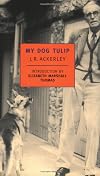
Unintentionally (?) hilarious. Ackerley straddles the line between overly involved creep and truly devoted dog owner, with some passages rivalling Sade in their matter of fact grotesqueness (perhaps I have the uneducated aesthetic taste of a savage but extended sentences concerning an Alsatian’s vulva make me squirm and uncomfortably burst out laughing).
SPOILER: he doesn’t end up fucking his dog, much to my chagrin (someone I had spoken to intimated that such a thing occurred and show more attested to a controversial aura around this book that has since been proven entirely fictional — lying bastard). show less
SPOILER: he doesn’t end up fucking his dog, much to my chagrin (someone I had spoken to intimated that such a thing occurred and show more attested to a controversial aura around this book that has since been proven entirely fictional — lying bastard). show less
Lists
Awards


You May Also Like


Associated Authors
Statistics
- Works
- 11
- Also by
- 10
- Members
- 2,139
- Popularity
- #12,032
- Rating
- 3.8
- Reviews
- 62
- ISBNs
- 68
- Languages
- 6
- Favorited
- 3