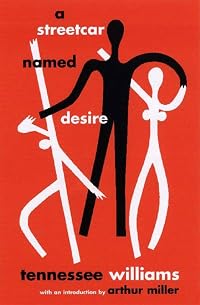
A Streetcar Named Desire
by Tennessee Williams
On This Page
Description
Caedmon is proud to release this archival full-cast recording of Tennessee Williams's A Streetcar Named Desire on cd for the first time! Blanche DuBois arrives at her sister Stella's New Orleans apartment seeking refuge from a troubled past-but her ethereal spirit irks Stella's husband, the loutish Stanley Kowalski. Crudely, relentlessly, he unmasks the lies and delusions that sustain Blanche, until her frail hold on reality is shockingly severed. This atmospheric recording of Tennessee show more Williams's powerful classic stars Rosemary Harris and James Farentino as Blanche and Stanley-roles they performed to acclaim in a smash revival at New York's Lincoln Center. show lessTags
Recommendations









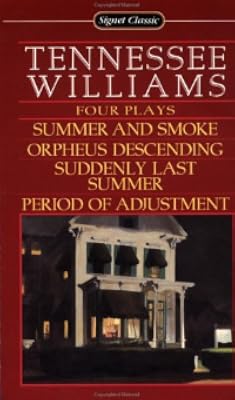

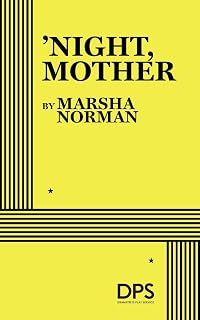
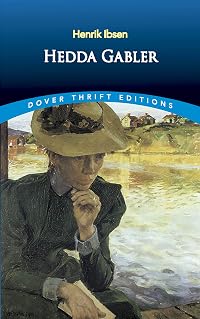

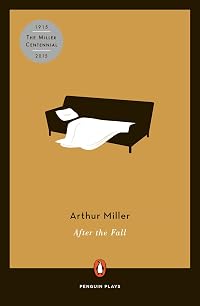












Member Recommendations


Member Reviews
Stepping off a streetcar run by the Desire line in New Orleans, the flighty Southern belle Blanche DuBois steps into the lives of her sister Stella and her primally masculine, roughneck husband Stanley, who live in a small, two-room apartment in an unpromising district of the city. What follows is a series of entertaining sparks from Tennessee Williams' carefully-crafted tinderbox.
There might not be any deeper theme to Williams' play, beyond the idea that people "needn't [be] cruel to someone alone" (pg. 81) – an irony brought home by the play's famous line, delivered by Blanche, that she has "always depended on the kindness of strangers" (pg. 107). Said by Blanche at a moment in the play when she has been treated cruelly – and show more needlessly so – it throws into tragically harsh light the idea that, with such a worldview, Blanche was always destined to be crushed by cold reality. Her old-fashioned idea of how people should interact (even if she doesn't follow it herself) comes up against the brute reality-check of Stanley Kowalski. And it's not that Stanley is particularly villainous. Blanche was always eventually going to cross paths with someone who would provide this reality-check.
There are things to discuss then, but less in theme and more in how the characters interact. I didn't find Blanche as sympathetic as many others appear to, and I thought the real victim of the story was Stella, caught between her overpowering and high-maintenance sister Blanche on one hand and her abusive husband Stanley on the other. I would have liked the play to focus more on the compromises Stella makes than the traps that Blanche wilfully falls into. The question of why women like Stella stay with men like Stanley is an interesting one, but one that the play does not take the opportunity to address – and one which hasn't, as far as I am aware, really been addressed in commentary on the play. Stanley has become rooted in popular culture as a smouldering and desirable bad boy, epitomised in his famous portrayal by Marlon Brando, and while this might be great for the play's popularity it distracts from the real implications of Stanley. Mostly, the orthodox ruling on the play has been that Stanley is a predatory male, a brute and a villain, and that Blanche and Stella are innocent birds caught in his trap – while simultaneously granting us licence to swoon over him when shirtless (a hypocrisy also found in modern depictions of Mr. Darcy in Pride and Prejudice). Such an orthodoxy denies the two women characters the agency they display on every page – it is a Blanche-like fiction obscuring the cold realism the man provides.
This, however, is a fault in how we have absorbed the play into our popular culture, not with Williams' play itself. Williams himself provides us with the nuance in how his characters interact, and it is up to us to choose how to interpret that. If a deeper theme isn't penetrated, Williams nevertheless provides greater scope and grandeur by staging his scenes evocatively, and in how naturally his dialogue comes across. My ultimate impression of A Streetcar Named Desire was as something of a high-class soap opera; too well-made to be dismissed as frivolous, and with a few trappings that make it appear grand, but not deep enough to provide a lasting fascination either. show less
There might not be any deeper theme to Williams' play, beyond the idea that people "needn't [be] cruel to someone alone" (pg. 81) – an irony brought home by the play's famous line, delivered by Blanche, that she has "always depended on the kindness of strangers" (pg. 107). Said by Blanche at a moment in the play when she has been treated cruelly – and show more needlessly so – it throws into tragically harsh light the idea that, with such a worldview, Blanche was always destined to be crushed by cold reality. Her old-fashioned idea of how people should interact (even if she doesn't follow it herself) comes up against the brute reality-check of Stanley Kowalski. And it's not that Stanley is particularly villainous. Blanche was always eventually going to cross paths with someone who would provide this reality-check.
There are things to discuss then, but less in theme and more in how the characters interact. I didn't find Blanche as sympathetic as many others appear to, and I thought the real victim of the story was Stella, caught between her overpowering and high-maintenance sister Blanche on one hand and her abusive husband Stanley on the other. I would have liked the play to focus more on the compromises Stella makes than the traps that Blanche wilfully falls into. The question of why women like Stella stay with men like Stanley is an interesting one, but one that the play does not take the opportunity to address – and one which hasn't, as far as I am aware, really been addressed in commentary on the play. Stanley has become rooted in popular culture as a smouldering and desirable bad boy, epitomised in his famous portrayal by Marlon Brando, and while this might be great for the play's popularity it distracts from the real implications of Stanley. Mostly, the orthodox ruling on the play has been that Stanley is a predatory male, a brute and a villain, and that Blanche and Stella are innocent birds caught in his trap – while simultaneously granting us licence to swoon over him when shirtless (a hypocrisy also found in modern depictions of Mr. Darcy in Pride and Prejudice). Such an orthodoxy denies the two women characters the agency they display on every page – it is a Blanche-like fiction obscuring the cold realism the man provides.
This, however, is a fault in how we have absorbed the play into our popular culture, not with Williams' play itself. Williams himself provides us with the nuance in how his characters interact, and it is up to us to choose how to interpret that. If a deeper theme isn't penetrated, Williams nevertheless provides greater scope and grandeur by staging his scenes evocatively, and in how naturally his dialogue comes across. My ultimate impression of A Streetcar Named Desire was as something of a high-class soap opera; too well-made to be dismissed as frivolous, and with a few trappings that make it appear grand, but not deep enough to provide a lasting fascination either. show less
When I was reading the 9nth scene I wanted to rate this play with 5 stars. When I finished it I wanted to give it 1 star.
I hate it.
But it's awesome.
I have strong objections with the last 2 scenes. I don't think they should exist. They're not necessary. The point of the play has already been made and the emotional impact on the reader/viewer is already immense. It's understandable why Williams wanted to go to the extreme but I found it pointless. I felt like he was trying to rip my soul to shreds, and it did the exact opposite.
In all, it's a great play, from one of the masters of the stage, and the value of A Streetcar of Desire is timeless. Regardless of my own objections, it's a play that must be read by everyone who enjoys not only show more theater, but great classic literature as well. show less
I hate it.
But it's awesome.
I have strong objections with the last 2 scenes. I don't think they should exist. They're not necessary. The point of the play has already been made and the emotional impact on the reader/viewer is already immense. It's understandable why Williams wanted to go to the extreme but I found it pointless. I felt like he was trying to rip my soul to shreds, and it did the exact opposite.
In all, it's a great play, from one of the masters of the stage, and the value of A Streetcar of Desire is timeless. Regardless of my own objections, it's a play that must be read by everyone who enjoys not only show more theater, but great classic literature as well. show less
A formerly-rich Southern Belle spends a few weeks with her sister and her working-class husband. No-one can know she’s really poor and desperate, but her brother-in-law feels punched in the working class by her very presence and sets out to diminish her. Tensions simmer and are expressed through spite, violence and power games.
I liked this one a lot better than Who’s afraid of Virginia Woolf?, which I read earlier this month. At least the characters in this one seem human, can be empathized with, show some characterization. And not just a little: they’re fully fleshed out and do not really feel like made-up people in made-up circumstances. I enjoyed not enjoying spending time with them.
Very well done!
I liked this one a lot better than Who’s afraid of Virginia Woolf?, which I read earlier this month. At least the characters in this one seem human, can be empathized with, show some characterization. And not just a little: they’re fully fleshed out and do not really feel like made-up people in made-up circumstances. I enjoyed not enjoying spending time with them.
Very well done!
Must reading for the #MeToo generation. This play is rough; it makes The Yellow Wallpaper seem like a quaint weekend vacation. Tennessee Williams really nails the subjugation of women in a male-dominated culture, and how those women who attempt to stand-up against it or define their own roles are mercilessly destroyed. For those who think that the feminism movement is just about equal pay and workplace harassment, this play should be an eye-opener.
this is well written and interesting, with a story that keeps you moving forward and a lot of layers to peel away. i've never read a play before that was sectioned only by scenes and not acts, so that was new for me, and i kind of liked it.
the themes that i found most interesting were fantasy/illusion vs reality and mental illness (and its relation to fantasy/illusion vs reality). it's also interesting to me that williams pits the two main characters against each other, neither of whom are likable, which (sort of) causes a reader to choose a side when neither side is a natural choice. (for me, blanche is a much more sympathetic character than stanley, as she is ruining herself and has experienced a great deal of suffering, whereas he is show more sometimes violent and predatory to others, and often rude and sexist. but that doesn't make blanche a character that many people would probably like. as i type that i realize that blanche, though, is also responsible to some degree for her young husband's suicide as well as what today would be sexual assault of her student, although probably wasn't as "serious" a situation in 1947.)
it's hard for me to believe that i'd never read this and had no knowledge of the story at all. i didn't expect that there would be a gay theme and i'm a little disappointed in his handling of sex (and maybe an underlying statement about being true to yourself?) but overall found this a quick but layered read and i'm glad i finally got to it. show less
the themes that i found most interesting were fantasy/illusion vs reality and mental illness (and its relation to fantasy/illusion vs reality). it's also interesting to me that williams pits the two main characters against each other, neither of whom are likable, which (sort of) causes a reader to choose a side when neither side is a natural choice. (for me, blanche is a much more sympathetic character than stanley, as she is ruining herself and has experienced a great deal of suffering, whereas he is show more sometimes violent and predatory to others, and often rude and sexist. but that doesn't make blanche a character that many people would probably like. as i type that i realize that blanche, though, is also responsible to some degree for her young husband's suicide as well as what today would be sexual assault of her student, although probably wasn't as "serious" a situation in 1947.)
it's hard for me to believe that i'd never read this and had no knowledge of the story at all. i didn't expect that there would be a gay theme and i'm a little disappointed in his handling of sex (and maybe an underlying statement about being true to yourself?) but overall found this a quick but layered read and i'm glad i finally got to it. show less
"A Streetcar Named Desire" is a captivating play by Tennessee Williams, exploring themes of desire, identity, illusion, and the clash between old Southern values and the emerging modern world. It’s a masterful weave that portrays the complexities of human relationships and the struggle for power and dominance. One of the most intriguing aspects of the play is the character of Blanche DuBois. Her descent into madness and her desperate attempts to cling to her illusions make her a tragic figure, evoking both sympathy and disdain from the audience. Contrast this with Stanley, who embodies raw masculinity and represents the changing social landscape of post-war America. His aggression and dominance over Blanche symbolize the decline of show more the old Southern aristocracy and the rise of a new, more ruthless order. Moreover, it continues to resonate with audiences today. Its exploration of universal themes and complex characters makes it one of the greatest plays of the 20th century. show less
Williamstown Theatre version. Strong play with strong performances that was a hard listen due to the content. Like the grimiest COPS episode where a gaggle of alcoholics and wife beaters take turns telling lies, cheating, abusing and raping each other. The play gets very theatrical and so do the characters, but the realism of the lives spiralling the drain shine through clear enough. In terms of emotional impact one of the best plays I've listened to.
Members
- Recently Added By
Lists

Plays I Like
230 works; 31 members

Well-Educated Mind
150 works; 3 members

The Well-Educated Mind Reading Challenge
75 works; 7 members

Books Read in 2021
5,361 works; 114 members
Stage Plays/Screenplays/Dialogues/Anything Dialogue-Storytelling Related
81 works; 2 members

Every Non-Musical Play Nominated for a Tony Award
64 works; 3 members
r/acting on Reddit - Essential Plays
44 works; 2 members

Books Read in 2005
182 works; 7 members

Best Books With Sisters
130 works; 30 members

Rory Gilmore Book Club
193 works; 5 members
1:28 p.m.'s 350 Stage Plays Challenge
94 works; 3 members

Greatest Books, allegedly
484 works; 9 members
Five star books
1,767 works; 110 members

AP Lit
363 works; 6 members

Mustich's 1000 Books to Read Before You Die: A Life Changing List
1,001 works; 20 members
Essential/Recognized Stage Plays
115 works; 4 members

The Well-Educated Mind, Susan Wise Bauer, 2016
179 works; 3 members

Recommended Reading : 600 Classics Reviewed, Editors of Salem Press, 2015
634 works; 6 members
Books in Riverdale
123 works; 3 members

The Torchlight List
95 works; 1 member
My Play Collection
769 works; 3 members

Titles to Avoid
6 works; 1 member

Books Read in 2020
4,379 works; 124 members
Mensa for Kids Excellence in Reading Award Program (Grades 9-12)
116 works; 3 members

Books featuring alcoholics
103 works; 18 members

Best Antiheroes and Antiheroines
119 works; 7 members

Books You Read During High School (For School)
301 works; 53 members

Watched the Movie, Probably Won't Read the Book
185 works; 34 members

20th Century Literature
1,161 works; 55 members
The Top Ten: Writers Pick Their Favorite Books
240 works; 31 members

Books Set in Louisiana
29 works; 8 members
Most Depressing Books
69 works; 16 members

Books Featured on Gilmore Girls
307 works; 21 members

Théâtre
10 works; 1 member
American Lit for Eng 11 Research Project
368 works; 6 members
1940s
221 works; 25 members

Fiction about the Working Class
74 works; 10 members

Banned or Challenged Books
400 works; 41 members
Harold Bloom - The Western Canon: D. The Chaotic Age
833 works; 24 members

Favourite Books
1,819 works; 316 members

Books Read in 2016
4,666 works; 199 members

New Orleans
13 works; 4 members

Books Read in 2017
4,249 works; 130 members
Southern Fiction
212 works; 52 members
Mensa for Kids Excellence in Reading Award Program (Grades 9-12)
116 works; 5 members

Books Tagged Abuse
152 works; 4 members
End of Your Life Book Club
134 works; 4 members
The Complete Rory Gilmore Reading List
506 works; 5 members
Talk Discussions
Past Discussions
A Streetcar Named Desire by Tennessee Williams – LIMITED EDITIONS CLUB 1982 in George Macy devotees (June 2025)
Author Information

335+ Works 32,040 Members
After O'Neill, Williams is perhaps the best dramatist the United States has yet produced. Born in his grandfather's rectory in Columbus, Mississippi, Williams and his family later moved to St. Louis. There Williams endured many bad years caused by the abuse of his father and his own anguish over his introverted sister, who was later permanently show more institutionalized. Williams attended the University of Missouri, and, after time out to clerk for a shoe company and for his own mental breakdown, also attended Washington University of St. Louis and the University of Iowa, from which he graduated in 1938. Williams began to write plays in 1935. During 1943 he spent six months as a contract screenwriter for MGM but produced only one script, The Gentleman Caller. When MGM rejected it, Williams turned it into his first major success, The Glass Menagerie (1945). In this intensely autobiographical play, Williams dramatizes the story of Amanda, who dreams of restoring her lost past by finding a gentleman caller for her crippled daughter, and of Amanda's son Tom, who longs to escape from the responsibility of supporting his mother and sister. After The Glass Menagerie,Williams wrote his masterpiece, A Streetcar Named Desire, (1947), along with a steady stream of other plays, among them such major works as Summer and Smoke(1948), Cat on a Hot Tin Roof (1954), and Suddenly Last Summer (1958). His plays celebrate the "fugitive kind," the sensitive outcasts whose outsider status allows them to perceive the horror of the world and who often give additional witness to that horror by becoming its victims. Stephen S. Stanton has summed up Williams's "virtues and strengths" as "a genius for portraiture, particularly of women, a sensitive ear for dialogue and the rhythms of natural speech, a comic talent often manifesting itself in "black comedy,' and a genuine theatrical flair exhibited in telling stage effects attained through lighting, costume, music, and movements." After The Night of the Iguana (1961), Williams continued to write profusely---and constantly to revise his work---but it became more difficult to get productions of his plays and, if they were produced, to win critical or popular acclaim for them. Williams won the Pulitzer Prize for drama for A Streetcar Named Desire and Cat on a Hot Tin Roof. He won the New York Drama Critics Circle Award for these two and for The Glass Menagerie and The Night of the Iguana. (Bowker Author Biography) show less
Some Editions
Awards and Honors
Awards
Notable Lists
Series
Belongs to Publisher Series
Work Relationships
Is contained in
Teatro: La gatta sul tetto che scotta; Improvvisamente l'estate scorsa, La rosa tatuata, Un tram che si chiama desiderio by Tennessee Williams
The Glass Menagerie / A Streetcar Named Desire / Cat on a Hot Tin Roof / Suddenly Last Summer by Tennessee Williams
The Norton Anthology of American Literature, Seventh Edition: Volume E: 1945 to the Present by Nina Baym
Is retold in
Has the adaptation
Inspired
Has as a study
Has as a commentary on the text
Has as a student's study guide
Tennessee Williams's The Glass Menagerie and A Streetcar Named Desire (Barron's Book Notes) by George Ehrenhaft
Lektürehilfen. A Streetcar Named Desire: Ausführliche Inhaltsangabe mit Interpretation. Inklusive Abitur-Fragen mit Lösungen by Tennessee Williams
Common Knowledge
- Canonical title
- A Streetcar Named Desire
- Original title
- A Streetcar Named Desire
- Original publication date
- 1947
- People/Characters
- Blanche DuBois; Stella Kowalski; Stanley Kowalski; Harold Mitchell (Mitch); Eunice; Doctor (show all 7); Matron
- Important places
- New Orleans, Louisiana, USA; Faubourg Marigny; Elysian Fields Avenue
- Related movies
- A Streetcar Named Desire (1951 | IMDb); A Streetcar Named Desire (1984 | IMDb); A Streetcar Named Desire (1995 | IMDb); Great Performances: A Streetcar Named Desire: From the San Francisco Opera (1998 | IMDb)
- Epigraph
- And so it was I entered the broken world
To trace the visionary company of love, its voice
An instant in the wind (I know not whither hurled)
But not for long to hold each desperate choice.
"The Broken Tower" by ... (show all)Hart Crane - First words
- The exterior of a two-storey corner building on a street in New Orleans which is named Elysian Fields and runs between the L&N tracks and the river.
- Quotations
- Stanley [bottle in hand]: Have a shot?
Blanche: No, I – I rarely touch it.
Stanley: Some people rarely touch it, but it touches them often.
Stanley: I never met a woman that didn't kno... (show all)w if she was good-looking or not without being told, and some of them that give themselves credit for more than they've got.
Blanche: Whoever you are – I have always depended on the kindness of strangers.
Blanche: Deliberate cruelty is not forgivable. It is the only unforgivable thing in my opinion and it is the one thing of which I have never, never been guilty.
Blanche: They told me to take a streetcar named Desire, and then transfer to one called Cemeteries and ride six blocks and get off at – Elysian Fields! - Last words
- (Click to show. Warning: May contain spoilers.)STEVE: This game is seven-card stud.
- Publisher's editor
- Hern, Patricia (Methuen Student Edition); Hooper, Michael (Methuen Student Edition)
- Original language*
- Inglese
- Canonical DDC/MDS
- 812.54
- Canonical LCC
- PS3545.I5365
- Disambiguation notice
- This work refers to separate editions of the play. Please do not combine with omnibus editions which contain other plays also, nor with any other version that does not contain the full original text (e.g. abridged or simplifi... (show all)ed texts, movie adaptations, the opera, student guides or notes, etc.).
*Some information comes from Common Knowledge in other languages. Click "Edit" for more information.
Classifications
Statistics
- Members
- 9,244
- Popularity
- 1,148
- Reviews
- 114
- Rating
- (3.92)
- Languages
- 15 — Arabic, Catalan, Chinese, Danish, Dutch, English, French, German, Italian, Korean, Multiple languages, Portuguese, Spanish, Swedish, Turkish
- Media
- Paper, Audiobook, Ebook
- ISBNs
- 101
- UPCs
- 2
- ASINs
- 77