
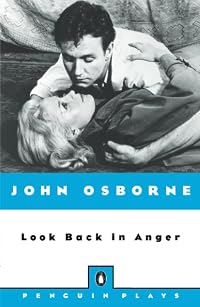
Look Back in Anger
by John Osborne
On This Page
Description
Jimmy Porter barely ekes out a living running a candy stall by day and playing jazz trumpet by night. Although he usually takes his frustrations out on his emotionless wife, Jimmy's scathing tongue and self-loathing seems destined to destroy everything. Set in the UK at the dawn of the 60's social unrest, this savage morality tale spawned the phrase "angry young man." This recording also includes an interview with Dan Rebellato, author of "1956 and All That: The Making of Modern British show more Drama". An L.A. Theatre Works full-cast performance featuring Steven Brand as Cliff; Moira Quirk as Alison; Simon Templeman as Jimmy; James Warwick as Colonel Redhorn; Joanne Whalley as Helena. show lessTags
Recommendations



























Member Recommendations

Member Reviews
Squalid, sketchy, melodramatic, charmless, misanthropic, abrasive, abusive, self-pitying… all but undeserving, frankly, of a proper review. Look Back in Anger has a place in history as the play that injected a bit of vinegar into a stale British theatre scene, but it's so acidic it quickly eats itself up. I can see how it would have seemed daring and scandalous back in the day, but now? It's a bit too Jeremy Kyle. It's a shell so brittle it's long since been reduced to powder.
It's a story of a petty, malicious man-child, convinced of his own stunted greatness, who cajoles two dim females into abusive, co-dependent relationships with him. I say 'story', but in truth it's poor theatre: it's just an unreflective, obnoxious rant with no show more dynamic stage movement, plot, theme or character development. Its successful existence alongside the genuine American playwrights who emerged in the immediate post-war era (Arthur Miller, Tennessee Williams) is shaming to British culture.
It's immensely mean-spirited, without any redeeming qualities. It's natural for any reader of this review to assume my negative reaction derives from the sickening, abusive nature of the relationships represented within the play's pages, but once I began to accept this and swallow it (reluctantly), I was surprised at the lack of actual artistry or dramatic competence. I find it hilarious that around the same time John Osborne was inflicting this vindictive, misogynistic trash on the British theatre scene, Shelagh Delaney was putting him to shame with her better-constructed, meritorious kitchen-sink play A Taste of Honey.
Look Back in Anger leaves a sour taste; not sour like daring theatre, but sour like toxic drain cleaner. Jimmy, the protagonist, and his two female co-dependents (they're not victims) deserve all they get. I believe people have much more agency in these situations than they claim, and while those readers who tend to keep their heads in the clouds will be reluctant to accept that some people actually behave like this, a quick glance at Osborne's bitter, acidic biography shows it's true. Such a perusal provides an inadvertent benefit to an otherwise valueless play: it's well to remember that men and women like this do really exist in the world. I don't want to read about them in a play, though, particularly one that takes their side. On the contrary, I'd like to give them the widest berth possible. show less
It's a story of a petty, malicious man-child, convinced of his own stunted greatness, who cajoles two dim females into abusive, co-dependent relationships with him. I say 'story', but in truth it's poor theatre: it's just an unreflective, obnoxious rant with no show more dynamic stage movement, plot, theme or character development. Its successful existence alongside the genuine American playwrights who emerged in the immediate post-war era (Arthur Miller, Tennessee Williams) is shaming to British culture.
It's immensely mean-spirited, without any redeeming qualities. It's natural for any reader of this review to assume my negative reaction derives from the sickening, abusive nature of the relationships represented within the play's pages, but once I began to accept this and swallow it (reluctantly), I was surprised at the lack of actual artistry or dramatic competence. I find it hilarious that around the same time John Osborne was inflicting this vindictive, misogynistic trash on the British theatre scene, Shelagh Delaney was putting him to shame with her better-constructed, meritorious kitchen-sink play A Taste of Honey.
Look Back in Anger leaves a sour taste; not sour like daring theatre, but sour like toxic drain cleaner. Jimmy, the protagonist, and his two female co-dependents (they're not victims) deserve all they get. I believe people have much more agency in these situations than they claim, and while those readers who tend to keep their heads in the clouds will be reluctant to accept that some people actually behave like this, a quick glance at Osborne's bitter, acidic biography shows it's true. Such a perusal provides an inadvertent benefit to an otherwise valueless play: it's well to remember that men and women like this do really exist in the world. I don't want to read about them in a play, though, particularly one that takes their side. On the contrary, I'd like to give them the widest berth possible. show less
Eu ia escrever alguma coisa sobre essa peça só hoje à noite quando assistir o filme do Richardson, mas vou escrever algo agora para não esquecer: aqui o embate entre homem e mulher espelha a luta de classes, o que é algo que muitas de nós feministas temos cantado há algum tempo, mas ao contrário do que um homem poderia escrever, a classe subalterna sempre foi a mulher. É uma luta de classes sim, da mulher enquanto classe sendo vilipendiada pelo homem, quem deveria "Look back in anger" é a esposa, ela deveria representar a classe trabalhadora e o homem ser o Império britânico em decadência. Osborne deveria ter conhecido a Silvia Federici, né.
Não ajuda o fato do Osborne escrever isso como comédia e todo mundo achar que é show more drama. Reza a lenda de quem leu a autobiografia do Osborne que ele é de fato misógino e o aspecto da misoginia em seus escritos não é estilo narrativo e sim projeção mesmo, como já explícito ele dizer que escreveu toda aquela misoginia como comédia.
Ia tentar ler a continuação dos anos 90, Déjà-vu, mas nem sei se quero mais. Enfim, estaria mais feliz lendo a Shelagh Delaney.
Plus: Recomendo muito a edição com introdução e notas da Margaret Rose, são muito bem vindas para o entendimento da leitura.
Sobre o filme: My ★★★★ review of Look Back in Anger on Letterboxd https://boxd.it/6zoR2F show less
Não ajuda o fato do Osborne escrever isso como comédia e todo mundo achar que é show more drama. Reza a lenda de quem leu a autobiografia do Osborne que ele é de fato misógino e o aspecto da misoginia em seus escritos não é estilo narrativo e sim projeção mesmo, como já explícito ele dizer que escreveu toda aquela misoginia como comédia.
Ia tentar ler a continuação dos anos 90, Déjà-vu, mas nem sei se quero mais. Enfim, estaria mais feliz lendo a Shelagh Delaney.
Plus: Recomendo muito a edição com introdução e notas da Margaret Rose, são muito bem vindas para o entendimento da leitura.
Sobre o filme: My ★★★★ review of Look Back in Anger on Letterboxd https://boxd.it/6zoR2F show less
"Why don't we have a little game? Let's pretend that we're human beings, and that we're actually alive."
The setting for 'Look Back in Anger' is an attic flat in a large Midland town in the mid-1950's, the home of Jimmy Porter and his wife Alison. Jimmy and Alison share their flat with Cliff Lewis, a young working-class man who as well as being Jimmy's best friend is also in business with him, running a sweet stall. Cliff and Jimmy both come from working-class backgrounds, though Jimmy has had more education than Cliff whilst Alison comes from a more prominent family, a fact that Jimmy clearly resents.
'Look Back in Anger' is regarded by many as saving British theatre as it brought a realism to it, the first of what today is classed as a show more 'kitchen drama' it also introduced the concept of 'angry young men' struggling in dark post-War Britain.
Jimmy is egotistical, a dreamer but he mainly a pretty dislikeable character. Osborne uses him as a vehicle to shine a light on many of the societal issues of the day; Religion, class, the rise and fall of the British Empire and in particular the loss of childhood. Jimmy lost his father at a young age and wants the others around him to share in his pain.
The play may be a little dated today but this is still a powerful piece of writing making this book well worth a read and at roughly 100 pages long its also a quick one. show less
The setting for 'Look Back in Anger' is an attic flat in a large Midland town in the mid-1950's, the home of Jimmy Porter and his wife Alison. Jimmy and Alison share their flat with Cliff Lewis, a young working-class man who as well as being Jimmy's best friend is also in business with him, running a sweet stall. Cliff and Jimmy both come from working-class backgrounds, though Jimmy has had more education than Cliff whilst Alison comes from a more prominent family, a fact that Jimmy clearly resents.
'Look Back in Anger' is regarded by many as saving British theatre as it brought a realism to it, the first of what today is classed as a show more 'kitchen drama' it also introduced the concept of 'angry young men' struggling in dark post-War Britain.
Jimmy is egotistical, a dreamer but he mainly a pretty dislikeable character. Osborne uses him as a vehicle to shine a light on many of the societal issues of the day; Religion, class, the rise and fall of the British Empire and in particular the loss of childhood. Jimmy lost his father at a young age and wants the others around him to share in his pain.
The play may be a little dated today but this is still a powerful piece of writing making this book well worth a read and at roughly 100 pages long its also a quick one. show less
There are certain books in my life I regret reading and if I'm to list them, this play, 'Look Back In Anger', should find its place in the top 5. God! What a squalid exhibition of cheap melodrama! The play means to portray the conflicts between a husband from a working class origin and his upper middle class wife; the never failing age long formulated theme. As it requires, the protagonist is a tough and very 'intelligent' man, proud of experiencing all the harshness of life while the wife is cottony soft, always offering her never ending sea of love (the formula, remember?) Our protagonist ignores the love of his wife Alison and falls in love with her bestie, Helena, creating to some extent, a tension. Now, if you're much worried about show more the fate of poor dear Alison, don't worry! The formula is always up there. 'True love' always prevails.
One thing I'll admit about this book that John Osborne named his play very wisely. I read the book. I looked back in disbelief at what I read. It angered me. show less
One thing I'll admit about this book that John Osborne named his play very wisely. I read the book. I looked back in disbelief at what I read. It angered me. show less
Look back in anger, first performed at the Royal Court theatre in 1956, is generally seen as the play that marked a turning-point in attitudes to drama - and more generally to literature - in Britain. Its central character, Jimmy Porter, was the original "angry young man" - the British equivalent of the rebel without a cause - and its setting in a squalid one-room flat gave rise to the term "kitchen sink drama." Curiously, there isn't actually a sink in the play, but a great deal of ironing gets done: it's odd nowadays to think of radical young people spending their time ironing! Interesting too, to note that although the characters are living in rather poor conditions, they certainly aren't working-class. And whilst young, they aren't show more teenagers either. But 1956 was a time when a lot of young people in Britain were forced to think more seriously about politics and their attitude to authority by the Suez crisis (most young men were either conscripts or reservists, and faced being called-up to fight a colonial war they didn't necessarily approve of). Jimmy's anger has to be seen against this political background, and against a tradition of deference to authority in general.
Although it has its moments, this is probably a play that doesn't have much to say to a modern audience, except as a document of its time. Tellingly, there are more than 400 copies on LT, but no-one's bothered to review it yet. But it is probably something that you should read, if you're interested in the generation of British writers that came into prominence in the 50s and 60s - novelists and playwrights like Alan Sillitoe, Kingsley Amis, Stanley Middleton, Joe Orton, John Braine; poets like Philip Larkin and Dylan Thomas. This is how theatre in England broke away from endless variations on The importance of being earnest and Agatha Christie whodunnits. On the other hand, you might prefer to look at Arthur Miller and Tennessee Williams... show less
Although it has its moments, this is probably a play that doesn't have much to say to a modern audience, except as a document of its time. Tellingly, there are more than 400 copies on LT, but no-one's bothered to review it yet. But it is probably something that you should read, if you're interested in the generation of British writers that came into prominence in the 50s and 60s - novelists and playwrights like Alan Sillitoe, Kingsley Amis, Stanley Middleton, Joe Orton, John Braine; poets like Philip Larkin and Dylan Thomas. This is how theatre in England broke away from endless variations on The importance of being earnest and Agatha Christie whodunnits. On the other hand, you might prefer to look at Arthur Miller and Tennessee Williams... show less
Classic tale of angry young man Jimmy Porter. Years later, I met a man named Jimmy Porter, and I couldn't help thinking about this one. When you remember a character so well, it is a sign of a great book (or play in this case.) Not sure I've ever seen this performed, but it works well on paper. And we still have our angry young men; maybe more than ever.
Interesting more as a glimpse into the English mind at a particular time than as drama. "Little squirrels?" Geesh.
Members
- Recently Added By
Lists

University literature
145 works; 5 members

Authors from England
147 works; 4 members

Literature which inspired Pop songs
85 works; 9 members

r/acting on Reddit - Essential Plays
44 works; 2 members

Books You Read For University
184 works; 3 members
My Play Collection
769 works; 3 members

Next Plays / 2025
352 works; 1 member

Next Plays to Watch
50 works; 1 member
Author Information

56+ Works 2,906 Members
John Osborne was born on December 12, 1929 in London, England. He was educated at Belmont College, Devon but was expelled after attacking the headmaster. He became involved in theatre, as a stage manager and then as an actor. He started writing plays and two of them, The Devil Inside Her and Personal Enemy, were staged in regional theatres before show more he submitted Look Back in Anger to the newly formed English Stage Company at London's Royal Court Theatre. The company chose the play as the third production to enter repertory. The play became a commercial success, transferring to the West End and to Broadway, and was later filmed with Richard Burton in the leading role. His other plays included The Entertainer, Luther, Inadmissible Evidence, A Patriot for Me, A Hotel in Amsterdam, A Sense of Detachment, and Deja Vu. He also wrote a number of screenplays, mainly adaptations of his own works. He won an Oscar for his 1963 adaptation of Tom Jones. He acted in a few films including Get Carter, Tomorrow Never Comes, and Flash Gordon. He also wrote two autobiographies entitled A Better Class of Person and Almost a Gentleman. He died from complications brought on from his diabetes on December 24, 1994 at the age of 65. (Bowker Author Biography) show less
Some Editions
Awards and Honors
Awards
Notable Lists
Series
Belongs to Publisher Series
Work Relationships
Is contained in
Has the adaptation
Has as a study
Has as a student's study guide
Common Knowledge
- Canonical title
- Look Back in Anger
- Original title
- Look back in anger
- Alternate titles*
- Omzien in wrok : toneelspel in drie bedrijven
- Original publication date
- 1956-05-08 (1st performance) (1st performance); 1957 (in print) (in print)
- People/Characters
- Jimmy Porter; Alison; Cliff; Helena Charles; Colonel Redfern
- Important places
- England, UK
- Related movies
- Look Back in Anger (1959 | IMDb); Look Back in Anger (1980 | IMDb); Look Back in Anger (1989 | IMDb)
- Dedication
- For
MY FATHER - First words
- The Porters' one-room flat in a large Midland town.
- Last words
- (Click to show. Warning: May contain spoilers.)Slides her arms around him.
- Original language
- English UK
*Some information comes from Common Knowledge in other languages. Click "Edit" for more information.
Classifications
Statistics
- Members
- 1,468
- Popularity
- 15,844
- Reviews
- 16
- Rating
- (3.51)
- Languages
- 10 — Arabic, Danish, Dutch, English, Estonian, French, German, Hungarian, Italian, Swedish
- Media
- Paper, Audiobook, Ebook
- ISBNs
- 32
- ASINs
- 37