
On This Page
Description
"Working all week at the lathe leaves Arthur Seaton with energy to spare at the weekends. A hard-drinking, hard-working rebel, he knows exactly what he wants, and how to get it. Before long his dalliances with a couple of married women make him the centre of local gossip. But then one evening he meets a young girl in a pub, and life begins to look a little less simple." "Alan Sillitoe's classic novel achieved instant critical acclaim, and now, fifty years after its first publication, it show more stands as one of the great works of twentieth-century British writing."--BOOK JACKET. show lessTags
Recommendations
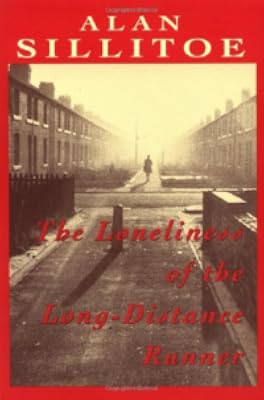


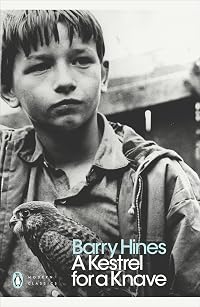
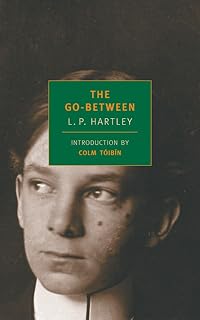











Member Recommendations
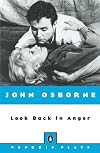
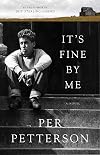
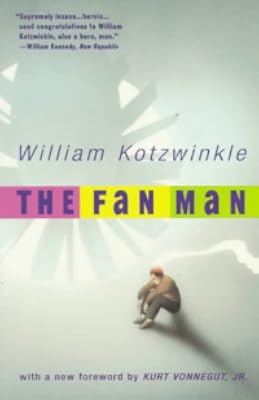
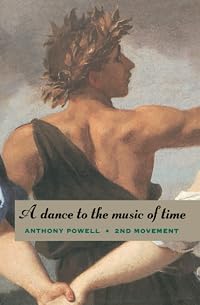
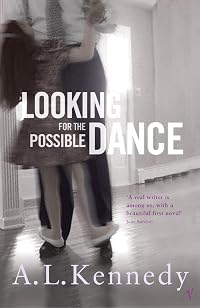
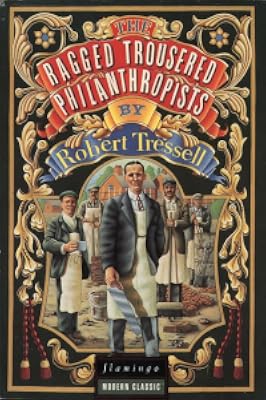
browner56 Superbly written character studies of two working class young men who experience the alienation and anger that come with growing up.
Member Reviews
"I'm me and nobody else; and whatever people think I am or say I am, that's what I'm not, because they can't know a bloody thing about me."
It's shortly after the end of World War II; Arthur is a worker at a Nottingham factory, still living at home, biding his time until the weekends. He spends his evenings at the pub, and is having sex with Brenda, the wife of one of his friends at the factory who works the night shift. He chooses married women because he knows they will make no demands on him. As I was reading this, I was struck by how much Arthur reminded me of Michael Caine's Alfie. Of course, the good times can't last forever.
And despite Arthur's perception of "good times," Silitoe does a masterful job of showing us the limitations show more of the dead end lives of the working class in Great Britain after the war. This was his debut novel (made into a well-regarded movie starring Albert Finley), and we are made to see the disillusionment and lack of opportunities facing the young working class, even if, like Arthur, they don't recognize it themselves. Recommended.
3 1/2 stars show less
It's shortly after the end of World War II; Arthur is a worker at a Nottingham factory, still living at home, biding his time until the weekends. He spends his evenings at the pub, and is having sex with Brenda, the wife of one of his friends at the factory who works the night shift. He chooses married women because he knows they will make no demands on him. As I was reading this, I was struck by how much Arthur reminded me of Michael Caine's Alfie. Of course, the good times can't last forever.
And despite Arthur's perception of "good times," Silitoe does a masterful job of showing us the limitations show more of the dead end lives of the working class in Great Britain after the war. This was his debut novel (made into a well-regarded movie starring Albert Finley), and we are made to see the disillusionment and lack of opportunities facing the young working class, even if, like Arthur, they don't recognize it themselves. Recommended.
3 1/2 stars show less
1958. Working class shlub works in the Raleigh bicycle factory in Nottingham tooling bike parts on a lathe. All he wants is his money to go out to pubs, buy nice clothes (Teddy suits?) and sleep with women. He's violent and crude. He hates the union, the bosses, the army, the government, taxes, cops and anyone else who gets in his way.
Sillitoe makes him human by talking about his childhood poverty before the war. Hearing the air raid sirens, his whole family would have to climb into the bomb shelter and wait for the bombs to land. After this upbringing, he's basically happy to have food on the table and enough money for beer.
At the beginning of the book he's sleeping with married women and hiding from their husbands. He doesn't want to show more get married. But towards the end the idea of having a woman in his bed every night, and not having to hide from or fight their husbands starts to appeal to him.
It was a testament to Sillitoe's beautiful writing that I made it through this book at all. I want to dislike it, but I can't because it makes the whole class mentality understandable. It's that gritty realism. It doesn't glorify violence, or affairs, or factory work, it makes them seem quite squalid really, but human.
I wanted him to leave Nottingham, get a wider perspective on life and maybe strive for something better. It's hard for me to accept that this is what this character's whole life may be. I have to look to Sillitoe himself to see that he did escape from these circumstances and survive to write many books, this one of which was really great.
It could almost be called 'How poor Republicans are made.' show less
Sillitoe makes him human by talking about his childhood poverty before the war. Hearing the air raid sirens, his whole family would have to climb into the bomb shelter and wait for the bombs to land. After this upbringing, he's basically happy to have food on the table and enough money for beer.
At the beginning of the book he's sleeping with married women and hiding from their husbands. He doesn't want to show more get married. But towards the end the idea of having a woman in his bed every night, and not having to hide from or fight their husbands starts to appeal to him.
It was a testament to Sillitoe's beautiful writing that I made it through this book at all. I want to dislike it, but I can't because it makes the whole class mentality understandable. It's that gritty realism. It doesn't glorify violence, or affairs, or factory work, it makes them seem quite squalid really, but human.
I wanted him to leave Nottingham, get a wider perspective on life and maybe strive for something better. It's hard for me to accept that this is what this character's whole life may be. I have to look to Sillitoe himself to see that he did escape from these circumstances and survive to write many books, this one of which was really great.
It could almost be called 'How poor Republicans are made.' show less
“If you went through life refusing all the bait dangled in front of you, that would be no life at all. No changes would be made and you would have nothing to fight against. Life would be dull as ditchwater.”
This is Alan Sillitoe's first book and probably the most well known. Written in 1958 against the backdrop of the Cold War it tells the tale of the mundane nature of working-class life in a Northern English town, Nottingham, and features an anti-hero Arthur Seaton. Arthur works in a bicycle factory doing back breaking piecework at a lathe Monday to Friday. He is 22,still lives at home,earns a decent wage and looks forward to the weekend when he goes binge drinking(no its not a new phenomenon surprise surprise) and having affairs show more with two married sisters. He is a well drawn character and despite being described by his own brother Fred as 'not a very nice bloke' you still end up rooting for him right to the very end. Arthur is constantly fighting against authority whether that be father,foreman, the Police and the Army but is not so daft to realise that ultimately cannot win. By having affairs with married women his is also battling against the perceived norms of courtship and hence ultimately marriage until he is beaten up by the soldier husband of one of his conquests. Yet he also enjoys fishing suggesting he is also able to appreciate the quieter elements of life.
Despite this being set at the end of the 1950's, when youth was coming to the fore after WWII with new suits hung in the bedroom ready to wear at the weekend, Arthur is in many respects just like his father and grandfather before him. Thus this becomes a comment on the class system within Britain, Arthur seems reasonably smart yet has only received a rudimentary education and is stuck in a monotonous job with seemingly little chance of advancement.
The prose is beautifully written with occasional streams of colloquialisms mainly from Arthur giving it a real authentic feel but despite giving his initials to his hero and after having himself worked in a factory the author has also insisted this was not autobiographical. Writers like Dickens have written about the realities of working class life in Britain but this marked the start of a new age of literary realism and should be more widely read. show less
This is Alan Sillitoe's first book and probably the most well known. Written in 1958 against the backdrop of the Cold War it tells the tale of the mundane nature of working-class life in a Northern English town, Nottingham, and features an anti-hero Arthur Seaton. Arthur works in a bicycle factory doing back breaking piecework at a lathe Monday to Friday. He is 22,still lives at home,earns a decent wage and looks forward to the weekend when he goes binge drinking(no its not a new phenomenon surprise surprise) and having affairs show more with two married sisters. He is a well drawn character and despite being described by his own brother Fred as 'not a very nice bloke' you still end up rooting for him right to the very end. Arthur is constantly fighting against authority whether that be father,foreman, the Police and the Army but is not so daft to realise that ultimately cannot win. By having affairs with married women his is also battling against the perceived norms of courtship and hence ultimately marriage until he is beaten up by the soldier husband of one of his conquests. Yet he also enjoys fishing suggesting he is also able to appreciate the quieter elements of life.
Despite this being set at the end of the 1950's, when youth was coming to the fore after WWII with new suits hung in the bedroom ready to wear at the weekend, Arthur is in many respects just like his father and grandfather before him. Thus this becomes a comment on the class system within Britain, Arthur seems reasonably smart yet has only received a rudimentary education and is stuck in a monotonous job with seemingly little chance of advancement.
The prose is beautifully written with occasional streams of colloquialisms mainly from Arthur giving it a real authentic feel but despite giving his initials to his hero and after having himself worked in a factory the author has also insisted this was not autobiographical. Writers like Dickens have written about the realities of working class life in Britain but this marked the start of a new age of literary realism and should be more widely read. show less
This book, along with John Osborne's play Look Back In Anger, really represents the Angry Young Man movement from Britain's late 50's. Even with it's misogynist traits leftover from the previous generations, The Angry Young Man was a new breed who refused to follow orders if they didn't suit his mood and he lashed out at anyone who tried to civilize him. Today, we would call this person an a-hole, but 50 years ago it was individuality.
Saturday Night...is such a well-written book and still holds surprises for the modern reader. Yes, Arthur is a pint-swilling troublemaker who not only gets married Brenda into "trouble", but sneaks around with her sister when Brenda is too busy to see him. He gets into drunken brawls and lies to just about show more everyone. He also takes pride in his work and loves his family. Sillitoe writes a complex character who vents, apologizes, looks forward to his future but is frightened of it too. show less
Saturday Night...is such a well-written book and still holds surprises for the modern reader. Yes, Arthur is a pint-swilling troublemaker who not only gets married Brenda into "trouble", but sneaks around with her sister when Brenda is too busy to see him. He gets into drunken brawls and lies to just about show more everyone. He also takes pride in his work and loves his family. Sillitoe writes a complex character who vents, apologizes, looks forward to his future but is frightened of it too. show less
Most English novels are written in an incredibly dry manner (and, hey, I'm English too). SN&SM really excels with the excellent way Sillitoe writes. It's an evocative style without ever being heavy handed like so many turgid, naturalistic novels. It makes for a wonderfully easy read that the author paces extremely well too. It's true that Arthur is in many ways a not too sympathetic character, but Sillitoe injects him with enough wit to, somehow, make him seem a loveable rogue who you want to avoid any nasty comeuppance. Perhaps the most surprising thing was how relevant the novel still feels today. Much of the behaviour (for better and worse) and the attitudes held still seem like ones you wouldn't have to travel far in England to come show more across.
Good writing in a setting that still feels relevant today - you can't ask for much more than that. A real great read. show less
Good writing in a setting that still feels relevant today - you can't ask for much more than that. A real great read. show less
The greatest 20th Century novel of the English working class. Well, that's what I think, I was born a few miles away from Arthur Seaton's Nottingham home, my mother was born and lived in the council estate where Doreen lived and I know these people, they're aunts and uncles and in-laws. Not that Arthur thinks of himself as working class, and no more do I, this book is an antidote to all those smug affluent people who glorify and sentimentalise the working class, most of us who grew up in that world had loyalty only too our friends and the hell with everyone else, boss, manager and union boss, all trying to grind you down. Of course Arthur looks doomed to knuckle under, for all his bravado he sees no other life but the one he was born show more into.
I pulled this book off the shelf to re-read, as Alan Sillitoe wrote a sequel in 2001, Birthdays, which I've just got round to ordering. show less
I pulled this book off the shelf to re-read, as Alan Sillitoe wrote a sequel in 2001, Birthdays, which I've just got round to ordering. show less
In the first, longer, section of the book, Saturday night, Arthur Seaton comes across as rather invincible. Earning a good wage in mindless work in a bicycle factory, making an effort to dress well, carrying out with two married women, drinking too much. In the second part, he's a bit more tentative and open, even if he's still convinced he knows better than anyone. As a novel, I found this book interesting to read, as a character I couldn't really stand Arthur for the most part.
Members
- Recently Added By
Lists

1001 Books You Must Read Before You Die
1,448 works; 1,133 members

The Guardian's 1000 Novels Everyone Must Read
1,005 works; 547 members

Books I've Read More Than Once
602 works; 49 members

BBC's 100 Novels That Shaped Our World
100 works; 22 members
TML 200 Best Books 1950-1999
202 works; 10 members

Anthony Burgess 99 Post War Novels
99 works; 7 members

1,001 BYMRBYD Concensus
723 works; 27 members

Fiction about the Working Class
74 works; 10 members

Review 4
37 works; 3 members

Nifty Fifties
129 works; 14 members

Blue Pyramid 1,276 Best Books of All Time
1,248 works; 32 members

Novels set over the course of a single day (or less)
72 works; 8 members
Canon de la narrativa universal del s. XX (cicutadry)
499 works; 3 members

The Modern Library (The Two Hundred Best Novels....
202 works; 1 member
20th Century Literature
1,161 works; 54 members
Author Information

Alan Sillitoe was born on March 4, 1928 and grew up in the slums of the industrial city of Nottingham. He began to write while in the Royal Air Force, stationed in Malaya. He is best known for Saturday Night and Sunday Morning (1958), which won the Author's Club Prize for the best British novel of 1958 and The Loneliness of the Long-Distance show more Runner (1959), which won Britain's Hawthornden Prize for 1960. Both books were adapted into films in 1960 and 1962 respectively. His other works include The Death of William Posters (1965), Tree on Fire (1967), Travels in Nihilon (1971), and Raw Material (1972). He died on April 25, 2010 at the age of 82. (Bowker Author Biography) show less
Some Editions
Awards and Honors
Notable Lists
Series

Belongs to Publisher Series
Pan Books (G391)
detebe (20230)
Gyldendals Tranebøger (104)
Impedimenta (51)
Salamanderpockets (429)
Reclams Universal-Bibliothek (9038)
Work Relationships
Is contained in
Has the adaptation
Common Knowledge
- Canonical title
- Saturday Night and Sunday Morning
- Original title
- Saturday Night & Sunday Morning
- Original publication date
- 1958
- Important places
- Nottingham, Nottinghamshire, England, UK
- Related movies
- Saturday Night and Sunday Morning (1960 | IMDb)
- Original language
- English
- Disambiguation notice
- Please DO NOT combine this print version of the novel with videos of film adaptations. These are considered separate and distinct works for LibraryThing cataloging. Also please be careful when editing and deleting information... (show all) in Common Knowledge, since this is common data that affects everyone in LibraryThing.
Classifications
Statistics
- Members
- 1,142
- Popularity
- 22,076
- Reviews
- 19
- Rating
- (3.74)
- Languages
- 11 — Catalan, Danish, Dutch, English, Finnish, French, German, Italian, Japanese, Spanish, Portuguese (Portugal)
- Media
- Paper, Audiobook, Ebook
- ISBNs
- 49
- ASINs
- 31