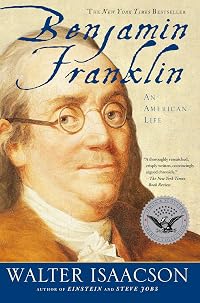
Benjamin Franklin: An American Life
by Walter Isaacson
On This Page
Description
In this authoritative and engrossing full-scale biography, Walter Isaacson, bestselling author of Einstein and Steve Jobs, shows how the most fascinating of America's founders helped define our national character.Benjamin Franklin is the founding father who winks at us, the one who seems made of flesh rather than marble. In a sweeping narrative that follows Franklin's life from Boston to Philadelphia to London and Paris and back, Walter Isaacson chronicles the adventures of the runaway show more apprentice who became, over the course of his eighty-four-year life, America's best writer, inventor, media baron, scientist, diplomat, and business strategist, as well as one of its most practical and ingenious political leaders. He explores the wit behind Poor Richard's Almanac and the wisdom behind the Declaration of Independence, the new nation's alliance with France, the treaty that ended the Revolution, and the compromises that created a near-perfect Constitution.
In this colorful and intimate narrative, Isaacson provides the full sweep of Franklin's amazing life, showing how he helped to forge the American national identity and why he has a particular resonance in the twenty-first century. show less
Tags
Recommendations
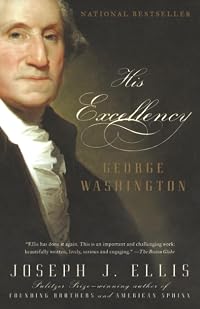
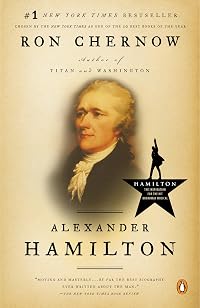
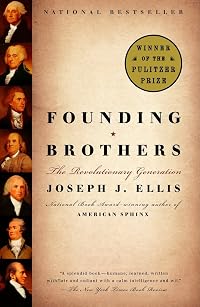
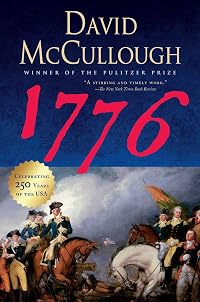

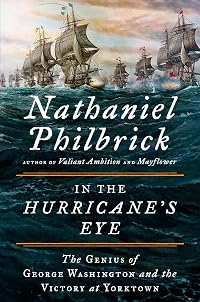

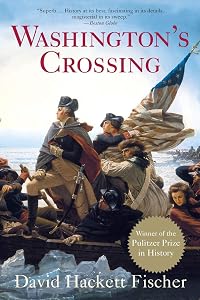
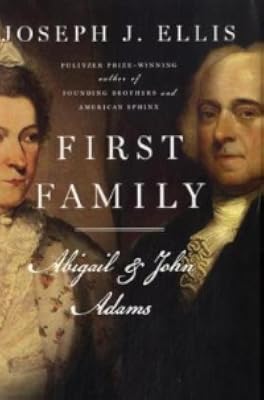
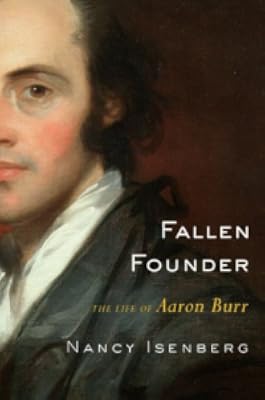
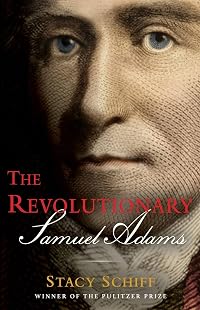

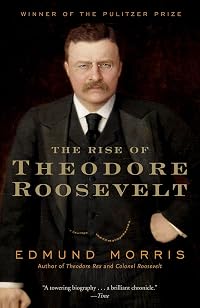
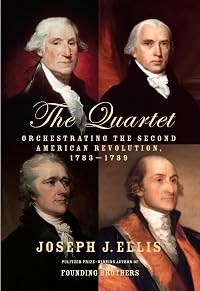

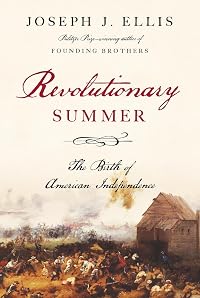


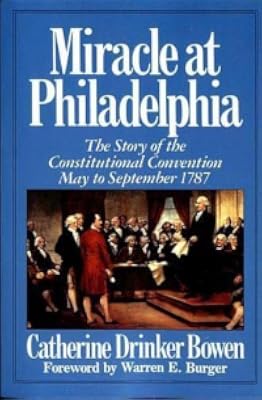
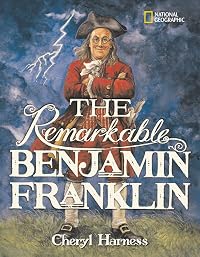
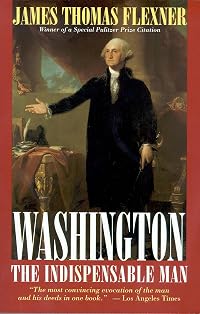
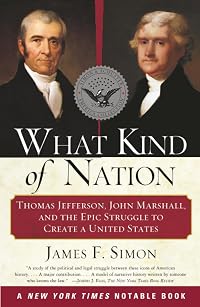
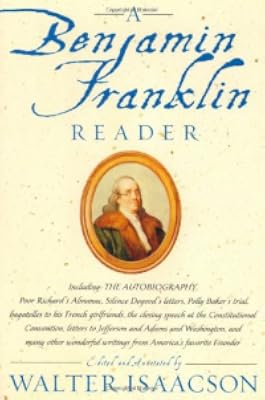
Member Recommendations

Member Reviews
Franklin has always fascinated me and has always been my favorite Founding Father, just ahead of Jefferson, so I am glad I finally pulled this bio off the shelf and dug in. It is quite mind-blowing what Franklin jammed into his eighty-four years- as a scientist, inventor, diplomat, writer and practical/political thinker. He was also the Forrest Gump of his time, inserting himself into many historical milestones, in America and abroad. The author also shines a light on Franklin's flaws, which make him even more human. He was not a very good father or husband, which I found very surprising and his adoration for young girls was borderline creepy.
I like the tone of this jaunty narrative, but, for me, it bogged down a bit in the details, show more especially in the use of extensive quotes, which can be overwhelming. It is still a very solid biography. show less
I like the tone of this jaunty narrative, but, for me, it bogged down a bit in the details, show more especially in the use of extensive quotes, which can be overwhelming. It is still a very solid biography. show less
"Benjamin Franklin is the founding father who winked at us" (p 2). What a great way to start a biography about a man whose life is such common knowledge you don't feel like you could read yet another one and get anything new out of it. It is Isaacson's writing style that sets him apart from all the other biographies. From the very beginning, Isaacson draws you into Franklin's world with such ease and humor. His style of writing is charming and winsome in a myriad of ways, but I liked that he used such words as "sassy" and "spunky" to describe people. A lot of Isaacson's information is drawn from Franklin's own words, either from his autobiography (even correcting Mr. Franklin from time to time) or from Franklin's personal letters. I show more particularly enjoyed Franklin's tongue in cheek research about the smell of farts correlating to the type of food one eats. But, Isaacson's playful account doesn't mean he refrains from personal critical opinion about our founding father's actions, especially concerning Franklin's treatment of his immediate family. He defends Franklin as much as he can concerning the relationships Franklin has with women other than his wife, claiming they were mostly nonsexual. However, Isaacson has sympathy for Franklin's family who spend nearly two decades without him. In addition to Franklin's personal life, Isaacson also is extremely thorough in detailing Franklin's civic contributions, political dealings and public life. show less
Comparisons will steal your joy.
I may have made the mistake of listening to Walter Isaacson's biography on DaVinci before I listened to his biography on the American founding father Benjamin Franklin.
The information and the writing seemed good enough, but this title, compared to the DaVinci bio was slow, wordy and was more hagiography as he, Isaacson, seemed to glaze over many of the deficits of the man by making excuses for poor behavior and performances.
This is not to denigrate the man himself as Franklin was an incredible individual, but by not showing his failures in the same light as his successes we do him a disservice as a human and place him more on a pedestal than show him as a real life human who has failures and show more disappointments that affected not only himself but all those around him and associated with him.
I also was not a big fan of the narrator's character voices as they rubbed me the wrong way each time he spoke as them, which was many.
Outside of the hagiography issue, many of my problems I feel came from comparing this to DaVinci which was read by Alfred Molina who was absolutely marvelous.
This book did expose a lot about Franklin that I was not aware of and reminded me about a lot more that I had forgotten. He was an incredible autodidact and was just so active and relatable, and was so intricately involved in the founding of this nation that he really has to be considered the Father of the Founding fathers. He really was incredible, but he was real and because so could be an ass and jerk but was never really a dull person to read about.
I give this three and a half stars as it didn't really live up to comparisons or my expectations but should be learned about by not only Americans, but any one, any where who is interested in enlightenment thinkers, scientists and philosophers. show less
I may have made the mistake of listening to Walter Isaacson's biography on DaVinci before I listened to his biography on the American founding father Benjamin Franklin.
The information and the writing seemed good enough, but this title, compared to the DaVinci bio was slow, wordy and was more hagiography as he, Isaacson, seemed to glaze over many of the deficits of the man by making excuses for poor behavior and performances.
This is not to denigrate the man himself as Franklin was an incredible individual, but by not showing his failures in the same light as his successes we do him a disservice as a human and place him more on a pedestal than show him as a real life human who has failures and show more disappointments that affected not only himself but all those around him and associated with him.
I also was not a big fan of the narrator's character voices as they rubbed me the wrong way each time he spoke as them, which was many.
Outside of the hagiography issue, many of my problems I feel came from comparing this to DaVinci which was read by Alfred Molina who was absolutely marvelous.
This book did expose a lot about Franklin that I was not aware of and reminded me about a lot more that I had forgotten. He was an incredible autodidact and was just so active and relatable, and was so intricately involved in the founding of this nation that he really has to be considered the Father of the Founding fathers. He really was incredible, but he was real and because so could be an ass and jerk but was never really a dull person to read about.
I give this three and a half stars as it didn't really live up to comparisons or my expectations but should be learned about by not only Americans, but any one, any where who is interested in enlightenment thinkers, scientists and philosophers. show less
Franklin is an American icon. Isaacson sees him as the quintessential American: self-made, independent, pragmatic, technical, anti-intellectual. Others view Franklin as a negative model, Isaacson is an apologist for him. Franklin was self-absorbed, narcissistic, destructive and dysfunctional in his personal relationships. It was always and only about Franklin. The author does a good job narrating how Franklin built his media empire, his wit and his love for the middle-class tradesman and his values. His fascination with science at the practical level would gain him the label "geek" if he were alive today. As a politician, he understood that the essence of politics is compromise: everyone gets something, no one gets everything they want. show more Isaacson's biography is an honest one, even if he gives Franklin a "pass" on moral matters. Definitely recommended as an excellent modern "read" of this prototypical American. show less
Isaacson’s biography of Benjamin Franklin is a welcome antidote for the madness and vulgarity of what passes for contemporary American political discourse. Isaacson takes the reader back to the formative years of American society and the many key moments and personalities associated with our nation’s founding and independence. He paints Franklin as an amazing contributor to civic and political life as well as a polymath with an inveterate curiosity about science.
At the same time, however, Isaacson is careful not to paint an overly rosy picture. He makes the case, for example, that Franklin’s personal relationships with members of his nuclear family (especially his brother, wife, son, and daughter) were rather wanting, cold, and show more shallow. Franklin seemed more interested in and energized by intellectual banter with friends and famous names, his grandchildrens’ adoration, and flirting with lady friends. That said, how many of us possess unblemished characters which the scrutiny of a biographer’s close analysis of our lives and letters would fail to find personal shortcomings and inadequacies?
Franklin was a great man, all things considered, who contributed with arguably unmatched impact to shaping our nation at a pivotal time. Isaacson’s biography was fun, carefully researched, well written, interest-filled, and balanced. show less
At the same time, however, Isaacson is careful not to paint an overly rosy picture. He makes the case, for example, that Franklin’s personal relationships with members of his nuclear family (especially his brother, wife, son, and daughter) were rather wanting, cold, and show more shallow. Franklin seemed more interested in and energized by intellectual banter with friends and famous names, his grandchildrens’ adoration, and flirting with lady friends. That said, how many of us possess unblemished characters which the scrutiny of a biographer’s close analysis of our lives and letters would fail to find personal shortcomings and inadequacies?
Franklin was a great man, all things considered, who contributed with arguably unmatched impact to shaping our nation at a pivotal time. Isaacson’s biography was fun, carefully researched, well written, interest-filled, and balanced. show less
I really enjoyed the two previous biographies of Isaacson's that I've read: his Albert Einstein one, which was very relevant to my interests, and the Steve Jobs one, which was fascinating even if its subject was unpleasant as a person. I didn't find this one quite as engaging, but I think that's mostly because this piece of history was of somewhat less interest to me. And being the particular sort of nerd I am, I'd have preferred reading more about the electricity and less about the diplomacy, but I'm fully aware that that's not going to be most people's priority in a Benjamin Franklin bio. I also admit that, as an American, I find myself getting sort of twitchy these days when reading about the origins of my country, because so much of show more where we've evolved from those origins seems so deeply dysfunctional to me. But, hey, that's hardly Walter Isaacson's fault. It's probably not even very much Benjamin Franklin's fault.
Anyway, all that having been said, this is still a good biography. Well-researched, thorough, and readable, with some interesting analysis from the author (especially at the end), but not too much editorializing, overall. I certainly do feel like I learned quite a bit about Franklin, and got a much better sense of who he actually was as a person, rather than as a myth or a pop culture caricature. Which I do appreciate, especially as someone who grew up within a stone's throw of Philadelphia, where Franklin's name and face seemed to be everywhere.
Anyway. If you're interested in reading a biography of Benjamin Franklin, this is probably exactly the book you want. show less
Anyway, all that having been said, this is still a good biography. Well-researched, thorough, and readable, with some interesting analysis from the author (especially at the end), but not too much editorializing, overall. I certainly do feel like I learned quite a bit about Franklin, and got a much better sense of who he actually was as a person, rather than as a myth or a pop culture caricature. Which I do appreciate, especially as someone who grew up within a stone's throw of Philadelphia, where Franklin's name and face seemed to be everywhere.
Anyway. If you're interested in reading a biography of Benjamin Franklin, this is probably exactly the book you want. show less
A fascinating biography of a key figure in American history, revealing far more depth and nuance than found in his well known Autobiography. Isaacson fleshes out a life that is even more pivotal in key events in history than you may know, and a man who had as many shortcomings and foibles as one could have, yet persevered and repeatedly reinvented himself to match what circumstances he encountered. Neither a glowing paean to Franklin nor a condemnation by modern standards, but brings more light to the complex life of B. Franklin, printer.
Members
- Recently Added By
Lists

Ben Franklin
9 works; 3 members

Best U.S. History Books (1754-1828)
363 works; 18 members

Best Biographies
216 works; 24 members

Best Biographies, Autobiographies and Memoirs
465 works; 160 members

TED 2013 Summer Reading List
190 works; 13 members

Non-Fiction Worth Reading
1,025 works; 264 members

Books Read in 2023
5,638 works; 147 members

2024-2025 Ezra Klein Guest Recommendations
213 works; 6 members
Author Information

41+ Works 36,116 Members
Walter Isaacson was born on May 20, 1952 in New Orleans, Louisiana. He received a B. A. in history and literature from Harvard College. He then attended the University of Oxford, where he was a Rhodes Scholar at Pembroke College and read philosophy, politics, and economics. He began his career in journalism at The Sunday Times of London and then show more the New Orleans Times-Picayune/States-Item. He joined TIME in 1978 and served as a political correspondent, national editor and editor of new media before becoming the magazine's editor in 1996. He became Chairman and CEO of CNN in 2001, and then president and CEO of the Aspen Institute in 2003. He has written numerous books including American Sketches, Einstein: His Life and Universe, Benjamin Franklin: An American Life, Kissinger: A Biography, Steve Jobs, and The Innovators: How a Group of Hackers, Geniuses, and Geeks Created the Digital Revolution. He is the co-author, with Evan Thomas, of The Wise Men: Six Friends and the World They Made. (Bowker Author Biography) show less
Some Editions
Awards and Honors
Awards
Distinctions
Notable Lists
Work Relationships
Common Knowledge
- Original publication date
- 2003-07-01
- People/Characters
- John Adams; William Allen; Benjamin Franklin; Richard Bache; Edward Bancroft; Pierre-Augustin Caron de Beaumarchais (show all 38); Andrew Bradford; William Bradford; Anne-Louise Boivin D'Hardancourt Brillon de Jouy; William Pitt the Elder; Jacques-Donatien Leray de Chaumont; Cadwallader Colden; Peter Collinson; Nicolas de Condorcet; Samuel Cooper; Thomas Cushing; Silas Deane; William Denny; Francis Dashwood; John Dickinson; John Fothergill; Abiah Folger Franklin; Benjamin Franklin; Deborah Read Franklin; James Franklin; John Franklin; Josiah Franklin; Andrew Hamilton; James Hamilton; Anne-Catherine de Ligniville, Madame Helvétius; Richard Howe (Lord Richard Howe); William Howe; Hume, David, 1711-1776; Thomas Hutchinson; Cotton Mather; Thomas Paine; John Penn; Joseph Priestley
- Important places
- Philadelphia, Pennsylvania, USA; Pennsylvania, USA; London, England, UK; Paris, France
- Important events
- American Revolution (1775 | 1783)
- Dedication
- To Cathy and Betsy, as Always...
- First words
- His arrival in Philadelphia is one of the most famous scenes in autobiographical literature: The bedraggled 17-year-old runaway, cheeky yet with a pretense of humility, straggling off the boat and buying three puffy rolls as... (show all) he wanders up Market Street.
- Last words
- (Click to show. Warning: May contain spoilers.)And it turned out to be, as history proved, a practical and useful one as well.
- Blurbers
- McCullough, David; Wood, Gordon S.; Ellis, Joseph J.; Morgan, Edmund S.; Freeman, John; Schlesinger, Arthur, Jr. (show all 24); Ferling, John; Goodwin, Doris Kearns; Brands, H. W.; Dreiter, Ted; Simmons, Tracy Lee; Jones, Malcolm; Frost, Bob; Van Brocklin, Bob; Blackburn, Robin; Takami, David; Mount, Charlie; Freeman, John; Shindler, Dorman T.; Beach, Patrick; Hartle, Terry W.; Lehrer, Jim; Horton, Marc; Lanham, Fritz
Classifications
- Genres
- Biography & Memoir, History, General Nonfiction, Nonfiction
- DDC/MDS
- 973.3092 — History & geography History of North America United States Revolutionary War (1775-89) Personal narratives--American Revolution
- LCC
- E302.6 .F8 .I83 — History of the United States United States Revolution to the Civil War, 1775/1783-1861 Biography (Late eighteenth century)
- BISAC
Statistics
- Members
- 6,401
- Popularity
- 1,928
- Reviews
- 93
- Rating
- (4.00)
- Languages
- English, French, Portuguese, Turkish
- Media
- Paper, Audiobook, Ebook
- ISBNs
- 27
- UPCs
- 1
- ASINs
- 27