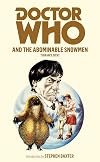
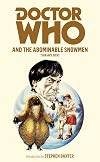
Doctor Who and the Abominable Snowmen
by Terrance Dicks
Doctor Who: Target Novelisations: Doctor Who Library order (1), Doctor Who: Target Novelisations: Publication order (10), Doctor Who: Target Novelisations: Broadcast order (38)
On This Page
Description
A single blow from the giant, hairy paw smashes the explorer to the ground. Terrified, he flees from the monster’s glowing eyes and savage fangs... Why are the peaceful Yeti now spreading death and destruction?And what is the secret behind the glowing cave on the mountain? When Doctor Who discovers that a long-dead friend is still alive,he knows why his visit to the lonely Himalayan monastery has led to a struggle to save the Earth! David Troughton reads Terrance Dicks’ complete and show more unabridged novelisation, first published by Target Books in 1974.. show less
Tags
Recommendations








Member Reviews
When I was a mini-Lee I really hoped that scientists would figure out how to build a craft that could travel faster than light as soon as possible. Failing that I'd just have to roll up my sleeves and do it myself. Why was FTL such a desideratum for me? It was simple: I wanted the chance to dash pell-mell and everywhither around the galaxy in an oversized starship like Captain Picard did in my favourite television show.
Now I'm older and wiser. I know a lot more about science and a little bit more about the world. Gone are my childish whims; now I realise the real value of faster than light travel, I understand the true benefit it would confer upon mankind. Namely: we could put someone on a spaceship and send them fifty light years away show more armed with a television, a VCR, and fifty years worth of TV licences, and they could sit back and record all those lost episodes of Doctor Who that were wiped from the BBC archives back in the 1960s as the original signals whizzed past.
This year marks the fiftieth anniversary of Doctor Who, and in celebration the motif of this year's half-series is not some Leitwort or a recurring image but more meta: homages to the past fifty years of the show. This theme actually began with the 2012 Christmas Special wherein a disembodied being used Richard E. Grant's “Great Intelligence Institute” as a front to try to take over the world using snowmen (it made sense at the time).
During the episode's dénouement the Doctor mused that “Great Intelligence” sounded familiar, before getting distracted and running off. And it should sound familiar, for this 2012 episode served as a prequel to two serials from 1967 and 1968 in which the primary antagonist was a being known as the Great Intelligence, served by an army of abominable snowmen.
The Doctor's inability to remember his former foe is probably just meant to be down to the fact that it's been some eight hundred years for him since he last faced the Great Intelligence, but it might also allude to the fact that of the twelve episodes making up the Great Intelligence's former appearances, only two are still extant.
So until someone gets around to building that spaceship, the only real way to experience these earlier adventures is through the novelisations. The Abominable Snowmen is Terrance Dicks' deft novelisation of the first story involving the Great Intelligence. It might help that Patrick Troughton's second Doctor is one of my favourite incarnations of the character, but this was by far my favourite Doctor Who novel so far. It's apparently a fairly faithful rendition of the original script, and so is a typically fast-paced tale of rip snorting adventure with a wonderful streak of dry humour.
And for anyone who can't wait for someone to break the universal speed limit in order to get a feel for watching the episode, the BBC has photonovel versions of The Abominable Snowmen and the second Great Intelligence story The Web of Fear on its website:
Doctor Who and The Abominable Snowmen
Doctor Who and The Web of Fear show less
Now I'm older and wiser. I know a lot more about science and a little bit more about the world. Gone are my childish whims; now I realise the real value of faster than light travel, I understand the true benefit it would confer upon mankind. Namely: we could put someone on a spaceship and send them fifty light years away show more armed with a television, a VCR, and fifty years worth of TV licences, and they could sit back and record all those lost episodes of Doctor Who that were wiped from the BBC archives back in the 1960s as the original signals whizzed past.
This year marks the fiftieth anniversary of Doctor Who, and in celebration the motif of this year's half-series is not some Leitwort or a recurring image but more meta: homages to the past fifty years of the show. This theme actually began with the 2012 Christmas Special wherein a disembodied being used Richard E. Grant's “Great Intelligence Institute” as a front to try to take over the world using snowmen (it made sense at the time).
During the episode's dénouement the Doctor mused that “Great Intelligence” sounded familiar, before getting distracted and running off. And it should sound familiar, for this 2012 episode served as a prequel to two serials from 1967 and 1968 in which the primary antagonist was a being known as the Great Intelligence, served by an army of abominable snowmen.
The Doctor's inability to remember his former foe is probably just meant to be down to the fact that it's been some eight hundred years for him since he last faced the Great Intelligence, but it might also allude to the fact that of the twelve episodes making up the Great Intelligence's former appearances, only two are still extant.
So until someone gets around to building that spaceship, the only real way to experience these earlier adventures is through the novelisations. The Abominable Snowmen is Terrance Dicks' deft novelisation of the first story involving the Great Intelligence. It might help that Patrick Troughton's second Doctor is one of my favourite incarnations of the character, but this was by far my favourite Doctor Who novel so far. It's apparently a fairly faithful rendition of the original script, and so is a typically fast-paced tale of rip snorting adventure with a wonderful streak of dry humour.
And for anyone who can't wait for someone to break the universal speed limit in order to get a feel for watching the episode, the BBC has photonovel versions of The Abominable Snowmen and the second Great Intelligence story The Web of Fear on its website:
Doctor Who and The Abominable Snowmen
Doctor Who and The Web of Fear show less
I've been slowly adding to my collection of these old Doctor Who episode novelizations over the decades, so I was delighted to find a shelf of the things at my local bookstore recently. I particularly appreciated this one, since it's a story that mostly no longer exists in video form, and one that's been referenced and returned to a few times over the long history of the show.
Like all of Terrance Dicks' novelizations, the writing in this one is pretty bare bones, although maybe a tiny bit less so than usual. It comes with a few illustrations, though, which was a pleasant surprise. The story itself, despite its later importance, is pretty standard for its era, but is elevated a bit by the way in which a character who at first might seem show more to be simply a bad guy turns out to be an affectingly tragic figure.
Mind you, I can't speak to where the portrayal of the Tibetan monks in the story falls on the scale of "shallow but acceptable" to "offensively bad." But at least in print, we have the advantage of not seeing them played by white British guys, so there's that.
In any case, while nobody is ever going to accuse any of these books of being great works of literature, I am still quite pleased to be able to fill in this particular gap in my Whovian reading. show less
Like all of Terrance Dicks' novelizations, the writing in this one is pretty bare bones, although maybe a tiny bit less so than usual. It comes with a few illustrations, though, which was a pleasant surprise. The story itself, despite its later importance, is pretty standard for its era, but is elevated a bit by the way in which a character who at first might seem show more to be simply a bad guy turns out to be an affectingly tragic figure.
Mind you, I can't speak to where the portrayal of the Tibetan monks in the story falls on the scale of "shallow but acceptable" to "offensively bad." But at least in print, we have the advantage of not seeing them played by white British guys, so there's that.
In any case, while nobody is ever going to accuse any of these books of being great works of literature, I am still quite pleased to be able to fill in this particular gap in my Whovian reading. show less
When I was a mini-Lee I really hoped that scientists would figure out how to build a craft that could travel faster than light as soon as possible. Failing that I'd just have to roll up my sleeves and do it myself. Why was FTL such a desideratum for me? It was simple: I wanted the chance to dash pell-mell and everywhither around the galaxy in an oversized starship like Captain Picard did in my favourite television show.
Now I'm older and wiser. I know a lot more about science and a little bit more about the world. Gone are my childish whims; now I realise the real value of faster than light travel, I understand the true benefit it would confer upon mankind. Namely: we could put someone on a spaceship and send them fifty light years away show more armed with a television, a VCR, and fifty years worth of TV licences, and they could sit back and record all those lost episodes of Doctor Who that were wiped from the BBC archives back in the 1960s as the original signals whizzed past.
This year marks the fiftieth anniversary of Doctor Who, and in celebration the motif of this year's half-series is not some Leitwort or a recurring image but more meta: homages to the past fifty years of the show. This theme actually began with the 2012 Christmas Special wherein a disembodied being used Richard E. Grant's “Great Intelligence Institute” as a front to try to take over the world using snowmen (it made sense at the time).
During the episode's dénouement the Doctor mused that “Great Intelligence” sounded familiar, before getting distracted and running off. And it should sound familiar, for this 2012 episode served as a prequel to two serials from 1967 and 1968 in which the primary antagonist was a being known as the Great Intelligence, served by an army of abominable snowmen.
The Doctor's inability to remember his former foe is probably just meant to be down to the fact that it's been some eight hundred years for him since he last faced the Great Intelligence, but it might also allude to the fact that of the twelve episodes making up the Great Intelligence's former appearances, only two are still extant.
So until someone gets around to building that spaceship, the only real way to experience these earlier adventures is through the novelisations. The Abominable Snowmen is Terrance Dicks' deft novelisation of the first story involving the Great Intelligence. It might help that Patrick Troughton's second Doctor is one of my favourite incarnations of the character, but this was by far my favourite Doctor Who novel so far. It's apparently a fairly faithful rendition of the original script, and so is a typically fast-paced tale of rip snorting adventure with a wonderful streak of dry humour.
And for anyone who can't wait for someone to break the universal speed limit in order to get a feel for watching the episode, the BBC has photonovel versions of The Abominable Snowmen and the second Great Intelligence story The Web of Fear on its website:
Doctor Who and The Abominable Snowmen
Doctor Who and The Web of Fear show less
Now I'm older and wiser. I know a lot more about science and a little bit more about the world. Gone are my childish whims; now I realise the real value of faster than light travel, I understand the true benefit it would confer upon mankind. Namely: we could put someone on a spaceship and send them fifty light years away show more armed with a television, a VCR, and fifty years worth of TV licences, and they could sit back and record all those lost episodes of Doctor Who that were wiped from the BBC archives back in the 1960s as the original signals whizzed past.
This year marks the fiftieth anniversary of Doctor Who, and in celebration the motif of this year's half-series is not some Leitwort or a recurring image but more meta: homages to the past fifty years of the show. This theme actually began with the 2012 Christmas Special wherein a disembodied being used Richard E. Grant's “Great Intelligence Institute” as a front to try to take over the world using snowmen (it made sense at the time).
During the episode's dénouement the Doctor mused that “Great Intelligence” sounded familiar, before getting distracted and running off. And it should sound familiar, for this 2012 episode served as a prequel to two serials from 1967 and 1968 in which the primary antagonist was a being known as the Great Intelligence, served by an army of abominable snowmen.
The Doctor's inability to remember his former foe is probably just meant to be down to the fact that it's been some eight hundred years for him since he last faced the Great Intelligence, but it might also allude to the fact that of the twelve episodes making up the Great Intelligence's former appearances, only two are still extant.
So until someone gets around to building that spaceship, the only real way to experience these earlier adventures is through the novelisations. The Abominable Snowmen is Terrance Dicks' deft novelisation of the first story involving the Great Intelligence. It might help that Patrick Troughton's second Doctor is one of my favourite incarnations of the character, but this was by far my favourite Doctor Who novel so far. It's apparently a fairly faithful rendition of the original script, and so is a typically fast-paced tale of rip snorting adventure with a wonderful streak of dry humour.
And for anyone who can't wait for someone to break the universal speed limit in order to get a feel for watching the episode, the BBC has photonovel versions of The Abominable Snowmen and the second Great Intelligence story The Web of Fear on its website:
Doctor Who and The Abominable Snowmen
Doctor Who and The Web of Fear show less
Re-reading the novelisation of this classic monster Doctor Who serial from 1967 after finishing Patrick Troughton's biography. As a novelisation, it's not one of the standouts, but the depictions of the Himalayas and Detsen monastery are well drawn, adding to the atmosphere of the original filmed in (non-snowy) Snowdonia. The Great Intelligence is a chilling disembodied form of evil.
As far as Target Doctor Who novelizations go, this one had more meat on the bones than usual. Normally a Terrance Dicks novelization from this period will basically resemble a shooting script with some adverbs thrown in, but this contains a fair bit of description and even some illustrations, which is a fun extra. The story itself is basically what it says on the tin. It's a quick read.
The Second Doctor, with Jamie and Victoria, visit a monastery in the mountains of Tibet. Expecting a warm welcome, he is instead greeted with suspicion after an English researcher precedes them telling tales of the death of his partner at the hands of a yeti. This is classic Doctor Who, so I don't really need to explain the plot. It's silly and yet still quite charming. I haven't seen the episode on which this is based, but I'm willing to bet that if you like Two with Jamie and Victoria, you'll enjoy this as well. I did.
A delightful and light read of the missing Dr. Who episode Dr. Who and the Abominable Snowmen featuring the 2nd Doctor and his companions Jamie and Victoria. Makes one wonder if there is some sort of connection between this story and the Planet of the Spiders featuring the 3rd Doctor.
Members
- Recently Added By
Lists

Books Read in 2021
5,361 works; 113 members
Author Information

292+ Works 23,358 Members
Some Editions
Series

Doctor Who: Target Novelisations: Doctor Who Library order
154 works (1)

Doctor Who: Target Novelisations: Publication order
191 works (10)

Doctor Who: Target Novelisations: Broadcast order
190 works (38)
Belongs to Publisher Series
Work Relationships
Common Knowledge
- Canonical title
- Doctor Who and the Abominable Snowmen
- Original publication date
- 1974-11-21
- People/Characters
- The Doctor (2nd); Jamie McCrimmon; Victoria Waterfield; Edward Travers; Thomni; Great Intelligence (show all 12); Padmasambvha; Songtsen; Khrisong; Rinchen; Sapan; Ralpachan
- Important places
- Det Sen Monastery, Tibet
- First words
- High on the Himalayan mountainside the little camp fire was burning low.
- Last words
- (Click to show. Warning: May contain spoilers.)The Doctor and his friends were off on their next adventure.
- Original language
- English
Classifications
Statistics
- Members
- 403
- Popularity
- 77,527
- Reviews
- 13
- Rating
- (3.43)
- Languages
- English
- Media
- Paper, Audiobook, Ebook
- ISBNs
- 9
- ASINs
- 4